Company
CND Superyacht Cyber Security
Explore the company profile and related Superyacht Guide coverage.
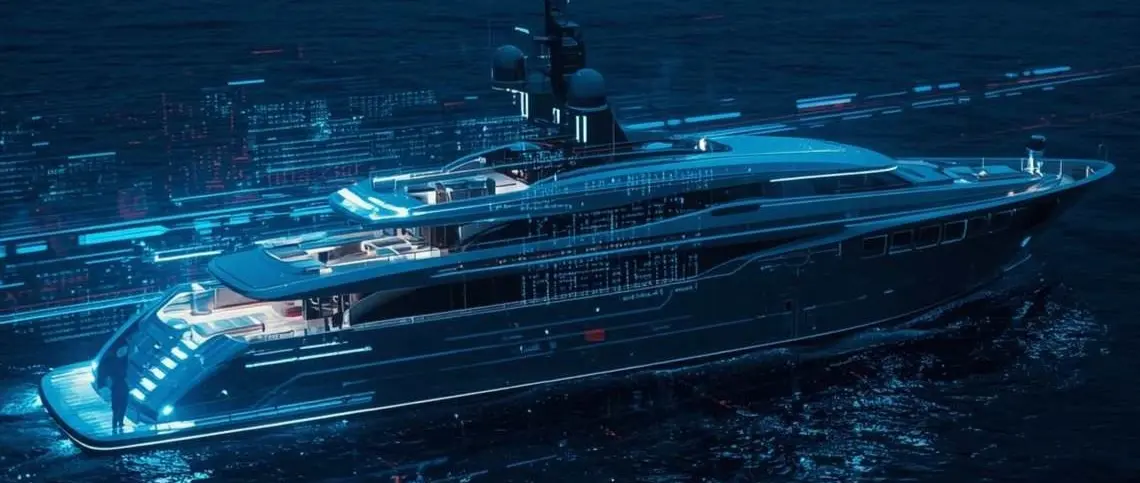
CND security specialist Charles Bain examines how AI-assisted threats, shared networks and crew practices can expose sophisticated superyacht automation and guest systems.
Specialists working with cyber-defence firm CND have warned that increasingly integrated superyacht technology creates new opportunities for attackers, particularly as artificial intelligence makes some malicious tasks faster and cheaper. A June 2026 industry interview with Charles Bain, a senior penetration tester, examined how a large yacht's combination of bridge systems, guest networks, building-style controls and connected equipment may permit unwanted access if technical boundaries are poorly designed. The issue is not confined to spectacular hacking scenarios; relatively ordinary configuration mistakes can create serious consequences.
The warning should not be misreported as evidence of an actual cyberattack on a named yacht. Bain was describing risks and lessons from authorised security testing across complex digital environments. He also made clear that he had not personally conducted a yacht-specific red-team exercise at the time. The practical value lies in translating credible security methods into the world of large private vessels before vulnerabilities lead to operational problems.
Modern yachts carry systems for navigation, machinery, communications, entertainment, lighting, air conditioning, surveillance and often remote work for the owner. Engineers may need access to power-control systems while guests stream media and crew handle accounts or itinerary information. If these activities share networks without meaningful separation, a compromised guest device might become a starting point for probing systems that should have much stronger protection.
Network segmentation creates boundaries between activities with different levels of trust. A guest Wi-Fi connection should not expose equipment that controls machinery or security cameras. Equally, vendors who need occasional maintenance access should not retain unrestricted connections when their job ends. Building these controls into the original design is usually less disruptive than discovering during a refit that every system has been connected through a poorly documented common network.
Bain described generative AI as an accelerant rather than an entirely new class of threat. Attackers can use automation to search for weaknesses, prepare persuasive messages or process information obtained from compromised systems. The availability of such tools does not mean a model can automatically hack any yacht. Effective attacks still depend on exploitable vulnerabilities, human mistakes, access paths and the ability to evade monitoring.
For yacht management, the most useful response is not to speculate about a future autonomous cyber adversary. It is to address existing weaknesses that software and automation can exploit at scale: reused passwords, remote-access systems left running, unpatched devices and excessive permissions. A security programme should prioritise those concrete issues and test whether crew can respond effectively to suspicious activity.
A yacht is not a sealed data centre. Engineers, contractors, marina workers, guests and temporary crew may pass through different areas during a refit or busy charter period. Devices can be connected to unfamiliar charging points or networks, and a malicious USB drive can be presented as a lost piece of equipment. Such social-engineering tactics are effective because they target behaviour rather than sophisticated software.
Security training should be practical and respectful of busy working routines. Crew need clear instructions for dealing with found devices, suspicious emails, unexpected requests for passwords and contractors who ask to connect laptops to ship systems. A reporting route that does not punish honest mistakes makes it more likely that an attempted intrusion will be identified early, before additional accounts or devices become involved.
Yacht automation is assembled from products supplied by numerous manufacturers. A lighting controller, guest-media system and remote-maintenance appliance may each have its own password rules, firmware and support arrangements. A shipyard or integrator must ensure that the combined design is secure and maintainable. The component supplier can support that effort through timely updates, secure defaults and clear documentation of communications protocols.
Owners should ask for a complete inventory of connected devices and the individuals authorised to administer them. That inventory needs to survive changes of crew, yacht managers and contractors. When equipment becomes unsupported, the owner faces a choice between isolating it, replacing it or accepting additional operational risk. The issue is especially important during refits when newly installed audiovisual equipment is linked to older automation systems.
In authorised testing, a red team attempts to identify weaknesses by imitating an attacker within an agreed scope. A blue team concentrates on detection and defence. Their combined work can expose problems that a routine checklist misses, such as a chain of seemingly minor configuration errors. On a yacht, however, testing must be planned carefully so that navigation, safety and propulsion systems are not disrupted by an experiment.
A credible cyber assessment begins with permission, scope and safeguards. Penetration testing of safety-critical systems requires a documented contingency plan and may be better performed in a controlled environment or during an appropriate shipyard period. Owners should be sceptical of claims that a supplier can make a yacht completely unhackable. Security is a process of controlling exposure, monitoring changes and responding to new information.
CND is a specialist security business that provides services including penetration testing and cyber-defence advice. Its relevance to superyachting comes from experience evaluating complicated networks in other sectors where sensitive data and operational systems coexist. Bain's contribution highlights the need to involve security experts during a yacht's design rather than assuming general IT installation automatically produces a protected environment.
A successful installation requires cooperation among the owner's IT adviser, shipyard, audiovisual integrator, marine electricians and yacht management company. The captain and chief engineer need a clear picture of what can safely be shut down during an incident and which systems must remain available. That operational knowledge cannot be supplied by a cybersecurity consultant working in isolation.
Owners can start with realistic measures: strong authentication, managed accounts, appropriate network boundaries, controlled software updates, secured backups and clear response procedures. Specialist assessment should establish the true risk presented by the particular vessel. The plan also needs to address personal privacy, since cameras, location data and owner correspondence can be as sensitive as technical equipment.
The June CND interview raises a credible concern without identifying a confirmed yacht breach or a new regulatory finding. Its long-term importance is encouraging builders and managers to regard cyber safety as an engineering and crew-management obligation, not a luxury optional extra. As yachts become more connected, the quality of that preparation may determine whether an attempted intrusion remains a small inconvenience or grows into a major operational incident.
Explore
Go deeper into the yachts, companies, events and destinations directly connected to this article.
Company
Explore the company profile and related Superyacht Guide coverage.
Continue reading
Cybersecurity on superyachts is now a core safety, privacy and operational issue, covering navigation, Wi-Fi, AV, crew devices and suppliers.

Computer Network Defence received British Marine's first national Product or Service award for Osprey, a maritime cybersecurity appliance.
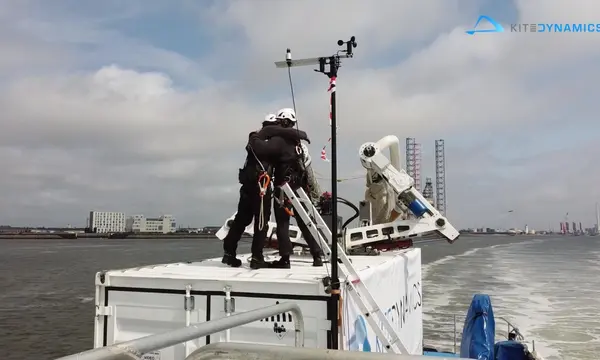
Kite Dynamics is developing four-line kite propulsion following at-sea trials in 2025 and 2026, with yacht applications remaining at the prototype and engineering stage.

Marlink has launched an operational-technology security offering for connected vessel systems, targeting risks around navigation, propulsion, HVAC, access control and other operational equipment.
Superyacht Guide
Continue into the wider Superyacht Guide.
Business opportunities · Superyacht Guide
Companies serving the superyacht market can discuss clearly identified advertising, sponsorship and business-profile opportunities. Commercial activity remains separate from independent editorial coverage.