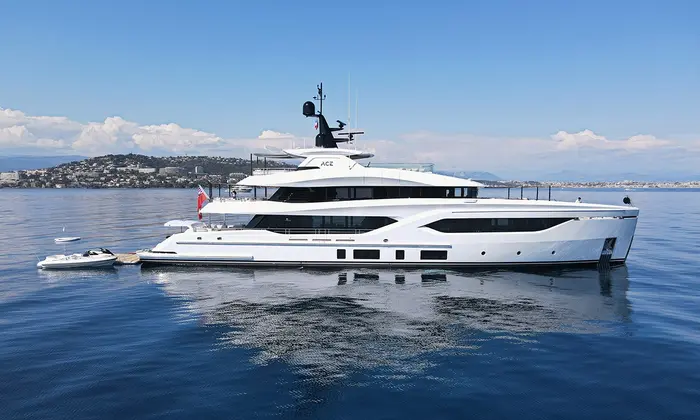
Official Conrad Shipyard company press newsletter source ID 910; dated 2024-11-29; official shipyard photo.
Conrad C144S ACE completed a 2024 Atlantic crossing from Palma to St. Maarten, with its reported 3,850-mile route and 16-day passage examined.
In November 2024, Conrad Shipyard reported that ACE, the first hull in its 44.27-metre C144S motor-yacht series, had completed her first transatlantic crossing. The yacht left Palma de Mallorca and reached St. Maarten in 16 days, covering approximately 3,850 nautical miles. Her captain, Jason McCormack, described the voyage as a demanding but successful demonstration of the vessel's capability. The passage matters because it moves the discussion away from drawings, awards and marina impressions toward actual long-distance operation.
A design brochure can describe range at an assumed cruising speed, but an Atlantic passage involves variable weather, changing loads and the decisions of a working crew. The 2024 crossing of ACE produced a specific reported route, duration, fuel record and destination. These are useful operational observations, even though they remain figures supplied by the operator and shipyard rather than independently instrumented test results.
There is no reason to turn the crossing into a race. The captain's first obligation is to deliver the vessel, people and equipment safely. Cruising comfortably across an ocean can be a more meaningful goal for a private displacement yacht than reaching a high maximum speed for a brief demonstration.
Conrad’s first C144S hull was launched in Gdańsk in October 2022, with delivery and early charter activity following afterward. Several public databases list a 2023 delivery year; that does not change the shipyard’s 2022 launch date. A well-maintained fleet record should distinguish launch from handover rather than assign a single date to both events.
The original November 2024 source refers specifically to ACE. EXTRA TIME, her second C144S sister, was delivered in 2024, and MOONLIGHT followed as hull #3. Repeated press references to the same model should never create multiple copies of ACE or attach this transatlantic voyage to another member of the family.
According to Conrad’s original announcement, ACE left Palma de Mallorca at the start of the crossing. The departure was preceded by preparation and technical checks carried out on a compressed schedule. The crew needed confidence in propulsion, steering, navigation, communications and the essential services that keep a large yacht functioning during weeks away from a repair facility.
Preparation for an offshore passage includes practical tasks that seldom appear in promotional photographs. Spares must be accounted for, weather information organised, fuel margins checked and the watch system established. Medical and emergency arrangements are also important. A successful crossing is never attributable solely to one piece of machinery.
The reported voyage lasted 16 days and covered approximately 3,850 nautical miles. The yard described an average speed of 10.1 knots, which aligns broadly with the journey's duration when allowing for differences between time underway and total elapsed time. It is important not to substitute one figure for the other without checking the source.
Arrival in St. Maarten placed ACE in the Caribbean at the start of her planned winter charter season. That was a specific 2024 commercial programme; the same statement cannot establish where she is today or whether she remains available through the same representative.
Conrad’s statement reported about 40,702 litres of fuel consumed during 382 hours underway, or approximately 106.55 litres per hour. Those numbers give more context than a simple brochure range because they arise from the crew's operating record on an identified passage. They should still be understood as reported figures, not an independent audit of calibrated fuel-flow instruments.
Fuel used by generators and hotel systems can vary with passenger count, weather and operating mode. Even when engine consumption appears efficient, total voyage economics include crew, provisions, maintenance and technical support. A single crossing offers useful evidence, but it cannot define the yacht's future consumption in every operating condition.
The shipyard reported that ACE completed the Atlantic leg on one bunkering. For owners this can reduce disruption, port calls and some logistical risks. It can also give the captain greater flexibility to choose a route based on weather rather than a narrow sequence of refuelling opportunities.
That freedom depends on prudent reserves. Captains do not normally plan a long voyage around consuming every usable litre. Fuel remaining at arrival, sea state, generator usage and the possibility of rerouting all influence the decision. One successful passage demonstrates capability within the conditions reported; it is not permission to disregard future reserve calculations.
The C144S uses a steel hull beneath an aluminium superstructure. This is a familiar arrangement for substantial displacement motor yachts because it allows robust structural engineering while controlling weight above the main deck. The arrangement is compatible with a comfortable multi-deck interior, large tanks and an ocean-crossing programme.
Material selection alone does not determine ride comfort. Hull form, weight distribution, stabilisation and the operation of the vessel all contribute. ACE's captain described a comfortable response across a range of weather, but the comments should be presented as his reported experience rather than a universal prediction for every sea state.
Reymond Langton Design shaped the exterior of ACE, while Diana Yacht Design provided naval architecture and M2 Atelier developed the interiors. Conrad integrated the engineering and construction. At 44 metres, success depends on the coordination of these disciplines: a handsome profile is not enough if the crew cannot maintain equipment or guests cannot rest comfortably while underway.
Large panoramic glazing, the straight bow and layered decks give ACE her recognisable appearance. Behind the visual presentation is a substantial technical system whose performance was exercised during the crossing. An ocean passage connects that public design identity with the operational requirements of the yacht.
The official C144S specification describes a top speed around 13.8 knots for ACE and a long-range cruising condition at approximately 10 knots. The crossing's reported average near 10.1 knots is consistent with the emphasis on efficient displacement travel rather than high-speed passage-making.
Higher speed on a displacement yacht generally demands disproportionately more power and fuel. The best compromise is not always obvious from a specification sheet. A captain may adjust engine load, route and speed as weather changes, protecting passenger comfort and machinery. The 2024 record illustrates the usefulness of designing around sustained, manageable performance.
Captain McCormack's account referred to conditions ranging from heavy rain and waves to intense heat. The crew's confidence is important, but published quotations cannot replace the details of weather-routing charts, engineering logs or the ship's complete passage plan. Those operational records remain with the vessel and her professionals.
A long voyage is an accumulation of small decisions. The bridge team monitors navigation and traffic, engineers supervise machinery and deck crew maintain the yacht in the conditions encountered. A passage that finishes ahead of schedule is a credit to coordinated work, not merely to the horsepower installed when the ship was built.
The original release described a planned 2024–2025 Caribbean charter programme following arrival in St. Maarten. It identified Luxury Charter Group as an operator and referenced cruising in St. Barts, the Grenadines and the British Virgin Islands. Those were destinations contemplated in a dated announcement, not a verified itinerary showing each location was visited.
Charter markets change. Management arrangements, seasons, rates and availability can be revised. Superyacht Guide records the historical debut without advertising a 2024 charter agreement as if it were still current. Any prospective booking would require fresh confirmation with a legitimate current representative.
ACE was the first yacht in Conrad’s C144S series, which subsequently included EXTRA TIME and MOONLIGHT. An ocean passage by the lead hull offers evidence about the fundamental platform that can inform owners' expectations for the series, although subsequent boats differ in specific equipment and interiors.
Builders gain practical feedback when yachts spend extended periods at sea. It can influence access to systems, preparation instructions and the evaluation of components. A successful first crossing does not guarantee the operation of every sistership, but it provides a meaningful real-world reference point for the yard's engineers and future clients.
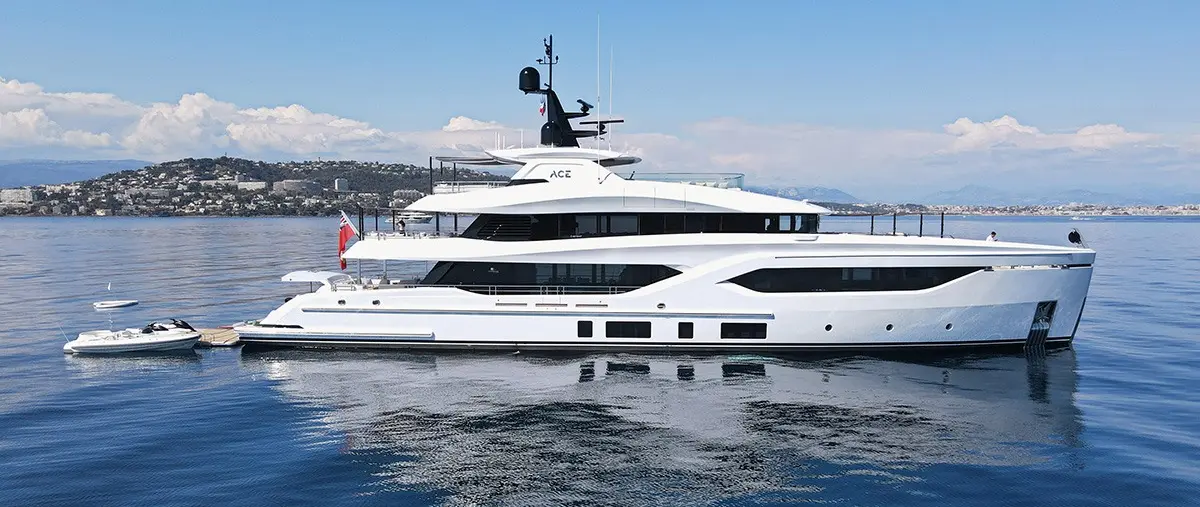
The photograph linked to this report comes from the November 2024 Conrad company email specifically concerning ACE's crossing. It is registered separately from images of EXTRA TIME and MOONLIGHT. This avoids a common editorial error: using a beautiful image of the right model but the wrong individual hull.
The published fleet page also now states ACE's October 2022 launch, distinct from her later delivery and 2024 Atlantic voyage. Her C144S#01 hull identification and original builder media are retained with the yacht's source references, supporting future research into the series.
The significance of ACE's first transatlantic voyage is not that every crossing will be equally swift or comfortable. It is that a completed superyacht with a known construction pedigree carried out a specific, documented long-range operation, from Palma to St. Maarten, without a refuelling stop.
The 16-day journey adds substance to the concept behind the C144S: a refined private yacht designed to travel between distant cruising regions under her own power. Preserving the original source gives readers a credible dated account of how this individual boat began turning that design intention into practice.
Sources and provenance: * Conrad Shipyard original source email 910, dated 29 November 2024, with original MIME and official ACE images retained. Conrad C144S#01 ACE builder specification; Conrad Shipyard 2024 crossing report distributed by Powerboat.World. Photography © Conrad Shipyard from the original direct email; specific image file and SHA-256 recorded.
Explore
Go deeper into the yachts, companies, events and destinations directly connected to this article.

Continue reading
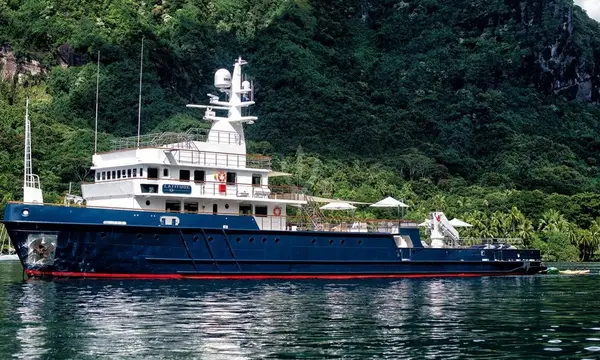
The 54.7m BUCCARA LATITUDE has been photographed in Germany’s Kiel Canal while sailing westward, highlighting a 1973 commercial vessel converted into an explorer yacht.
The S-100 navigation transition is not just a chart-data upgrade: Teledyne Raymarine Commercial says bridge teams and shore managers must plan workflows, training and …
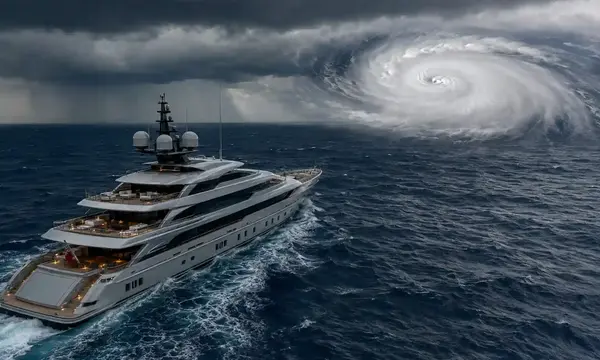
A large, ocean-going superyacht may be capable of surviving extreme tropical-cyclone conditions, but professional hurricane strategy is built around avoidance rather than proving structural …
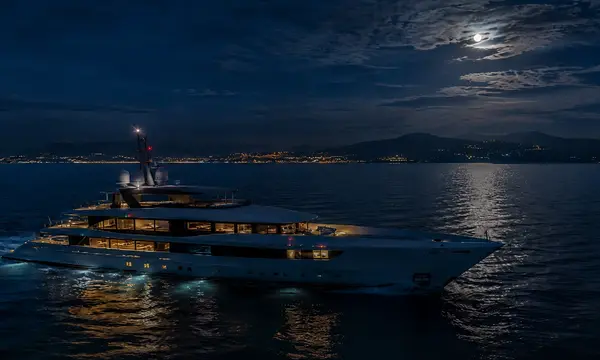
While guests sleep through an overnight passage, bridge and engineering teams remain fully engaged. Watchkeeping, machinery monitoring, fatigue control and arrival planning make the …
Superyacht Guide
Continue into the wider Superyacht Guide.
Business opportunities · Superyacht Guide
Companies serving the superyacht market can discuss clearly identified advertising, sponsorship and business-profile opportunities. Commercial activity remains separate from independent editorial coverage.