
Corvus Launches Blue Whale NxtGen Power LFP Battery System
By Stephen Yardley · Edited by Stephen Yardley
Sept. 14, 2026
Technology
Image: Corvus Energy
Corvus Energy launches Blue Whale NxtGen Power, a high-power LFP marine battery system developed with BYD Energy Storage for demanding vessel applications.
Corvus Energy has expanded its lithium iron phosphate battery portfolio with Blue Whale NxtGen Power, a new high-power marine energy-storage system developed with BYD Energy Storage. The product is designed for vessels where rapid power delivery and charging performance matter more than maximising total stored energy.
The system is the first commercial product to emerge from the strategic cooperation between Corvus Energy and BYD Energy Storage. BYD supplies cell technology and cell-stack manufacturing, while Corvus retains responsibility for the marine system architecture, battery management, safety functions, cybersecurity, class approval, final assembly and lifetime support.
Blue Whale NxtGen Power uses Corvus' established NxtGen architecture and shares core elements with the wider product family, including the stack interface, battery-module design, battery-management system and cell-string assembly. Corvus says the common platform is intended to simplify installation, maintenance, training and spare-parts management across different battery applications.
The new product is aimed particularly at vessels that experience high C-rate demand, including tugs, workboats, offshore vessels and large ferries with rapid charging requirements. The same underlying characteristics are also relevant to future large-yacht installations where batteries may be used for peak shaving, silent operation, spinning reserve or hybrid propulsion support.
The partnership combines BYD's scale in lithium iron phosphate manufacturing with Corvus' maritime engineering and certification experience. Corvus remains responsible for the elements that determine how the battery system behaves as part of a shipboard electrical network, including protection, control, monitoring and compliance.
LFP chemistry has gained wider marine interest because of its cycle life, thermal characteristics and cost profile. Corvus says advances in the chemistry now make it suitable for a broader range of vessel operating profiles, allowing the company to extend its portfolio beyond installations where energy capacity is the primary requirement.
On a superyacht, high-power battery capability can be useful even when the vessel is not intended to operate as a fully electric yacht. A battery bank can absorb short-duration load peaks, reduce unnecessary generator starts and allow generators to operate closer to efficient load points, depending on the wider electrical architecture.
Battery power can also support quieter periods at anchor, harbour manoeuvring and hotel loads when integrated into an appropriate hybrid system. Actual benefits depend on vessel size, load profile, class requirements and the design of the propulsion and hotel-power systems, so the technology must be engineered around the individual yacht rather than treated as a stand-alone component.
Corvus says more than 1,400 projects have been delivered using its energy-storage technology. The company is presenting Blue Whale NxtGen Power as part of a broader shift toward standardised marine battery platforms that can be adapted to different power and energy requirements without redesigning the complete system for each vessel.
For superyacht designers and technical teams, the development is another sign that battery selection is moving beyond a simple discussion of kilowatt-hours. Power density, charging rate, cybersecurity, thermal safety, class approval, serviceability and integration with generators and propulsion systems are increasingly central to how hybrid yachts are specified.
Explore
Go deeper into the yachts, companies, events and destinations directly connected to this article.
Continue reading
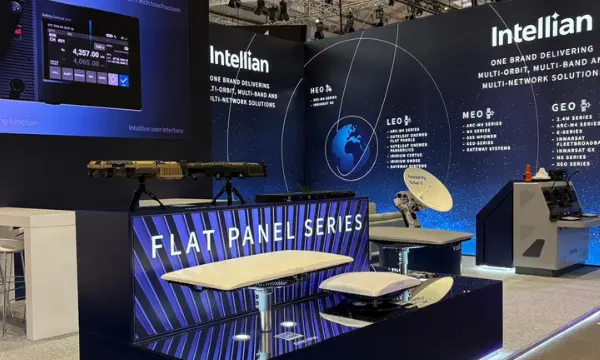
Intellian has given its new GMDSS Console a European debut at SMM while also showing the 65cm VS60 ViaSat-3 terminal and OneWeb maritime flat …
SEA.AI and Anschütz are integrating optical and thermal machine vision with the Autonomics Navigation Suite to strengthen bridge situational awareness.
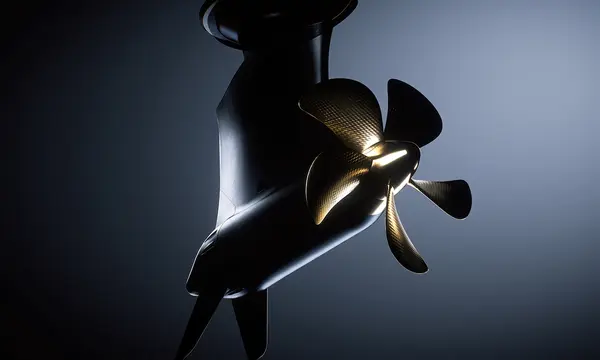
Kongsberg Maritime is extending its Elegance Pod electric propulsion family with five larger sizes delivering up to 22 MW for high-power vessel applications.
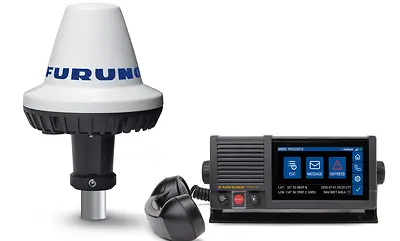
Furuno’s new SOLION-100 combines Iridium GMDSS, SSAS and LRIT functions in one Certus 100 terminal for retrofit and newbuild vessels.
Superyacht Guide
Continue into the wider Superyacht Guide.