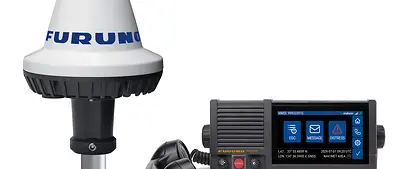
Furuno SOLION-100 Brings Iridium GMDSS to a Single Safety Terminal
By Stephen Yardley · Edited by Stephen Yardley
Furuno’s new SOLION-100 combines Iridium GMDSS, SSAS and LRIT functions in one Certus 100 terminal for retrofit and newbuild vessels.
Furuno is adding Iridium GMDSS to its maritime safety portfolio with the SOLION-100, a new terminal that combines distress and safety communications with Ship Security Alert System and Long-Range Identification and Tracking functions. Developed around Iridium Certus 100 technology, the unit is intended for both existing vessels and future newbuilds.
The launch gives yacht designers, shipyards and technical managers another route to regulated satellite safety communications, particularly for vessels operating internationally or at high latitudes. Iridium Marine's low-Earth-orbit network provides pole-to-pole coverage, making the technology relevant to expedition yachts whose operating areas may extend beyond conventional cruising grounds.
The SOLION-100 integrates GMDSS, SSAS and LRIT capability rather than treating each requirement as a separate communications installation. For a superyacht bridge, that consolidation can reduce equipment complexity while preserving the distinct safety and security functions required by the vessel's flag, class and operating profile.
Iridium GMDSS has been in service since 2020 following recognition by the International Maritime Organization. Its services include distress alerting, Safety Voice communications and SafetyCast navigational and meteorological warnings, allowing the same satellite ecosystem to support a vessel before, during and after a maritime safety event.
Large yachts increasingly combine conventional navigation electronics with high-capacity satellite communications, integrated bridge systems and extensive onboard networks. Safety communications remain a regulated layer within that wider technology environment, so equipment selection has to account for compliance, redundancy, coverage and the yacht's intended area of operation rather than bandwidth alone.
For expedition yachts, global coverage is particularly significant because cruising programmes can include polar waters and remote regions where communications resilience becomes an operational issue. A terminal capable of supporting recognised GMDSS services through a low-Earth-orbit constellation gives naval architects and bridge integrators an additional option when defining the yacht's communications architecture.
Furuno and Iridium expect the SOLION-100 to become commercially available for retrofit applications in late 2026, with newbuild availability following in 2027. That timetable makes the system relevant both to yachts approaching winter refit periods and to projects now moving through design and equipment-selection phases.
Retrofit suitability is important in the superyacht sector because communications equipment often evolves faster than the vessels themselves. A yacht may remain in service for decades while satellite networks, regulatory requirements and bridge electronics change substantially, creating repeated opportunities to modernise safety communications during scheduled yard periods.
The development reflects a broader movement toward bridge systems that combine more functions while maintaining clear regulatory responsibilities. Consolidation can simplify installation and operation, but technical teams still need to consider power supply, antenna positioning, network interfaces, emergency procedures and the specific requirements imposed by flag and class.
For owners and captains, the significance of the SOLION-100 is therefore less about adding another satellite terminal and more about widening the choice of recognised safety infrastructure. As superyachts travel farther and bridge systems become more connected, dependable distress, security and tracking communications remain fundamental parts of the vessel's safety case.
Explore
Go deeper into the yachts, companies, events and destinations directly connected to this article.
Continue reading
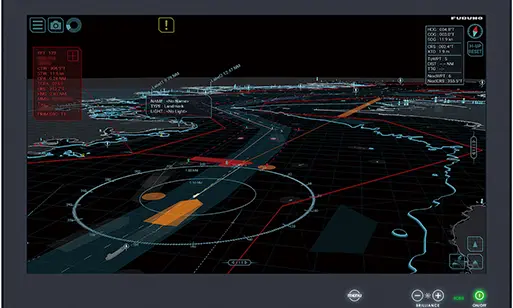
Furuno’s VNS-100 combines charts, radar, AIS and collision-risk visualisation in a 3D bridge environment designed to improve situational awareness in congested waters.
SEA.AI and Anschütz are integrating optical and thermal machine vision with the Autonomics Navigation Suite to strengthen bridge situational awareness.
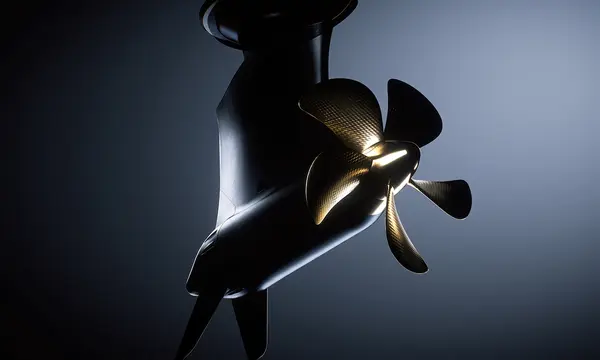
Kongsberg Maritime is extending its Elegance Pod electric propulsion family with five larger sizes delivering up to 22 MW for high-power vessel applications.
IMO uses a carbon conversion factor of 3.206 tonnes of CO₂ for each tonne of diesel or gas oil consumed. It is a useful …
Superyacht Guide
Continue into the wider Superyacht Guide.