GB Mec EvoDeck 48V electric yacht platform, official November 2026 manufacturer promotional photograph

News

GB Mec Announces 48V Electric EvoDeck Platform for Superyachts at METSTRADE 2026

Nov. 13, 2026 Technology

GB Mec EvoDeck 48V electric yacht platform, official November 2026 manufacturer promotional photograph

GB Mec will introduce its EvoDeck 48V electrically actuated articulated platform for yachts and superyachts at METSTRADE 2026, alongside deck equipment.

A new full-electric deck mechanism heads for Amsterdam Italian marine-equipment specialist GB Mec has announced that its EvoDeck 48V articulated platform will make its public debut at METSTRADE 2026, opening at RAI Amsterdam on 17 November. The company describes the new mechanism as a fully electric 48-volt DC product developed for applications on yachts and superyachts. Its announcement of 10 November places the product alongside an existing range of electric and hydraulic deck systems. A movable platform may be a prominent feature of a modern beach club, but the engineering behind its operation can involve substantial forces, safety checks and integration work. The new product is therefore more than an attractive accessory. It introduces another option for yards considering whether electric actuation can suit a particular deck arrangement.

EvoDeck is an articulated platform, not a propulsion system The published description calls EvoDeck 48V a new articulated platform driven by electricity rather than a hydraulic power circuit. It is intended for the yacht's deck arrangement and access areas, not to move the vessel through the water. That distinction matters because high-profile marine technology announcements can sometimes be confused with propulsion electrification. A motor that moves a deck element has a different duty cycle from a propulsion motor. Its required torque, operating speed, braking and holding capacity will depend on the weight and geometry of the platform, as well as environmental loads. The manufacturer's initial statement does not provide a complete load-rating or dimensional table for every intended installation.

Why forty-eight volts may appeal to yacht designers The stated 48V DC architecture gives shipyards another electrical option for a movable deck feature. Higher-voltage low-voltage systems can deliver the same electrical power at lower current than a 12V or 24V arrangement, potentially affecting cable size and electrical losses. That does not mean a 48V mechanism can be connected to any onboard battery bank without engineering. Current protection, control architecture, thermal management, cable routes and emergency isolation must be designed for the vessel. Owners should also recognise that the nominal voltage does not determine the safe working load of a platform. Mechanical strength and the complete drive system remain the decisive factors in its ability to lift or hold equipment.

Electrical movement may reduce some hydraulic complexity Hydraulic equipment has long been used aboard yachts to operate passerelles, cranes, tender doors and swim platforms. It can deliver substantial force, but the installation may require pumps, hoses, reservoirs and valves positioned around the yacht. A fully electric system can potentially reduce some of that local plumbing, although it introduces electrical drives, controls and components of its own. The environmental comparison should not be assumed from the words full electric. Reliability, energy use and lifecycle impacts depend on the whole installed system. A proposal should document where energy is produced, the required cabling, and whether the actuator remains serviceable after years of exposure to a saltwater environment.

GB Mec's existing products provide technical context The company, founded by Bartolomeo Gallo, develops mechanical systems for motor yachts and sailing yachts. Its planned exhibition range includes an electrically operated 24V gangway, a 24V electric swim ladder, a 48V electric captive winch rated at two tonnes and several sail-handling components. Those products demonstrate that GB Mec works in both guest-access and high-load deck-equipment categories. Their presence on the same stand does not mean their specifications are interchangeable or that one control system is automatically compatible with every other device. Each arrangement must be evaluated in relation to its intended role aboard the yacht, the crew's operating procedures and the manufacturer's technical documentation.

The captive winch is a separate electric technology The 48V two-tonne electric captive winch is a sail-handling product rather than part of the EvoDeck mechanism. Captive winches store and manage line under controlled conditions, which can be important on large sailing yachts where running rigging carries substantial loads. The stated two-tonne designation should be read according to the manufacturer's rating documentation, not extrapolated into a general lifting limit for the new platform. A different hydraulic captive winch rated at nine tonnes will also appear among the products at METSTRADE. The comparison illustrates why some yacht functions may be appropriate for electric actuation while other installations continue to rely on hydraulics. Engineering selection depends on required performance, not fashion.

Line-feeding and monitoring systems matter on large sailing yachts GB Mec's exhibition lineup also includes an Electric Feeder, a Hydraulic Feeder and a Loose Sheet Sensor. Sail-handling systems need to control lines safely when loads rise or change, and they may require monitoring to detect conditions that could damage equipment. A sensor by itself cannot replace a properly designed winch or trained crew, but data can support the safe management of complicated deck operations. The new EvoDeck launch sits within this wider portfolio of automation and mechanical engineering. Owners should not assume the company has announced a universal autonomous handling system, however. The technical statement describes several distinct products and does not establish that every function has been combined into a single network.

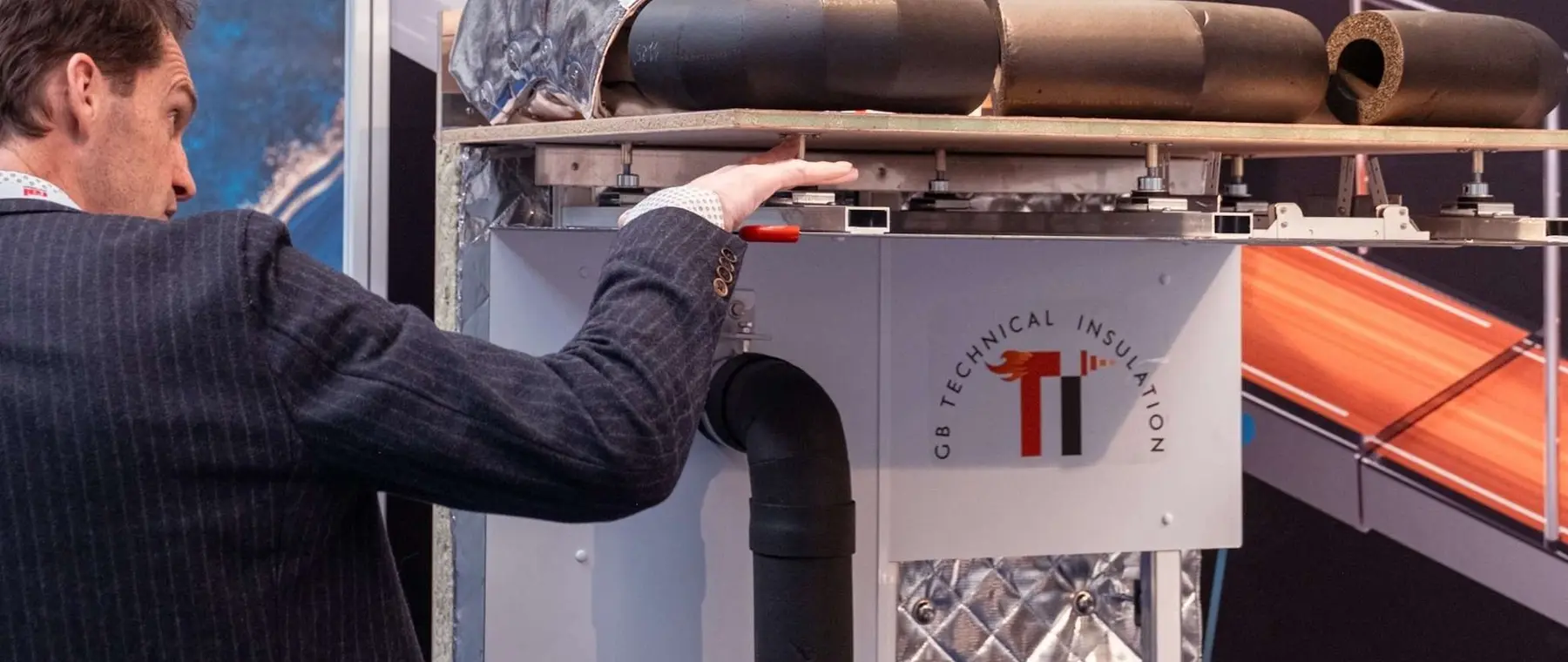
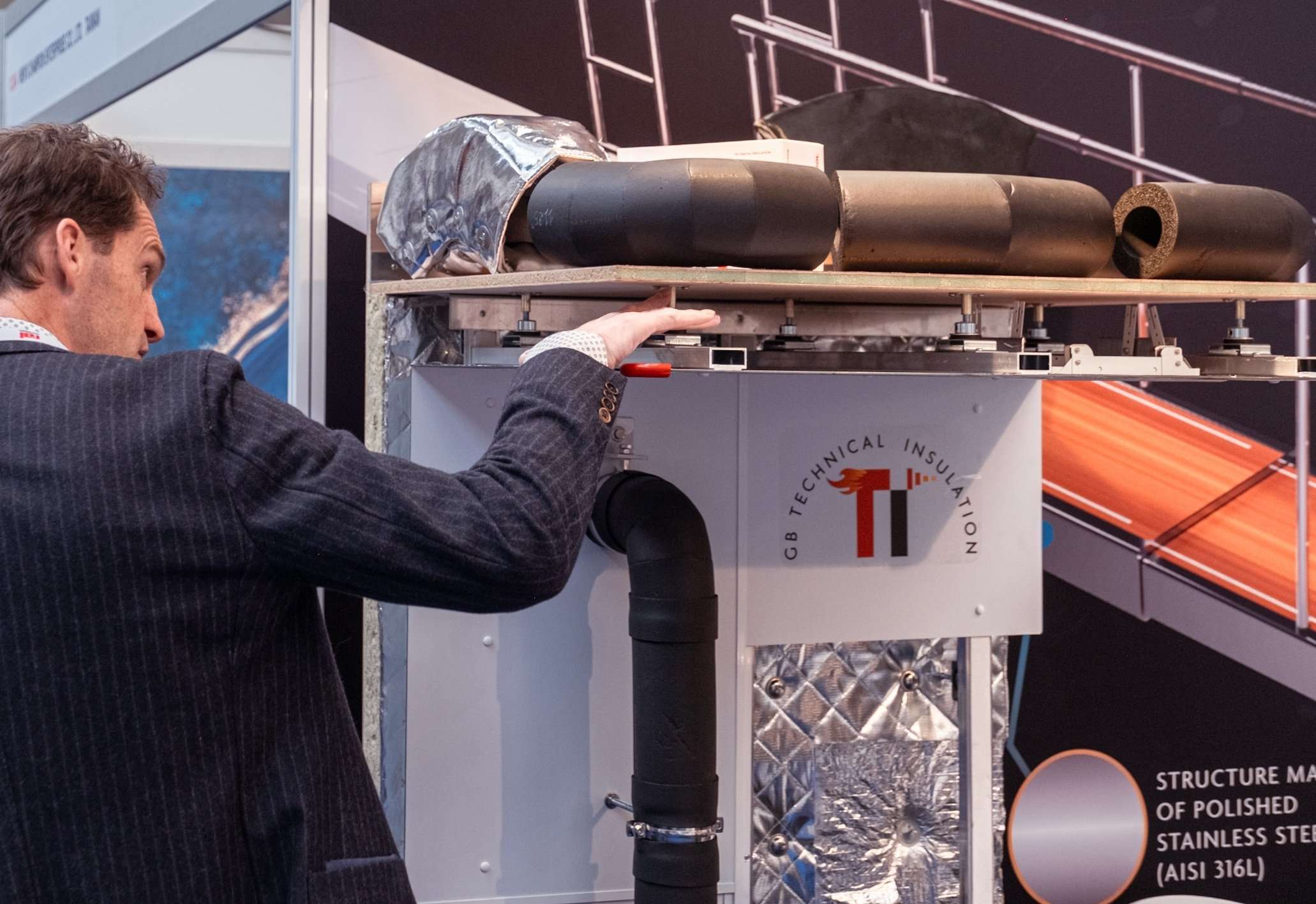
Thermal and acoustic insulation is also on display The company plans to bring a mock-up of its thermo-acoustic insulation system, broadening the stand beyond mechanisms that move. On a superyacht, insulation can affect the comfort of guests and crew by helping control heat and the transmission of sound. Such installations must be evaluated for fire behaviour, moisture resistance, durability and space requirements. A demonstration sample may show how an assembly is constructed without establishing the performance of the complete yacht. Insulation must also accommodate inspection and access to nearby machinery. GB Mec's decision to present these capabilities alongside deck equipment illustrates the range of engineering specialisms needed to fit out a modern yacht.

A moving platform requires a mechanical safety case Any articulated platform used close to guests, swimmers or tenders needs safeguards for unexpected movement, trapping hazards and loss of power. Engineers should establish the permissible loads, operating envelope, mechanical stops and any locking system necessary when the platform is deployed or stowed. Crew should also understand whether movement is permitted while the yacht is underway or only in specified conditions. The EvoDeck launch summary does not publish its complete risk assessment or emergency operating procedure. It would therefore be inappropriate to claim that the system can perform every desired function without a project-specific study. An intelligent purchasing decision begins with drawings and clearly stated engineering limits.

Refits face constraints different from new construction A new yacht can be designed around the dimensions, structural loads and service routes of a platform from an early stage. Retrofitting a substantial articulated mechanism may be more difficult because foundations, electrical distribution and watertight boundaries already exist. Even a compact electric actuator can require reinforcement and space for maintenance. A refit also needs to consider how equipment will be brought aboard and how the structure can be modified safely. GB Mec's announcement does not confirm a completed retrofit involving EvoDeck, so examples should not be invented. The technology may nevertheless be of interest to yards looking for alternatives when a conventional hydraulic package would occupy valuable space.

Electrical efficiency must be assessed under actual load The manufacturer links the new product with market interest in efficiency, integration and sustainability. Those goals are relevant, but a yacht owner should request electrical consumption under realistic duty cycles, including starting loads, repeated operation and holding requirements. A platform used a few times each day has a different energy profile from a continuously running machine. Claims about lower total emissions would also need to account for manufacturing, power generation and maintenance. No independently verified percentage saving is supplied in the announcement. A credible comparison with another platform should use equivalent loads and operating conditions rather than the difference between electric and hydraulic labels alone.

The operator interface can determine crew confidence An access system may be straightforward mechanically but difficult to operate if controls are not positioned appropriately or the crew cannot see the moving structure. Ideally, the operating station provides clear visibility, intuitive commands and unambiguous indication of the current position. A yacht may also require bridge notification or interlocks to ensure that equipment is properly secured before leaving a berth. These design decisions need to be made with the yard and captain, not simply taken from a trade-show demonstration. A new electrical system might make certain forms of feedback easier to implement, but the manufacturer must document which functions are actually provided in the proposed configuration.

Bartolomeo Gallo positions the show as a market test GB Mec's founder says the Amsterdam exhibition offers an opportunity to present the technology internationally and hear directly from designers, builders and industry professionals. This is a sensible stage for a new product because different yachts have different mechanical and styling requirements. The feedback may help determine which configurations are most commercially relevant, but it would be premature to report confirmed orders or installations that have not been publicly announced. The presence of a device at a trade show does not establish that a type-approval process has been completed. Buyers should ask about testing, warranties, certification and supplier support in the countries where their yacht will operate.

What designers should ask about EvoDeck A technical meeting at METSTRADE should establish the permitted platform dimensions, structural loads, drive duty, electrical requirements and applicable safety protections. Details such as position sensing, braking, emergency movement and the manufacturer's recommended foundation design will matter to the naval architect and chief engineer. Owners should also ask how the finish and mechanical components can be maintained in a wet and saline environment. For larger yachts, a platform is part of a wider beach-club or boarding arrangement and must work safely with surrounding equipment. A catalogue photograph can establish the overall concept, but it cannot replace a full installation review.

An electric launch rather than a completed yacht project The confirmed November development is GB Mec's plan to unveil EvoDeck 48V as a fully electric articulated platform and to exhibit its related equipment portfolio at METSTRADE 2026. That is a substantive product announcement for the superyacht supply chain, not evidence of a newly delivered vessel or a quantified efficiency result. The system's long-term value will depend on the quality of its engineering, the reliability of its safety functions and the practical benefits it offers over existing arrangements. For yacht owners, it adds an option to discuss with their designers and technical teams while leaving performance and installation suitability to be established through documentation and testing.

**Reporting basis:** GB Mec's official 10 November 2026 METSTRADE announcement, distributed by PressMare. The hero photograph is official manufacturer press material representing the product; no completed sea trial or yacht-specific installation is asserted.

Primary source: GB Mec first-party 10 November 2026 METSTRADE equipment briefing via PressMare.

Image: GB Mec official November 2026 product publicity distributed by PressMare, illustrating the EvoDeck announcement, not a completed Amsterdam demonstration. Official source image.

Photo licence and source

Image: GB Mec official November 2026 product publicity distributed by PressMare, illustrating the EvoDeck announcement, not a completed Amsterdam demonstration.

Continue reading

All news

Superyacht Guide

Explore the superyacht world

Continue into the wider Superyacht Guide.

Business opportunities · Superyacht Guide

Reach the superyacht industry audience

Companies serving the superyacht market can discuss clearly identified advertising, sponsorship and business-profile opportunities. Commercial activity remains separate from independent editorial coverage.