Aon Italia Warns Yacht Owners to Review Crew and Shipyard Insurance Exposure
Aon Italia's Paolo Mascino identifies crew liability and shipyard insurance as critical issues for superyacht owners, covering P&I and refit risk allocation.
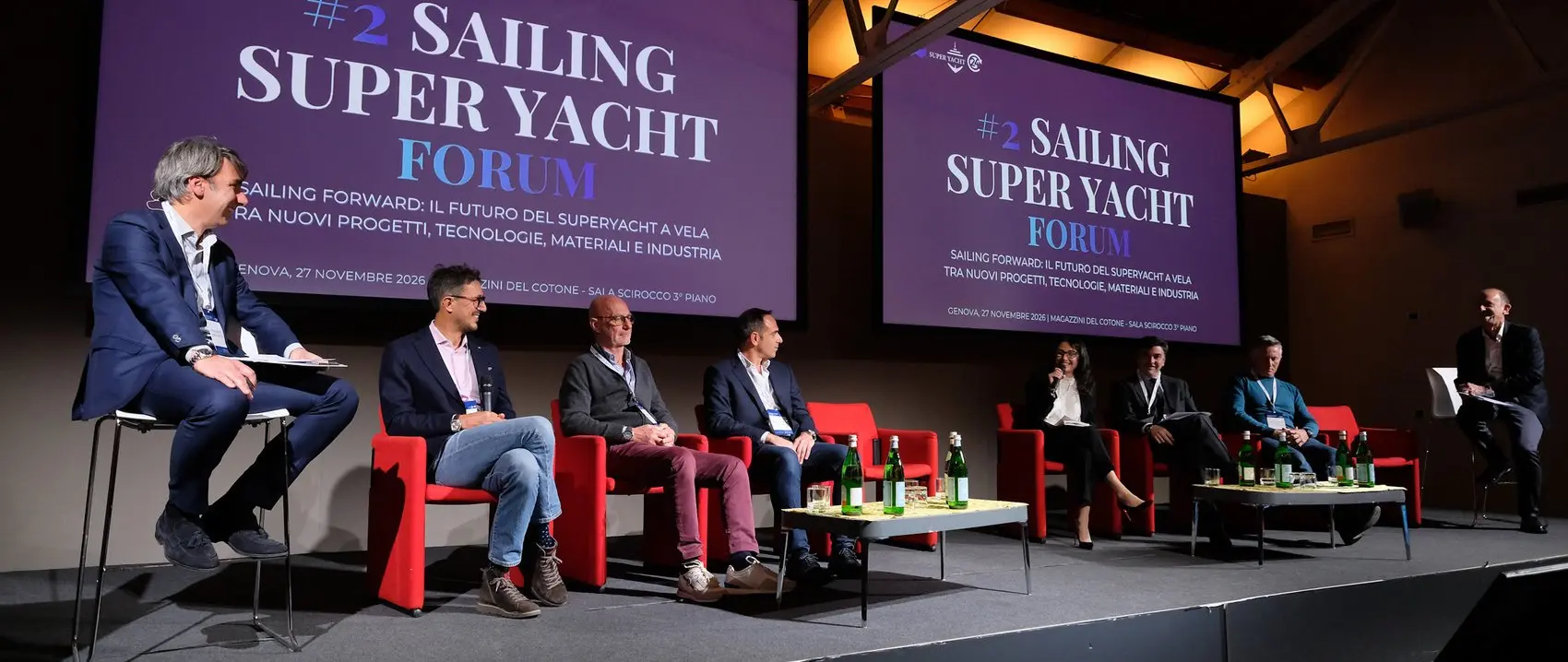
SUPER YACHT 24 official 27 November 2026 Genoa forum refit panel original organiser press photograph.
A 27 November Genoa forum panel examined how planning, contracts, shipyard insurance and crew responsibilities shaped the completed refit of the 100-foot Grillo Parlante.
The second Sailing Super Yacht Forum in Genoa turned to refit planning on 27 November 2026, with speakers explaining why major work on a sailing yacht is as much a management and contractual undertaking as an engineering project. The discussion covered owner expectations, shipyard access, crew responsibilities, insurance and the danger of discovering hidden problems after work has started.
The organiser's account offers a timely operational lesson rather than the announcement of a brand-new yacht. Its main example was a completed refit of the 100-foot sailing vessel Grillo Parlante, supported by perspectives from a shipyard, owner, captains and professional advisers. The event took place at the Magazzini del Cotone conference venue, not aboard the yacht itself.
Sangiorgio Marine discussed work undertaken with owner Fausto Sestini and skipper Andrea Cinerari. The project followed an initial season of learning how the vessel behaved and studying its less visible systems. The yard subsequently completed structural and aesthetic work, including a change to white exterior paint, with a launch reported in May ahead of the agreed schedule.
The organiser's report says the launch was about fifteen days early. That is a specific account of this refit and should not be generalised into a promise about the yard's other projects. Nor does it mean the boat was launched again on 27 November. The news is the operational experience discussed at Genoa and the lessons offered to owners planning similar work.
An owner who has spent time aboard can identify issues that might not appear during an initial inspection: awkward equipment access, inconsistent performance or spaces that do not suit how the crew actually works. A period of observation can make a refit specification more accurate, particularly on a yacht with complicated sailing systems and long-established onboard modifications.
That does not eliminate hidden defects. The value of early observation is to distinguish known requirements from areas that will need further investigation. It can also prevent an owner from committing to purely cosmetic changes before the condition of important structures and equipment is understood.
Edoardo Bianchi of Sangiorgio Marine emphasised maintaining a relationship with Southern Wind, which built Grillo Parlante. The original yard may be able to provide drawings, construction records and knowledge about equipment choices. Such information helps a refit team understand the consequences of removing or modifying elements that appear straightforward from the outside.
Not every older yacht has complete documentation, and the availability of drawings should never be assumed. When documents are incomplete, the yard may need to conduct more inspection and technical assessment before selecting a method of work. The important principle is to use genuine build history wherever possible rather than guessing what lies behind a finished panel.
A refit timetable must accommodate access, procurement, engineering decisions and inspections. If the owner asks for a fixed end date before the technical scope has been established, the agreement may create unreasonable expectations. Hidden work discovered later can alter both cost and sequencing, even when the shipyard acts diligently.
The Genoa discussion stressed that scheduling should account for foreseeable tasks and define a process for handling unforeseen findings. A promise of penalties for delay cannot by itself solve a badly specified project. Owners are better served when the programme clearly describes assumptions, dependencies and the decisions required from each party.
Cecilia Vernetti of Deloitte Legal discussed the importance of bringing the owner, captain, yard, project manager and advisers together before work begins. Unanticipated defects uncovered after lifting teak or opening structures can complicate obligations and budgets. An agreement should explain how such discoveries are evaluated and how changes are approved.
This does not mean every problem should be treated as a legal dispute. Clear procedures can actually reduce disputes by recording who may authorise additional work, how prices are agreed and when revised schedules become binding. The forum account is a report of professional discussion, not a substitute for jurisdiction-specific legal advice.
Raffaele Bruzzo of Cambiaso Risso Marine highlighted the change in risk when a yacht moves from ordinary operation into a yard environment. Lifting, welding, painting, temporary equipment, open compartments and the presence of contractors create exposures that differ from normal cruising. Owners should not automatically assume that their existing coverage responds identically during all yard activities.
The relevant policy terms, shipyard clauses and liability provisions must be reviewed before the work starts. Questions include what happens if a subcontractor damages property, which insurer responds while the yard has custody of the vessel and whether any waiver of recourse applies. Those answers depend on the actual insurance contract rather than a general statement about ship repair.
A yacht's crew often knows its equipment better than visiting contractors, and their knowledge is valuable during a refit. But that does not mean crew members should carry out any task simply because they are available. Safety procedures, competence, insurance arrangements and the yard's rules determine which activities they may undertake.
The panel included captain perspectives emphasising the importance of boundaries. A crew member assisting an engineer must know when to stop and who has authority to continue the work. Clear procedures protect the crew, the vessel and contractors, while reducing uncertainty about responsibility if something goes wrong.
A closely involved owner can resolve questions quickly and clarify priorities, as the Grillo Parlante example suggests. However, constant changes without a disciplined decision process can cause disruption. The useful model is a defined chain of communication in which the owner makes informed choices while technical specialists explain costs and consequences.
Captain and project manager roles should be clear. The captain may provide operational feedback, but responsibility for design approval, budget commitments and contract amendments can rest elsewhere. A successful refit depends on knowing who decides what, not on bringing more people into every conversation.
A shipyard's experience with the specific construction methods, rigging, systems and size of yacht can be more important than a low initial figure. The Genoa panel also discussed proximity to the home port and local support relationships. Being close enough to inspect progress and obtain assistance can make oversight easier for some owners.
Geography is only one factor. Owners should assess technical capacity, subcontractor coordination, insurance, berth suitability, scheduling and access to replacement equipment. A thorough comparison should be based on the same written scope; otherwise two seemingly different prices may reflect different assumptions rather than genuine savings.
The discussion touched on the thermal implications of dark and light hull finishes. A darker surface can absorb more heat, which may affect temperatures and accommodation cooling demands. White finishes can behave differently, while developing coating technologies may change the range of workable choices.
Any particular claim about temperature reduction needs product-specific test conditions. The forum referred to work on innovative coatings, but its general discussion should not be turned into an assurance that a chosen paint system will lower temperatures by the same proportion on every yacht. Owners should obtain compatibility guidance for the actual composite structure and finish.
A refit project is especially vulnerable to scope growth because one opened-up compartment may reveal another issue nearby. A formal change record can identify what has been discovered, why additional work is proposed, how much it costs and what effect it has on the programme. This is standard project discipline applied to a complex vessel.
The practical goal is not to prevent every change. Some adjustments are essential for safety, reliability or long-term maintenance. The value comes from documenting the decision, securing the right approval and ensuring that new work does not silently displace critical tasks from the agreed schedule.
A regular reporting rhythm helps owners understand whether tasks are progressing as planned. Photographs, inspection notes, budget updates and an agreed list of outstanding decisions can make the project's state more transparent. These records are useful when specialists work in different locations or cannot be aboard at the same time.
The Genoa speakers repeatedly stressed relationships and good faith, but those should be supported by documentation. Trust is more resilient when the parties share a clear account of what has been agreed, especially if a change becomes contentious. No one benefits from reconstructing important decisions from informal recollections.
A yacht can emerge with attractive finishes yet leave an owner dissatisfied because the budget changed unpredictably or systems are difficult to maintain. Conversely, disciplined administration cannot compensate for poor technical execution. The best outcome requires the two sides to work together from the earliest planning stage.
Professional advisers, the yard and crew therefore have complementary responsibilities. Engineering evidence informs the specification; contractual documents define obligations; owners set priorities; and the captain helps assess day-to-day operational consequences. The forum's message was about these interfaces rather than a single new product.
Sailing yachts introduce rigging loads, spars, sail-handling equipment and complex structural relationships into the refit brief. A modification that is straightforward on a motor yacht may have different implications when it affects mast support, deck hardware or the distribution of loads around a sailing structure.
That does not make sailing refits uniquely unmanageable. It makes specialist knowledge and good drawings especially important. A yard that understands the design and service history of a particular vessel can plan the intervention more safely than one relying on assumptions based on appearance alone.
The forum did not publish a new mandatory refit standard or announce that its recommendations were binding on the industry. It documented experience from a completed 100-foot yacht project and the perspectives of specialists involved in legal, insurance, shipyard and operational decisions. Those contributions are relevant because many refit difficulties arise before a tool is brought aboard.
The next owner considering major work can apply the lessons by documenting the yacht's condition, involving the captain and original builder where appropriate, agreeing a realistic change process and reviewing cover before the vessel enters the yard. The core message is that successful technical work depends on the quality of the decisions made before it starts.
Continue reading
Aon Italia's Paolo Mascino identifies crew liability and shipyard insurance as critical issues for superyacht owners, covering P&I and refit risk allocation.

Running a 40m superyacht requires a substantial annual budget for crew, maintenance, fuel, berthing and other operating costs. Superyacht Guide's 2026 model of 322 …

Superyacht Guide's 2026 running cost calculator provides annual, monthly and five-year ownership estimates using either an existing yacht or a planning value. It gives …

Vitters Shipyard's November announcement highlights long-term sailing yacht engineering support, maintenance and refit coordination through its two service bases.
Superyacht Guide
Continue into the wider Superyacht Guide.
Business opportunities · Superyacht Guide
Companies serving the superyacht market can discuss clearly identified advertising, sponsorship and business-profile opportunities. Commercial activity remains separate from independent editorial coverage.