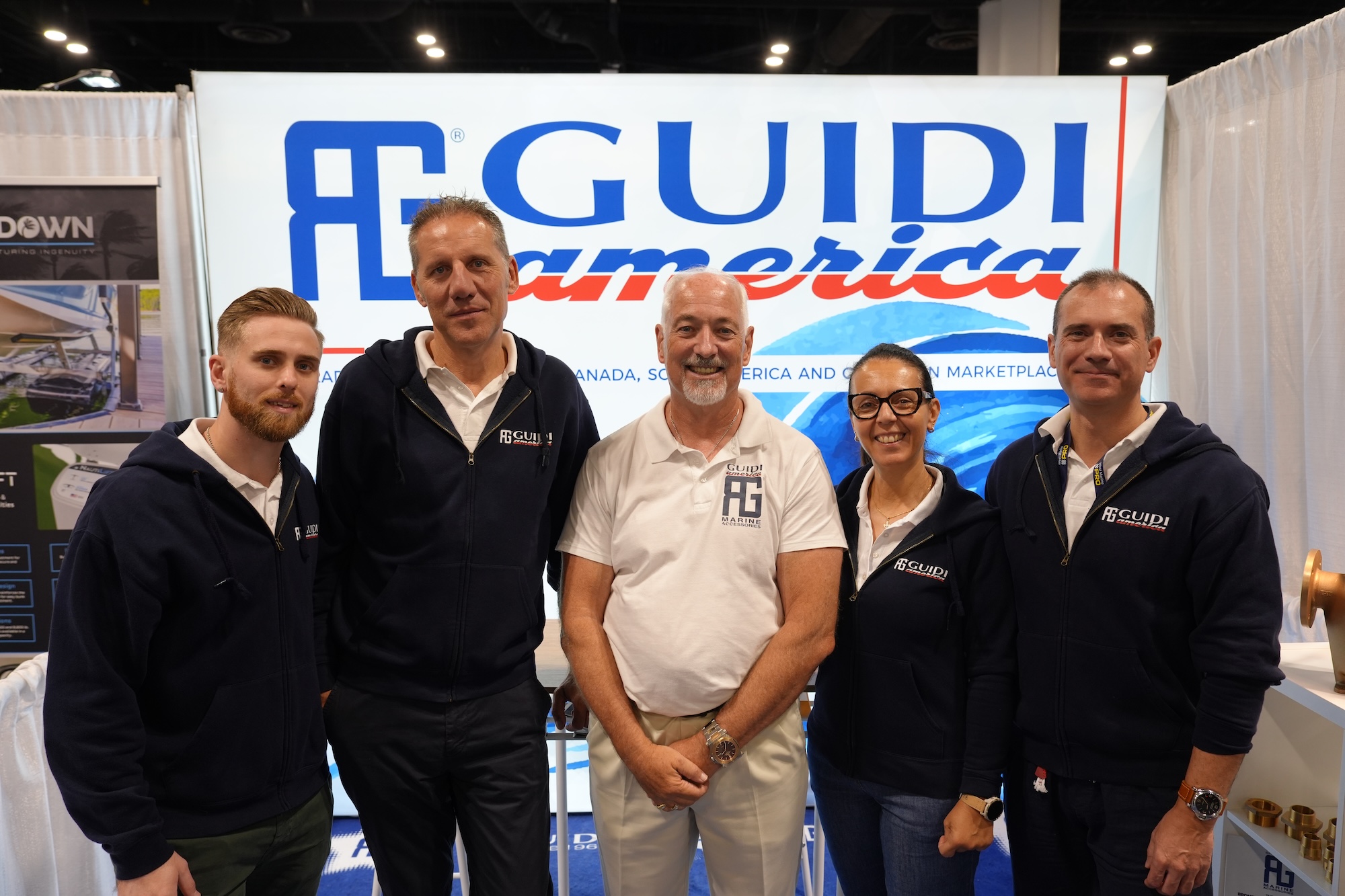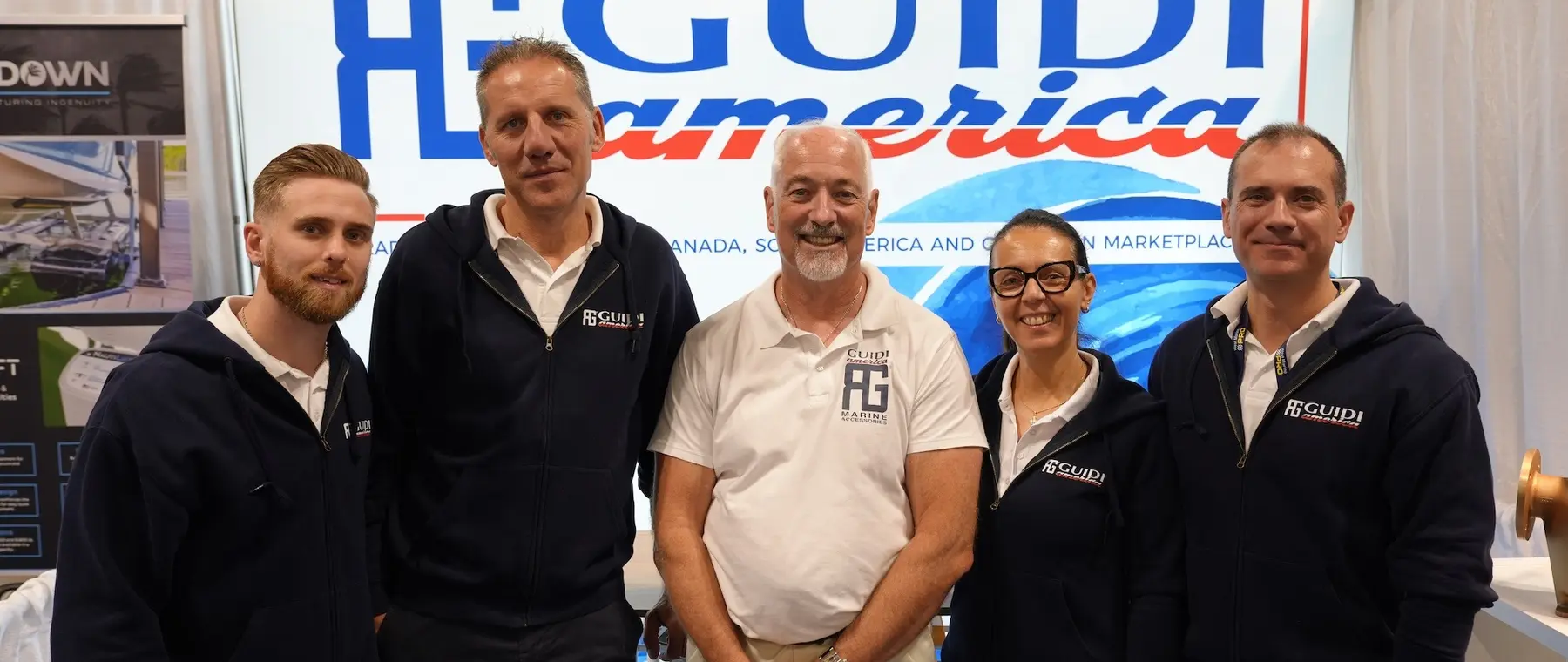
Guidi America Sanford expansion official exhibitor press-release photograph October 2026
Guidi America highlights its Sanford, Florida warehouse relocation as METSTRADE opens, with local inventory intended to support marine refit and service demand.
Italian marine equipment manufacturer Guidi is highlighting the development of its American operations as the industry gathers for METSTRADE in Amsterdam. The United States subsidiary, established in February 2023, relocated from Apopka to Sanford, Florida, in July 2026. An exhibitor release dated 30 October describes the new premises as including offices and a warehouse of approximately 2,650 square feet. The manufacturer's own October announcement identifies growth in the service and refit business, alongside emerging interest from American boatbuilders, as important aspects of its development. The expansion is already an operational move rather than a future construction proposal, although detailed sales figures and independently verified delivery-performance statistics have not been disclosed.
A yacht's technical equipment may represent a relatively small proportion of the capital invested in the entire vessel, but the availability of an individual component can have an outsized effect on the duration of a maintenance project. A fitting, valve or strainer required to complete a repair may be inexpensive compared with the cost of keeping a yacht out of service while the right replacement is obtained. Local distribution therefore plays an important part in the service economy surrounding large yachts. European manufacturers with customers in the Americas must consider freight lead times, customs formalities, time zones and the practicalities of technical communication. A regional stockholding operation can address some of these factors, although its usefulness depends on the products actually stocked and the quality of the associated support.
The development of a local subsidiary represents a different approach from relying entirely on exports arranged from a company's headquarters. An American operation can communicate with customers during their ordinary working hours, gather information about demand and arrange domestic distribution for items it already holds in inventory. It may also identify products that require particular documentation or adaptations for the regional market. The economic challenge is to maintain an appropriate balance between the breadth of the inventory and the costs associated with supporting that stock. A company that carries too little may leave customers facing the same delays they previously experienced, while excessive stock can tie up capital in products for which demand is limited. The larger Sanford facility indicates the company's intention to strengthen its regional service, rather than proof that every product in its catalogue is immediately available.
A replacement marine component should not be selected merely because its external dimensions resemble those of an existing item. Intended service, materials, pressure and temperature ratings, connection standards, relevant approvals and installation conditions may all affect its suitability. On a large yacht it can be especially important to establish whether an item is part of a wider approved arrangement. A seemingly minor substitution may require careful attention to corrosion risks or compatibility with existing piping. Engineers also need access to reliable identification information when an equipment item has been installed for years and the original markings are difficult to read. A supplier with appropriate technical knowledge can help narrow the options, but the decision should still be made by the responsible technical professionals in accordance with the yacht's requirements.
Guidi's business covers equipment used within marine fluid systems, including fittings, valves and strainers. For the superyacht sector, such equipment can serve important supporting functions across the vessel's machinery and services. Understanding the distinction between available product versions matters because yachts are built in many countries and may be maintained in numerous jurisdictions over their service lives. Technical purchasing teams should identify the original specification, the system in which a replacement operates and any documented restrictions before placing an order. Photographs may help identify the equipment, but part numbers, measurements and other reliable technical information are usually more useful. A local supplier may also be able to communicate more efficiently with an overseas manufacturer when questions arise. This is one of the practical advantages regional service teams can offer compared with purely transactional distribution.
The manufacturer has identified interest in products using American NPT threaded connections as an emerging business opportunity. Thread compatibility is a practical subject for yachts that combine equipment from different international supply chains. Similar-looking threaded fittings can use different thread forms, dimensions and sealing arrangements. It is therefore important that buyers do not assume interchangeability merely because a fitting can be partially engaged with another component. Product documentation should establish the intended connection type and appropriate installation requirements. In the context of a yacht refit, this can avoid unsuitable substitutions and the potential need to repeat work. The manufacturer's response to regional demand illustrates how serving an international market may involve more than translating a sales catalogue and establishing a distributor. It can require a closer understanding of the technical conventions in use within that market.
When a refit project is scheduled, certain activities depend on the completion of earlier tasks. If a replacement fitting is not available, the team may be unable to finish a piping installation, conduct a pressure test, close access panels or return a machinery space to its intended condition. Delays in one seemingly modest item can therefore affect other contractors. Procurement should identify items with uncertain lead times before the yard period begins, particularly when the yacht is expected to leave by a fixed date. Local availability can be useful for unanticipated requirements discovered during inspection, but it should not replace advance planning for known work. Technical managers may benefit from checking whether regional stock is confirmed rather than simply assuming that the presence of a distributor means that any item can be supplied at short notice.
The Sanford location is in central Florida, within a state that supports a substantial concentration of yacht-related activity. The important question for any customer is not simply the supplier's distance from a particular marina but how efficiently the supplier can support the intended delivery and any technical enquiry. A regional warehouse can serve multiple locations through domestic logistics, and may also supply distributors that are closer to the individual yacht. International shipments still have a role when specialised or less common items are required. The service network must accommodate both routine purchases and enquiries that require manufacturer input. A well-organised procurement system records contact details, equipment identification, delivery expectations and any technical correspondence so that information remains available to the yacht's management team after the immediate project has been completed.
Regional operations can create a channel through which customer experience reaches the manufacturer. Service professionals may identify installation challenges, requests for different connection arrangements or the need for improved documentation. Boatbuilders can provide information about the systems they are designing and the standards relevant to their projects. Feedback of this type may assist a manufacturer when considering future products. However, interest in a product should not be confused with a confirmed new manufacturing contract, an approved redesign or a completed sale. Guidi's published remarks describe a growing awareness of opportunities among United States boatbuilders. They do not establish how much revenue that segment will generate or identify specific customers. For a specialist supplier, the continuing relationship between the service sector, distributors and original equipment customers can be more important than a single exhibition announcement.
Captains, engineers and procurement managers may wish to update their supplier information and identify whether the new American premises can support equipment already installed aboard their yachts. An enquiry is most useful when it includes the precise product identification and the vessel's intended delivery location and date. The buyer should request clarification of availability, technical suitability, any necessary accompanying documentation and the terms applicable to a replacement order. If the yacht is preparing to travel outside major service centres, the engineer may also consider which critical components are prudent to carry aboard. Inventory decisions should reflect the yacht's own system design and operational profile rather than a generic list of equipment. The expansion of shore-based support is valuable only if the yacht's technical team knows how to use it efficiently.
The warehouse relocation is an example of the infrastructure investment taking place behind the scenes of the international yachting sector. Large yachts depend on a network of relatively specialised suppliers, many of which do not appear prominently in public accounts of luxury yacht design. The reliability of that network nevertheless contributes to their ability to return vessels to service following maintenance. Guidi's participation in the November trade exhibition provides a timely occasion for the superyacht industry to take note of the earlier Florida move. The next meaningful indicators will be the range of products supported locally, delivery reliability and the practical quality of the technical assistance provided. The company has reported positive customer feedback; the performance of individual orders remains a matter for customers to confirm directly.
Primary source: Guidi official METSTRADE exhibitor news release, 30 October 2026.
Further information: Guidi manufacturer announcement for IBEX, 6 October 2026.
Guidi S.r.l., official exhibitor press-release image distributed with its 30 October 2026 METSTRADE news announcement; editorial publicity use. Official source.
Explore
Go deeper into the yachts, companies, events and destinations directly connected to this article.
Continue reading
Guidi America has opened a Sanford, Florida warehouse as the marine-components manufacturer expands US refit support and pursues more boat-builder business.
IMO prepares its 20 November launch of NextWave phase two, aiming to expand supervised onboard training opportunities for officer cadets from developing countries.

An IMO workshop in Tanzania advances preparations for the 2027 IMO–WISTA workforce survey, with lessons for superyacht recruitment and career development.

The Superyacht Forum closes with a SYBAss economic study highlighting market growth, regional demand and constraints on large-yacht production capacity.
Superyacht Guide
Continue into the wider Superyacht Guide.
Business opportunities · Superyacht Guide
Companies serving the superyacht market can discuss clearly identified advertising, sponsorship and business-profile opportunities. Commercial activity remains separate from independent editorial coverage.