

Company
International Maritime Organization
Explore the company profile and related Superyacht Guide coverage.
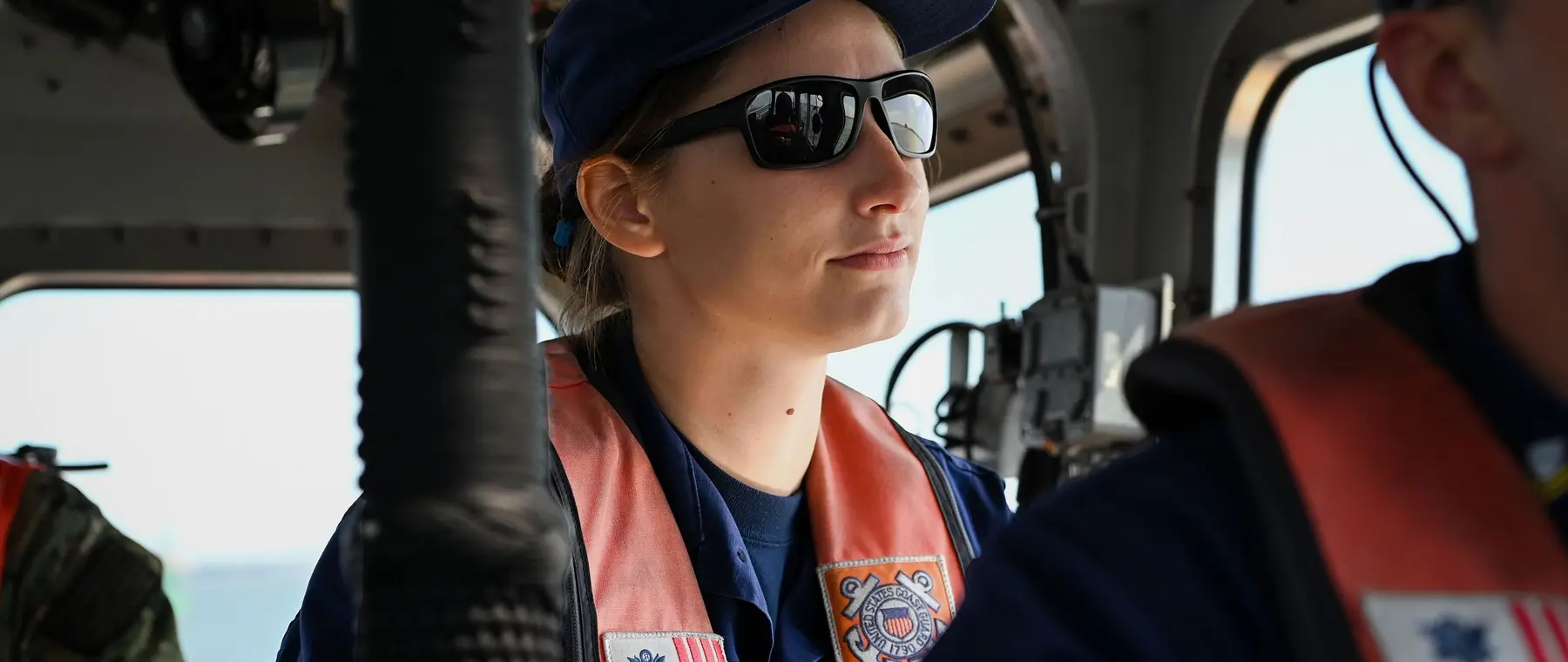
US Coast Guard boat crew at work, April 2024 — illustrative archival photo
An IMO workshop in Tanzania advances preparations for the 2027 IMO–WISTA workforce survey, with lessons for superyacht recruitment and career development.
The International Maritime Organization reported on 16 November 2026 that a regional workshop in Dar es Salaam, Tanzania, had advanced preparations for the 2027 IMO–WISTA Women in Maritime Survey. The meeting, held from 10 to 12 November, brought together maritime professionals from seventeen countries across Eastern and Southern Africa. Its central purpose was to improve the information available on women's employment within the maritime sector, including the ability of national stakeholders to collect and report comparable data. For the superyacht industry, the development is relevant to crewing organisations, yacht managers, training providers and employers seeking to understand the composition of their workforce. The workshop was not a superyacht-specific survey and does not provide a measured proportion of women serving on superyachts. Its importance lies in the method of evidence gathering and the implications for a more informed approach to maritime employment.
The superyacht sector depends on a workforce whose skills encompass navigation, engineering, hospitality, maintenance, logistics and a growing range of specialist technical functions. Shore-based organisations also employ managers, administrators, brokers, designers, surveyors and training professionals. These occupational categories are not interchangeable, and a statistic that combines them without distinction may obscure important variations in employment and career progression. Reliable measurement therefore requires a clear definition of the population being counted. An employer seeking to understand the composition of its workforce should distinguish between people working at sea and those employed ashore, and between different functions within both categories. Similar distinctions matter when comparing figures collected by training institutions with figures gathered from actual employers. A well-designed dataset allows maritime organisations to identify specific questions rather than attempt to infer the situation in every occupation from a single aggregate figure.
The IMO's report refers to its earlier 2024 survey undertaken with WISTA, which found that women represented less than nineteen percent of the maritime workforce captured by that exercise and around one percent of seafarers in the reporting companies. These are figures from a particular international data-collection exercise. They are not measurements of the superyacht industry, nor should they be interpreted as exact proportions for all maritime workers worldwide. Reporting coverage, the categories surveyed and the composition of participating organisations all matter. The figures nevertheless demonstrate why a more precise understanding of employment patterns is valuable. Within yachting, the distribution of personnel across departments and the opportunities available at different stages of a career may be more informative for practical decision-making than an overall estimate of representation. The 2027 exercise offers the prospect of an updated international reference against which further research can be considered.
The Tanzania workshop focused on the capacity of regional stakeholders to gather information and develop datasets that could contribute to the international survey. The involvement of maritime professionals from multiple countries provides an opportunity to examine how different institutions record employment and training information. The Association for Women in the Maritime Sector in Eastern and Southern Africa, known as WOMESA, was central to the initiative. Developing comparable information across national boundaries is not straightforward. National employment classifications may differ; records may be maintained by distinct public authorities, educational bodies or private employers; and maritime careers frequently involve international mobility. Yacht management companies face similar challenges when recruiting across several regions. A person may obtain training in one country, hold a qualification associated with another administration and spend much of the year working aboard a vessel registered elsewhere. These circumstances make careful definitions especially important.
A superyacht's crew is not a single professional category. The captain and navigational officers occupy roles different from engineering personnel, deck crew, hospitality staff and other specialist employees. When seeking to understand recruitment or promotion patterns, management teams should therefore examine appointments within relevant qualifications and occupational functions. An aggregate statistic may conceal whether particular roles attract different groups of candidates or whether those groups are progressing through the ranks. The same consideration applies to temporary placements and rotation arrangements, which may complicate a simple count of employees over a year. Data collection should also respect privacy. Particularly on an individual yacht with a small complement, detailed demographic reporting could make people identifiable even without a published name. Aggregated information collected for a defined purpose is more useful than unnecessarily detailed records about identifiable individuals.
Maritime training providers have an important perspective because entry into the workforce often depends on access to appropriate instruction, qualification opportunities and supervised experience. An educational institution can count the people entering a programme, but that count does not establish how many ultimately secure employment or move into more senior positions. Tracking progression requires cooperation between education providers, recruitment organisations and employers, subject to appropriate consent and data-protection arrangements. In the yacht sector, some people enter through maritime academies, others through hospitality or engineering backgrounds, and others through experience in related branches of the marine industry. These differing routes complicate the interpretation of a single entry-level measure. Employers and training providers can use better information to identify whether requirements are well communicated, whether training opportunities correspond to actual vacancies and whether newly qualified personnel have credible pathways into employment.
Recruitment is only one part of workforce development. A company may attract suitable applicants but still encounter problems retaining experienced personnel. The causes of departure can include changes in personal circumstances, the nature of the working environment, available career opportunities or the operational pattern of a vessel. Collecting useful retention information requires distinguishing between the end of a particular placement and departure from the wider industry. Yacht personnel may move between employers while remaining within the same profession, and an individual who leaves one vessel should not automatically be counted as having left maritime employment altogether. A clear evidence base can help managers understand whether particular practices affect continuity within their own teams. It may also support better planning for the preservation of technical knowledge when crew members rotate or change employers. The aim should be to identify practical opportunities for improvement rather than assign unsupported explanations to observed differences.
An employer contributing to a workforce survey should be able to explain which people are covered by its submission and what period the figures represent. For example, headcount at a particular date may differ significantly from the total number of people employed during a complete season. Employees, contractors and temporary placements may be treated differently in different reporting systems. If definitions are not transparent, apparent changes between survey rounds may partly reflect changes in methodology. This is why the Tanzania workshop's focus on improved data collection and reporting is relevant beyond the region in which it took place. Yacht management organisations that keep consistent internal records will be better placed to contribute meaningful information if an appropriate industry survey is undertaken. Such records should be collected lawfully and should not become a mechanism for making assumptions about the suitability of individual applicants based on demographic characteristics.
The workshop also included an agreement between WOMESA and the Maritime Technology Cooperation Centre for Africa to cooperate on a climate-mitigation capacity-development project. The relationship between workforce development and changing maritime technology deserves attention. Yachts increasingly require expertise in areas such as electrical systems, energy management, emissions-related maintenance and the integration of increasingly complex onboard controls. The skills required can develop faster than established training and recruitment channels. Programmes that improve access to relevant technical education can help widen the pool of qualified people available to the industry. The agreement announced in Tanzania is not a superyacht technology programme and does not establish particular yacht employment commitments. It does, however, illustrate how professional development and environmental transition can be addressed together rather than treated as unrelated concerns.
The next IMO–WISTA survey will offer updated evidence about the maritime workforce covered by the international exercise. Its eventual findings will need to be interpreted with attention to their definitions and reporting coverage. For superyacht organisations, the immediate lesson is the importance of developing a reliable understanding of their own recruitment, training, appointment and retention practices. This does not require waiting for a universal global estimate of personnel working aboard yachts. Individual organisations can establish proportionate reporting procedures now and participate in future evidence-gathering exercises where appropriate. The November workshop demonstrates the continuing international effort to improve maritime employment information. Whether similar work ultimately produces a clearer picture of the yacht sector will depend on the participation of relevant employers, professional associations and training providers. Superyacht Guide will distinguish future yacht-specific findings from general maritime statistics when such data becomes available.
Primary source: IMO official news report, 16 November 2026.
U.S. Coast Guard / Key Bridge Response Unified Command, 8 April 2024, public domain, via Wikimedia Commons, resized. Illustrative maritime professional at work; not an image of the Tanzania workshop or superyacht crew. Official source.
Explore
Go deeper into the yachts, companies, events and destinations directly connected to this article.
Company
Explore the company profile and related Superyacht Guide coverage.
Continue reading

Choosing a superyacht flag is not a post-purchase formality. The registry can shape private or commercial use, technical compliance, crewing, finance and the wider …
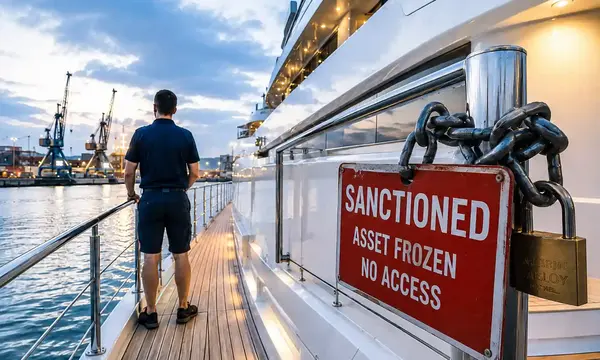
A sanctions freeze can immobilise a superyacht without making its crew sanctioned, leaving wages, contracts and daily operations caught between employment law and financial …
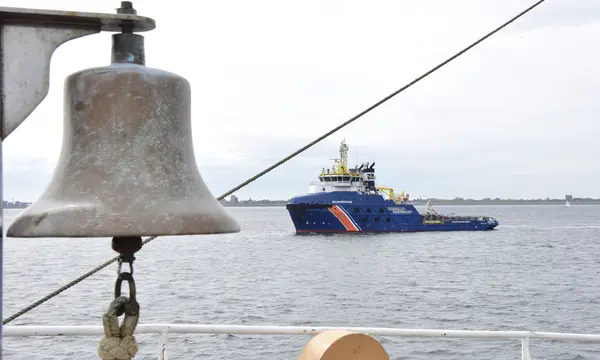
IMO prepares its 20 November launch of NextWave phase two, aiming to expand supervised onboard training opportunities for officer cadets from developing countries.
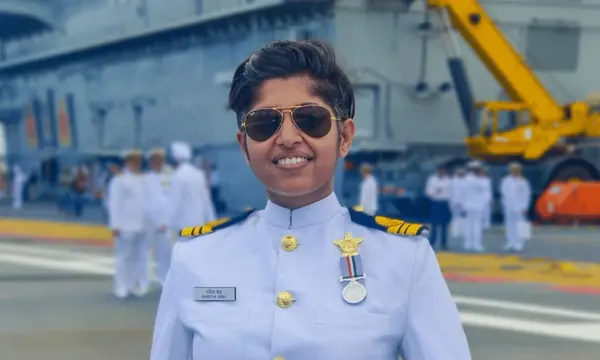
A METSTRADE interview with former Indian Navy engineer Darsitha Babu examines the transfer of engineering, project leadership and compliance skills to yachting.
Superyacht Guide
Continue into the wider Superyacht Guide.
Business opportunities · Superyacht Guide
Companies serving the superyacht market can discuss clearly identified advertising, sponsorship and business-profile opportunities. Commercial activity remains separate from independent editorial coverage.