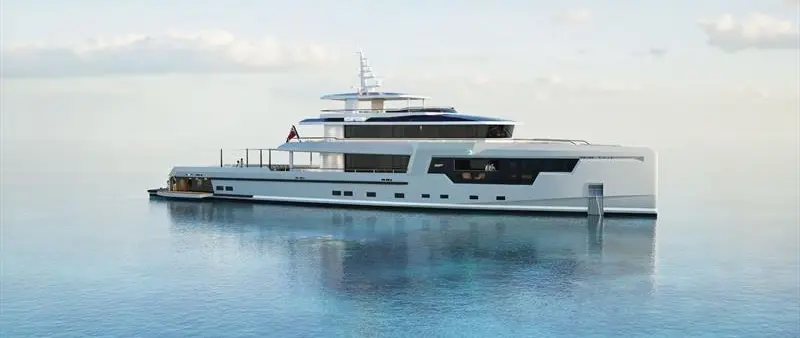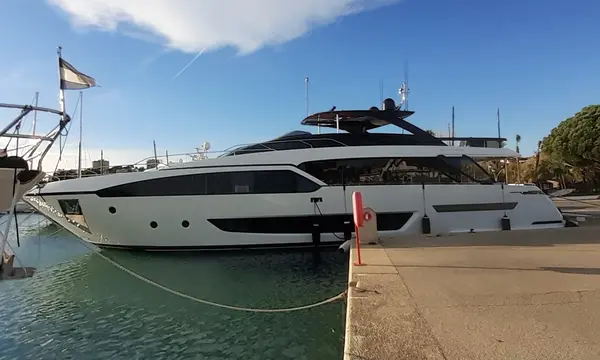
H50EXP 50m explorer yacht concept, official Humphreys Yacht Design rendering

News

Humphreys Unveils 50m H50EXP Explorer With 5,000nm Range Target

Nov. 12, 2026 Design

H50EXP 50m explorer yacht concept, official Humphreys Yacht Design rendering

Humphreys Yacht Design introduces the 50m H50EXP explorer concept with Mark Whiteley Design and Occam Marine, targeting over 5,000nm of range at 12 knots in under 500GT.

Superyacht design news, 12 November 2026. H50EXP is a newly unveiled 50-metre project concept, not a completed yacht, an announced build contract or the separate JFA-built explorer CANOA. Performance numbers are design targets supplied by the design team.

A proposed explorer platform from an established naval architect Humphreys Yacht Design has unveiled H50EXP, a proposed 50-metre explorer yacht developed with Mark Whiteley Design and Occam Marine. The concept was presented in a studio-authored announcement distributed on 11 November 2026 and is intended to reconcile long-distance cruising with substantial opportunities for individual owner configuration. Humphreys is responsible for the naval architecture and exterior design, Mark Whiteley Design for the interiors, and Occam Marine for technical development and build consultancy. Those distinct responsibilities are important because a convincing explorer yacht is not simply a large volume around which striking renderings are drawn. It requires propulsion, tankage, stability, deck equipment, service access and accommodation to work together from the beginning. As of this announcement H50EXP remains a concept moving through discussions with shipyards over indicative construction costs. It is not appropriate to report that a hull has been laid or that a delivery date has been agreed.

The specification combines 18 knots with long range The designer states that the concept is intended to reach a top speed of 18 knots and to exceed 5,000 nautical miles at a cruising speed of 12 knots. These are proposed design capabilities, not independently verified sea-trial results. The distinction is especially important when evaluating an explorer yacht, where fuel consumption and range depend on displacement, sea conditions, reserve policy, load state and machinery choices. An owner should ask for the assumptions used to produce the published numbers and how they will be validated during detailed design. An ability to cruise at a somewhat higher speed may give a captain more freedom to manage weather windows, but it does not abolish the need for conservative route planning. Maximum speed and economical passage-making are separate operating cases, and a sales presentation should not suggest that the vessel can cover its maximum quoted range at top speed.

Under 500GT does not mean a small vessel H50EXP has been conceived with a gross tonnage below 500, a boundary that can influence design and regulatory decisions in particular operating contexts. Gross tonnage measures the enclosed volume of a vessel; it is not its weight. The arrangement therefore requires an unusual amount of discipline from the design team, which must decide how much enclosed space to allocate to guest cabins, crew, machinery, stores and specialist equipment. Below-500GT status is not in itself a blanket exemption from every rule governing yachts, and the particular operational consequences depend on flag, commercial or private use, class and other factors. A purchaser considering charter activity should obtain professional advice for the proposed vessel and jurisdiction. What the announcement establishes is that the design team is working within this stated volume envelope, rather than proposing a larger yacht whose capabilities can be assumed without regard to tonnage.

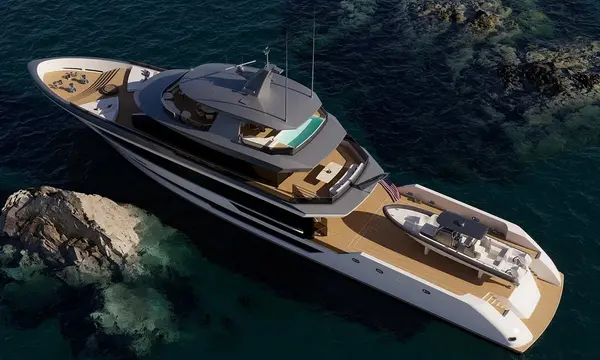
Aft-deck flexibility is central to the brief The proposed aft deck and lazarette are described as adaptable areas for tenders, vehicles, watercraft and specialised exploration equipment. That flexibility could allow an owner to place greater emphasis on guest adventure or on practical support activities without redesigning the entire hull. But each type of payload brings engineering questions. A substantial tender requires an appropriate cradle, verified lifting system and structural load path; dive or survey equipment may require secure stowage, power, ventilation and protected launch areas. Vehicles and powered equipment also introduce fuel, battery, fire and maintenance considerations. It would be misleading to suggest that every imaginable item can be carried simultaneously. Owners need to decide which assets are genuinely mission-critical and what deck space and crew capacity are needed to operate them safely. A flexible platform creates options only when those options can be engineered and certified for the chosen specification.

Equipment handling must be designed, not added later Humphreys highlights the ability to tailor crane installations and deck loading to different equipment inventories. A crane is not simply an accessory to be chosen after a yacht's general arrangement is complete. Its maximum load, working radius, foundation and relationship to vessel stability must be checked together. Tender recovery in an exposed anchorage is also a question of geometry, sea state and crew procedure, not solely of published lifting capacity. Structural support, visibility from operating stations, machinery protection and the ability to secure equipment under way can all influence the deck arrangement. In some circumstances a simpler, well-understood handling system may prove more dependable than a more ambitious arrangement requiring specialised maintenance. Owners considering multiple types of equipment should clarify whether proposed cranes and cradles would serve the complete inventory or whether particular items would be mutually exclusive.

Guest and crew layouts can follow different missions The designer says the sub-500GT platform leaves room to adjust the balance among guest accommodation, crew facilities and technical spaces. An owner who spends months far from developed cruising grounds may prioritise a larger crew workshop, refrigeration capacity, spares and stores. Another may seek more guest cabins, a substantial owner suite and interior spaces for frequent entertaining. The right arrangement cannot be determined solely by a general desire for exploration. Crew welfare and service circulation remain essential in either case. A boat that can remain at sea for long periods needs proper accommodation for the people keeping her operational, including access to laundry, refrigeration, waste handling and safe rest. The formal requirements will depend on the yacht's eventual regulatory status. A flexible concept offers a starting point for these discussions; it does not provide evidence that every configuration has already been approved.

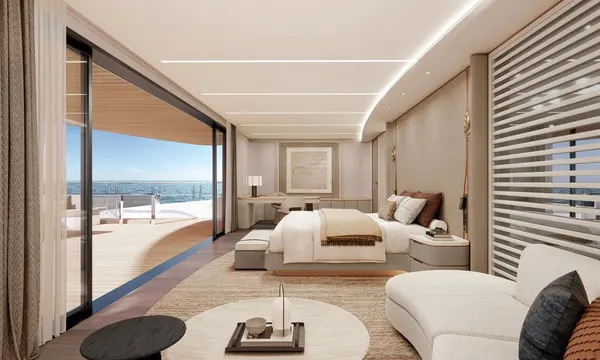
Mark Whiteley Design's interiors support the proposition The announced interior design by Mark Whiteley Design uses natural finishes, with oak and leather among the materials cited in the studio's description. The intention is to offer a refined atmosphere suitable for a large private yacht while acknowledging the vessel's operational purpose. Materials should be selected for durability, maintenance and their response to the environment as well as appearance. In a yacht expected to undertake long passages, ease of cleaning, the availability of replacements and the effect of movement on furnishings can affect daily comfort. Future renderings will be useful for understanding the designer's approach, but the final material schedule may evolve as engineering details and owner preferences are fixed. The source does not confirm that interior construction has begun, that individual owners have selected finishes or that the illustrated configuration constitutes a firm production specification.

The concept draws on experience but is not CANOA Humphreys refers to its naval architecture work on the approximately 50-metre explorer CANOA and on the Arksen Explorer Series as part of the background informing this new proposal. CANOA is a separate existing project, built by JFA Yachts, and must not be confused with H50EXP. Design experience on a previously completed hull may contribute useful lessons on motion, efficiency, systems integration and technical coordination. It does not mean the new concept has identical machinery, performance or construction status. For a client, the most constructive question is which observations and validated calculations can be transferred to H50EXP, and which remain to be determined by a future owner brief and selected yard. Every design carries its own weight distribution, tank arrangement, propulsion configuration and environmental assumptions. Previous success should be treated as experience, not as automatic certification of a new vessel.

Shipyard discussions are an early commercial stage According to the announcement, preliminary engagement with selected shipyards is under way to establish indicative build costs and support further development. This is a measured statement and should not be rewritten as confirmation of a signed order or a builder selection. Indicative quotations can help a client understand how a proposed arrangement fits likely budgets, but prices may change when materials, engines, machinery, emissions compliance, interior detail and equipment are specified. Lead times can be affected by yard capacity and the complexity of technical approvals. A transparent owner-side process will identify exclusions as carefully as inclusions. It should also establish who is responsible for design revisions, model testing, weight control, warranty arrangements and coordination among subcontractors. The best time to address those questions is before contract signature, when owners still have flexibility to refine the project.

Explorer capability is measured by reliable operations The H50EXP release emphasises seakeeping, buildability and long-range performance. The more demanding test of those claims will come if a future yacht is built and commissioned. A genuine explorer must function in difficult conditions with maintainable equipment and clear procedures. Redundancy is valuable where a failure would jeopardise safety or the voyage, but unnecessary complexity can add weight and maintenance demands. Owners should consider spare parts, crew expertise, workshops and the support network in destinations where specialised technicians may not be readily available. This is why the choice of mission profile should precede a shopping list of tenders and machinery. The right yacht for remote diving and coastal exploration may differ from a vessel intended to operate across oceans with extensive guest hospitality and few port stops.

What is confirmed as of November 2026 The reported development is the unveiling of a 50-metre, sub-500GT explorer concept designed by Humphreys Yacht Design with interior work by Mark Whiteley Design and technical development and build consultancy from Occam Marine. The proposed top speed is 18 knots and the target range is more than 5,000 nautical miles at 12 knots. The aft deck and equipment arrangements are designed to be configurable for different owner missions. No owner, contract value, signed shipyard contract, build commencement or delivery date has been verified in the official announcement. H50EXP should therefore be judged as an engineering and design proposition whose next milestones will be the selection of a builder, owner-driven specification decisions and progress towards contract and production. For Superyacht Guide readers, the interest lies in the attempt to make a capable explorer more adaptable without losing sight of the engineering discipline that true long-range cruising demands.

Primary source: Humphreys Yacht Design, 11 November 2026, H50EXP official design announcement distributed by Powerboat.World.

Photo licence and source

Humphreys Yacht Design official H50EXP press rendering, credited to the design studio in its 11 November 2026 release distributed by Powerboat.World. This is a computer-generated concept illustration, not a photographed vessel.

Continue reading

All news

Superyacht Guide

Explore the superyacht world

Continue into the wider Superyacht Guide.

Business opportunities · Superyacht Guide

Reach the superyacht industry audience

Companies serving the superyacht market can discuss clearly identified advertising, sponsorship and business-profile opportunities. Commercial activity remains separate from independent editorial coverage.