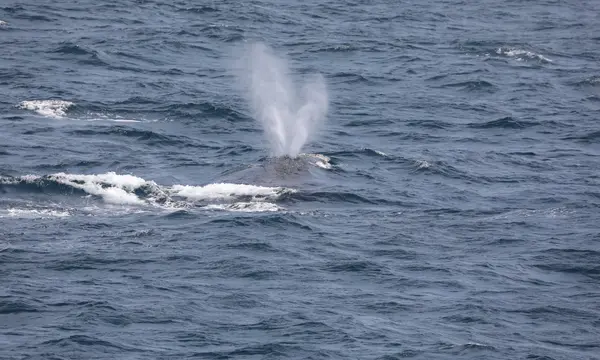
Coast Guard Flags Chesapeake Right Whale Calf Sightings for Yacht Crews
Two US Coast Guard notices recorded endangered right whale mother-calf sightings near Chesapeake Bay in November, as NOAA confirmed the start of the 2027 …
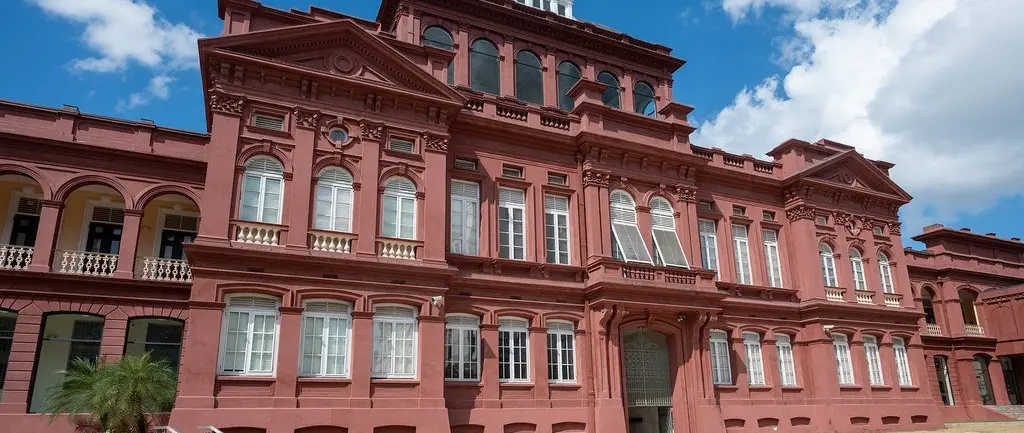
Photo: xiquinhosilva / Flickr, CC BY 4.0. Licensed Port of Spain context photograph; not an image of the IMO search-and-rescue workshop.
The IMO reported a 25–27 November workshop in Port of Spain involving maritime and aeronautical authorities, part of work towards a national search and rescue plan.
The International Maritime Organization has reported a national search and rescue coordination workshop held in Port of Spain, Trinidad and Tobago, from 25 to 27 November 2026. The event brought together authorities responsible for maritime and aeronautical rescue, emergency response, defence and disaster management. Its objective was to strengthen institutional arrangements and practical cooperation as the country develops its national search and rescue plan.
For superyacht operators using the southern Caribbean, the relevance is direct but should not be exaggerated. A workshop is not the same as a newly commissioned rescue station or a proven improvement in response times. It is, however, an official step in the work needed to ensure different authorities can cooperate when a vessel or aircraft requires urgent assistance.
The IMO's account identifies the development of a National Search and Rescue Plan as part of the country's continuing work with international technical partners. The November workshop concentrated on coordination among agencies and the responsibilities they would carry during an emergency. Such coordination can matter even when each participating organisation has its own operational resources and established mandate.
The event followed a subregional workshop on search and rescue mission coordination held in Jamaica in August 2025. According to the IMO, Trinidad and Tobago subsequently requested further technical support in developing its national plan. The 2026 meeting should therefore be understood as a continuation of a capacity-building process, not an isolated conference with no wider programme.
A serious emergency at sea can require resources and decisions from both maritime and aeronautical systems. An aircraft may help locate a vessel, a rescue coordination centre may organise information, and surface craft may ultimately provide assistance. The roles and communications need to be understood before an incident occurs, especially where geography and weather make rapid response difficult.
The IMO's workshop included both maritime and aeronautical authorities for this reason. Cross-agency understanding is particularly valuable when reports come through different channels or when the location of the casualty is uncertain. Effective cooperation is a procedural as well as a technical capability; equipment alone cannot resolve confusion over who is responsible for directing a response.
The Caribbean presents a complex environment for emergency coordination because islands, territorial waters and international routes are spread across a large sea area. A yacht can travel between ports and jurisdictions in a relatively short time, while a potential rescue may involve authorities from more than one state. The IMO explicitly connects the regional need for cooperation with geographically dispersed islands, exposure to natural disasters and substantial maritime activity.
That context is familiar to large-yacht crews who move between charter destinations, ports and offshore anchorages. They may be far from the nearest base able to provide specialist assistance, even when the weather appears favourable at departure. Passage planning therefore needs to address both normal port operations and credible responses to medical, mechanical or navigational emergencies.
The IMO refers to the International Convention on Maritime Search and Rescue, 1979, as a foundation for cooperation and mutual assistance between neighbouring states. The convention is part of an international effort to organise rescue services and reduce gaps in responsibility. Its importance lies in enabling a coordinated response when an incident crosses administrative boundaries or requires help from multiple organisations.
A superyacht's crew should not interpret this international framework as a promise of a specific response time in any location. Actual assistance depends on circumstances, resource availability, communications and the nature of the distress. Effective risk management combines respect for the international system with an honest assessment of the vessel's own capabilities and the limitations of its route.
The national plan is being developed with reference to the International Aeronautical and Maritime Search and Rescue Manual, known as IAMSAR. The IMO and International Civil Aviation Organization jointly publish that guidance, which deals with the organisation and coordination of relevant rescue services. It gives different participants a common conceptual language for planning and conducting rescue activity.
The manual's relevance is not restricted to professional rescue organisations. Yacht masters and safety officers benefit from understanding the basic principles of alerting, coordination and clear information exchange, though they must follow the procedures and equipment requirements applicable to their own vessel. Crews should use authoritative training and current operational guidance, rather than assume that reading a news report is equivalent to SAR qualification.
When an emergency develops at sea, the accuracy of the first alert can affect subsequent coordination. Position, nature of distress, number of people involved, available communications and the condition of the vessel are examples of information that may become important. Yacht procedures should make it straightforward for the bridge team to assemble accurate facts even under pressure.
The IMO workshop did not publish a new yacht-specific distress checklist in the cited announcement. Nevertheless, its focus on inter-agency cooperation reinforces the value of consistent communications and reliable information. A crew that practises alerting procedures and maintains current equipment records is better placed to communicate coherently with whatever authorities become involved.
Trinidad and Tobago is relevant to international yachting as part of the wider Caribbean cruising and marine-services region. Large yachts may call in the area for logistical, maintenance or passage-planning reasons, while others transit nearby waters on longer voyages. Each operating profile brings different exposure to local weather, distance from support and the need for emergency contingencies.
Owners should avoid assuming that a well-equipped luxury yacht is effectively self-sufficient in every emergency. An onboard medical capability, tender fleet and advanced communication suite can improve options, but serious incidents may still require external assistance. Understanding how regional authorities coordinate is therefore a sensible part of professional planning rather than an admission that a voyage is unusually dangerous.
A yacht preparing for a Caribbean passage should verify relevant maritime contacts, official reporting procedures and the communications expected in each operating area. That may include coastal radio information, port requirements and the contact details associated with any voyage-specific safety plan. The precise channels and numbers should be taken from current authoritative sources at the time of travel.
It would be misleading to treat the November workshop as a substitute for that verification. The IMO announced cooperation on a national plan, not a new set of emergency telephone numbers for visitors. Operators must continue using existing official services and check for subsequent updates through the appropriate maritime authorities.
Regular drills can reveal whether a yacht's emergency procedures work when a captain or officer is unavailable. A useful exercise can test how quickly the crew identifies its position, transmits a distress message and keeps an accurate record of actions. It can also show whether the bridge and shore management team share the same understanding of who must be informed and how decisions are escalated.
These exercises should be conducted safely and without creating false distress alerts. Professional guidance and the vessel's established procedures govern how training transmissions or simulations are organised. The broader aim is readiness: a crew needs a repeatable process that works under pressure and can connect effectively with external responders if a genuine incident occurs.
Management companies play an important supporting role because they often retain crew records, technical documents, itineraries and emergency contact information. In an incident, they may be asked to verify details for authorities or assist with family and owner communications. Preparing that information in advance can reduce confusion and allow the vessel's bridge team to focus on immediate safety.
The IMO's emphasis on national inter-agency arrangements has a parallel at company level. A manager, captain, insurer, agent and local authority can all become involved, but their roles should be differentiated clearly. A detailed plan is useful only if the information remains current and people know when to activate it.
The IMO highlights the Caribbean's exposure to natural disasters among the reasons for better regional coordination. Tropical weather, shifting conditions and damage to infrastructure can complicate response activity, particularly over extended distances. A yacht's risk assessment must therefore consider the season and forecast alongside mechanical reliability and the location of suitable support.
The presence of a national rescue planning programme does not remove those hazards. A passage should still include contingency ports, realistic endurance calculations and a decision framework for delaying or altering travel. Operators should review official weather and maritime notices directly rather than infer current conditions from general regional descriptions.
The official announcement describes a three-day workshop, its participants and the framework for developing a national plan. It does not say that the plan was formally completed, that additional rescue assets entered service or that an operational performance target was achieved. Those would be separate claims requiring subsequent documented evidence from the responsible authorities.
This distinction matters for both industry reporting and yacht operations. A positive capacity-building development can be reported accurately without turning it into a claim that emergency response across the southern Caribbean has already been transformed. Owners and captains deserve a clear account of the milestone and the remaining practical questions.
The next useful evidence will come from official updates about the National Search and Rescue Plan, its implementation and any published operational arrangements. The IMO says the November workshop was delivered under its Integrated Technical Cooperation Programme in cooperation with the Trinidad and Tobago Civil Aviation Authority and the Maritime Services Division of the Ministry of Works and Infrastructure. Those named organisations provide relevant reference points for future verified announcements.
For now, the workshop signals a continuing effort to coordinate rescue planning across maritime and aviation authorities. Superyacht managers should retain the established safety requirements and regional contacts for every voyage while monitoring official developments. The aim is not to assume rescue is guaranteed, but to improve the preparedness and communication that give a coordinated response its best chance of success.
Original primary record: International Maritime Organization. Photo: xiquinhosilva / Flickr, CC BY 4.0. Licensed Port of Spain context photograph; not an image of the IMO search-and-rescue workshop. Original first-party media: source photograph or official illustration. Copyright and image source are credited; first-party availability does not imply unrestricted reproduction permission.
Continue reading
Two US Coast Guard notices recorded endangered right whale mother-calf sightings near Chesapeake Bay in November, as NOAA confirmed the start of the 2027 …
The MCA marine information note explains how the former French international service area will be integrated into the UK service and what bridge teams …
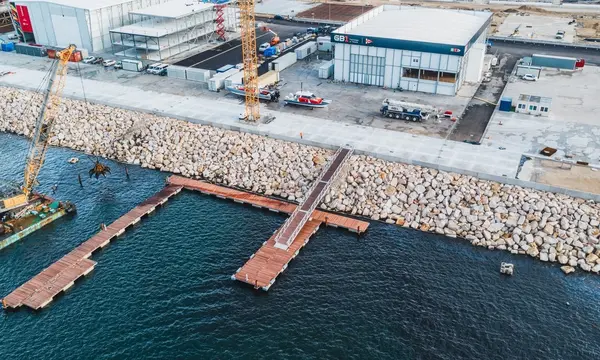
America's Cup organiser says GB1 is reusing 90% of its previous Barcelona team-base structure at Naples ahead of the 2027 competition, reducing new-build demand.
The Tuscany regional government has opened an engineering tender for a proposed 145-metre movable bridge over the Scolmatore d’Arno to ease larger-yacht access from …
Superyacht Guide
Continue into the wider Superyacht Guide.
Business opportunities · Superyacht Guide
Companies serving the superyacht market can discuss clearly identified advertising, sponsorship and business-profile opportunities. Commercial activity remains separate from independent editorial coverage.