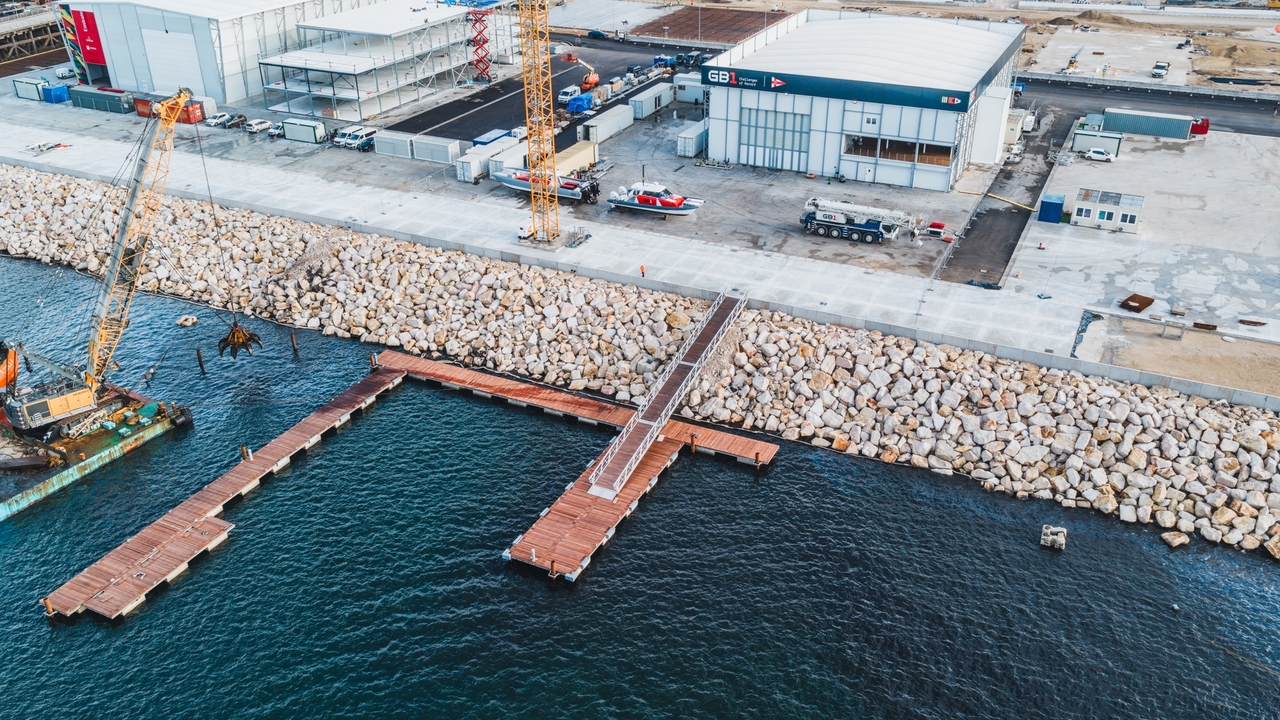
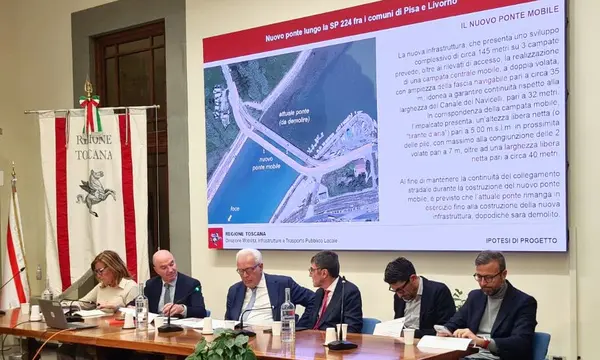
Tuscany Opens €1.07m Design Tender for 145m Scolmatore Yacht-Access Bridge
The Tuscany regional government has opened an engineering tender for a proposed 145-metre movable bridge over the Scolmatore d’Arno to ease larger-yacht access from …
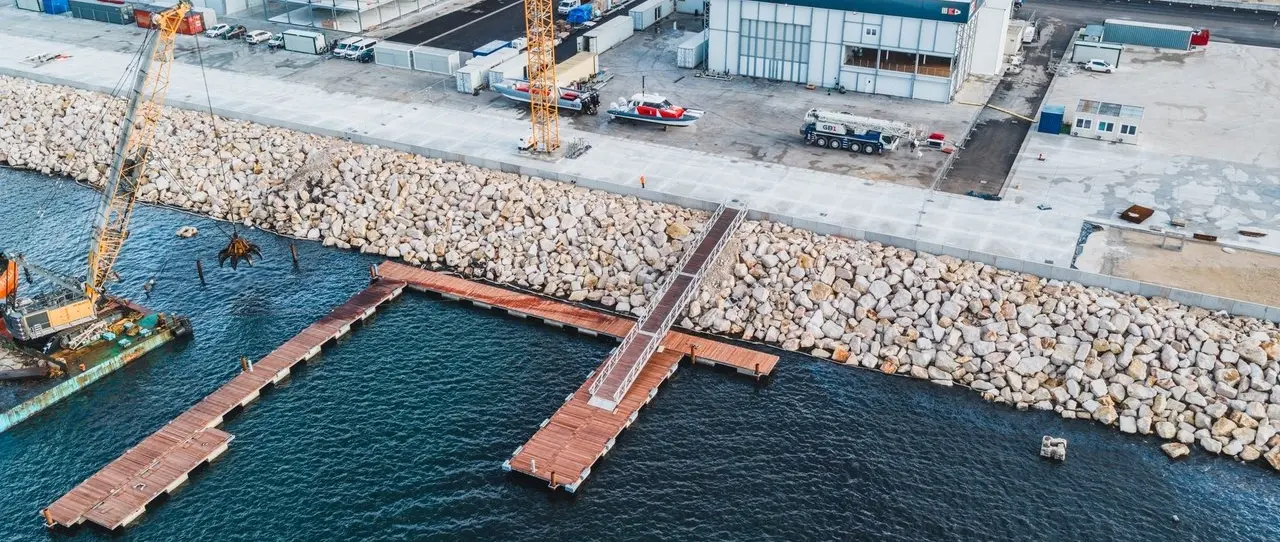
© America's Cup / GB1 and original organiser photographer. First-party 2026 team-base photograph.
America's Cup organiser says GB1 is reusing 90% of its previous Barcelona team-base structure at Naples ahead of the 2027 competition, reducing new-build demand.
GB1 is reassembling its America's Cup team base in Naples using ninety percent of the structure previously employed in Barcelona, according to an official organiser statement published on 27 November 2026. The initiative is intended to reduce demand for newly manufactured materials, avoid construction waste and limit associated carbon emissions ahead of the thirty-eighth America's Cup in 2027. Unlike an announcement about a new racing yacht, this development concerns the infrastructure around the team: the buildings and working spaces needed to support a professional sailing campaign. It is an example of reusing existing assets rather than treating a temporary event facility as disposable. The ninety-percent figure is reported by the organiser; it is not presented as an independently audited lifecycle calculation or a claim that the entire new Naples installation is carbon neutral.
An America's Cup campaign relies on a working environment capable of supporting design, engineering, sailing operations, maintenance and administration. The team base is far more than a decorative hospitality pavilion. It may house equipment, storage, offices and spaces where people review the results of a day's sailing. These functions place demands on structure, utilities, access and safety that must be considered when a facility moves from one host city to another. For GB1, reusing a large proportion of the previous base provides a starting point for the new campaign. It does not remove the need to adapt the installation to local conditions and requirements in Naples. An existing structure is useful only when it can be reassembled and operated safely.
The official announcement says ninety percent of the structure from the Barcelona team base is being reused in Naples. That is a substantial fraction, but the wording must be read carefully. It refers to the structure, not necessarily ninety percent of all equipment, electrical systems, fittings, furnishings or materials purchased for the next event. Nor does it establish that the full carbon footprint of the new base will be reduced by ninety percent. Lifecycle emissions depend on transport, adaptation, additional construction and operation as well as the material retained. Readers should treat the figure as a reported reuse measure with a defined subject. More comprehensive environmental conclusions would require detailed records and a transparent accounting method.
The decision to use the Barcelona structure again creates practical logistics. Components have to be identified, handled and transported, and then installed in a different location with its own site boundaries, ground conditions and planning rules. If the original structure was designed to be taken apart and reconstructed, that could make the process easier; the official release does not provide a detailed account of the design or dismantling sequence. It would therefore be premature to state that all components are modular or that every part arrived without damage. The current verified development is that GB1 is reassembling the base using existing structural material. The execution still depends on construction professionals ensuring that the result meets the requirements of the Naples project.
Every newly manufactured structural element involves resource use, processing and transport. Reusing components can avoid some of those demands, especially if a suitable existing element would otherwise be discarded. The precise savings depend on what was originally made, how it has been stored and what is required to make it fit for another use. The America's Cup statement presents reducing new material consumption as one of the project's objectives. That is a reasonable intention, but the report does not publish a detailed comparison between the reuse strategy and a hypothetical entirely new base. A credible sustainability story reports the actual reuse action and the stated rationale separately from quantitative environmental benefits not yet demonstrated by an independent study.
Temporary installations can create significant waste when dismantled after a major event. If structural components retain their usefulness, keeping them in service may help reduce what is sent to recycling or disposal. Reuse is not always the simplest option because moving large items can require careful packing, storage and repairs. The balance between the cost and environmental consequences of transport and replacement needs to be evaluated for the actual project. GB1's decision is noteworthy because it puts the principle into practice at considerable scale, according to the organiser's stated ninety-percent figure. But the article should not invent tonnage of waste avoided or suggest that all materials from Barcelona were recovered. Those claims would require a documented inventory and disposal report.
The release identifies associated carbon emissions among the reasons for reusing the structure. The term embodied emissions generally refers to impacts linked with producing, transporting and installing the materials that make up a building. Operating emissions are associated with activities such as heating, cooling, lighting and other ongoing energy use. The two categories are related but not interchangeable. Keeping existing structural material may reduce the need for fresh production, while the new base's operating footprint will still depend on its utilities, equipment and use. The America's Cup announcement does not provide a complete carbon inventory for either host city. It demonstrates a design and logistics decision intended to avoid certain impacts, rather than independently proving an exact total reduction.
Barcelona hosted the previous America's Cup campaign and developed infrastructure for the teams and event activity. GB1's base there was an operational part of that setting, not a structure built solely to look attractive for television cameras. Reusing it for Naples creates continuity between two editions of the competition. Such continuity can be valuable for a team that has already learned how its workplace functions, even if the exact new layout requires adjustments. It does not mean the sporting campaign itself is unchanged or that the boat and personnel remain identical. The reuse figure concerns a building, not the team's entire competitive programme. That distinction allows the story to focus on the real infrastructure development without confusing it with racing preparations.
Naples presents different geographical, administrative and maritime conditions from Barcelona. A team base must fit into its designated site and respect local construction, safety and access arrangements. Reusing a prior structure can be an advantage, but it may also impose design constraints if its dimensions or layout are poorly matched to the new location. The official statement reports reassembly, indicating that GB1 considers a substantial reuse workable. It does not publish the complete planning approvals, foundation specifications or safety certification. Those should be understood as separate project requirements. A well-executed approach combines the resource benefits of reuse with careful attention to the practical needs of the team and the responsibilities of the host city.
Ninety percent is a powerful headline, yet the quality of an infrastructure project depends on more than the fraction of material retained. Safety, durability, maintenance, accessibility and energy performance all matter when people work within a facility for an extended period. A team could retain a large share of a structure and still need to invest significantly in services or local works. Conversely, replacing a smaller component may be necessary to meet local requirements. The organiser's claim is meaningful because it describes a concrete reuse decision, but it is not an all-purpose rating of the finished base. A full evaluation would look at how the reused material performs over the Naples campaign and what happens to it afterward.
Large racing teams have access to resources that smaller yacht clubs and regatta organisers may not possess. Nonetheless, the principle of planning temporary infrastructure for future reuse has broader relevance. Events can consider whether staging, signage, furniture or other facilities may serve more than one edition rather than being purchased for a few days. The right solution depends on transport distance, cost, safety and local demand. GB1's project should therefore be viewed as a specific illustration rather than a universal prescription. A small coastal event may achieve a more appropriate outcome by renting local equipment or sharing existing facilities, while a larger international campaign may have a good case for transporting a substantial structure between cities.
GB1 is preparing for a competition in which technical development, crew coordination and time on the water will shape the result. The team base supports that work by providing a place to manage equipment, analyse performance and coordinate activities. Its reuse does not establish that the yacht itself is faster or that the team has an advantage over rivals. Similarly, an environmental initiative should not be treated as a sporting ranking. The official announcement concerns how the organisation is preparing the physical setting for the 2027 edition. Reporting the infrastructure separately from the racing programme helps readers understand a dimension of America's Cup preparations that might otherwise be overshadowed by new foils, sails and athlete announcements.
The lead photograph is supplied from the America's Cup organiser's original first-party reporting on GB1's new base arrangements. It documents a real element of the team-base project and is credited to the relevant event source and photographer. It does not provide an independent inventory of every structure reused, nor can a photograph prove the full environmental effect of transporting and reconstructing the facility. The ninety-percent figure comes from the organiser's written announcement, not from estimating materials visible in the image. This is important because visually striking construction photographs can encourage readers to assume that every part of an installation is shown. The image offers context for the reported work without pretending to establish unseen technical details.
A later project report could help clarify exactly which structural components were retained, how the transfer was managed and what additional materials the Naples installation required. It could also describe whether the facility will be reused again after 2027. The organiser has not made those detailed records available through the brief 27 November announcement, so they should be treated as questions rather than facts already answered. Owners and shipyard managers following sustainability practices may be interested in that next level of evidence. Reuse can be a valuable strategy, but its effectiveness is best established through documented service life and material accounting. A concise official update is a valid beginning, not a substitute for the complete lifecycle story.
GB1's reported decision to reuse ninety percent of its Barcelona America's Cup base structure in Naples is a concrete infrastructure milestone ahead of the next edition of the competition. The team is reducing its need for entirely new construction materials, with a stated aim to limit waste and associated emissions. Those intentions should be assessed within the exact scope of the organiser's claim: structural reuse, not a verified ninety-percent reduction in the total carbon footprint. The project illustrates how a major yacht racing campaign can connect its next host-city preparation with lessons from the previous one. Its operational success will depend on safe installation and service in Naples, while the sporting outcome remains separate.
Original primary record: America's Cup official 27 November 2026 GB1 Naples base reuse update. © America's Cup / GB1 and original organiser photographer. First-party 2026 team-base photograph. Original first-party media: source photograph or official illustration. Copyright and image source are credited; first-party availability does not imply unrestricted reproduction permission.
© America's Cup / GB1 and original organiser photographer. First-party 2026 team-base photograph.
Continue reading
The Tuscany regional government has opened an engineering tender for a proposed 145-metre movable bridge over the Scolmatore d’Arno to ease larger-yacht access from …

Tenerife's 26 November 2026 report documents a tanker entering Hidramar Ultra 22000 for repair, cargo and bunkering operations, and planned calls at Granadilla.
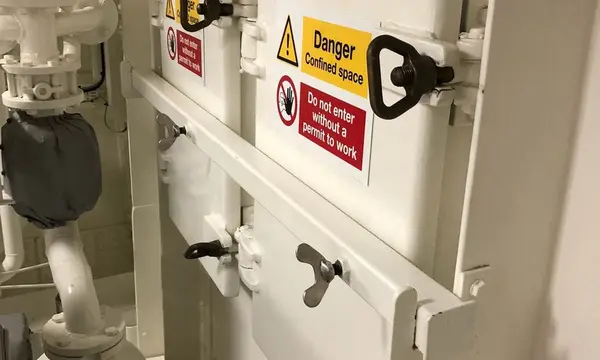
A 26 November 2026 Sentini Marine safety review examines how the IMO's existing enclosed-space entry recommendations translate into superyacht hazard registers, entry procedures and …
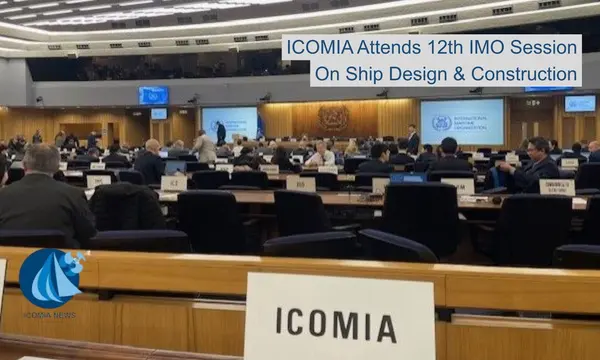
ICOMIA and SYBAss monitored IMO ship design and construction discussions on composites, underwater radiated noise, remote surveys and propulsion in January 2026.
Superyacht Guide
Continue into the wider Superyacht Guide.
Business opportunities · Superyacht Guide
Companies serving the superyacht market can discuss clearly identified advertising, sponsorship and business-profile opportunities. Commercial activity remains separate from independent editorial coverage.