

IDEA Release 2026.4.5 Adds Crew Records and Fleet Reporting Tools
IDEA Data Solutions confirms new 2026.4.5 yacht-management software functions for crew records, maintenance tasks and shoreside fleet reports.
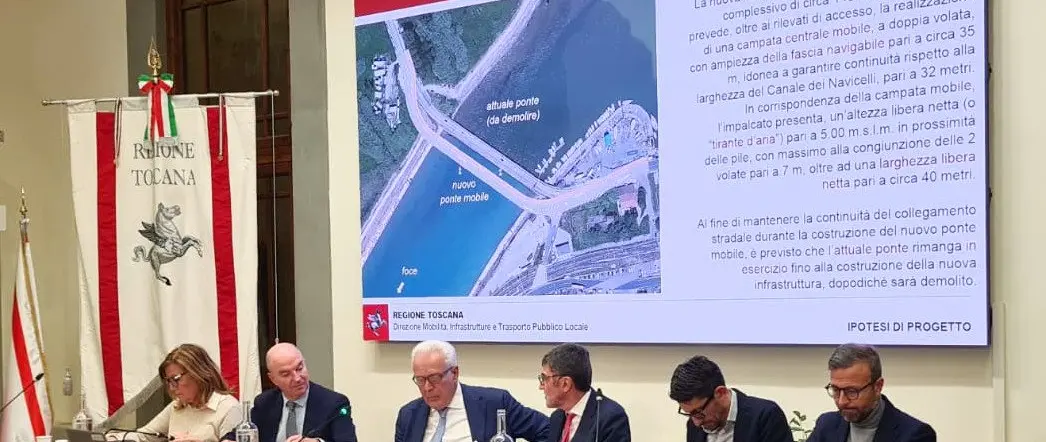
© Regione Toscana / Toscana Notizie and original government press photographer. Genuine January 2026 public bridge briefing photograph.
The Tuscany regional government has opened an engineering tender for a proposed 145-metre movable bridge over the Scolmatore d’Arno to ease larger-yacht access from Pisa shipyards to the sea.
The regional government of Tuscany has published an engineering tender for a proposed movable road bridge over the Scolmatore d'Arno, a project intended to improve access to the sea for larger yachts built along Pisa's Canale dei Navicelli. The official Toscana Notizie announcement of 24 November 2026 states that the technical and economic feasibility design contract has a tender base of €1,073,655, excluding applicable taxes and professional charges. The future structure is envisaged at approximately 145 metres in length, with a movable central span. The relevant development is the start of this procurement stage, not the beginning of physical construction. For shipyards whose output must eventually travel from inland construction sites to open water, the proposal concerns a practical constraint that can shape the size and movement of completed vessels.
The Canale dei Navicelli links industrial sites around Pisa with waterways leading towards the coast. Its importance extends beyond leisure boating because it provides a route for the movement of large marine structures and commercial craft. For yacht builders, a completed vessel can be a challenging object to transport: high superstructures, fixed equipment and limited ability to reduce height may restrict the routes available. The current arrangements involve waterways, bridges and locks whose operational constraints must be carefully managed. Tuscany's regional government identifies the future Scolmatore bridge as an opportunity to improve the direct route towards the sea. That aspiration does not mean the waterway is already unrestricted, and every future movement will continue to depend on approved navigation clearances and safe operating conditions.
The regional announcement describes a structure of approximately 145 metres with three spans, the central one movable and capable of being raised. It is designed to carry the SP 224 between the municipalities of Livorno and Pisa at Calambrone, while allowing boats to use the waterway when the opening mechanism is operated. The arrangement must reconcile two legitimate needs: continuity of road transport and the passage of vessels that cannot fit beneath a fixed bridge. A movable span is not a simple removal of a height restriction. Opening schedules, bridge operation, road traffic management and navigational safeguards must all be engineered. The tender concerns feasibility design, so precise final clearances and the operating mechanism should not be invented before the necessary technical approvals exist.
The tender base of €1,073,655 is a figure for engineering and architectural services associated with the project's technical and economic feasibility stage, not the declared construction price of the bridge. This distinction is crucial to credible infrastructure coverage. A project can require extensive surveys, environmental assessment, design optimisation and consultation before the ultimate cost of building it is known. The regional government is seeking specialist professional services to develop that work. The figure excludes certain fiscal and professional charges, according to the first-party release, and should not be described as a total programme budget. Future construction procurement would be a separate milestone with its own documentation, timetable and financial commitments.
The regional announcement identifies 14 January 2027 as the deadline for submission of bids. That gives the procurement process a specific near-term date, unlike a general political statement of support for an infrastructure idea. The feasibility-design assignment is expected to run for 200 days once awarded, according to the information released. A 200-day contract period does not establish a date when the bridge can be opened to traffic or vessels. Procurement evaluation, contract award, further design, authorisation and construction all take additional time. The most accurate interpretation is that Tuscany has advanced the project into a defined engineering-services competition. The industry should follow the result of that competition rather than treat the release as a promise that yachts will be using a new crossing in 2027.
Tuscany's president Eugenio Giani described the tender as an important step for the coastal economy and said the region was prepared to act as implementing body. He also referenced a €200,000 regional contribution towards development of the technical and economic feasibility project. That contribution should not be equated with the full design tender base or with future construction finance. The participating public institutions include authorities and administrations on both sides of the waterway, reflecting the importance of local roads, ports and manufacturing. A large infrastructure programme cannot be delivered by one interested shipyard acting alone. It requires a governance structure capable of resolving responsibilities for design, waterway management, environmental impact and future operation.
The government statement refers to the existing porte vinciane, or water-control gates, as part of the wider navigation and hydraulic constraints on the route. Such structures serve important functions in controlling water movement and protecting infrastructure, but they can complicate the passage of larger vessels. Regional officials argue that a new movable crossing could ease the journey from the Navicelli area toward the sea without routing every vessel through the port of Livorno. The exact benefits will depend on the final design and how the proposed crossing integrates with the other parts of the waterway. Removing one obstacle does not automatically resolve channel depth, current, weather or every other navigational requirement. The relationship between engineering and the wider environment remains central.
The SP 224 road connection must continue to serve residents, businesses and other traffic between the Pisa and Livorno areas. The proposed structure is therefore not solely a yacht-industry asset. Opening a bridge to let a large hull pass can affect road movement, and the design must balance those demands. Issues such as queue management, emergency access, mechanical reliability and safe stopping arrangements are likely to be examined through the feasibility work, although the precise solutions have not yet been published. The regional administration characterises the project as strategic both for navigation and local connectivity. That assessment is a public policy position; the engineering process will establish what form of design can meet the relevant requirements.
Pisa's nautical and marine manufacturing activities have long relied on access to the coast. A more predictable passage for larger vessels may affect future decisions about the scale and type of work undertaken inland, although no specific expansion contract has been announced as a result of this tender. Shipyards invest in facilities according to a range of factors, including orders, skilled labour, utilities, transport and the availability of specialised suppliers. Better marine access would be one part of that picture. It would be premature to assign a number of future yacht deliveries or jobs to an infrastructure project still in design procurement. The relevant point is that regional authorities have identified a navigation constraint and are taking a formal step to evaluate a replacement crossing.
The Scolmatore d'Arno is part of a complex coastal and hydraulic setting, where flood management, sediment, river flow and sea access interact. Any bridge proposal needs to respect the waterway's existing purpose rather than consider only the height of yacht superstructures. Engineering studies may need to assess how foundations, spans, machinery and construction affect water movement and the surrounding environment. The official release does not provide a completed environmental assessment or a full approved design, and the article should not claim otherwise. For industry stakeholders, the prospect of improved navigation is attractive, but durability and responsible operation will matter just as much. A design that works only under ideal conditions would not solve the larger operational problem.
A prospective owner commissioning a yacht from an inland Tuscan yard might welcome the possibility of easier access to the Mediterranean in the future. However, the November 2026 tender does not change the current permissions or physical constraints on a delivery passage. Yacht transport planning must still use the waterways, clearances and operational procedures in force when the move takes place. Any expectation that a future bridge will support a particular beam, draft or air height should remain provisional until the approved specifications are available. The proposal is most relevant to medium-term industrial planning, not as a guaranteed element of a yacht delivery scheduled next month. Responsible reporting preserves that distinction.
The new tender follows earlier public discussions and a January 2026 presentation of a feasibility concept involving the regional government and other institutions. It is therefore better understood as a fresh procedural milestone in an existing initiative than as a project conceived for the first time this week. The historic official briefing photograph used with this report dates from that January presentation and is not a photograph of construction work or a completed crossing. Original project documentation and the new 24 November announcement provide the factual basis for the present update. Clear chronology prevents readers from mistaking political support, engineering design and physical construction for interchangeable stages.
Once the bidding period ends, the responsible authority must assess the submissions and proceed according to procurement rules. A successful appointment would allow the technical and economic feasibility work to be developed, but further approvals and funding decisions may still be required. The regional announcement provides the 200-day assignment period and the bid deadline, not a verified final opening date. The yachting sector will be watching for a design with credible navigational clearances and a practical operating regime. Road users and nearby communities will have their own legitimate concerns about construction and access. Those interests need to be addressed through the public process, rather than assumed to have been resolved by the publication of a tender notice.
Tuscany has moved its proposed 145-metre Scolmatore movable bridge into a real design procurement stage, with an engineering-services tender base of €1,073,655 and bids due on 14 January 2027. The plan calls for a three-span road crossing with a movable middle section that could eventually allow larger vessels from the Navicelli system to reach the sea more directly. It is an important announcement for the local yacht-building cluster and for public transport infrastructure, yet much remains to be designed and approved. The best measure of progress will be a completed technical study, credible funding and a later construction programme. For now, the tender is the verified news, while the operational benefits remain the purpose of a proposed project.
Original primary record: Regione Toscana official 24 November 2026 movable-bridge PFTE engineering tender announcement. © Regione Toscana / Toscana Notizie and original government press photographer. Genuine January 2026 public bridge briefing photograph. Original first-party media: source photograph or official illustration. Copyright and image source are credited; first-party availability does not imply unrestricted reproduction permission.
Continue reading
IDEA Data Solutions confirms new 2026.4.5 yacht-management software functions for crew records, maintenance tasks and shoreside fleet reports.
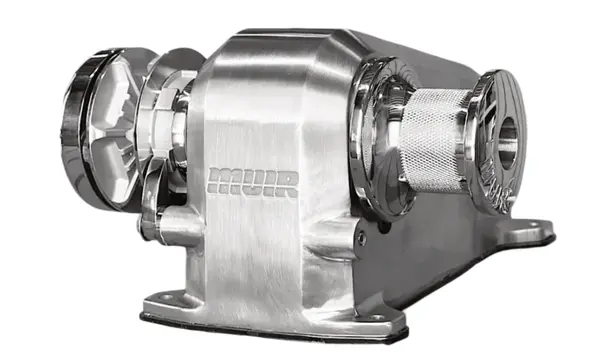
Muir introduces Volume II of its anchoring guide at METSTRADE, addressing equipment handover, commissioning, safe operation and maintenance for large yacht crews.
A new Northrop & Johnson crew advisory questions whether rotational employment suits every position, highlighting differences between senior and junior crew and between yacht …

An IYC and SuperYacht Times panel at Monaco Yacht Show 2026 examined how crew rest, staffing, mental wellbeing and working culture affect the guest …
Superyacht Guide
Continue into the wider Superyacht Guide.
Business opportunities · Superyacht Guide
Companies serving the superyacht market can discuss clearly identified advertising, sponsorship and business-profile opportunities. Commercial activity remains separate from independent editorial coverage.