

IMO Workshop Advances Trinidad and Tobago Search and Rescue Coordination
The IMO reported a 25–27 November workshop in Port of Spain involving maritime and aeronautical authorities, part of work towards a national search and …
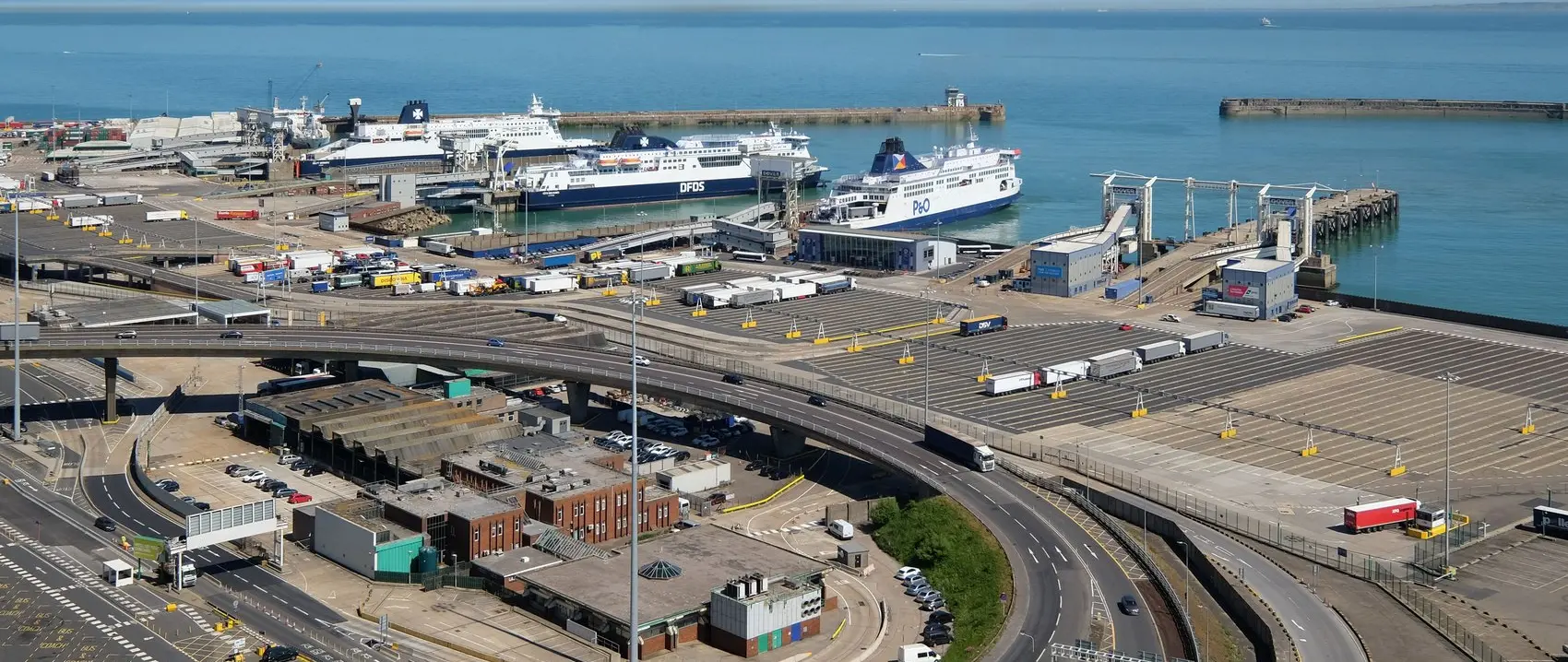
DeFacto / Wikimedia Commons, CC BY-SA 4.0; resized. Licensed contextual photograph of Dover and the Channel, not a photograph of a NAVTEX transmitter.
The MCA marine information note explains how the former French international service area will be integrated into the UK service and what bridge teams should verify before 2027.
The Maritime and Coastguard Agency has issued Marine Information Note MIN 743 (M+F), explaining changes to NAVTEX and maritime safety information arrangements in the English Channel from 1 January 2027. The notice was published on 19 November 2026 and is expressly addressed to owners, masters, superintendents and skippers, including those responsible for yachts and other seagoing craft. For superyacht captains, the effective date offers a specific point for bridge preparation rather than a general warning about communications technology.
The agency describes changes to existing arrangements between the United Kingdom and France for the provision of maritime safety information. They involve the way relevant service areas are organised and warnings are distributed. The notice should be read alongside the official referenced guidance, with a practical check that the vessel's equipment and routines will continue receiving the information needed for its intended routes.
NAVTEX is a system for receiving maritime safety information, including navigational warnings and relevant meteorological messages. It is part of a wider safety-information environment that can also include other official broadcasts and modern communication channels. On a superyacht, the practical value is not merely that a receiver is installed, but that navigators monitor the correct transmissions and use them in passage planning.
The information can affect a route even when no danger is obvious from a chart. Temporary restrictions, hazards, navigational-aid issues and weather notices may require a change of track, speed or timing. A bridge team that relies solely on yesterday's downloaded plan risks overlooking timely information intended for mariners approaching busy coastal waters.
The MCA notice explains that the former French international service area in the Channel will be integrated into the UK service under the new arrangements. The significance lies in the organisation and delivery of messages, not in a change to the geographical location of the English Channel itself. Navigators should therefore pay particular attention to the official mapping of service areas and any station or message-selection guidance attached to MIN 743.
A change in how information is assigned to a service area can affect the configuration choices that officers make on equipment. It can also change their expectations about where a particular warning will be received. The correct operational response is to follow the detailed official instructions and confirm reception in the relevant area, rather than relying on assumptions formed under the previous arrangements.
The wording of the MCA's notice includes yachts among the categories of craft for whom the information is intended. That makes the publication more than a piece of commercial-shipping administration that can safely be ignored by a large-yacht management company. A 40-metre motor yacht, for example, may cross the Channel while moving between northern European refit facilities and Mediterranean cruising commitments.
The risk is especially practical for privately operated yachts whose owners are not involved in day-to-day navigational compliance. Responsibility for checking official maritime information stays with the operating team. A yacht's length, luxury specification or modern integrated-bridge package does not remove the need for a reliable process for receiving and acting on warnings.
The date of 1 January 2027 deserves an explicit entry in the navigation department's change-control calendar. It falls in a period when some yachts are undertaking winter refits or crew changes, while others are moving internationally for maintenance or charters. A vessel that does not plan to enter the Channel in January may nevertheless need to confirm arrangements before its first passage through the area later in the year.
The official publication also notes that this marine information note is due to expire in July 2027. That expiry is an administrative feature of the guidance and should not be interpreted as proof that the underlying information becomes irrelevant on that day. Operators should monitor for updated instructions and verify what remains in force at the actual time of a voyage.
NAVTEX reception depends partly on the receiver, available transmissions and the preferences or filtering configured by the user. Officers should check whether equipment settings are appropriate to the updated service structure, using the manufacturer's instructions and the official station information. A routine that worked reliably for a past crossing is evidence of historical performance, not proof that every relevant message will arrive under a changed arrangement.
This check should be recorded rather than left to memory. A dated equipment configuration note, a reception test when practical and a reference to MIN 743 can help incoming crew understand why settings were reviewed. If a receiver is incapable of meeting an applicable requirement, technical advice should come from a qualified service provider and the relevant administration.
Many superyachts combine electronic charts, radar, positioning, communication and alarm systems into a single bridge environment. Integration can improve situational awareness, but it also creates a temptation to assume that a single screen shows every relevant source of safety information. A NAVTEX message may need independent monitoring or deliberate acknowledgement as part of a wider navigational workflow.
Owners contemplating bridge refits should ask vendors precisely how official safety messages are received, displayed, stored and brought to an officer's attention. Claims about compliance should identify the particular equipment standards and rules that apply to the vessel. MIN 743 documents a service-arrangement change; it should not be exaggerated into an automatic requirement to replace otherwise suitable electronics.
A Channel passage requires more than plotting the shortest feasible route between departure and arrival. Traffic separation schemes, tides, weather, port movements and the status of navigational aids all shape the decision. Official maritime safety information provides a current layer that must be considered alongside charts, notices and the bridge team's direct observations.
The revised arrangements are an opportunity to audit the process by which those messages become actionable information. Who checks the receiver before departure, who reviews warnings during the watch and who records changes to the passage plan? Clear answers reduce the chance that a received message is overlooked because everyone assumed another officer was handling it.
MIN 743 is addressed not only to masters but also to shipowners and superintendents. In a professional yacht operation, that distribution is a useful reminder that shore management and the bridge share different parts of the preparation task. The captain owns decisions on the voyage; managers can support by providing the correct notices, equipment documentation and training resources.
The shore team should avoid substituting an internal summary for the official marine information note. A concise briefing can explain the January date and request a configuration check, but the original MCA text should remain accessible. Where an interpretation of a technical instruction is uncertain, the safer course is to consult the official authority or appropriately qualified technical specialist.
Crew rotation presents a particular vulnerability when operational changes are relatively small but important. An incoming officer may be familiar with NAVTEX in general and still be unaware that a specific regional arrangement has changed. The handover checklist should therefore include the relevant notice, the receiver's settings and any tests performed since the transition.
Procedures should also allow an officer to identify failed reception without undue delay. A working practice that depends on one person knowing a hidden setting is fragile. Documented checks and training improve reliability while keeping equipment changes proportionate to the actual requirements.
NAVTEX is part of maritime safety information, not a complete substitute for every other communication used on a modern yacht. VHF broadcasts, port notices, weather systems and approved safety services can be relevant in different circumstances. Operators should refer to the applicable rules for required equipment and reception, rather than assume that a new service area removes any duty to monitor complementary sources.
It is equally important to distinguish an official NAVTEX message from a general online weather forecast or a third-party route advisory. Each source can add value, but they have different status and timeliness. A yacht's safety management procedures should identify which official information must be obtained and how it is incorporated into voyage decisions.
The MCA's announcement establishes that the English Channel maritime safety information arrangements are changing from the beginning of 2027. It does not, by itself, certify that any particular yacht's installation is compliant, and this article cannot determine whether a receiver requires alteration. That question depends on vessel equipment, flag requirements, the final service instructions and the intended voyage.
Nor should the timing of the change be interpreted as a reason to disregard safety broadcasts before January. Existing procedures remain relevant throughout the transition. The appropriate response is a planned update to an established safety process, not a gap in monitoring while crews await a new calendar year.
Before the first affected passage, the captain can obtain MIN 743 and its referenced guidance, check the service-area details, review equipment settings and document the results. A watchkeeping briefing should explain how the revised arrangement may affect where messages originate and how officers will confirm reception. If deficiencies are identified, they should be handled through normal maintenance and risk-assessment channels.
The wider lesson is that seemingly administrative changes to international and national maritime services have direct operational consequences. For a superyacht, the objective is simple: relevant warnings must continue reaching the right people at the right time. The MCA's dated guidance gives captains and managers an authoritative starting point for making that continuity demonstrable.
Original primary record: Maritime and Coastguard Agency MIN 743. DeFacto / Wikimedia Commons, CC BY-SA 4.0; resized. Licensed contextual photograph of Dover and the Channel, not a photograph of a NAVTEX transmitter. Original first-party media: source photograph or official illustration. Copyright and image source are credited; first-party availability does not imply unrestricted reproduction permission.
Continue reading
The IMO reported a 25–27 November workshop in Port of Spain involving maritime and aeronautical authorities, part of work towards a national search and …

Two US Coast Guard notices recorded endangered right whale mother-calf sightings near Chesapeake Bay in November, as NOAA confirmed the start of the 2027 …
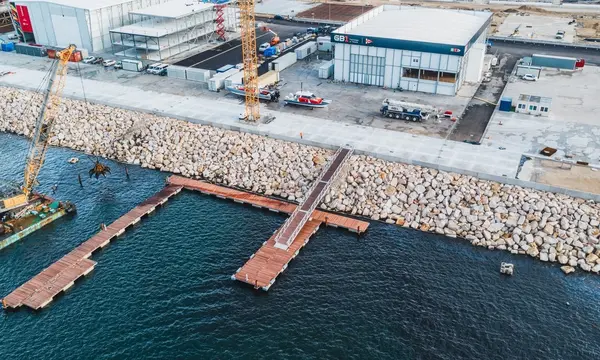
America's Cup organiser says GB1 is reusing 90% of its previous Barcelona team-base structure at Naples ahead of the 2027 competition, reducing new-build demand.

The Tuscany regional government has opened an engineering tender for a proposed 145-metre movable bridge over the Scolmatore d’Arno to ease larger-yacht access from …
Superyacht Guide
Continue into the wider Superyacht Guide.
Business opportunities · Superyacht Guide
Companies serving the superyacht market can discuss clearly identified advertising, sponsorship and business-profile opportunities. Commercial activity remains separate from independent editorial coverage.