
Rondal Marks 50 Years of Custom Superyacht Rig Engineering
Rondal's 50th-anniversary account traces the development of its custom aluminium and composite spars, from Endeavour's rig to modern large-yacht manufacturing.
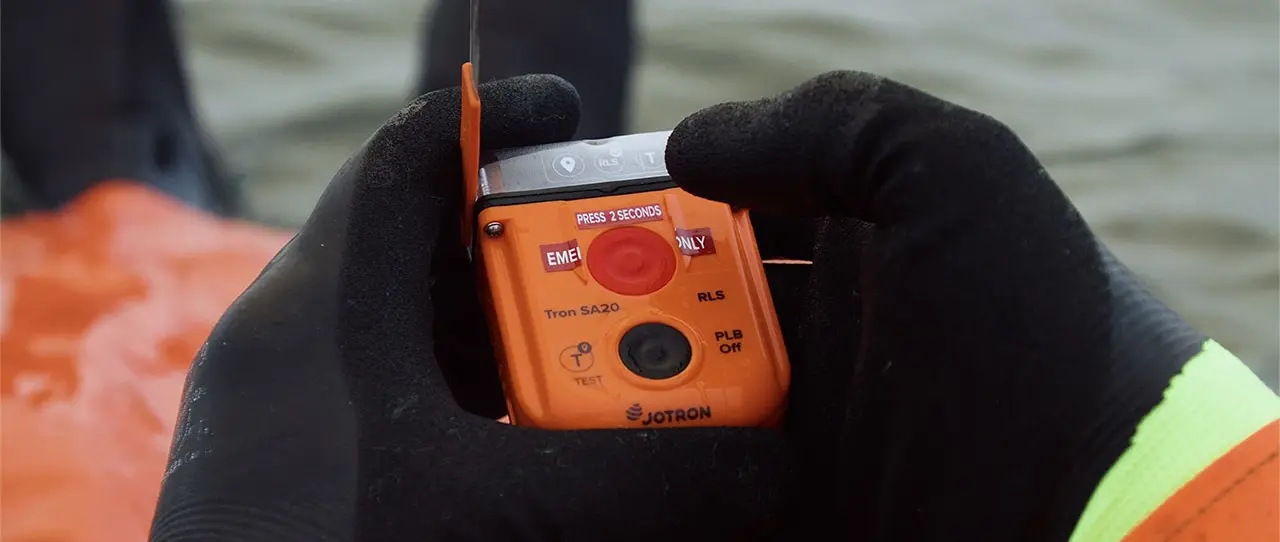
Jotron official maritime locator beacon photograph from product passport announcement
Jotron outlines a QR-based product passport planned for 2027, linking marine equipment to manuals, approval documentation and its international service network.
Jotron has outlined a digital product passport intended to give its distribution and service network direct access to product information, manuals and approval documentation. The announcement, dated 20 August 2026 in the METSTRADE exhibitor news archive, identifies 2027 as the period in which the system will become available to users as it is introduced across the manufacturer's products. It is a relevant development to examine during this week's Amsterdam marine equipment exhibition, although the original announcement predates the show. The company describes the passport as a means of connecting individual equipment and spare parts to appropriate online information through a QR code. The initiative is not presented as a new navigation instrument or distress-alerting technology. It concerns the information and support available to the people who specify, install, operate and maintain maritime equipment. For superyacht owners, managers and technical departments, the distinction matters because a piece of equipment remains in service for years after its initial installation. Reliable identification of the associated documentation can consequently become an important aspect of the vessel's operational management.
The proposed arrangement is intended to allow a user to scan a code on a Jotron product or spare part and retrieve information connected with it. The manufacturer lists authenticity information, product descriptions, images, user and installation manuals, type approvals, other certifications and service partner contacts among the resources envisaged for the passport. According to the announcement, no dedicated application will be required. The practical benefit of this approach is that it can make the equipment itself the starting point for finding information, rather than requiring someone to identify the appropriate part of a manufacturer's general website before beginning an enquiry. Nevertheless, the announcement does not describe the precise identifiers encoded in the labels or establish that every item will be individually serialised. A user should distinguish access to a product family's information from a verified record of a particular unit. The ability to retrieve an online page is not in itself proof that the physical item bearing the label is genuine or correctly installed. That remains dependent on the design of the verification process and the physical and commercial evidence available.
A large yacht may carry an extensive assortment of communication, navigation, emergency and other electronic equipment, assembled from several manufacturers and installed at different stages in the vessel's life. A technical team may therefore need to consult documentation from a variety of sources. Where equipment has been replaced or modified, information retained from the original build may no longer describe the installed configuration. Accurate identification becomes particularly useful when a service enquiry concerns a specific revision of hardware or a spare part that resembles another item in the same product range. Jotron's proposed initiative addresses equipment supplied by the company and should not be confused with a vessel-wide asset register covering products from every manufacturer. A yacht manager could nevertheless consider how references obtained through such a passport might complement the vessel's existing documentation arrangements. That would require an appropriate method of recording which equipment is actually installed and which documents apply to it. A digital link can assist with access to information, but it does not automatically maintain the yacht's complete inventory.
Jotron identifies both installation manuals and user manuals as intended components of the product passport. These documents serve different audiences and may contain substantially different information. An operator may need to understand the normal controls, status indications and limitations of the equipment. A technician installing or maintaining it may require additional information about the permitted configuration, connections, environmental conditions and servicing procedures. Selecting an inappropriate manual could therefore lead to a misunderstanding even if it was issued by the correct manufacturer. A QR-based resource can potentially make it easier to locate the documentation for a particular product; the user must still confirm that the version of that documentation applies to the installed equipment. The announcement does not explain whether the passport will retain access to historical versions for equipment no longer in production. That is an important question for a yacht with a long operational life. A sensible documentation arrangement should allow authorised personnel to identify the manual applicable to an earlier installation without assuming that the most recently published instructions necessarily describe it.
The announcement also refers to access to type approvals and certification information, including MED-B documentation where applicable. Marine equipment approval is a more specific matter than general product identification. The relevant certificate may apply to a defined model, configuration and set of conditions. Its presence in an online database does not establish that particular equipment is accepted for every intended use or that the complete yacht installation satisfies all applicable requirements. A yacht's flag, operating status, applicable rules and the circumstances of its construction or modification may influence the assessment. The responsible technical specialists must consider the requirements of the actual vessel. A convenient means of retrieving approval documentation can assist with preparation for that work, particularly when an engineer needs to establish the scope of a certificate or identify the appropriate manufacturer's contact. The product passport does not replace flag-state or classification decisions, and the source does not claim that it will issue approvals on behalf of those organisations. This distinction is especially important when digital access to documentation forms part of a broader compliance workflow.
Jotron states that the initial focus of the programme is its international network of approximately two hundred partners. The company's proposal includes connecting users with relevant service contacts and supplying those partners with appropriate installation and product information. For a yacht that moves between different cruising regions, the identification of a suitable service provider can be significant when equipment requires attention. The relationship between the manufacturer, its representative and the technical team on board should nevertheless remain clear. A directory entry does not guarantee immediate availability, the presence of a particular spare part or authorisation to perform every form of work on a given item of equipment. Those details may vary by location and product. The manufacturer has not published individual service response commitments as part of the product passport announcement. The potential value of the initiative is more narrowly defined: giving the people involved a common starting point with which to identify the product and obtain relevant support information. That could help reduce uncertainty during an initial enquiry while leaving the actual service arrangement to be established for the circumstances.
Superyachts can operate beyond the coverage of ordinary terrestrial communications networks. Even where an onboard data connection is normally available, its quality or accessibility may vary with the yacht's location or equipment status. It would consequently be inappropriate to rely exclusively on scanning a code and retrieving a remote document when information is essential to safe operation. The announcement does not specify an offline cache, local document storage facility or guaranteed availability of its online service. Owners and managers should consider the passport as an additional method of accessing information rather than a reason to remove established onboard documentation. Essential manuals, instructions and contact arrangements should remain available in forms appropriate to the yacht's actual operations and applicable requirements. There is also a distinction between the convenience of accessing a public-facing resource and the management of private technical or vessel information. Anyone implementing a system that connects equipment records with other yacht systems should examine the data being exchanged, the access arrangements and the responsibility for maintaining the records. The press release is not a cybersecurity specification and provides no independent evaluation of those arrangements.
Jotron's announcement identifies 2027 as the intended start of availability for users and describes subsequent development of the platform. The company envisages a broader role over time in equipment lifecycle information, service support and fleet management. Those ambitions should be distinguished from the functions specifically listed for the initial product passport. No complete deployment schedule, cost structure, technical integration interface or commitment to retrospective labelling of all existing equipment is provided in the release. Crews and fleet managers considering the proposal should establish which products will be supported and how they will be identified when the rollout proceeds. The company also anticipates adapting the tool in response to relevant regulatory developments. That intention is not evidence of current compliance with every evolving digital product passport requirement. Superyacht Guide has not independently tested the system or assessed its implementation. The development is worth following because it addresses a practical connection between a maritime equipment supplier and the people responsible for keeping that equipment documented and supported throughout its service life. The quality of the implementation, the accuracy of the information retrieved and its availability over time will determine its eventual operational usefulness.
Primary source: Jotron official METSTRADE exhibitor announcement, 20 August 2026.
Jotron / METSTRADE exhibitor press release. Representative locator beacon photograph, not a screenshot of the planned product passport. Official source.
Continue reading
Rondal's 50th-anniversary account traces the development of its custom aluminium and composite spars, from Endeavour's rig to modern large-yacht manufacturing.
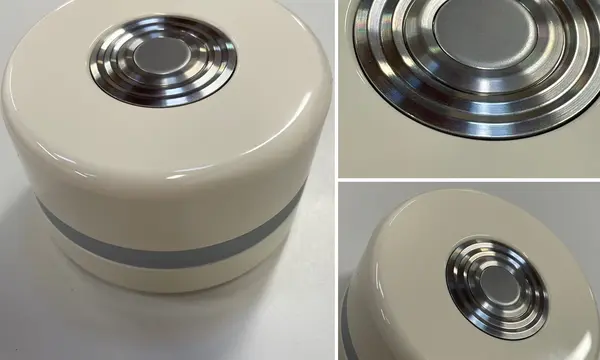
Channel 28 expands its MORSE service-call system with tactile switches, offering superyacht designers and integrators a choice of physical or piezo controls.
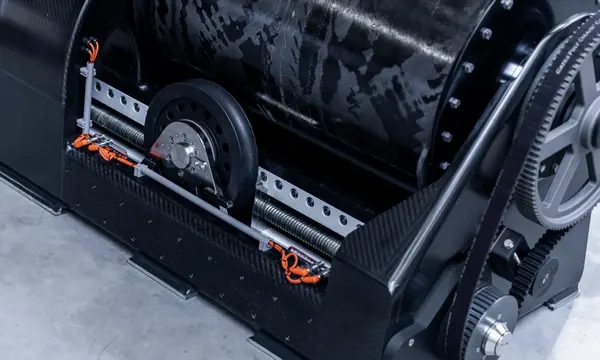
Rondal highlights captive winch technology at METSTRADE, tracing electric sail-handling advances and the move into remote-operated superyacht mooring systems.
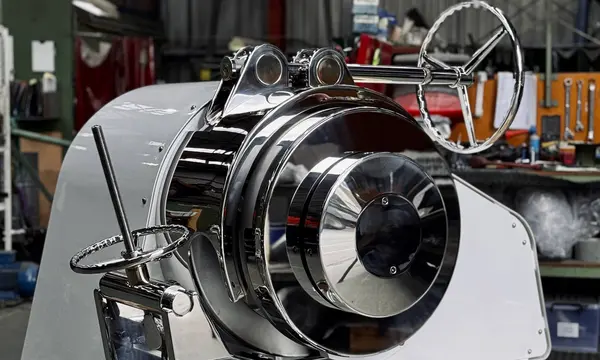
Muir details its integrated horizontal planetary-drive windlass for yachts from 30 to 150 metres, with a reported footprint reduction of up to 40 per …
Superyacht Guide
Continue into the wider Superyacht Guide.
Business opportunities · Superyacht Guide
Companies serving the superyacht market can discuss clearly identified advertising, sponsorship and business-profile opportunities. Commercial activity remains separate from independent editorial coverage.