
Rondal Marks 50 Years of Custom Superyacht Rig Engineering
Rondal's 50th-anniversary account traces the development of its custom aluminium and composite spars, from Endeavour's rig to modern large-yacht manufacturing.
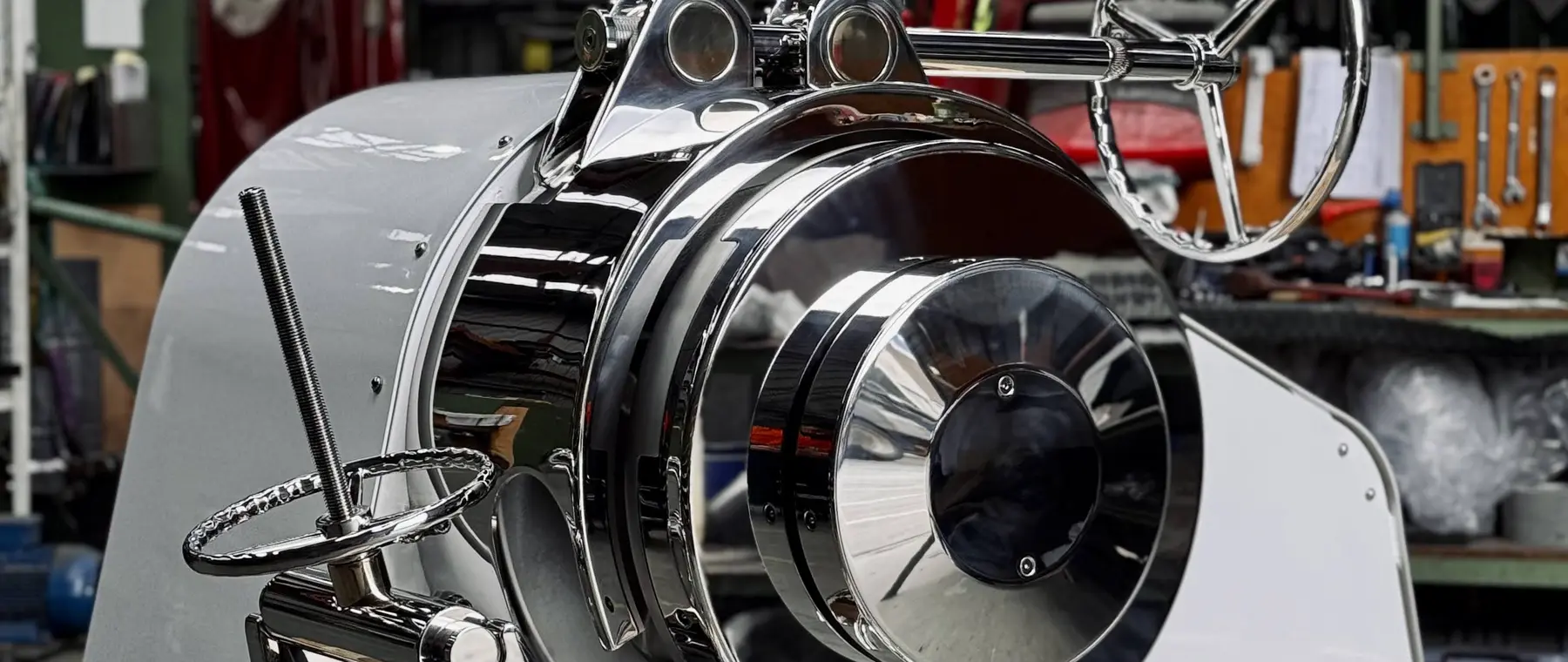
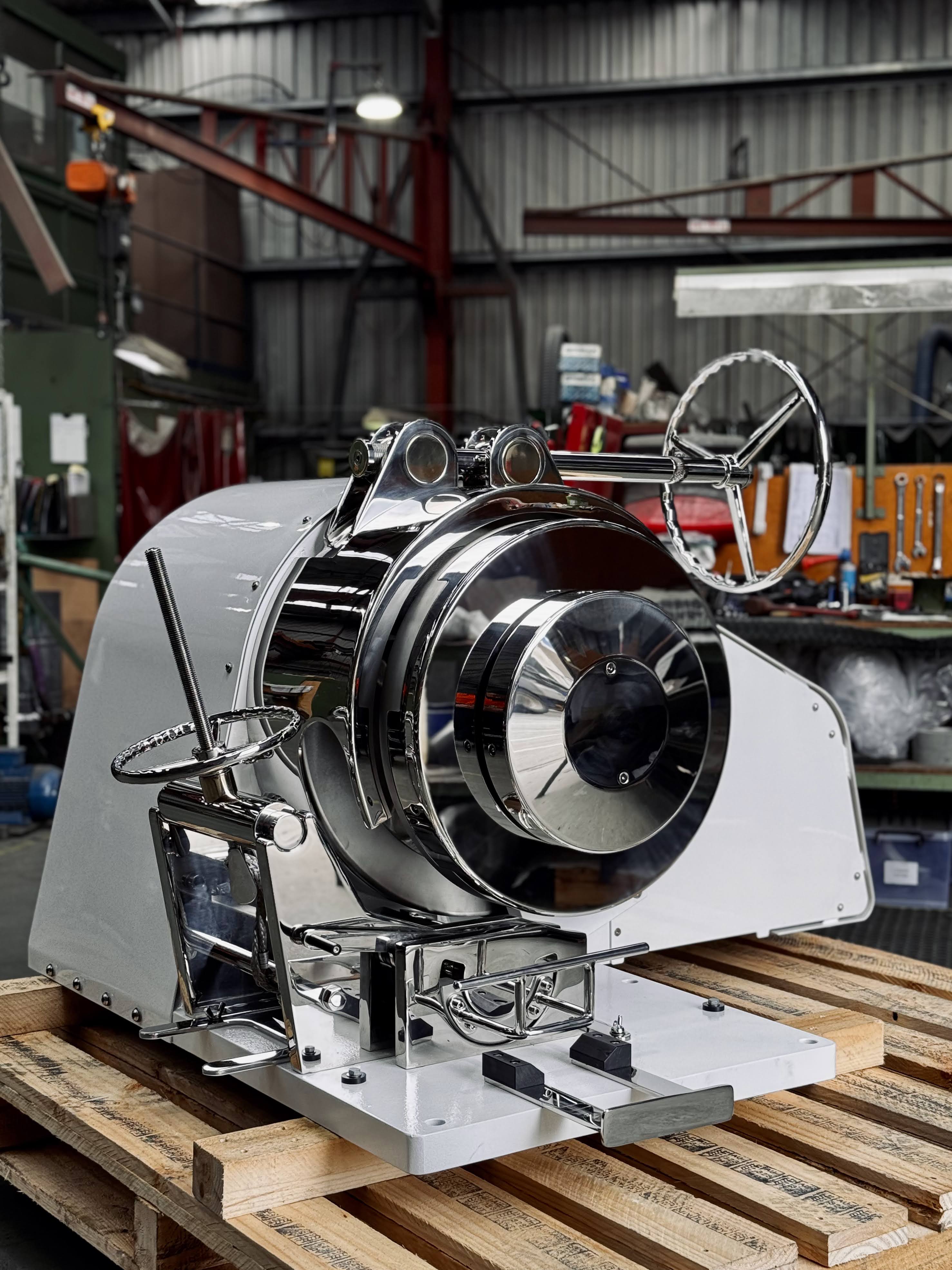
Muir official workshop photograph of anchoring machinery in horizontal windlass development release
Muir details its integrated horizontal planetary-drive windlass for yachts from 30 to 150 metres, with a reported footprint reduction of up to 40 per cent.
Muir Anchoring Systems has set out its approach to the design of a compact horizontal planetary-drive windlass for the superyacht sector. In an exhibitor release dated 27 July 2026, available in the METSTRADE 2026 press archive, the Australian specialist describes a system developed in response to a specific difficulty encountered by a large-yacht builder. Space between the wing doors and the anchoring machinery was insufficient to accommodate the intended conventional gearbox arrangement without interfering with access and operation. The supplier developed an alternative in which the chain stopper, windlass and chain wheel share a common supporting plate. It reports a reduction of up to forty per cent in the overall footprint. The figure is a manufacturer claim and does not establish that the same proportion of space will be saved in every installation. Nevertheless, the development is relevant to the Amsterdam equipment exhibition taking place from 17 to 19 November because it illustrates how a comparatively small change in machinery arrangement can influence the planning of a much larger vessel. It is not a newly announced launch on the final day of the show.
The original design problem identified by Muir concerns the relationship between equipment that must remain fixed and parts of the vessel that need space to move or provide access. The location of a windlass may be influenced by the anchor pocket, chain lead, chain locker and the arrangement of the deck. On a large yacht, the same area may also contain doors, hatches, other mooring machinery or equipment needed to support tender handling. The space required by these elements is not simply the sum of their dimensions when all are at rest. Their working envelopes and the routes through which personnel approach them are also important. Designers must consider what happens when equipment is in use and when a component requires inspection or replacement. A system that occupies less area may create an opportunity to resolve an otherwise difficult arrangement, but the available space must be assessed using the actual vessel plans and the equipment manufacturer's drawings. The aim is to achieve a workable overall arrangement rather than place a smaller component within an unchanged and unsuitable space.
Muir explains that the horizontal planetary-drive system incorporates an integrated chain stopper on the same base plate as the windlass and chain wheel. These components have related but distinct functions. A windlass raises or lowers the anchor chain through its chain wheel, while an appropriately designed chain stopper can form part of the arrangement used to secure the chain and transfer loads to the vessel's structure. The loading path and the manner in which the equipment is used must reflect the approved installation rather than a generic description of its components. Combining their supports may reduce the number of separate structures that a shipyard needs to provide. It may also simplify the process of establishing the relative position of the components during design. That does not diminish the need to evaluate the loads transmitted to the supporting deck and underlying structure. Integrators must establish the requirements of the specific equipment and ensure that the overall installation is consistent with the vessel's design. The manufacturer's account does not provide the foundation calculations, the exact chain sizes for the complete product range or an approved arrangement for any named yacht.
The gearbox is a central element of the development described in the press release. A planetary gearbox employs a different configuration of gears from a conventional parallel-shaft or helical gearbox arrangement. Depending on the particular design, a coaxial or compact configuration may be suitable for installations in which space along the machinery axis or around related equipment is constrained. Muir reports that its chosen arrangement is more compact and lighter than conventional alternatives and uses a commercially available gearbox. The release does not quantify the weight reduction for individual models or disclose the detailed gear ratios, input requirements and output ratings. A purchaser should therefore obtain the relevant selection information before comparing the proposed system with another product. The stated reduction in footprint is meaningful within the supplier's comparison but is not a measurement of pulling force, operating speed or duty cycle. Those engineering characteristics require separate consideration. The announcement illustrates how the selection of an established gearbox architecture can form part of a wider product redesign without implying that all planetary gearbox products are suitable for anchoring service.
The supplier describes collaboration with naval architects, original equipment manufacturers and shipyards with a view to addressing a range of vessels measuring between thirty and one hundred and fifty metres. The breadth of that range is significant. A thirty-metre yacht and a vessel approaching one hundred and fifty metres are likely to have different requirements in terms of displacement, chain inventory, anchoring equipment, deck arrangement and applicable technical rules. The same design principle may be applied through differently sized products or project-specific configurations, rather than a single windlass serving every vessel in that range. Muir's statement refers to work undertaken to meet classification requirements across relevant installations. It is not a published certificate granting universal approval for the product on any yacht. The builder and owner should establish the applicable requirements for the particular vessel, including documentation associated with the actual windlass, chain and associated equipment. Appropriate engineering review is also necessary when the anchor handling system is being changed on an existing yacht rather than specified as part of a new-build project.
Muir identifies the HR20000 as a system delivered to the shipyard partner that prompted the development. According to the company, that yard integrated the equipment into a completed build and subsequently placed another order for a larger arrangement of the same design. This account provides a more concrete indication of the development's commercial progress than a concept description alone. The supplier has not named the shipyard, identified either yacht or published the full specification of the installed systems in the release. Its reference to repeat business should consequently be understood as its own report of an ongoing relationship rather than an independently assessed performance guarantee. The official press photograph accompanying this article depicts equipment associated with the development in a workshop setting, not an identified yacht or an installation inspection. The distinction is important in specialist marine reporting, where the availability of machinery imagery does not necessarily establish the identity of the vessel receiving it. Further project information may become available as additional installations are completed.
Muir says that the use of an established gearbox should assist with the availability of spare parts through its service network. For a yacht undertaking extended voyages, access to replacement components and suitably qualified assistance can have an appreciable influence on the management of equipment over its lifetime. However, a commercially available gearbox does not establish that every replacement part can be obtained immediately in every location. A yacht operator should obtain a clear description of the selected gearbox, applicable parts, support arrangements and maintenance procedures. An integrated base plate may also change the way that certain components are accessed during maintenance. Designers should consider those requirements during the initial arrangement of the equipment rather than after adjacent structures and finishes have been installed. The availability of the documentation associated with the final configuration can make an important difference when enquiries are made several years after delivery. A compact product that cannot readily be inspected or removed within the chosen arrangement may present different maintenance difficulties from those associated with its initial installation. The complete equipment installation, not merely its footprint, is therefore the relevant basis for evaluating suitability.
The Muir release describes an established development programme, an initial reported installation and a design approach intended to reduce the area occupied by horizontal anchoring machinery. It does not announce a new model on 19 November or provide independently verified performance data for every configuration. The significance of the equipment within this year's trade exhibition is its relationship to a genuine problem encountered during large-yacht design. Machinery spaces and working deck areas must serve multiple purposes, and design decisions about each group of equipment can affect the arrangements available for other systems. A constructive discussion between a shipbuilder and its equipment specialist should establish the actual requirements of the vessel, the interfaces between systems and the criteria against which the installation will be accepted. The outcome may be a compact system, a different equipment location or another overall arrangement. Superyacht Guide has not tested the equipment. The company's report of an integrated base, its planetary-drive design and experience with a shipyard customer nevertheless provide useful evidence of the ways specialist suppliers are responding to the demands of contemporary superyacht construction.
Primary source: Muir Anchoring Systems official METSTRADE exhibitor announcement, 27 July 2026.
Muir Anchoring Systems / METSTRADE exhibitor press release. Workshop equipment photograph, not a named yacht installation. Official source.
Continue reading
Rondal's 50th-anniversary account traces the development of its custom aluminium and composite spars, from Endeavour's rig to modern large-yacht manufacturing.
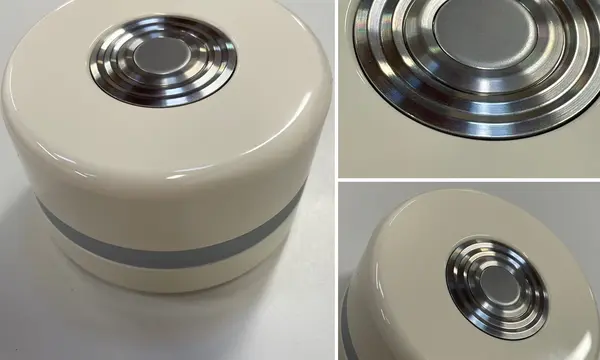
Channel 28 expands its MORSE service-call system with tactile switches, offering superyacht designers and integrators a choice of physical or piezo controls.
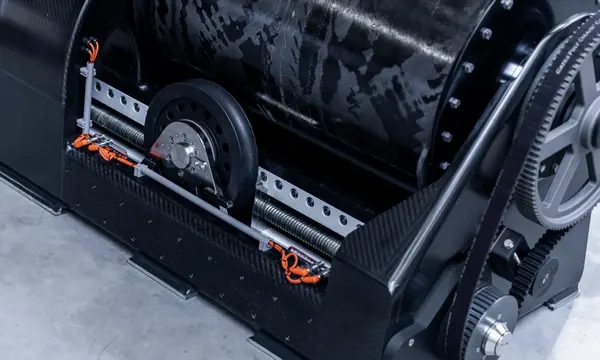
Rondal highlights captive winch technology at METSTRADE, tracing electric sail-handling advances and the move into remote-operated superyacht mooring systems.

Jotron outlines a QR-based product passport planned for 2027, linking marine equipment to manuals, approval documentation and its international service network.
Superyacht Guide
Continue into the wider Superyacht Guide.
Business opportunities · Superyacht Guide
Companies serving the superyacht market can discuss clearly identified advertising, sponsorship and business-profile opportunities. Commercial activity remains separate from independent editorial coverage.