
Seares Targets Superyacht Mooring Loads with Seadamp Monitoring
Seares presented hydraulic mooring dampers and load monitoring at METSTRADE 2026, with configurations aimed at large yachts, shipyards and marina operators.
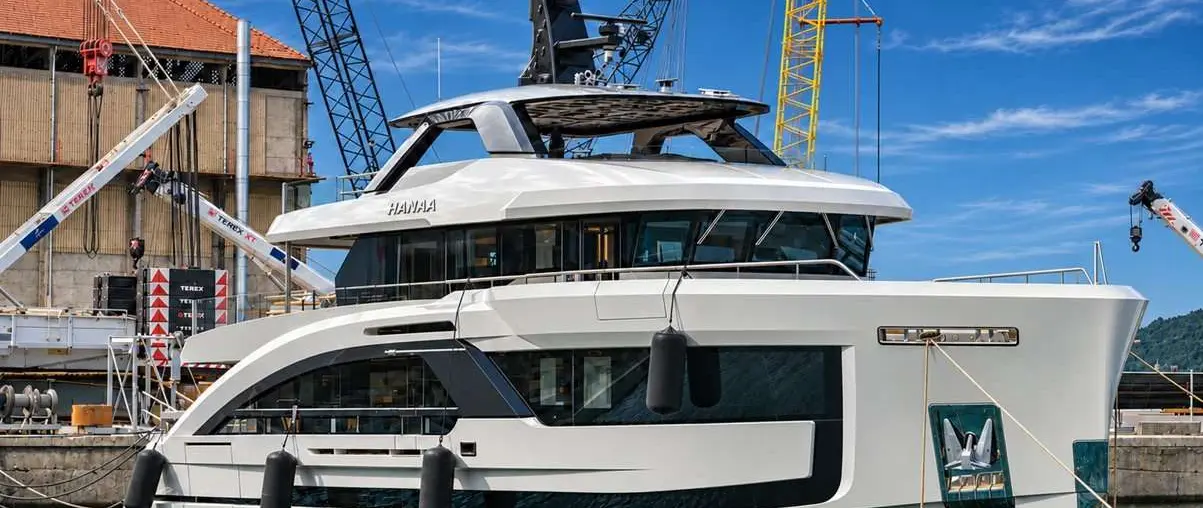
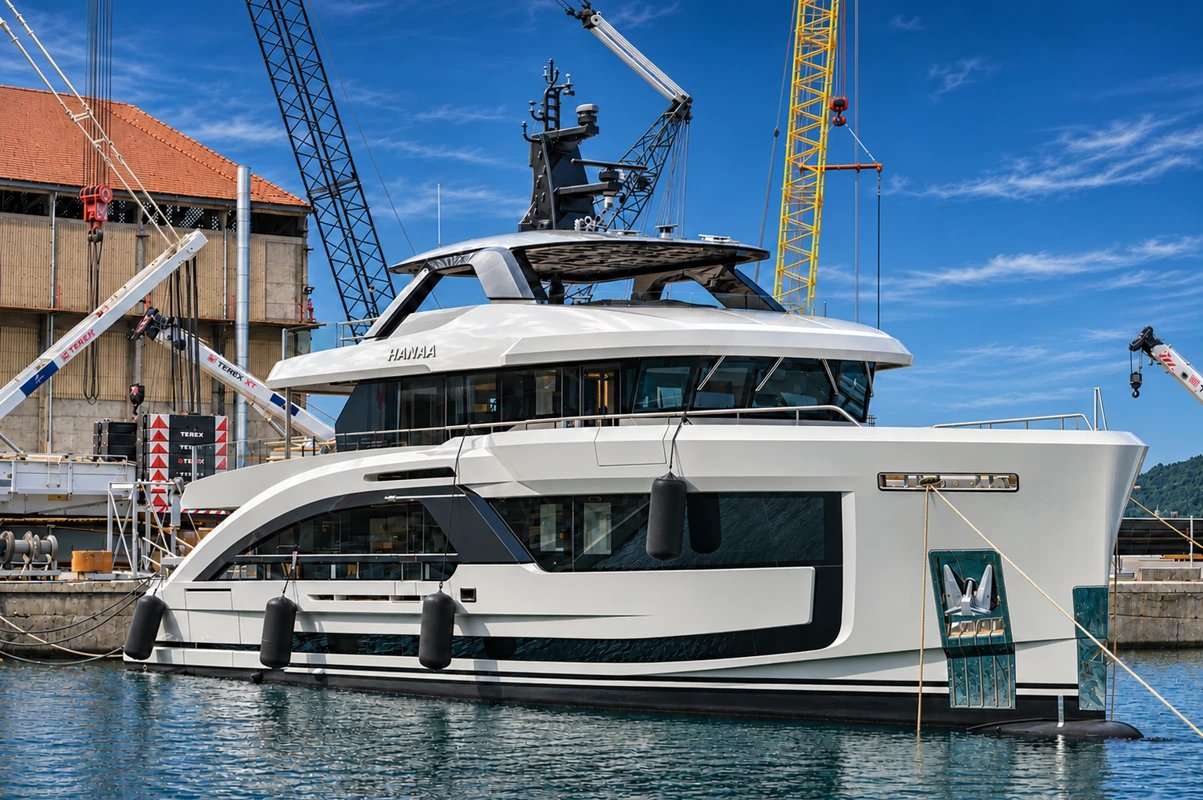
Jotun supplier press release photograph of Antonini Navi HANAA November 2026
Jotun reveals its MegaGloss AC specification for Antonini Navi's 31m HANAA, detailing early collaboration between designer, builder, owner and applicator.
Jotun has detailed its role in the development of the exterior coating specification for HANAA, Antonini Navi's 31-metre EVO 31 explorer yacht. The coatings specialist's 19 November 2026 statement identifies the use of its full MegaGloss AC system and describes cooperation with the builder, the client, the design team and the paint applicator from early in the project. The announcement follows the yacht's previously reported launch in La Spezia and provides new information about the relationship between custom yacht construction and the specialist suppliers responsible for its final finish.
The statement also identifies a preceding collaboration on the yard's Seamore 34, which uses Jotun's MegaGloss BC Metallic system. Taken together, these two examples illustrate that exterior finishes are not necessarily an isolated purchase made at the conclusion of a build. The decision can begin while the vessel's design is being developed and continues through the preparation of substrates, the selection and application of a coating system, and assessment of the resulting appearance. The requirements for each vessel will depend upon its individual construction specification, and the two named systems should not be regarded as interchangeable on the basis of these announcements alone.
Antonini Navi draws upon the Antonini Group's experience in the energy industry. Jotun's account emphasises the relevance of precision, quality control and cooperation between suppliers in transferring that industrial experience to custom-yacht construction. A yacht, however, presents a distinctive combination of requirements, particularly where an owner expects a highly refined exterior appearance as well as a durable technical system.
The same coating may be viewed differently by the different people involved in a project. The designer considers the visual relationships between surfaces, windows and details. The builder is responsible for coordinating materials and sequences of work. The coatings supplier advises on the suitability of the system, while the applicator translates that specification into the actual finish. The owner or representative evaluates whether the finished boat corresponds to the agreed design and acceptance criteria.
Jotun identifies early cooperation as a feature of the EVO 31 project. This is commercially significant for the sector because many of the issues that become visible during final painting originate in earlier decisions. Addressing those decisions while changes are still relatively manageable can help reduce the risk of unnecessary rework. Neither the statement nor its accompanying image establishes the full extent of the yard's quality-assurance procedures, so the specific inspection arrangements should not be inferred from the announcement.
The supplier names Hydro Tec in connection with design and Antonini Navi for construction and overall project coordination. It identifies Simone Zini's team as responsible for executing the paintwork. The client contributed to the visual objectives and Jotun supported the definition and evaluation of finishes.
This allocation of responsibilities is particularly informative for an owner commissioning a one-off yacht. The party supplying the coating system is not necessarily the party applying it, and the designer's visual proposal does not independently establish the final procedure for its application. Even where every participant is working towards the same overall result, the interfaces between them need to be clearly defined.
A well-coordinated project should record the agreed responsibilities for material selection, application conditions, changes to specifications and acceptance of the work. Particular attention should be paid to issues where one specialist's activities could affect another's work. Engineering installations, access arrangements and external fittings may require coordination with the finishing team. The builder should determine when areas are ready for coating and how they will be protected against damage during subsequent stages of construction.
The statement from Jotun gives a useful account of the named participants, but it does not publish their contracts or the precise terms under which they worked. Owners should establish the relevant responsibilities for their own projects independently.
The yacht's full MegaGloss AC system is the principal technical detail newly identified in the announcement. Jotun says it was selected through discussions between the shipyard, the client and its own team, including the consideration of different finishing options. The release does not specify every layer, colour formulation, preparation stage or application parameter.
For a custom yacht, defining the intended appearance requires more than selecting a colour from a small sample. The geometry of a yacht includes broad surfaces, narrow details and transitions around windows, openings and fittings. Reflections and the appearance of a finish can change as the viewing angle and lighting conditions change. A representative sample can support the designer's intentions in a way that a computer rendering alone cannot.
The technical team should also consider whether the specified finish corresponds to the way the yacht will be used and maintained. Cleaning methods, repair requirements and exposure conditions are relevant to long-term ownership. Where a system incorporates several compatible materials, the documentation should explain its full intended composition rather than identify only the final visible coating.
The information needed for these decisions should come from the system manufacturer and the builder's approved specification. The published choice for HANAA is a useful example of a real project but not an application instruction for a different boat.
A yacht's exterior appearance is influenced by the condition and preparation of the material beneath the final paint. Different substrates and construction arrangements can require different treatments, and the transition between structural work and finishing is an important interface in the building programme.
Inspecting these areas before subsequent layers are applied can be more useful than attempting to diagnose the cause of a defect after the exterior is complete. The procedure and appropriate acceptance criteria depend on the yacht's actual materials and the coating manufacturer's recommendations. Work should be planned in a manner that allows the personnel carrying out the preparation, inspection and application to coordinate their activities.
The timing of external equipment installation is also relevant. Some fittings may need to be temporarily absent during painting, while others can affect access or require careful protection. Decisions about the sequence of work can influence both the appearance of the completed installation and the amount of labour needed to achieve it.
For an owner representative, the key issue is whether the builder has established inspection points and an agreed process for resolving discrepancies before successive operations make them difficult to address. There is no published detailed inspection record for HANAA within the supplier's latest statement; the importance of early integration is the general lesson from the collaboration.
The contribution of the applicator deserves attention in its own right. Jotun explicitly credits Simone Zini's team with turning the agreed coating specification into the exterior surfaces of HANAA. Paint application on a yacht of this scale requires coordination across considerable surface areas, involving practical decisions about access, working conditions, equipment and protection of surrounding work.
The circumstances under which a coating is applied can affect its resulting performance. Those conditions should be managed according to the relevant approved system instructions and occupational safety requirements. It is inappropriate to assume that a generic application method would be suitable for every coating or substrate.
The owner may also wish to agree how the result will be assessed. The manner in which a surface is illuminated during an inspection, the areas to be examined and the applicable standards should be considered in advance. A suitably documented agreement between the parties is preferable to a subjective assessment introduced only after the work has been completed.
The photographs published with the November statement illustrate the completed exterior, but a publicity photograph cannot establish measured conditions or coating performance. Such evidence is a matter for appropriate project records and inspections.
The supplier says that its work with Antonini Navi on HANAA follows cooperation on the Seamore 34, which uses a full MegaGloss BC Metallic finish. The second project is relevant because it establishes that the relationship was not limited to a single named yacht and that the coating system is selected according to a project's appearance and requirements.
Metallic finishes can raise different visual and practical considerations from other exterior finishes. A repair procedure, for example, may need to take account of how the repaired area appears beside the surrounding surface. The actual method and feasibility of local repair should be determined by the specialists responsible for that system.
The supplier's statement does not provide a comparison of service life, costs or measured performance between the two choices. It would be misleading to assign one system a general advantage on those measures without appropriate evidence. The more important lesson for a custom-yacht owner is that experienced partners can evaluate the suitability of a finish in the context of the individual design.
The delivery of a custom yacht begins a longer phase in which its appearance must be maintained at sea, at anchor and in port. Knowledge of the actual coating system, agreed cleaning procedures and recommendations for resolving damage can assist the captain and management team in preparing a maintenance programme.
A record of the products used, colours and relevant system documentation can be especially valuable when the yacht visits a different shipyard or requires work some years after delivery. The ownership team should establish the appropriate means of obtaining manufacturer support and retaining the records required to identify the system accurately. Maintenance and remedial work should be assessed against current competent advice rather than the publicity description of the product alone.
The decision to commission a particular exterior finish therefore has implications beyond the visual result at launch. Availability of specialist services, maintenance obligations, access for inspection and the eventual requirements of refit should be considered during the original build.
Jotun's November release gives the superyacht industry a specific example of how a coating specialist enters a custom build at an early stage and works alongside those responsible for the yacht's visual and technical identity. HANAA's MegaGloss AC specification and the distinct metallic system identified for Seamore 34 provide concrete details of that collaboration.
For owners and project managers, the significance lies in the interfaces between design, specification, construction, application and future ownership. The quality of the result depends upon the performance of the particular system and the coordination of the people responsible for delivering it. The supplier's statement is a useful new contribution to understanding HANAA's build, separate from the earlier account of her launch.
Primary source: Jotun official supplier statement distributed via PressMare, 19 November 2026.
Jotun official supplier press image distributed with its 19 November announcement via PressMare; HANAA at the shipyard. Official source.
Continue reading
Seares presented hydraulic mooring dampers and load monitoring at METSTRADE 2026, with configurations aimed at large yachts, shipyards and marina operators.

Benetti's 67m DAGGER receives the Boat Builder Awards sustainability honour for its integrated hybrid installation and supporting performance evidence.
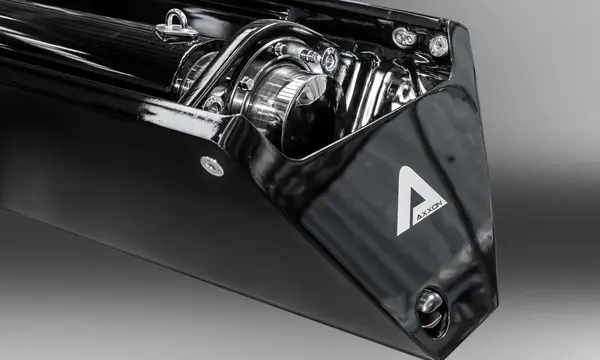
Axxon's updated digital portfolio provides a starting point for sailing yacht project teams evaluating carbon masts and booms for 24–30m projects.
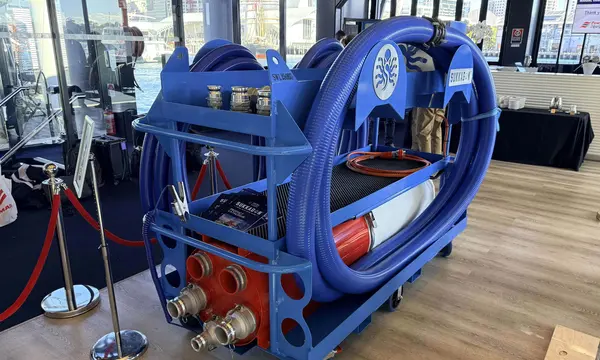
Control Point Group outlines its mobile ventilation equipment for tank and void maintenance, with potential applications at large-yacht refit facilities.
Superyacht Guide
Continue into the wider Superyacht Guide.
Business opportunities · Superyacht Guide
Companies serving the superyacht market can discuss clearly identified advertising, sponsorship and business-profile opportunities. Commercial activity remains separate from independent editorial coverage.