DeepBlue Adds Mobile Maintenance Rounds to Superyacht Equipment Histories Ahead of METSTRADE
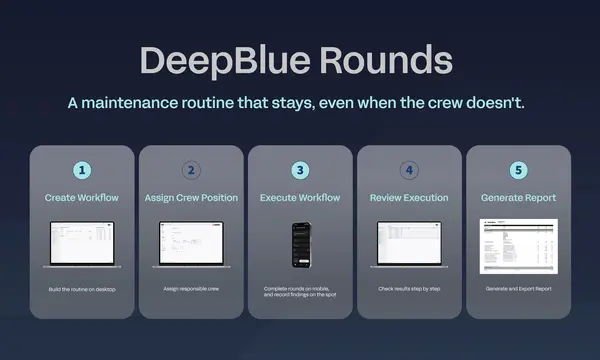
DeepBlue introduces Rounds, a mobile inspection workflow linking equipment readings, maintenance checks and follow-up jobs to yacht equipment records.
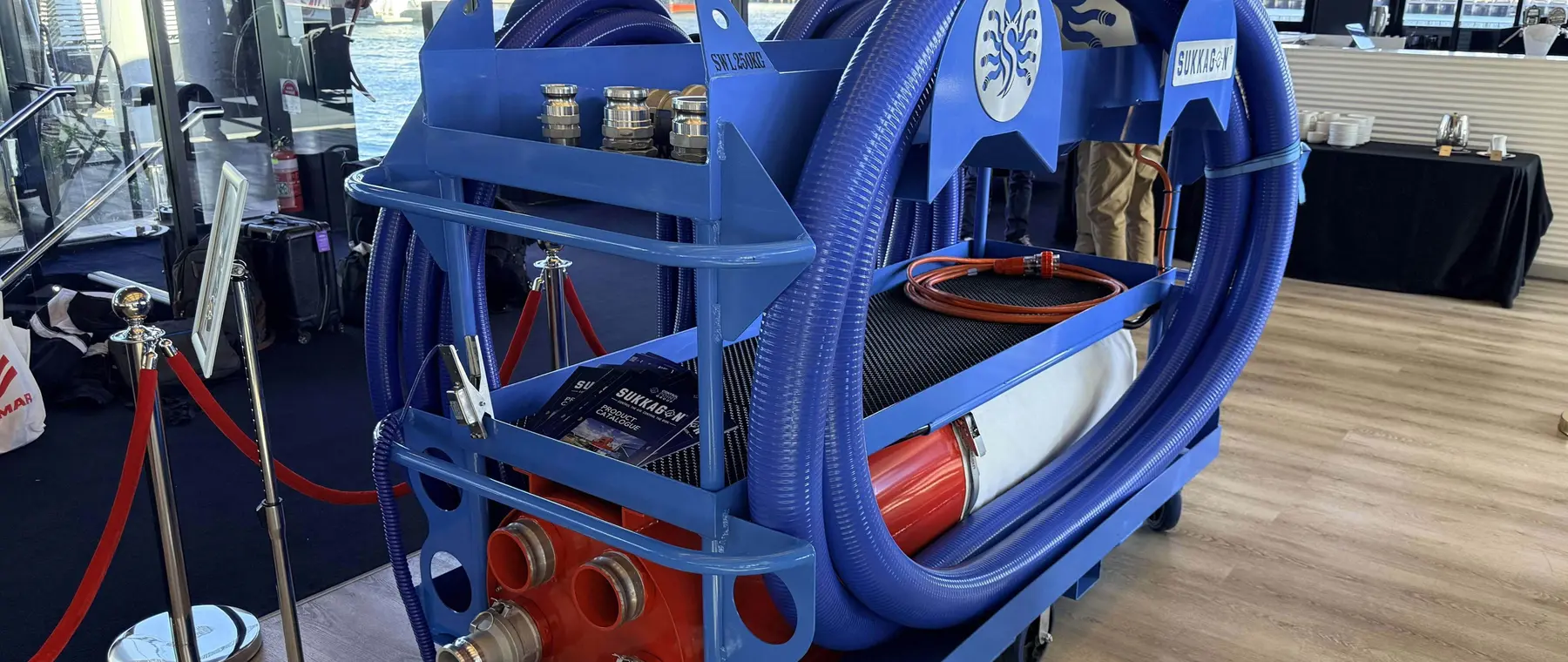
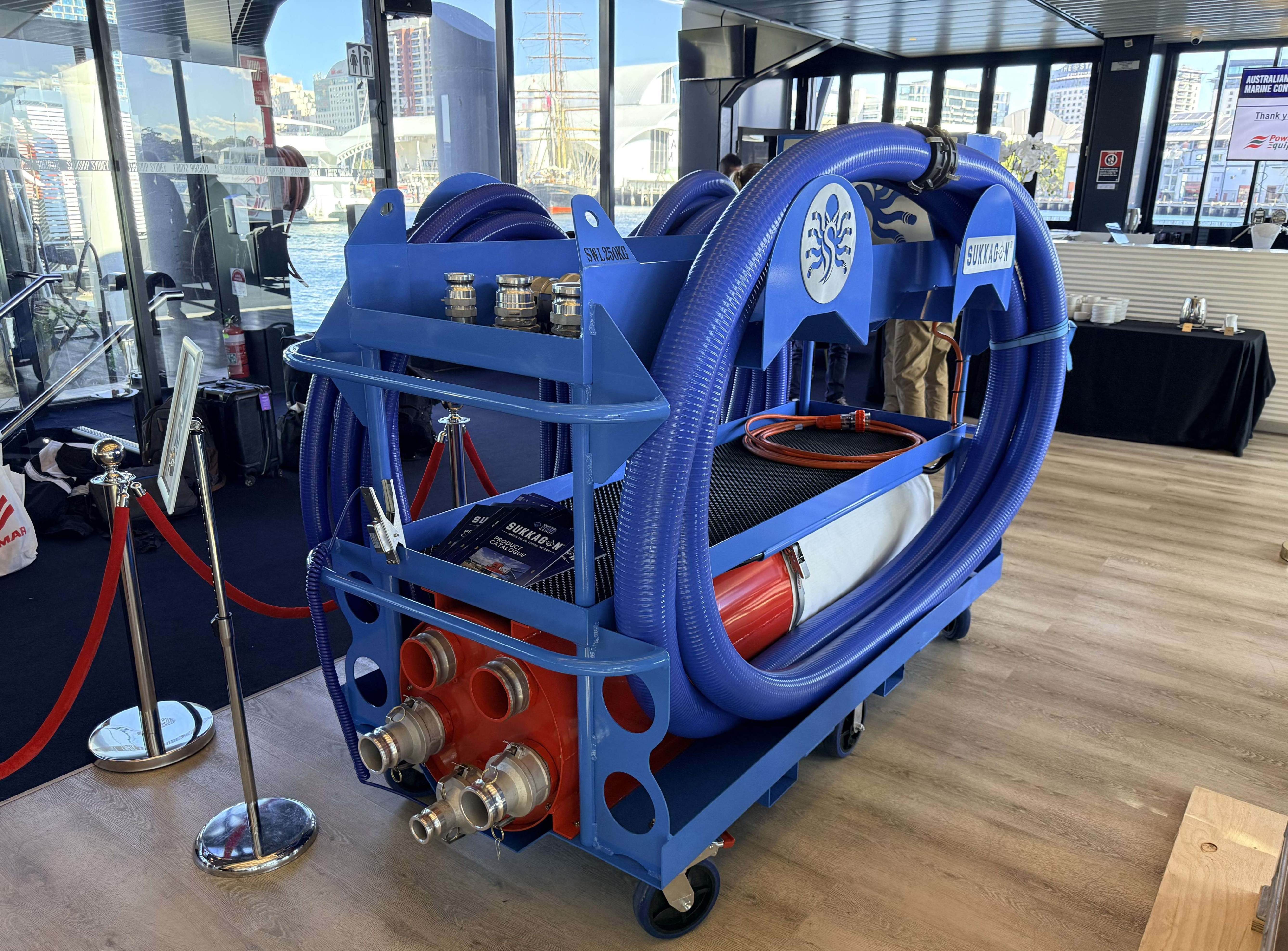
Control Point Group SUKKAGON equipment official exhibitor photograph
Control Point Group outlines its mobile ventilation equipment for tank and void maintenance, with potential applications at large-yacht refit facilities.
Australian engineering and safety specialist Control Point Group has outlined a mobile ventilation system intended to help marine maintenance teams manage work in tanks and enclosed compartments. Its SUKKAGON system is described in an exhibitor communication dated 6 August 2026 in the Metstrade press archive. The material is particularly relevant to the refit industry because the equipment is designed to remain outside the compartment while connecting to existing vessel ventilation piping. The company also identifies commercial shipyards, industrial facilities and defence maintenance among its intended users. This week's Amsterdam exhibition provides a context for examining the proposed system and the questions it raises for yards working on substantial yachts. The source does not identify a particular superyacht installation or announce a newly completed sale at the exhibition. Nor does it establish measured performance under every possible shipboard condition. This report considers the published design and its potential relevance to a large-yacht refit rather than presenting the equipment as a proven solution for every enclosed space.
The planning of maintenance in a large yacht can involve a complicated relationship between the worksite itself and the routes used to reach it. Tanks, voids and similar enclosed compartments often occupy parts of the structure with restricted access. Temporary services needed during a period of work may need to pass through adjoining spaces used by other contractors. If those services occupy access routes or obstruct equipment, they can affect the organisation of several activities at once. Control Point Group identifies long lengths of flexible ventilation ducting and the presence of portable fans close to entry points as practical problems that its system is intended to address. The issue is not simply that a shipyard might find such equipment cumbersome. Access arrangements form part of the wider risk assessment and the preparation for emergencies. Any alternative arrangement must therefore be evaluated against the actual geometry and condition of the vessel, the nature of the work and the applicable safety procedures. The published product description is not a substitute for that assessment.
The distinctive design feature described by the supplier is the use of flexible connections between the external ventilation unit and the vessel's tank or void ventilation piping. The equipment is intended to use parts of the existing installation rather than require a separate large temporary duct to be run into each compartment from its access opening. In principle, this could change the distribution of equipment around the worksite and leave some routes less congested. Whether an existing vent provides a suitable path for the intended airflow is a separate engineering question. The dimensions, condition and arrangement of the pipework differ between vessels, as do the properties of the atmosphere within the spaces concerned. A connection that appears physically compatible does not establish that the complete arrangement provides adequate ventilation. The responsible specialists must establish the suitability of the proposed arrangement for the particular work, including any interactions with other onboard systems. No universal airflow specification for every potential vessel configuration is established by the announcement.
The equipment described in the August exhibitor communication measures approximately 2.3 metres long, one metre wide and 1.7 metres high, with an unladen weight of 250 kilograms. It is fitted with lockable wheels and lifting points. The publication identifies a 32-amp three-phase electrical supply and a ten-metre power lead. These particulars indicate that the system is intended as a substantial industrial asset rather than a small portable appliance that an individual crew member can simply carry through a doorway. A refit planner would need to establish whether the intended staging area can accommodate its dimensions, weight and associated connections. The movement of the equipment to that position would also require appropriate handling arrangements. Space availability, lifting requirements and the relationship with other work would influence the practical advantages of the proposed system. The manufacturer's information gives a starting point for that planning but does not establish the capacity of any specific yacht's deck or the suitability of a particular electrical supply.
The company describes the capability to operate the system in either positive or negative ventilation configurations, as well as the potential to serve multiple spaces. Its design includes speed control, interchangeable particulate filters and a motor described as having IECEx flameproof and dustproof characteristics. An equipment description of this kind should not be interpreted as permission to work in a hazardous atmosphere or a certification of the complete temporary installation. The motor rating is only one element of a system containing several components and interfaces. Ventilation arrangements for confined spaces require an appropriate risk assessment, evaluation of the actual hazards and supervision by competent people. In particular, a filter intended to capture particles should not be assumed to remove all gases or vapours that could be present. The company's claims concerning extraction and containment are qualitative in the public material. Independent testing of performance across particular configurations is not supplied in the exhibitor communication. A yard considering the equipment should obtain the necessary technical documentation and establish how it relates to its own approved procedures.
The possibility of using a single unit in connection with several compartments is one of the supplier's proposed advantages for maintenance organisations. A large refit may involve multiple work packages scheduled within a limited period of shipyard occupation. The availability of a suitable means of ventilation can influence the sequence in which those packages can begin. A common external asset could reduce the number of individual pieces of temporary equipment required in some circumstances, but it could also create dependencies between separate work areas. Those dependencies must be identified and managed appropriately, including the consequences of interruption or failure of the shared service. The actual demand for ventilation may differ considerably between tasks, and it cannot be assumed that a unit serving one compartment has sufficient capacity for several at once. Simultaneous work in neighbouring spaces can introduce additional considerations associated with the movement of contaminants and the allocation of responsibilities. The manufacturer describes the flexibility of the proposed system; the suitability of any particular deployment remains a matter for the yard's competent safety and technical personnel.
The commercial arrangements listed in the exhibitor material include an annual leasing option, a longer lease-to-own arrangement and outright purchase. The described service provisions include inspection, servicing, integration guidance and technical assistance, depending on the option chosen. Prices are available on enquiry rather than published as part of the release. For a shipyard undertaking recurring maintenance projects, the choice between purchase and lease may depend on the frequency with which the unit could be deployed and the practical arrangements for transporting and maintaining it. A contractor working temporarily at several different locations may have other requirements. The commercial terms should be assessed alongside the actual technical suitability of the equipment for the proposed applications. A service agreement is not a substitute for the responsibilities associated with the safe execution of confined-space work. It may, however, help define which party is responsible for equipment inspection, maintenance and the provision of technical documentation. Those responsibilities should be clearly established before an installation is placed in service.
The SUKKAGON concept illustrates the interest of looking at temporary maintenance infrastructure as an engineered part of a refit rather than treating each item of worksite equipment in isolation. Its proposed advantages concern the way ventilation services are provided, their position relative to access routes and the opportunities for coordinating the use of an industrial asset. Control Point Group identifies reduced congestion, improved visibility for certain activities and shorter preparation periods among its intended outcomes. These are claims about the potential effect of the design, not independently measured outcomes for a named superyacht project. Superyacht Guide has not tested the system or assessed any proposed operating configuration. The manufacturer and exhibitor material establish the main design features and intended applications, but do not provide a complete method of work for a particular vessel. For the large-yacht sector, the significance of the proposal lies in the relationship between maintenance planning, worksite access and the temporary services required to carry out specialist tasks. Any prospective application must be considered within the vessel-specific safety arrangements, applicable requirements and competent technical assessment.
Primary source: Control Point Group supplied Metstrade exhibitor communication, 6 August 2026.
Further information: Control Point Group official SUKKAGON product information.
Control Point Group / Metstrade exhibitor press material. Product photograph, not a yacht installation. Official source.
Continue reading
DeepBlue introduces Rounds, a mobile inspection workflow linking equipment readings, maintenance checks and follow-up jobs to yacht equipment records.
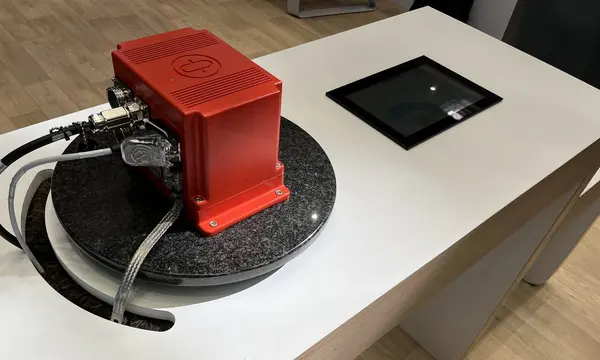
Anschütz has unveiled the Standard 100 MF, a maintenance-free gyrocompass designed for straightforward new-build and retrofit integration from 2027.
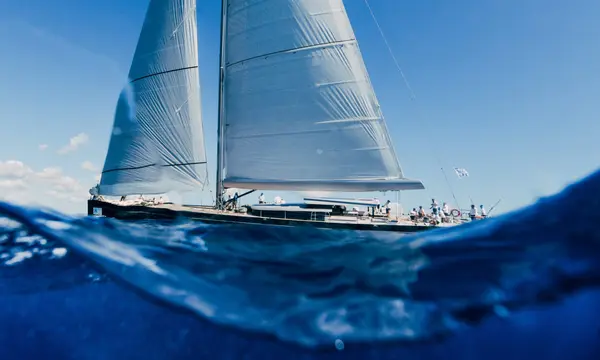
Vitters Shipyard's November announcement highlights long-term sailing yacht engineering support, maintenance and refit coordination through its two service bases.
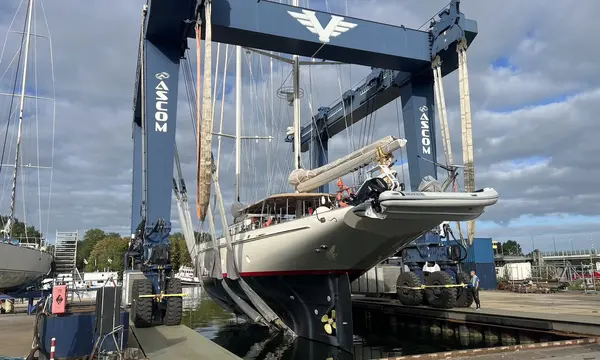
Amsterdam Yacht Service reports a rig-on haul-out for 41.54m MELODY, including antifouling, exterior maintenance, rig retuning and a swing-keel inspection.
Superyacht Guide
Continue into the wider Superyacht Guide.
Business opportunities · Superyacht Guide
Companies serving the superyacht market can discuss clearly identified advertising, sponsorship and business-profile opportunities. Commercial activity remains separate from independent editorial coverage.