Jotun Details Custom MegaGloss Coating Collaboration on 31m HANAA
Jotun reveals its MegaGloss AC specification for Antonini Navi's 31m HANAA, detailing early collaboration between designer, builder, owner and applicator.
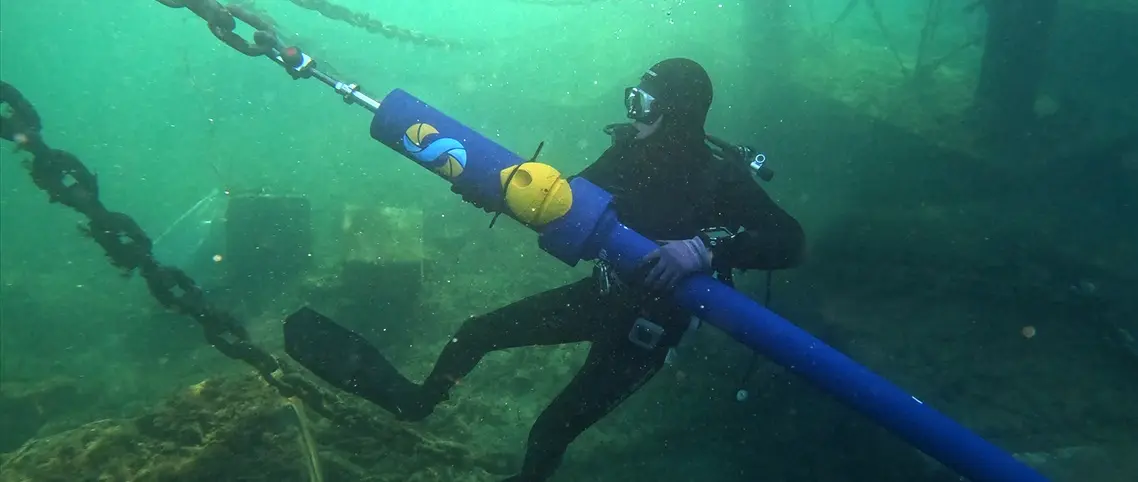
Seares MCDS installation diver — November 2026 press photograph
Seares presented hydraulic mooring dampers and load monitoring at METSTRADE 2026, with configurations aimed at large yachts, shipyards and marina operators.
Seares has brought a particular engineering problem into the conversation following this year's METSTRADE exhibition in Amsterdam: how to manage the repeated and sometimes sharply changing loads imposed by a large yacht on its berth. In its 19 November announcement, the Italian marine technology business described a range of hydraulic damping devices that can be combined with instrumentation and, in suitable configurations, energy recovery. Its Heavy model is intended for yachts extending to 90 metres, with bespoke engineering available beyond that size. For an owner commissioning a new superyacht, or a captain preparing for an extensive refit, the announcement is a reason to examine the entire mooring arrangement rather than simply considering another item of deck equipment.
A yacht at a berth is not a static structure. Its displacement, exposure to passing traffic, local water depth, windage and the geometry of the mooring arrangement all influence the distribution of forces. Even when the average load on a line seems manageable, movement can produce much larger temporary forces. The crew's immediate concern might be noise, chafe or motion affecting guests, but the engineering question is what those forces are doing to every component between the vessel and the shore.
On larger yachts, the arrangement may include sophisticated deck machinery, fairleads, recessed fittings and equipment whose replacement or repair requires substantial access work. The corresponding infrastructure ashore may belong to a marina or a separate port authority. That division of ownership makes it especially important to understand where the loads are being transmitted and which party is responsible for the associated inspections.
Rather than treating rope stretch as the only means of accommodating movement, Seares proposes incorporating damping elements into the load path. The company's proposition is that the devices can reduce abrupt increases in tension by dissipating mechanical energy. Its November presentation also draws attention to the possibility of combining physical damping with data collection. These are related but different functions. One changes the mechanical response of the mooring arrangement; the other provides evidence about how that arrangement behaves.
The distinction is important for naval architects and project managers. A reduction in a measured peak is not necessarily equivalent to a reduction in every force affecting a yacht, nor does it automatically increase the permissible operating conditions of a berth. Engineers would need to consider the complete arrangement, including line characteristics, fittings and the particular movement of interest. An individual damper cannot compensate for an unsuitable berth layout or remove the need for sound seamanship.
The Heavy model is of particular interest to the larger-yacht sector because of the vessel sizes envisaged by its manufacturer. However, length is only a convenient preliminary reference for product selection. Two yachts of identical overall length can have very different displacement, exposed surface areas, hull characteristics and mooring plans. Consequently, using length alone to specify equipment would be a weak basis for a procurement decision.
A useful enquiry from a yacht's technical team would describe the vessel, the operating locations and the proposed arrangement. It should also distinguish between an installation intended to travel with the yacht and one intended to remain at a particular berth. This distinction affects handling, storage, inspection responsibilities and the division of cost between the owner and the marina. Where a vessel will use the arrangement at several ports, compatibility with differing shoreside arrangements becomes an additional consideration.
The manufacturer should be able to explain the limits of the proposed configuration, how those limits were established and how inspection requirements change with usage. The owner's representative can then examine those answers alongside the yacht's existing technical documentation and the applicable requirements of its flag administration and classification society.
Seares is also promoting instrumentation capable of reporting the behaviour of mooring systems over time. The underlying idea has practical significance for marina managers. A conventional inspection may reveal damage or deterioration at the time of an examination, but it may provide little information about the event that caused it. Records of loading can help a technical team identify changes worth investigating and compare behaviour before and after alterations to the arrangement.
For a superyacht captain, the value of such records depends on their context. An isolated number is difficult to interpret without knowing the point of measurement, the condition of the line and the environment in which the reading was taken. Useful records must retain enough information to make comparisons meaningful. A berth subject to occasional traffic wash, for example, may display a very different pattern from one exposed to prolonged weather-driven movement.
The availability of data should not create an expectation that an automated system can determine whether every operating condition is safe. The alarm settings, response responsibilities and actions following alerts require an agreed procedure, with the judgement of the responsible crew and shore staff remaining central.
The company has previously disclosed work at the Yacht Club de Monaco. Its March announcement describes an installation combining its damping technology with the potential for more detailed monitoring. In the latest press material, Seares reports that measurements at two berths indicated a peak loading reduction of approximately 90 per cent, with the club subsequently considering a wider deployment.
That is a manufacturer-reported result for a specific arrangement, not a general guarantee. It is nevertheless a useful starting point for due diligence. Prospective clients should ask what was measured, whether measurements were made under comparable environmental conditions, which equipment was included and how the baseline was established. They should also establish whether the reported result describes the maximum reduction, a representative comparison or the outcome of a particular event.
An independently reviewed test record would provide more meaningful evidence for a new specification than the headline percentage by itself. There is also a case for agreeing how performance would be assessed after installation, so the marina and yacht are working towards the same definition of success.
Among the wider technological possibilities described in the November release is converting some of the mechanical movement experienced at a floating installation into useful electricity. For a marina, modest and persistent generation may be relevant to equipment with limited power requirements, particularly where cabling or maintenance access is difficult.
It would be premature to interpret this concept as a replacement for conventional shoreside electrical infrastructure. Any energy budget has to account for actual environmental conditions, conversion losses, equipment consumption and periods when generation is limited. The electrical needs of a large yacht at berth are quite different from those of an individual instrument. Keeping these applications separate helps prevent unrealistic expectations and allows engineers to determine whether an energy-recovery element is justified by its particular operating conditions.
A refit is often the most convenient opportunity to review equipment interfaces, especially when deck machinery or mooring fittings are already scheduled for inspection. The captain and shipyard can use that opportunity to document available space, evaluate access for servicing and discuss how installation would affect normal deck operations. Any changes to the arrangement should be addressed through the yacht's established technical approval process.
A specification should also identify who is expected to maintain the system once the yacht returns to service. Replacement intervals, recording requirements, availability of service personnel and the procedure when a device is taken out of use are all relevant. An elegantly designed component is of little practical value if routine inspections cannot be undertaken safely or a fault cannot be managed without disrupting the mooring plan.
For a marina considering permanent equipment, the same principles apply to its shore infrastructure. An arrangement serving different visiting vessels needs clearly defined limits and procedures for assessing compatibility. Installing equipment is only one part of an operational programme that should include induction, maintenance and communication with visiting captains.
The most useful commercial comparison is likely to be between complete operating arrangements rather than isolated purchase prices. Owners and marina operators should establish what problem they are trying to solve, what evidence will demonstrate improvement and which costs could be avoided if that improvement is achieved. Those questions may lead to a carefully planned demonstration before a larger procurement commitment.
For the superyacht industry, the Seares presentation is particularly interesting because it brings the responsibilities of vessel operators, marina engineers and equipment suppliers together. It proposes a way to investigate the forces acting at the boundary between yacht and berth, and encourages a more measurable approach to managing them. The opportunity is not to abandon established mooring practice in favour of a single new device. It is to make the design, observation and maintenance of mooring arrangements more deliberate, with documented evidence supporting any changes. The details of an individual installation will ultimately determine whether it delivers a worthwhile improvement for the yacht, the crew and the marina.
Primary source: Seares official press announcement, 19 November 2026, distributed through Lulop.
Further information: Seares — Monaco installation.
Photograph: Seares, MCDS Installazione, supplied with the manufacturer's November press release; public editorial distribution via Press Mare. Official source.
Continue reading
Jotun reveals its MegaGloss AC specification for Antonini Navi's 31m HANAA, detailing early collaboration between designer, builder, owner and applicator.

Benetti's 67m DAGGER receives the Boat Builder Awards sustainability honour for its integrated hybrid installation and supporting performance evidence.
Axxon's updated digital portfolio provides a starting point for sailing yacht project teams evaluating carbon masts and booms for 24–30m projects.
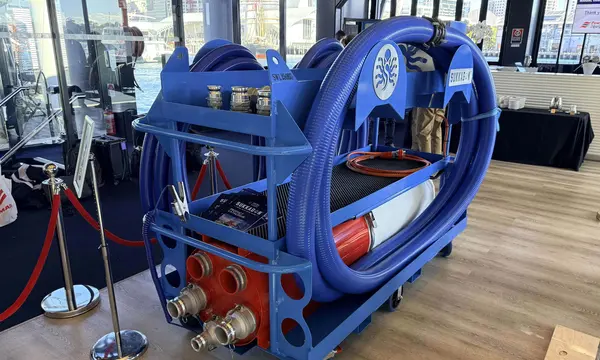
Control Point Group outlines its mobile ventilation equipment for tank and void maintenance, with potential applications at large-yacht refit facilities.
Superyacht Guide
Continue into the wider Superyacht Guide.
Business opportunities · Superyacht Guide
Companies serving the superyacht market can discuss clearly identified advertising, sponsorship and business-profile opportunities. Commercial activity remains separate from independent editorial coverage.