Baglietto Lays Keel of 48m Ice-Class Custom Hull 10277
Baglietto has marked the keel-laying of its fully custom 48-metre hull 10277 at Carrara, giving a project first announced as a sale in October …
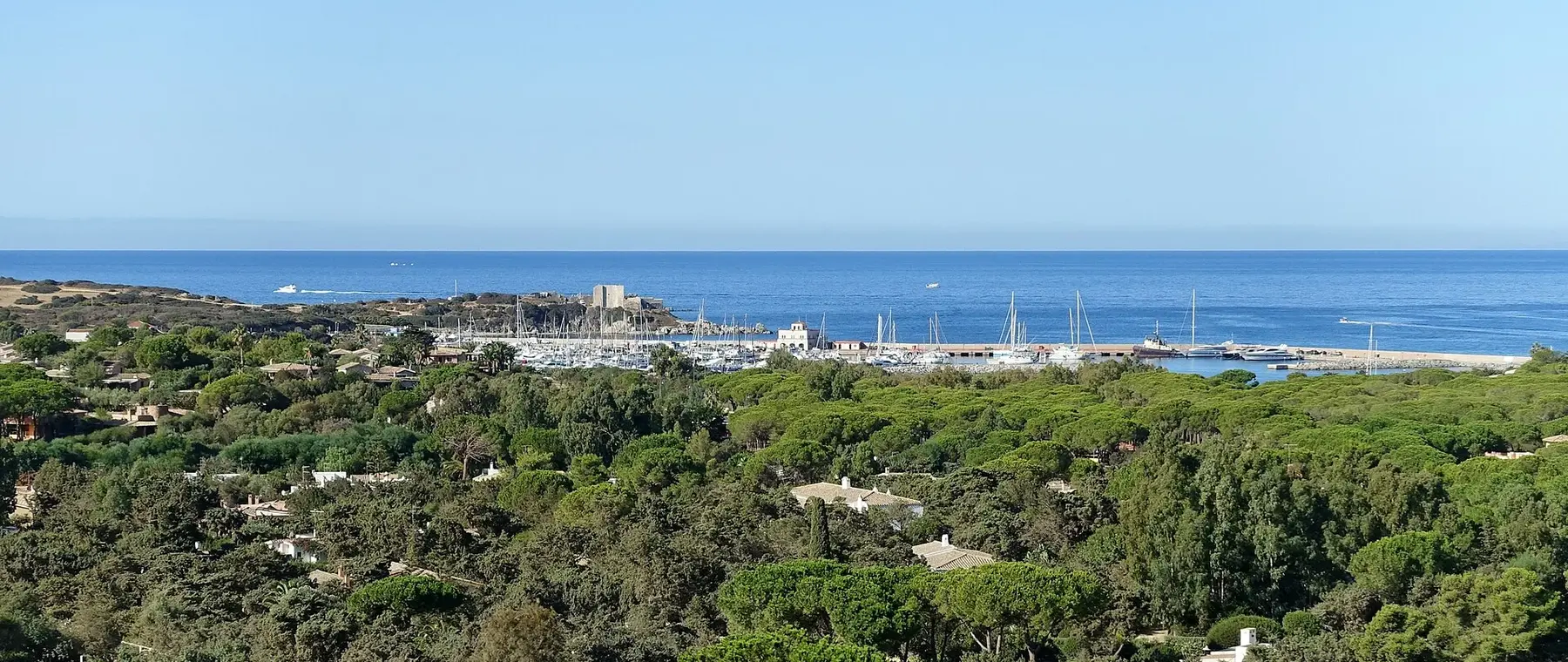
Marina di Villasimius is considering an 80-metre superyacht berth, shore-power improvements and a proposed €5 million refurbishment, but the development remains dependent on maritime concession procedures.
Marina di Villasimius, on Sardinia's south-eastern coast, has outlined a possible investment programme that would change the size of yacht it could accommodate. Director Amedeo Ferrigno has described plans for a berth for vessels up to 80 metres, improvements to the electricity supply and a broader refurbishment supported by a proposed €5 million business and financial plan. These are stated development intentions, not an announcement that a new 80-metre berth has entered service. The timing remains linked to forthcoming public procedures for maritime concessions. The account was set out in an interview published on 23 October by SuperYacht24 and subsequently reported in the marina trade press. It is particularly relevant to owners and captains because the existing facility already serves large private yachts but must accommodate rising demand within a geographically constrained Mediterranean location.
The marina currently handles yachts up to approximately 65 metres, according to its director and the Marinedi operator's introductory description. Ferrigno told SuperYacht24 that the present distribution of dedicated large-yacht moorings includes one position for a 65-metre vessel, two for 50-metre vessels, two for 40-metre vessels, five in the 30–35-metre range and seven for vessels of around 25–28 metres. He also put the practical maximum draft for those yachts at five metres, including access to the fuel facility. Such numbers require confirmation for a specific vessel and season because the usable position depends on beam, draft, local manoeuvring requirements and the marina's current allocation. The public Marinedi site presents slightly different summary capacities in separate sections, making direct verification especially important for a charter or owner itinerary.
Extending the largest suitable berth from 65 metres to 80 metres would be a material change for the marina's superyacht offering. A yacht of that length generally needs more than extra linear quay space: the suitability of turning areas, mooring loads, shore-side services and arrivals planning must be considered together. Ferrigno's plan places electrical improvements alongside the larger berth, a useful indication that capacity is being considered as a complete service rather than a simple modification of a published length limit. No specific electrical rating for the proposed berth was given in the interview. Owners should therefore not assume that any future connection will meet the hotel load, charging arrangements or redundancy standards of their particular vessel until detailed project information becomes available.
The director described a €5 million business and financial plan to renew the facility, but explicitly linked implementation to public tenders for maritime state concessions. That condition is central to the story. A prepared plan is not the same thing as a secured, funded construction contract, and a future berth cannot safely be offered to yacht captains until the necessary legal, engineering and operational steps are complete. The marina has not provided a firm opening date for an 80-metre berth in the material reviewed. The implication for the charter market is straightforward: cruising programmes may take account of the long-term proposal, but any immediate reservation should be based on the marina's existing capability. The distinction is equally important to contractors assessing whether to treat the proposed upgrade as a definite procurement opportunity.
Ferrigno cited a rise in seasonal large-yacht passages from about 40 to 450 over the preceding ten years. These are figures provided by marina management, not a separately audited series of unique yacht arrivals or a forecast of future demand. They nevertheless help explain why a south Sardinian marina is looking at larger berths and different mooring arrangements. A higher number of calls can improve business for the facility and nearby suppliers, but it also creates pressure during peak months and makes berth utilisation more complex. Growth in the number of calls does not, by itself, indicate that vessels are becoming larger at the same rate. Capacity planning needs to account for the mix of lengths, beam requirements and short versus extended stays.
Villasimius lies near the Capo Carbonara area at the island's south-eastern end, with access to the broader western Mediterranean cruising network. The Marinedi operator describes it as roughly 60 kilometres from Cagliari and its airport. For a yacht moving between Italy, Corsica, the Balearics or other western Mediterranean destinations, this position can be useful as an intermediate stop, subject to the voyage plan and weather conditions. Ferrigno explained that the marina's staff frequently help with reservations at other ports, local restaurants and airport transfers. Those requests show why a marina's commercial role extends beyond supplying a safe berth. An owner may value a reliable port call because it makes crew changes, guest movements and shore-side arrangements easier to coordinate.
The Capo Carbonara Marine Protected Area is a defining feature of the location and introduces a further planning dimension for charter and commercial yacht operations. The director indicated that the marina advises operators and managers about authorisations they may need, including requirements relevant to commercial vessels. The point should not be read as a substitute for a current legal or navigational assessment: authorisation rules, zoning and permitted activities depend on the vessel and the waters involved. Captains should obtain the applicable instructions from official harbour and protected-area authorities before departure. At the same time, the area's environmental character forms part of its appeal to guests. Infrastructure planning needs to reconcile access for large yachts with those local sensitivities rather than treat them as competing considerations that can be ignored.
Electrical supply is included in the proposed Villasimius upgrade, alongside the berth extension. That reflects a growing operational issue across Mediterranean marinas: large modern yachts may require significant and stable shore power to operate hotel systems while reducing generator running time in port. Different yachts have different voltage, frequency, connection and load requirements, so a general reference to upgraded supply does not establish compatibility. A yacht manager considering a future call would need to ask about shore connection specifications, available capacity, metering, electrical safety arrangements and any restrictions during peak usage. The marina's existing website lists current electricity services, but those published general facilities should not be treated as a technical specification for the proposed 80-metre position.
The director's description of existing services includes a fuel station, a yard, shore-side retail, restaurant options, chandlery, first-aid facilities and transport links into the town. The Marinedi information also describes round-the-clock access, VHF and mooring support. For a large yacht, the value of those services depends on practical availability: whether the fuel facility can handle the vessel's draft, which repairs can be completed locally, how quickly critical parts can arrive and whether service providers can access the quay when needed. Ferrigno noted that assistance with local travel and alternative activities is especially valuable when weather interrupts a planned cruise. These seemingly modest facilities can influence how captains assess a destination's resilience and how long an owner chooses to stay.
Marina di Villasimius operates within the Marinedi network, whose official materials describe reciprocal options among participating facilities. The director discussed priority booking arrangements and a multi-marina programme for annual berth holders. Such benefits may allow owners and captains to coordinate stays across Sardinia and other locations without negotiating every visit from the beginning. However, offers change, specific eligibility rules apply and berth availability cannot be guaranteed merely by a network affiliation. The operator's current information describes conditions for the 2025/2026 season, including limits on how long a vessel can be away from its home marina and exclusions for certain peak periods. Commercial terms should be checked with Marinedi before a passage plan or annual budget relies upon them.
Ferrigno also identified interest from multihull operators and demand extending beyond the traditional summer period. A multihull may require far more beam than a monohull of comparable length, so adding a larger berth does not automatically solve the broader challenge of mooring efficiency. A marina may need to re-examine pontoon geometry, the arrangement of mooring lines, access channels and the balance between permanent berth holders and transient visitors. Wintering yachts can offer more stable utilisation, but they also require dependable utilities, security, maintenance access and longer-term service arrangements. The director referred to external specialist expertise for revisions to the mooring plan. The reported approach suggests that expansion is being considered as an operational redesign rather than merely a higher maximum-length figure on a directory listing.
The stated €5 million relates to a proposed plan for refurbishing the wider facility, rather than a published fixed cost for constructing a single 80-metre position. Without a detailed cost breakdown, tender documents and funding structure, it would be misleading to assign arbitrary amounts to pontoons, shore power, utilities or public space. Construction sequencing could also affect existing berth users if the work proceeds. Captains, long-term tenants and charter managers will be interested in whether projects can be carried out outside the main visitor season and which quays might be unavailable temporarily. None of those operational arrangements has been confirmed in the source material. The financially meaningful milestone will be the completion of the relevant concession and approval process, followed by a defined programme and scope.
The Villasimius proposal fits a wider pattern in which marinas seek to differentiate themselves through dependable large-yacht infrastructure and shore-side support. Location remains important, but a yacht's captain also considers access restrictions, draft, turnaround space, weather exposure, security and the ability to arrange repairs without a costly diversion. As fleets grow and existing yachts are refitted, the requirement for serviceable berths can change even where the number of vessels is stable. For Sardinia, this means the capacity of individual marinas matters within an island-wide system of possible stops, not only in competition with a nearby harbour. The proposed 80-metre mooring would be notable precisely because it could add another option in a size band for which reservations require careful advance coordination.
For now, the prudent approach is to request written confirmation of actual berth suitability before committing to a 65-metre-or-smaller yacht visit. Captains should supply length overall, beam, maximum draft and intended arrival date, and discuss the services required while alongside. If planning for a larger vessel in a later season, ask when the concession and engineering milestones are expected to be completed, whether a verified 80-metre berth is available and what shore-power specification will apply. It is also worth checking the current protected-area guidance and local reporting requirements. The intention is not to discourage a visit to Villasimius, but to separate an attractive development ambition from infrastructure that exists now. That distinction protects guest itineraries and gives management teams more reliable cost and scheduling information.
The most significant aspect of Marina di Villasimius' announcement is the combination of an identified larger-yacht requirement, reported growth in seasonal visits and a financial plan for more extensive refurbishment. The story is not that €5 million has already been spent, nor that 80-metre yachts can already book a new position. It is that a functioning south Sardinian marina is preparing to pursue a bigger role in the superyacht market, subject to concession decisions and subsequent delivery. The director's first-hand explanation and the operator's current marina description provide a reasonably clear distinction between present services and proposed works. The next developments worth watching are the concession process, confirmed design specification, investment commitment and a reliable construction timetable.
Continue reading
Baglietto has marked the keel-laying of its fully custom 48-metre hull 10277 at Carrara, giving a project first announced as a sale in October …
Chinese builder Heysea Yachts has reported a contract for a 54.65-metre full-custom superyacht designed by the Netherlands-based studio Vripack, with delivery anticipated in 2029. …
Oceanco has reported that the 72-metre expedition support yacht Indratus has begun sea trials following an extensive refit at its Zwijndrecht facilities in the …
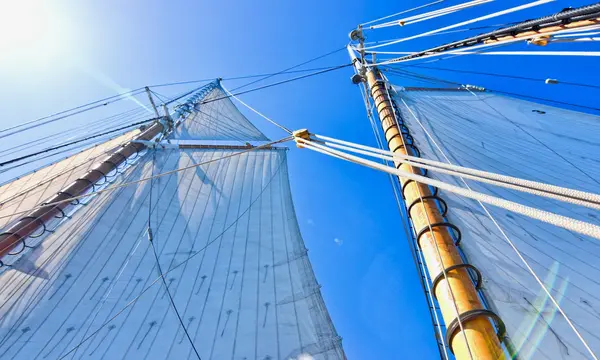
Amsterdam Yacht Service has disclosed a tightly sequenced exterior maintenance project on the 36.94-metre schooner Wolfhound. The brief combined a complete topsides respray with …
Superyacht Guide
Continue into the wider Superyacht Guide.
Business opportunities · Superyacht Guide
Companies serving the superyacht market can discuss clearly identified advertising, sponsorship and business-profile opportunities. Commercial activity remains separate from independent editorial coverage.