

IYC Explains How Yacht Buyers Should Choose International Boat Shows
IYC explains how buyers can compare yacht shows worldwide, select vessels worth inspecting and plan appointments around their real ownership needs, for.
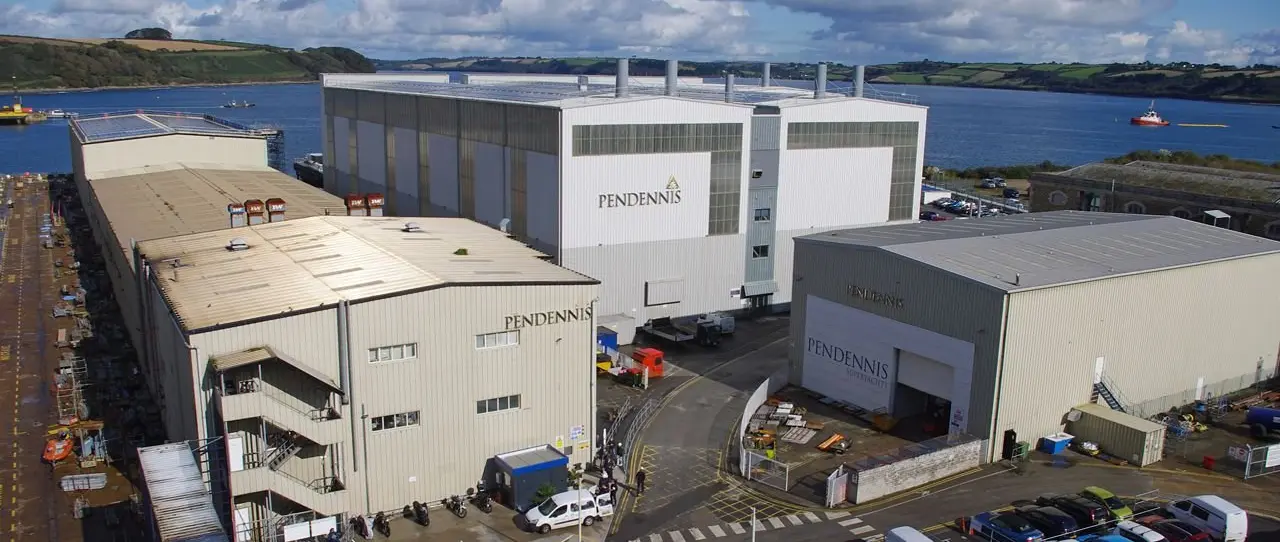
Ian Taylor / Wikimedia Commons, CC BY-SA 2.0; resized. Licensed contextual photograph of a British superyacht shipyard, not an endorsement or evidence of specific fee exposure.
A nine-week UK consultation opened on 23 November 2026 on proposed statutory service charges, including survey, inspection, training, certification and registry services.
The United Kingdom's Maritime and Coastguard Agency opened a nine-week consultation on proposed changes to its statutory fees on 23 November 2026. The agency says the exercise is intended to update and simplify charging for public services essential to maritime safety, administration and certification. Its stated closing date is 24 January 2027, giving yacht owners, management companies and other affected organisations a defined opportunity to review the proposals and submit feedback.
The consultation concerns proposed Merchant Shipping (Fees) Regulations 2028. That title is not a declaration that new prices already apply, and a fee consultation should not be confused with an invoice or a tariff currently in force. For the superyacht industry, the immediate news is the request for evidence and comment about how official costs should be recovered in future.
According to the MCA, the present charging framework has not kept pace with inflation since statutory fees were last set. The proposed reform aims to align what customers pay more closely with the cost of supplying a service while reducing the amount subsidised by taxpayers. The agency also wants a simpler structure so customers can understand charges and plan with greater certainty.
Those are the administration's stated objectives, rather than independently established outcomes of the proposals. A change designed to recover costs could still affect different clients in different ways, depending on which services they use and how often. Yacht owners should therefore examine the consultation documents rather than assume that the headline objective produces the same financial result for every vessel.
The MCA identifies three broad groups of statutory services: survey and inspection; seafarer training and certification; and the Registry of Shipping and Seamen. All three can touch parts of a professionally managed superyacht operation, though their relevance depends on the yacht's flag, use and the requirements applicable to particular crew members. A vessel's ownership structure and the nationality of its captain are not sufficient on their own to determine every possible exposure.
Survey and inspection may be relevant when a yacht requires particular examinations or certification services. Crew members or employers can have separate interests in training and certificate administration. Registration services concern another set of transactions, sometimes only at distinct stages in a vessel's ownership or operating history.
Large yachts often have complex compliance calendars involving flag-state requirements, class surveys, equipment servicing and professional crewing. A change in one category of official fees may not dominate the cost of an annual operating budget, but it can affect individual transactions and the way managers forecast regulatory expenditure. The most useful response is to identify whether UK statutory services are actually purchased for a specific yacht.
Owners should not be told that every superyacht will see an immediate increase. Many vessels operate under other flags or obtain services through different administrations, and the ultimate rules may differ from the initial proposals. The effect of this consultation on any one operation depends on final regulations, eligibility, service use and implementation dates.
Surveys and inspections are planned activities that owners commonly schedule alongside refits, annual maintenance and certificate renewals. When official charging structures change, an otherwise unchanged technical inspection may carry a different administrative cost. In some cases the time taken by an authorised surveyor and the logistics of travel can be material to the final bill.
The MCA has specifically mentioned changes intended to make surveyors' travel-time charging more consistent. That does not establish a universal price for visits to marinas or shipyards, and it does not quantify a yacht's future fee from the press release alone. Managers should inspect the full consultation schedule and request clarification before inserting provisional amounts into a formal owner budget.
Professional captains and crew depend on clear and timely certification processes. Statutory charges in the seafarer training and certification category can affect individual applications or employer-supported administration, depending on which services are used. For large yachts with internationally recruited personnel, it is especially important to distinguish UK services from qualifications and renewals managed elsewhere.
A change to fees is not necessarily a change to the underlying competence standard. Certificates may continue to require the same training or assessment even if the price of a relevant administrative service changes. Training coordinators should avoid presenting the consultation as an announcement of new licensing thresholds without separate official evidence.
The Registry of Shipping and Seamen is the third service group identified by the MCA. Registry transactions often occur at important commercial moments, including changes in ownership or registration, and may involve agents, counsel and technical managers. A proposed fee structure can therefore be relevant to a planned sale or transfer even when the yacht will not undertake a major survey in the same period.
The practical question is whether a particular transaction falls within the scope of the proposed charging schedule. Owners and brokers should ask for the applicable service description and current price before assuming that a future proposal is an amount payable today. Transaction budgets can then include a clearly labelled contingency if a deal is expected to span a potential regulatory transition.
The MCA says that a more consistent approach, including the use of fixed fees for some services, is intended to give customers greater certainty. Predictability may be valuable to managers responsible for several yachts or for complex maintenance schedules. However, a predictable charge is not automatically a lower charge, and there is no sound basis to describe the reform as a saving without comparing the actual proposals against a vessel's transaction profile.
A serious consultation response can distinguish administrative simplicity from the financial incidence of the change. For example, a service that is used frequently by one operator and rarely by another can have different budget effects even under an identical tariff. Industry participants should therefore consider both the schedule and the distribution of their actual service needs.
The government has invited responses during a period running to 24 January 2027. This is an opportunity for respondents to explain how the proposed model would work in practice, including effects on planning and access to statutory services. Operators with experience of inspection scheduling, certification renewals or UK registry transactions may be able to provide useful evidence grounded in actual administrative workflows.
Constructive feedback is stronger when it identifies a specific proposal and explains the operational consequence. A general statement that regulatory costs are rising may not address an underlying design choice. Managers can compile examples from their own systems while protecting confidential owner and crew information that need not be disclosed publicly.
A yacht's operating budget normally contains many categories that are larger than a single statutory transaction, including crew, maintenance, insurance and fuel. Even so, regulatory expenditure deserves a consistent line item with supporting evidence. The consultation is a prompt to update the assumptions behind that line, not to replace the present approved forecast with an unverified estimate.
For yachts undergoing substantial refits or changes of flag, timing matters. Some projects cross multiple financial years, and invoices can arise at different stages of a contract or inspection process. A manager should identify the effective date of any eventual rule and confirm which version of the charging schedule governs each transaction.
Superyacht sales and construction transactions bring together brokers, shipyards, surveyors and specialist legal advisers. Each can see a different portion of the same administrative process, which can create confusion if a proposed charge is discussed without identifying the payer and the service being supplied. The MCA's consultation offers an opportunity to develop a shared understanding of the relevant statutory fee categories.
Professional advisers should keep government charges separate from their own professional or agency fees. This distinction is important when owners compare quotations or investigate an unexplained budget variance. A clear statement of the statutory source, service and date helps prevent administrative costs from being attributed to the wrong organisation.
The MCA says it is operating within government principles that seek recovery of the full economic cost of statutory work without overcharging customers. Those principles explain the rationale presented in the press announcement, but they do not remove the need to scrutinise the detailed figures and assumptions. Respondents are entitled to examine the proposed balance between public subsidy, service quality and charges to users.
For the yacht sector, the central issue is whether the charging structure is transparent and proportionate to the relevant services. That assessment requires more than the press release's broad summary and should take account of the consultation's explanatory documents. The appropriate editorial stance is to report what has been proposed and what remains subject to consultation.
The announced deadline closes the response window; it does not automatically bring a new tariff into force. The administration must consider submissions and proceed through whatever formal steps are required for the final regulations. Until an updated official schedule becomes applicable, owners should continue relying on the current statutory charges for real transactions.
The 2028 label in the proposed regulations is another reason to avoid suggesting that a November 2026 consultation has already changed today's bills. A future commencement date and any transitional arrangements should be verified from the final legal instrument when published. Responsible budgeting keeps proposals, decisions and effective rules separate.
A useful response starts with identifying which MCA services a yacht has paid for in recent years. Managers can compare those transactions with the categories in the consultation, check the proposed charging model and prepare a short briefing for the owner. Where the financial effect is material or unclear, seeking expert clarification is more useful than repeating a general prediction of higher charges.
The industry has a defined period to participate in a policy discussion affecting official maritime services. What matters now is accurate recordkeeping, specific feedback and preparation for possible future change. A measured review gives owners visibility without confusing a proposed cost-recovery system with an enacted and immediately payable price.
Original primary record: Maritime and Coastguard Agency. Ian Taylor / Wikimedia Commons, CC BY-SA 2.0; resized. Licensed contextual photograph of a British superyacht shipyard, not an endorsement or evidence of specific fee exposure. Original first-party media: source photograph or official illustration. Copyright and image source are credited; first-party availability does not imply unrestricted reproduction permission.
Continue reading
IYC explains how buyers can compare yacht shows worldwide, select vessels worth inspecting and plan appointments around their real ownership needs, for.

Marine Results International has become a RINA Approved Service Supplier for mast and rigging surveys with no restriction on yacht size or rig type, …
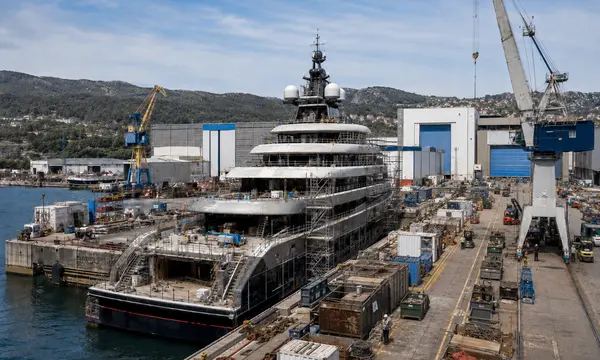
How owner deposits and stage payments help fund superyacht construction, why the model carries risk and what real shipyard cases teach buyers.

Burgess identifies a 74m Amels, 43m Codecasa and 36.6m Benetti among yachts offered for both sale and charter, inviting clients to experience life aboard …
Superyacht Guide
Continue into the wider Superyacht Guide.
Business opportunities · Superyacht Guide
Companies serving the superyacht market can discuss clearly identified advertising, sponsorship and business-profile opportunities. Commercial activity remains separate from independent editorial coverage.