Yacht Club de Monaco Awards 15 Yachting Masterclass Certificates
By Superyacht Guide Newsroom · Edited by Superyacht Guide Newsroom
SYG 20261124 batch12 official first party unique monaco15 Yacht Club de Monaco Awards 15 Yachting Masterclass Certificates
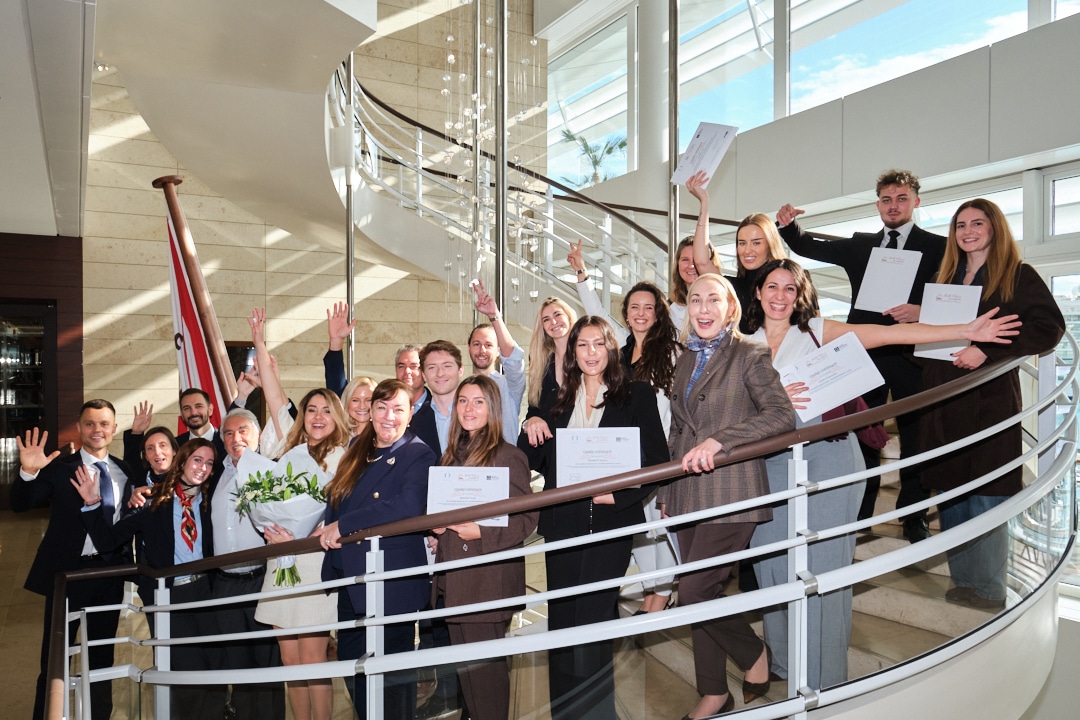
Monaco’s La Belle Classe Academy recognised 15 Yachting Masterclass graduates on 14 November 2026 after nine weeks of online learning.
Fifteen participants have completed a nine-week Yachting Masterclass organised by La Belle Classe Academy at Yacht Club de Monaco, receiving certificates at the club on Saturday 14 November 2026. The academy's official report confirms that the course began on 16 September and was conducted online, with classes held on Wednesday evenings and Saturday mornings. Its subject was not simply sailing or onboard hospitality. The programme introduced participants to the range of professional disciplines involved in creating, selling, managing and operating a superyacht.
The number of graduates is a verified outcome of a completed course, rather than an estimate of future students or a claim that fifteen new masters have been issued navigation certificates. The masterclass is designed to broaden industry understanding among people whose professional roles may touch different parts of the large-yacht sector. Its certificate should be described as an award for completing that educational programme, not as a statutory crew qualification.
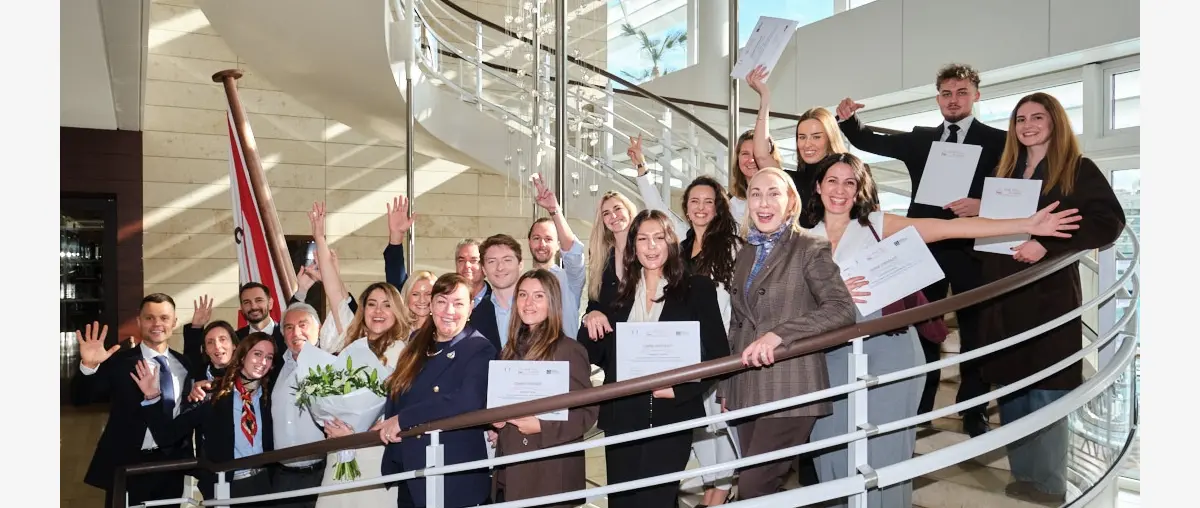
The Yacht Club de Monaco report identifies a gathering of fifteen graduates at its clubhouse on 14 November. The ceremony marked the end of a course running for nine weeks. This is a clear and specific professional development event, distinct from a new training programme merely being advertised or scheduled.
The official article does not publish a full roster of participants or assign each graduate to a yacht or employer. It would therefore be wrong to invent individual career changes, promotions or certificates of competency. The evidence supports the aggregate number of graduates and the breadth of training they completed.
The course commenced on 16 September 2026. This matters for the chronology because the graduation did not follow a one-day seminar; participants followed instruction over more than two months. An extended programme can provide room for topics to connect and for students to ask questions about unfamiliar parts of the industry.
Nine weeks should not be converted into a specific total number of tuition hours unless the organiser supplies that figure. The source describes the weekly schedule but does not provide an audited attendance log or compulsory practical sea time. Its scope is professional education across the business of yachting.
La Belle Classe Academy delivered the programme remotely. Online teaching can accommodate participants who live or work in different regions and may already be employed in demanding roles. For yacht crew, a course that does not require repeated trips to Monaco can be more practical than one involving regular travel.
Remote classes still require time, reliable communications and focused participation. A nine-week online course can teach professional context and industry processes, but it cannot replace practical instruction that might be required for specific navigation, safety or engineering credentials. The academy presents this programme as broader industry understanding.
The organisers scheduled classes twice weekly, on Wednesday evenings and Saturday mornings. This arrangement is designed to make attendance more accessible to people with weekday work commitments. It acknowledges that professional development must often fit around operational responsibilities rather than taking place during a lengthy absence from employment.
The course schedule is an important factual point because it distinguishes the programme from a conventional full-time academic course. The public report does not say whether every participant joined live from the same country or whether all sessions were recorded. It is enough to note the official online format and regular class times.
Naval architecture was part of the syllabus. This discipline determines fundamental characteristics of a vessel, including stability, hull design and how engineering choices affect performance. A person working in brokerage or yacht management may benefit from understanding the constraints under which designers and builders operate.
An introductory industry masterclass is not equivalent to a degree in naval architecture or an engineering licence. The report lists the subject among the topics covered, but it does not provide complete calculations, assignments or examination materials. The value is exposure to the profession and its connections with other fields.
Construction was another component. The path from a design brief to a finished superyacht involves engineering, procurement, subcontracting, installation, inspections and commissioning. A manager or adviser who understands the sequence can communicate more effectively with shipyards and owners when priorities or schedules change.
The academy's programme addressed the industry context of building yachts. It did not, according to the public report, certify the graduates to conduct welding inspections, operate a shipyard or sign construction drawings. Technical authority must remain with appropriately qualified professionals.
The course also introduced yacht design. On a large project, exterior styling and interior spaces have to coexist with structure, safety, equipment and crew circulation. Owners may seek distinctive aesthetics, but designers need to work within the vessel's physical and operational requirements.
For participants outside a design studio, understanding those trade-offs can improve decisions and reduce misunderstandings. The source confirms design as a subject taught without naming a specific design project completed by the class. It would be speculative to attribute a yacht concept to the graduating group.
Superyacht sales require knowledge that goes beyond advertising attractive photographs. Brokers need to understand a yacht's specification, condition, commercial position and the legal steps involved in a transaction. The masterclass included sales among its disciplines, enabling participants to appreciate the role of brokers in a wider project.
No evidence is published that students were licensed as brokers or completed real transactions as part of the programme. A certificate of attendance or completion should not be confused with the professional requirements that may apply in particular markets. The aim is an introduction to how the sector works.
Charter was another listed subject. Professional charter activity links yacht capability, crew, agents, guests and contractual commitments. A good charter programme has to balance customer expectations with the operational limits of the vessel and the regulations governing commercial use.
The academy's inclusion of charter acknowledges how many different professions intersect in a yacht's commercial operation. It does not mean the students automatically receive authority to manage a commercial charter business. Such responsibilities depend on experience, current rules and individual arrangements.
Management forms part of the syllabus because owners need ongoing support after delivery. Day-to-day responsibilities can include maintenance, technical records, finances, crew administration and compliance. Understanding how these functions interact is valuable even for professionals whose own work concentrates on design or sales.
The official report does not describe a proprietary management-software qualification or prescribe a universal management model. The masterclass introduces the professional relationships that make long-term yacht operation possible.
The course also covered insurance and maritime law. These fields influence contracts, ownership, liability, charter activity and the response to incidents. Professional advisers working in them may understand general commercial issues but benefit from additional knowledge about the distinctive structure of yacht projects and operations.
Studying maritime law is not the same as being authorised to practise it. Likewise, learning about insurance does not grant a licence to underwrite or arrange cover. The course offers a way to appreciate why specialist legal and financial advisers become involved in the superyacht sector.
The central theme described by Yacht Club de Monaco is the connection between different disciplines. A design decision may affect a shipyard's construction plan; a change in equipment may influence maintenance; operational experience can shape an owner's next yacht brief. People working in one segment do not always have a clear view of how the others contribute.
A masterclass that explains these relationships can improve communication across companies. It is an educational benefit rather than a numerical claim about project cost savings. The official source does not publish measured productivity gains from the programme, so those outcomes should not be assumed.
The academy identifies several potential audiences: existing yachting professionals, crew considering shore-based employment, students, young graduates and people working in banking, insurance or law. The diversity of roles is relevant because a yacht's commercial and technical life does not fit neatly within a single profession.
The report does not say precisely how many of the fifteen graduates came from each category. It describes the intended audience, not a demographic breakdown of this year's class. Keeping that distinction avoids misrepresenting the participants' identities or career history.
Crew members sometimes consider moving into management, brokerage, technical sales or other shore-based positions. Operational experience can be valuable in these roles, but a person may also need to learn about contracts, project management and the perspectives of other specialists. The masterclass is designed to expand that broader understanding.
It should not be advertised as a guaranteed employment route. Completion may help professional development, but a job offer depends on skills, opportunities and the employer's requirements. The organiser has not published a placement percentage for the graduating group.
Yacht Club de Monaco says La Belle Classe Academy was established in 2015. Its continuing educational work gives context to the November ceremony: this is an organised programme within a wider professional training institution rather than an isolated meeting without an academic framework.
A longstanding academy still needs to be judged by its individual programmes and the credentials they provide. The existence of the centre since 2015 does not imply that every course has the same syllabus or awards a regulated certificate. Readers should distinguish this masterclass from other possible qualifications offered by the institution.
The report says participants learned from professionals active in the disciplines being taught. That approach can provide practical insight into questions that do not appear in generic descriptions of the industry. A yacht manager may explain operational decisions differently from a designer or insurance specialist, and those perspectives can complement one another.
The organiser does not provide a complete speaker list in the public account used for this report. It would be inappropriate to invent keynote speakers, guest lectures or corporate endorsements. The verified teaching model is interaction with people who practise the relevant professions.
A sophisticated yacht project may involve a builder, owner representative, naval architect, interior designer, classification society, lawyer, insurer and technical suppliers. Each works within different responsibilities. Misunderstanding the boundaries can make decisions slower or less precise.
An educational programme that introduces the overall chain can help participants appreciate why cooperation matters. But it does not remove the need for individual expertise. Professionals should continue to seek qualified advice before making technical, commercial or legal decisions.
The club published photographs with its announcement of the graduates. These are evidence of an actual event, unlike a generic portrait of a classroom or yacht. The image attribution should remain connected to Yacht Club de Monaco and its credited photographer, and the photo should not be used to identify individual participants without a verified caption.
A publicly visible image is still subject to copyright. Correct source identification and a description of the actual ceremony are important for both editorial accuracy and the rights of the photographer.
A course-completion certificate demonstrates participation in a particular learning programme. It does not by itself establish STCW compliance, a yacht master qualification, an insurance professional licence or legal authority. Those credentials have separate requirements and recognition processes.
The academy's statement is clear that participants completed the Yachting Masterclass. Describing them as newly qualified yacht captains would be false. The distinction protects both the graduates and readers considering educational options.
The announcement confirms the November 2026 results. It does not establish enrolment numbers or dates for a future masterclass. A reader interested in applying should consult the academy's current information rather than infer that the same course calendar repeats unchanged every year.
The verified achievement remains the graduation of fifteen participants following nine weeks of remote instruction across multiple professional domains. That is sufficient for a meaningful industry education story.
The November ceremony highlights how the superyacht industry relies on more than the crew aboard a vessel. Design, construction, commercial representation, finance, insurance and maritime law all influence the finished product and its operation. People who understand those connections may be better prepared to communicate across disciplines.
La Belle Classe Academy's nine-week programme provided that broad perspective to fifteen graduates, culminating in the Yacht Club de Monaco ceremony on 14 November. It is an authentic and specifically documented professional-development milestone, with no need to invent qualifications, employment guarantees or results beyond those the academy has confirmed.
Primary source: Yacht Club de Monaco first-party French report, 14 November 2026.
Photo: Yacht Club de Monaco / @mesi, official photograph of the 14 November 2026 Yachting Masterclass graduation ceremony. Official source.
Explore
Go deeper into the yachts, companies, events and destinations directly connected to this article.
Continue reading
Monaco’s March 2027 exploration programme brings expedition yachts, scientific discussions, captains and marine innovation together at Yacht Club de Monaco.
Yacht Club de Monaco sets the second J/70 Sportsboat Winter Series act for 10–13 December 2026, with further international racing scheduled through March 2027.
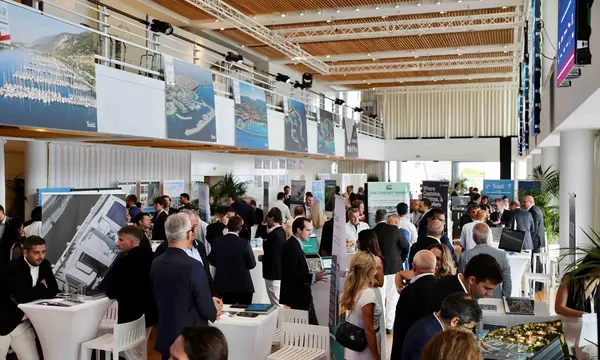
The sixth Monaco Smart & Sustainable Marina Rendezvous opens on 20 September with participants from 30 countries discussing marina investment, biodiversity, standards, AI and …
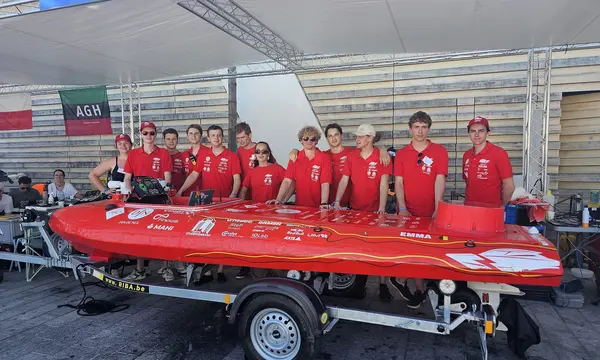
Yacht Club de Monaco invites engineering students to redesign its Energy Class catamaran, with May 2027 submissions and final presentations in Monaco.
Superyacht Guide
Continue into the wider Superyacht Guide.
Business opportunities · Superyacht Guide
Companies serving the superyacht market can discuss clearly identified advertising, sponsorship and business-profile opportunities. Commercial activity remains separate from independent editorial coverage.