Muir HR22000 Addresses Space-Constrained Superyacht Windlass Installations
By Superyacht Guide Newsroom · Edited by Superyacht Guide Newsroom
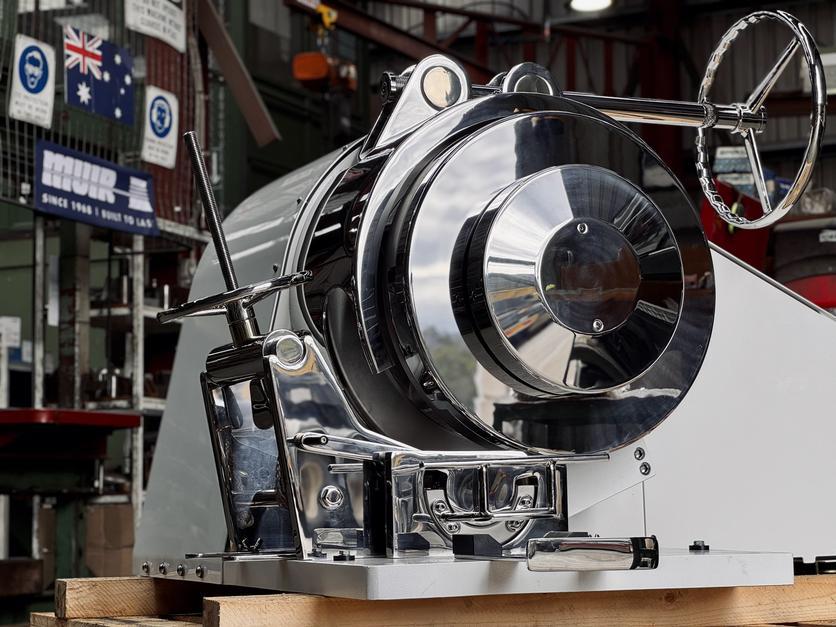
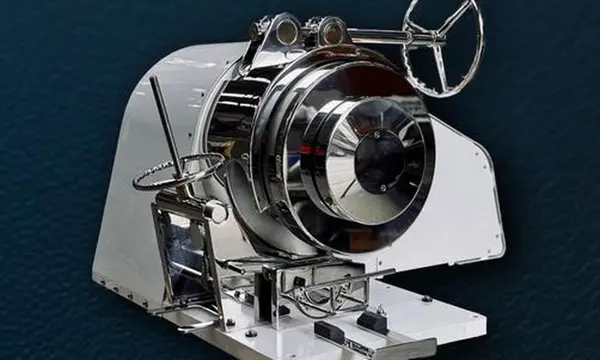
Muir HR22000 original Australian manufacturer superyacht anchor windlass genuine technical product photo
Muir showcases its HR22000 windlass, engineered around tight superyacht foredeck installation spaces to protect safe anchoring and essential maintenance access.
Australian deck-machinery manufacturer Muir Anchoring Systems is drawing attention to the HR22000, a horizontal windlass developed in response to a challenging spatial constraint identified by a superyacht shipyard. The official METSTRADE 2026 product listing says the project began because existing windlass solutions could not satisfy the yard's installation requirements without compromising safety or access. Rather than adapting an available unit, the supplier says it undertook a ground-up design exercise with experienced superyacht builders. The product was listed in April 2026 and is part of the company's current exhibition offering, not a first-time November launch. For large yacht owners the significant development lies in the engineering process: anchoring machinery has to function reliably within highly constrained spaces while remaining accessible to crew who must inspect, maintain and sometimes recover it under difficult operating conditions.
A large superyacht's foredeck conceals equipment that must manage considerable mechanical loads. Windlasses, chain lockers, stoppers, fairleads and associated controls all compete for space with structure, access routes and other deck hardware. The exterior designer may prefer an uninterrupted bow profile, while the engineering team needs room for gears, brakes, motors and maintenance access. These requirements are not always compatible with the footprint of a standard catalogue product. The HR22000 story is interesting because Muir explicitly states that an actual shipyard problem initiated the design. It illustrates how bespoke equipment sometimes arises from a constraint that cannot be resolved simply by choosing a smaller model. A machine that physically fits but cannot be serviced safely is not a sound engineering solution.
The METSTRADE listing identifies the HR22000 as a Muir windlass designed after close collaboration with demanding superyacht builders. It says the original challenge concerned available installation space and the need to maintain safety and access. The announcement does not publish a full technical schedule showing maximum chain size, pulling power, rated holding capacity, motor specification or dimensional drawings. Buyers should therefore avoid inferring numerical performance from the product name alone. An owner cannot safely assume that HR22000 refers to a particular mass, thrust or load rating without checking the manufacturer's technical documentation. The available source supports a story about the engineering approach and market application, while leaving the exact equipment capabilities to be confirmed for each yacht.
The deck machinery works as part of a complete anchor-handling arrangement. Chain must travel through fairleads, a gypsy and the chain locker without excessive interference or uncontrolled movement. Poor alignment can create wear, uneven loading and difficulties when retrieving the anchor. A yacht may have unusual bow geometry or large decorative elements that make the ideal chain path difficult to achieve. A ground-up windlass design can create opportunities to address such issues, but the surrounding structure and chain-handling equipment still need coordinated engineering. Naval architects must determine where loads are transferred and ensure that the supporting foundations can withstand the relevant conditions. A manufacturer-specified machine should not be installed as an isolated component without examining the entire anchoring system.
Technical access is frequently sacrificed late in a superyacht project when the design team is trying to preserve usable volume or a flawless deck arrangement. That creates problems later when engineers need to inspect brake linings, service hydraulics or remove parts. Muir's product description makes service access part of the original design challenge, which is significant. A properly engineered installation should provide clear routes to items that require periodic maintenance and allow necessary removal without major dismantling of surrounding structure. The captain and chief engineer should review those arrangements before they are hidden behind finishing panels. A windlass that occupies a compact footprint may still need a larger servicing envelope when equipment is opened or components are lifted. Those dimensions belong in the approved general arrangement and technical drawings.
A windlass is designed to handle chain movement and related operational forces, but safe anchoring arrangements also require a clear understanding of how the load is held once the vessel is secured. The appropriate stopper, brake and handling procedures depend on the equipment and vessel design. Muir's separate November 2026 operational guidance emphasises that the chain stopper rather than the windlass should carry the relevant at-anchor load in a properly arranged system. That is a general principle requiring application through the specific manuals and approved procedures for the yacht. The HR22000's published product description does not establish which stoppers are included or how its brake is rated. The technical specification should make these interfaces explicit, and the crew should be trained in a consistent sequence for deployment, setting and recovery.
A substantial yacht can experience very large forces on its ground tackle in weather, current or an exposed anchorage. Those loads depend on vessel displacement, windage, chain geometry, seabed conditions and the circumstances of operation. An apparently strong windlass does not remove the need for suitable anchors, chain and securing arrangements. The designer should establish the applicable class and flag requirements and select machinery capable of the tasks assigned to it. The supplier's engineering response to a spatial constraint is valuable only if it preserves the required structural safety margins. Procurement documents should distinguish handling loads, holding arrangements and emergency limits. Owners benefit from knowing which ratings have been independently assessed and which are specific to a manufacturer test rather than a complete vessel approval.
The ideal time to solve a difficult windlass problem is before surrounding hull and deck structure has been finalised. The shipyard can share its expected anchor arrangement, chain size, structural drawings and service-access envelope with the machinery supplier. Iterative design may then help balance the equipment's mechanical requirements with the spaces available. If the selected solution needs a different gear arrangement or mounting configuration, that decision may influence the bow structure and installation sequence. Muir's claim that HR22000 emerged from a particular shipyard collaboration illustrates this approach. Owners should ask whether the relevant design is standardised or customisable and which aspects can be altered without affecting approval. A well-defined engineering responsibility matrix avoids discovering interface problems only during final outfitting.
Windlasses may use different power arrangements depending on vessel size and engineering philosophy. The chosen HR22000 package must be examined for its actual motor and gearbox configuration; the short exhibition listing does not specify a universal drive choice. A hydraulic system can introduce piping, pumps, reservoirs and cooling considerations, while an electric system requires attention to supply characteristics, protective devices and cable routing. Both need appropriate controls and fault handling. A shipyard should assess how the machinery integrates with the yacht's existing services, especially if other deck equipment shares hydraulic or electrical capacity. The supply architecture also affects maintenance and emergency response. It is not enough for the windlass to have adequate mechanical capacity if the vessel cannot deliver the necessary power safely when the crew needs it.
Anchoring systems need procedures for equipment faults, chain jams or loss of normal power. The yacht's captain should ensure that operators understand how the selected machinery behaves and which actions are permitted under abnormal conditions. A compact machine may be especially challenging to reach during a fault if access was not carefully planned. The design should therefore address safe isolation, mechanical recovery options and the space required for specialist intervention. The manufacturer must provide the relevant procedures and limitations; improvisation around a loaded chain is hazardous. Crew should not open guards or release components without following the approved steps. An equipment choice can be considered complete only when the operating manual, emergency procedures and service access have been reviewed as carefully as the visible foredeck arrangement.
Replacing an existing windlass is often more complicated than fitting one in a newbuild. The hull structure, chain path and original mounting space already exist, and moving them can involve costly steelwork or changes to the deck. An owner may seek a different machinery design because the original installation is difficult to maintain or no longer meets the vessel's operating needs. A custom approach such as that described for HR22000 could be useful in principle, subject to technical suitability. The yard should first survey the existing foundations and the complete anchor-handling arrangement, including corrosion or damage around the locker. It should also establish whether any new load path requires structural reinforcement. A replacement that fits the same visible opening may still introduce significant changes below deck.
After installation, the yacht should undergo appropriate tests of chain movement, control responses, stopping arrangements and fault indications. The commissioning programme should be agreed with the supplier and reflect applicable rules and the approved system design. Operators need a practical demonstration, not only a file of manuals. The engineer should receive spare-part numbers, service intervals and the details of any custom components that may not be available through a general distributor. If the machine was designed around a unique shipyard constraint, those particulars should be preserved in the vessel's technical records. A future crew or surveyor may otherwise struggle to understand why the installation differs from standard equipment. Strong documentation is a lasting benefit of the design process.
Heavy deck machinery is exposed to moisture, salt and repeated mechanical stress. Even if parts of a windlass remain protected below deck, the operating environment can be harsh. The crew must monitor seals, bearings, corrosion, brake condition and the chain path according to the manufacturer's instructions. A custom product also raises questions about spare parts and the availability of a replacement component if it is damaged during a remote cruise. Owners should establish a support plan that accounts for international use and the criticality of the system to safe anchoring. A lower initial installation cost may prove illusory if later repairs require extensive dismantling. The true value of a compact arrangement depends on both serviceability and the ability to maintain correct operation for years.
The HR22000 stands out within the 2026 METSTRADE catalogue because Muir's description focuses on a real design constraint and the response to it, rather than solely on a list of features. It highlights the tension between aesthetic ambitions, limited technical space and the physical requirements of anchoring machinery on a large yacht. A design developed from close builder collaboration may solve an important problem, but the manufacturer has not supplied all the numerical information needed to select it for an unrelated vessel. The right editorial conclusion is that owners should involve machinery specialists early and demand evidence of safe load handling, proper access and maintainability. Equipment designed to fit the yacht should also be designed to support the people who must use and repair it.
Muir's official HR22000 product listing is dated 30 April 2026. Its presence in the current Superyacht Zone catalogue offers builders another opportunity to discuss the company's collaboration-led approach, but it would be incorrect to call it a November premiere. The model addresses a different sector and design problem from Muir's recently announced INOX PRO recreational windlass housing upgrade. HR22000 concerns packaging of substantial superyacht deck machinery; INOX PRO addresses material choices for smaller recreational equipment. Keeping the two developments separate is important for technical buyers. The larger message from Amsterdam is that some of the most consequential superyacht innovations remain hidden in spaces guests rarely see, where safe operation and long-term serviceability are more important than a dramatic exterior appearance.
**Primary source:** Muir Anchoring Systems' HR22000 product listing in the official METSTRADE 2026 Superyacht Zone catalogue, released 30 April 2026. No unsupported numerical load rating, certification or first-time November launch is asserted.
Primary source: Muir Anchoring Systems — official HR22000 product listing released 30 April 2026, presented at METSTRADE 2026.
Official Muir Anchoring Systems HR22000 superyacht windlass manufacturer photograph from its METSTRADE 2026 presentation. Official source.
Explore
Go deeper into the yachts, companies, events and destinations directly connected to this article.
Continue reading
Aon Italia's Paolo Mascino identifies crew liability and shipyard insurance as critical issues for superyacht owners, covering P&I and refit risk allocation.
Running a 40m superyacht requires a substantial annual budget for crew, maintenance, fuel, berthing and other operating costs. Superyacht Guide's 2026 model of 322 …

Superyacht Guide's 2026 running cost calculator provides annual, monthly and five-year ownership estimates using either an existing yacht or a planning value. It gives …
Muir debuts its INOX PRO stainless motor and gearbox housing option for recreational windlasses at METSTRADE 2026, addressing corrosion in anchor lockers.
Superyacht Guide
Continue into the wider Superyacht Guide.
Business opportunities · Superyacht Guide
Companies serving the superyacht market can discuss clearly identified advertising, sponsorship and business-profile opportunities. Commercial activity remains separate from independent editorial coverage.