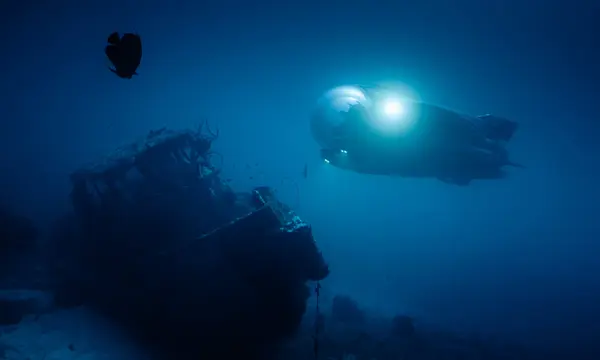
U-Boat Worx Completes Super Sub Trials Ahead of First Client Delivery
U-Boat Worx has completed Curaçao sea trials of its Super Sub and confirmed first-client delivery, with a 300m operating depth and nine-knot top speed.

Image: PowerCell Group
PowerCell has secured a SEK21 million DLR order for a marine Fuel-to-Power test system combining two Marine System 225 fuel cells with methanol reformers.
PowerCell Group has secured an order worth about SEK21 million from the German Aerospace Center, DLR, for an integrated marine Fuel-to-Power test system in Kiel. The installation will combine two Marine System 225 fuel-cell units with two methanol reformers, hydrogen buffer storage, gas mixing and integrated control equipment.
The project is relevant to large yachts because it addresses one of the central problems facing hydrogen-electric vessel design: how to carry a practical amount of energy without dedicating very large volumes to compressed or cryogenic hydrogen storage. In this architecture, liquid methanol is carried as the primary fuel and reformed into hydrogen on demand before the hydrogen enters the fuel cells.
Each Marine System 225 has a net electrical output of 225 kW, giving the DLR installation two independently packaged marine fuel-cell units as the electrical conversion stage. PowerCell says the systems are designed for marine use, are scalable into larger power installations and have received type approval from Lloyd's Register and RINA.
The order also includes the equipment needed to turn methanol into a usable hydrogen stream, rather than testing the fuel cells in isolation. That makes the facility useful for examining the complete chain from stored liquid fuel through reforming, gas handling and buffering to electrical generation under changing loads.
PowerCell says DLR intends to operate the system across profiles ranging from steady-state loads to fully dynamic cycles representing different vessel types. Delivery is planned for the fourth quarter of 2026, with commissioning expected during the first half of 2027 at DLR's maritime research facilities in Kiel.
Dynamic testing is important because a yacht's electrical demand changes constantly. Hotel loads, propulsion assistance, stabilisers, HVAC, galley equipment and battery charging can create rapid load swings, so a fuel-to-power installation has to respond safely and efficiently rather than simply achieving good figures at a fixed laboratory output.
Methanol is liquid at normal ambient conditions and already has an established global marine-fuel logistics base. Reforming it on board does not make the overall energy chain emission-free by itself, because the lifecycle result depends heavily on how the methanol is produced, but it can simplify storage compared with carrying the same usable energy as compressed hydrogen.
For superyacht designers, the attraction is therefore less about one fuel winning immediately and more about having another route to fuel-cell power. A yacht could potentially use fuel cells for quiet hotel loads or part of a hybrid propulsion system while carrying a liquid fuel that is easier to bunker and store than pure hydrogen.
The DLR order is a test and research installation, not a yacht delivery. Its value to the yacht sector will come from the operational data generated as the combined reformer, buffer and PEM fuel-cell system is exposed to realistic changing loads and start-stop conditions.
If the architecture proves robust, it could help inform future decisions about auxiliary power, battery sizing and low-emission operation on large yachts. The project also shows that marine fuel-cell development is moving beyond individual stacks toward complete, controllable fuel-to-electricity systems that can be engineered into real vessel power networks.
Continue reading
U-Boat Worx has completed Curaçao sea trials of its Super Sub and confirmed first-client delivery, with a 300m operating depth and nine-knot top speed.
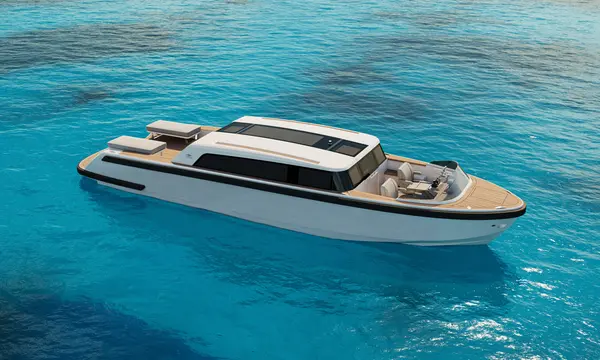
Castoldi’s new 10.5m JT34 Limo combines twin waterjet propulsion, an enclosed air-conditioned cabin and seating for 12 guests plus two crew.
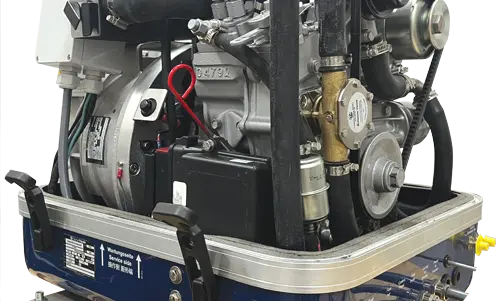
Fischer Panda has introduced the compact 5.5e inverter generator, rated at 5.5kW and designed for quiet variable-load marine electrical supply.
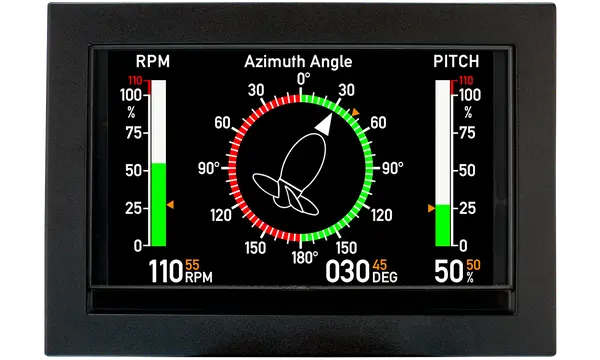
DEIF has previewed its next-generation XDi II digital bridge instrumentation alongside new wind and rudder-sensing hardware at SMM 2026.
Superyacht Guide
Continue into the wider Superyacht Guide.