Prebit Brings Dual-Channel EB108 RW Bridge Lighting to the METSTRADE Design Award Programme
By Superyacht Guide Newsroom · Edited by Superyacht Guide Newsroom
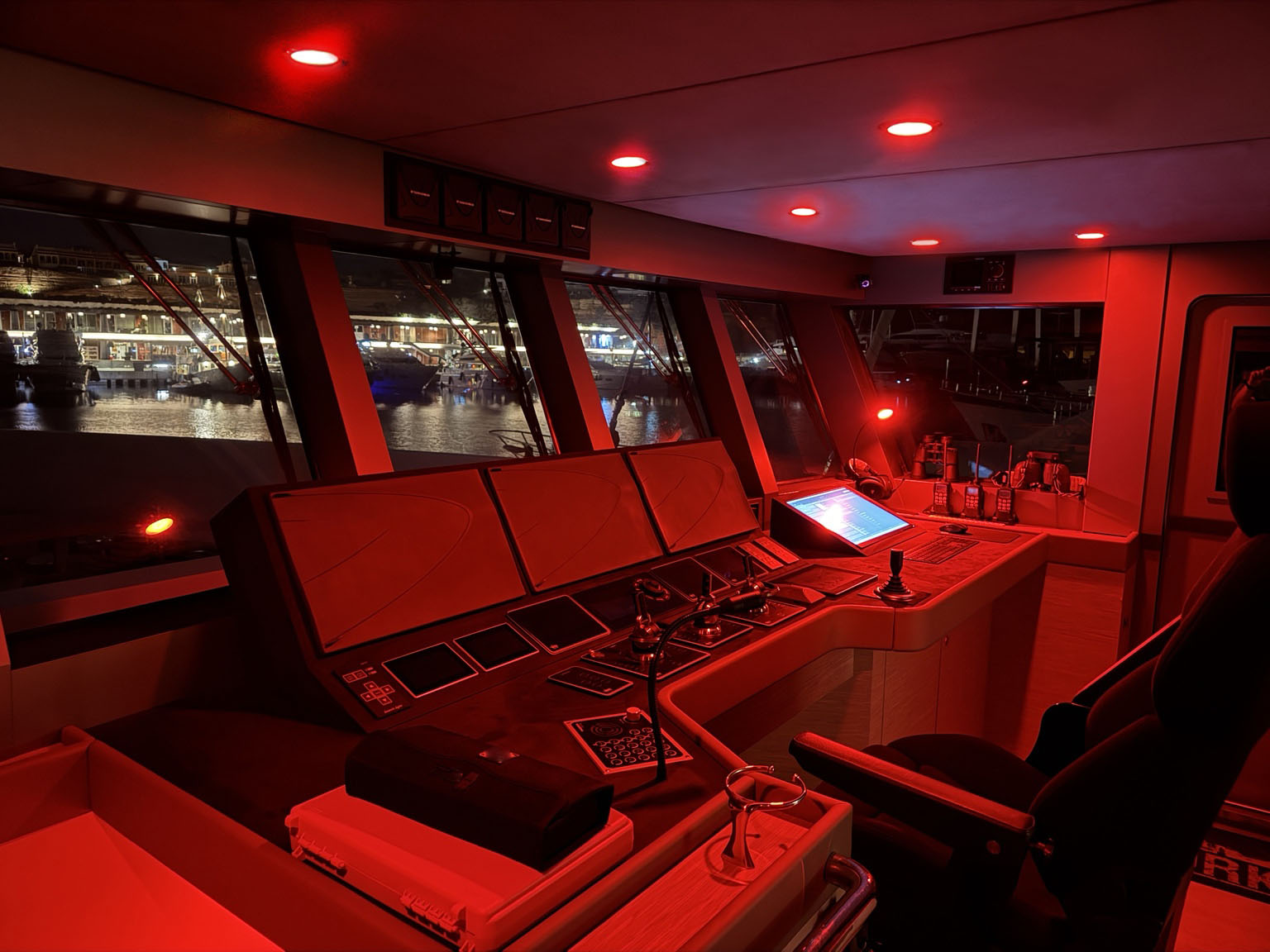
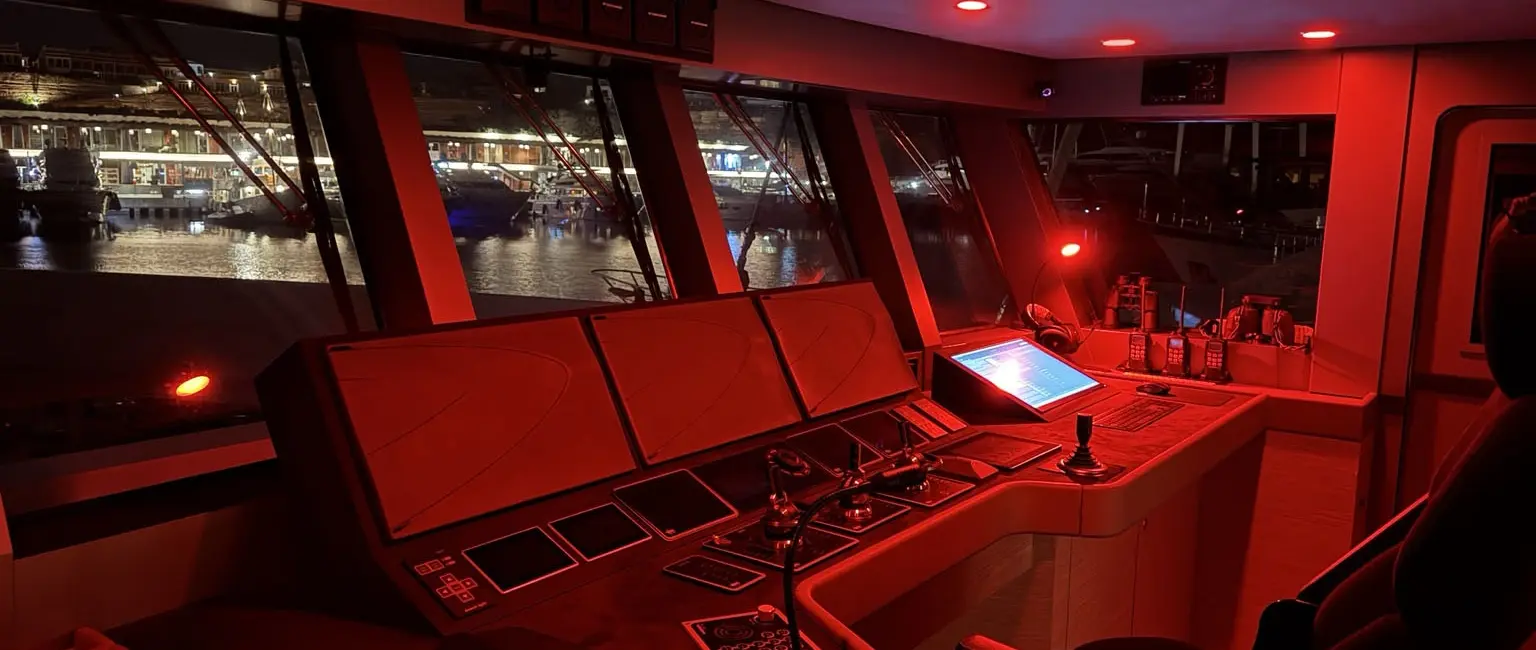
Prebit EB108 RW official exhibitor product publicity image at METSTRADE 2026
Prebit's DAME-nominated recessed fitting combines independently dimmable white and red LED lighting with selectable optics for professional yacht wheelhouses.
During METSTRADE 2026, which runs from 17 to 19 November in Amsterdam, the DAME Design Award programme gives yacht designers and technical buyers an opportunity to examine equipment that addresses practical problems in marine installations. German lighting manufacturer Prebit is among the exhibitors presenting such a product, the EB108 RW recessed downlight, which combines white and red illumination in a single fitting. The manufacturer's announcement of 29 October identifies the unit as a DAME nominee and describes its intended applications in wheelhouses, bridges and crew spaces. The fitting has a central white-light source and a surrounding red LED ring. Both modes are dimmable, according to the published specification. The significance of the design lies less in the novelty of red illumination itself than in the consolidation of two lighting functions otherwise often provided by separate fittings. This report concerns the nominated design and its technical specification, not a claim that the product received an award.
A superyacht wheelhouse is a working environment whose requirements change throughout a voyage. It may be used in daylight for reviewing navigational information, discussing operational plans and reading documents. At night, the people on watch may require a substantially different distribution and intensity of illumination. They must be able to carry out their duties while retaining an appropriate view outside and managing the visibility of instrumentation. The colours and surfaces within the bridge can have an important influence on the way light is reflected towards windows. Prebit's proposed fitting addresses the need to provide two forms of general illumination without necessarily allocating separate physical locations in the ceiling to each. It is not a substitute for a complete bridge lighting specification. The relationship between instrument illumination, task lighting, window reflections and general illumination must be considered for the actual yacht. Red light may assist in limiting disruption to dark adaptation under suitable conditions, but excessive intensity or unsuitable placement can still be a problem.
The EB108 RW is designed with a white-light module surrounded by a separate ring of red LEDs. The latter is associated with a laser-engraved acrylic diffuser, while the white-light arrangement incorporates a choice of optical components. A fitting that combines these functions should not be confused with a conventional decorative colour-changing luminaire. The manufacturer describes a distinct optical arrangement intended to deliver different lighting characteristics from a single recessed location. That distinction is relevant to the specifying designer because the performance required from each channel is not necessarily the same. A white source selected to illuminate an extensive work area might require relatively high output, whereas the red channel might be used at a considerably lower level. The particular location of the fitting can influence the usefulness of both modes. It is therefore important to evaluate the intended ceiling position using the requirements of each channel, rather than assume that a location selected for one application is automatically appropriate for the other.
Prebit specifies white-light output of up to 2,000 lumens and red-light output of up to 120 lumens. These are declared luminous flux values, not a direct measurement of illuminance at a bridge console or other working surface. The amount of light reaching a particular area depends on the distribution of the source, its distance and orientation relative to that area and the surrounding surfaces. The much smaller red-light figure also reflects the different purpose of the two channels. It would not be appropriate to compare them simply as alternative sources for producing the same general illumination level. A designer should establish the appropriate performance under the different operating conditions of the bridge. Depending on the layout, multiple fittings, more selective task lighting or other sources may also be necessary. The manufacturer has not provided a complete photometric file within its short press announcement, and the published output figures alone do not determine the number of luminaires required for a particular space.
Five interchangeable beam angles are identified in the specification: 18, 24, 36, 60 and 80 degrees. The choice has practical consequences for a yacht interior because ceiling heights, console positions and the dimensions of spaces vary. A narrower optical distribution can concentrate light within a more limited area, while a wider distribution may cover more of the surrounding environment. Neither approach is universally preferable. A fixture positioned close to an important reflective surface may require particular attention to the direction of its light. Conversely, a more extensive space may benefit from a broader distribution or a coordinated arrangement of several luminaires. The relevant assessment should be made with the actual geometry of the vessel rather than on the basis of the nominal beam angle alone. Designers can use the selection of optics to coordinate the lighting arrangement with the bridge's furnishings and operational needs. The product's interchangeable optical system creates flexibility at the specification stage, but the practical access needed to change components after installation should also be established.
The white-light channel is available in nominal colour temperatures of 2700, 3000 and 4000 kelvin, with a stated colour rendering index of up to 98. The temperature choices allow the specifying team to consider the character of the light alongside the appearance and function of the room. Colour rendering can be relevant where personnel need to distinguish materials, markings or other visual information accurately. The maximum published index should not, however, be interpreted as a guarantee that every available configuration has an identical colour rendering performance. The relevant data should be confirmed for the configuration selected. A yacht's bridge can contain a variety of screens and surfaces whose colours may appear different under different combinations of reflected and source illumination. The choice of a fitting is therefore best made in conjunction with the overall design and instrumentation requirements. Professional assessment and appropriate trials remain important in establishing whether the complete lighting arrangement provides a suitable environment for the crew.
The manufacturer identifies fewer ceiling openings and reduced cabling complexity as advantages of consolidating the two lighting functions. In a new-build project, a coordinated fitting can simplify some aspects of the arrangement of ceiling components. In refit, the possible benefits depend on the location of the existing equipment and the condition of the surrounding construction. Replacing two fittings with one may leave an unused opening, or may require alterations to the ceiling panel and its supporting arrangements. The new unit still needs an appropriate power supply, controls and access for service. Its ability to provide two independently controllable functions does not establish that the existing wiring can be reused without modification. Project teams should ask for the applicable technical drawings, electrical requirements and installation instructions before committing to a particular configuration. The press release does not identify the total depth required behind the visible ceiling or the precise connection arrangement for all versions. These details are especially important where several unrelated installations occupy the same limited space.
Dimming is offered for both the white and red channels. That feature can support the development of lighting settings for different operational circumstances, but the design of the controls should allow the crew to understand and select the appropriate functions reliably. A bridge may also need to provide local and central control of particular fittings, depending on the layout and intended operating arrangements. The compatibility of the luminaire with the yacht's control system must be established using the current manufacturer specifications. A product that can be dimmed is not necessarily compatible with every available dimming protocol or power supply. Maintenance planning also deserves attention: components installed behind a finished bridge ceiling may be difficult to reach if access has not been considered in the initial design. Engineers should establish which parts are serviceable and what provision is needed for replacement. The release describes the integrated optical and light-source arrangement but does not specify the service sequence or life of the individual components.
The EB108 RW is developed and manufactured in Germany according to Prebit's announcement. Its DAME nomination provides a useful reason for technical buyers visiting the exhibition to examine the relationship between lighting design and professional marine operation. For superyacht projects, a consolidated luminaire may be relevant to the aesthetics of a carefully designed bridge as well as the requirements of the personnel working within it. The actual savings in installation labour and materials will depend on the project and should not be assumed from the nomination. Designers should also establish the applicable approval and technical requirements for the intended vessel and location. The central development is the presentation of a recessed fitting that addresses white and red illumination through distinct optical arrangements within one assembly. Its suitability will depend on the quality of the complete lighting design, including the placement and control of the fixtures and their interaction with the yacht's working environment.
Primary source: Prebit GmbH official METSTRADE exhibitor announcement, 29 October 2026, reviewed during the November exhibition.
Image: Prebit GmbH, original-resolution publicity asset accompanying the manufacturer's METSTRADE product announcement. Official source.
Explore
Go deeper into the yachts, companies, events and destinations directly connected to this article.
Continue reading

Rondal's 50th-anniversary account traces the development of its custom aluminium and composite spars, from Endeavour's rig to modern large-yacht manufacturing.

Channel 28 expands its MORSE service-call system with tactile switches, offering superyacht designers and integrators a choice of physical or piezo controls.

Rondal highlights captive winch technology at METSTRADE, tracing electric sail-handling advances and the move into remote-operated superyacht mooring systems.
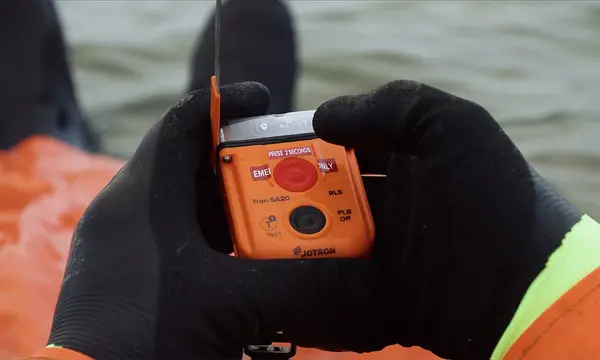
Jotron outlines a QR-based product passport planned for 2027, linking marine equipment to manuals, approval documentation and its international service network.
Superyacht Guide
Continue into the wider Superyacht Guide.
Business opportunities · Superyacht Guide
Companies serving the superyacht market can discuss clearly identified advertising, sponsorship and business-profile opportunities. Commercial activity remains separate from independent editorial coverage.