Rigging Projects X Glide Ceramic Sheaves Address Large Sailing Yacht Line Loads
By Superyacht Guide Newsroom · Edited by Superyacht Guide Newsroom
Rigging Projects X Glide Ceramic Sheaves Address Large Sailing Yacht Line Loads — official manufacturer image SYG News 2026-11-24 batch02
Rigging Projects' X Glide uses ceramic rolling elements and double angular-contact bearings for large-yacht sheave systems, warranting load-specific review.
Rigging Projects' X Glide is a high-performance sheave system designed for larger performance and racing sailing yachts, with ceramic rolling elements and a double angular-contact bearing arrangement intended to reduce friction when lines are moving rapidly under load. The British supplier's product remains in the 2026 METSTRADE catalogue, keeping attention on an often overlooked aspect of sailing-superyacht engineering. A sheave may be physically small compared with a mast or a winch, but it changes how rope loads are transmitted through the rig and determines how freely a control line runs. The manufacturer says its bearing seals and ceramic-element arrangement are intended to minimise servicing. The practical question for riggers is whether a specified unit can combine suitable load capacity, low resistance and serviceability under the particular geometry of a 24-metre-plus sailing yacht.
The official Rigging Projects X Glide entry identifies an original release date in September 2022. Its inclusion in the METSTRADE 2026 catalogue is therefore current industry exposure, not evidence that the product was newly invented at the November exhibition. It also needs to be distinguished from the company's X Batten Car, a separate product recognised by a 2026 DAME special mention. The X Glide story is about the continuing role of specialist sheave designs in high-load rig systems, not a claim that it won a DAME award itself. Keeping those identities separate is important to accurate equipment reporting.
Sailing loads often pass through several turning points before a line reaches a winch, hydraulic system or crew-operated control. Each change of direction introduces a reaction force into the supporting structure. A sheave must guide the line through that bend while resisting bearing loads and allowing rotation. If resistance becomes excessive, a winch may work harder and line handling can become less predictable. However, friction at one component is only part of a larger system that includes the rope, fairleads, blocks and winch. An improved sheave cannot compensate for an unsuitable line path or overloaded hardware elsewhere.
Rigging Projects specifies ceramic rolling elements in the X Glide bearing arrangement. Ceramic material may offer useful characteristics in particular bearing applications, including resistance to some forms of corrosion and a suitable balance of hardness and weight. Those are general engineering considerations, not proof that every ceramic bearing outlasts every steel bearing in seawater. Performance depends on race material, lubrication, contact stresses, sealing and the actual environment. A yacht engineer should seek the supplier's complete bearing specification before drawing conclusions about durability or allowable loads. The important point is the integrated design rather than the word ceramic alone.
The company says the X Glide uses a double angular-contact arrangement. Such bearing geometry can be useful where a rotating component faces forces with more than one direction, although the precise rating belongs to the finished assembly. On a real yacht, a sheave may experience changing rope tensions and side loads as the sail plan shifts. The installer should confirm which forces the manufacturer has accounted for and whether the intended lead angle falls within the approved limits. A bearing that turns freely under a simple test may behave differently if the rope is misaligned or the structure flexes under sail.
The manufacturer describes X Glide as designed for low friction and high rolling speeds. Those claims are relevant to performance sailing, but the official listing does not publish a universal percentage of resistance reduction for every sheave size and load. A comparison would need consistent rope, bearing load, speed and alignment. A yacht owner should avoid treating a product description as a guarantee that the vessel will sail faster by a particular number of knots. The gain may be more directly related to reducing line-handling effort or improving repeatability in some manoeuvres. An accurate trial should isolate the component's contribution where possible.
Large sailing yachts can move substantial lengths of control line during tacks, gybes and sail changes. A sheave that runs at high rotational speed must retain suitable bearing behaviour and protect the rope from heat or abrasion. Sudden loading changes can be more demanding than a slow workshop demonstration. The manufacturer positions X Glide for performance and racing environments where these characteristics matter. Still, the safe speed and loading envelope must be obtained from technical drawings, not guessed from the marketing phrase high performance. Crew should also ensure that lines remain correctly aligned during rapid operations.
A sheave exposed on deck or in an exterior rig assembly may encounter spray, salt deposits, airborne grit and washdown water. Rigging Projects states that bearing seals contribute to the X Glide's limited service requirement. Protection against contamination can help preserve smooth operation, but seals are components that may themselves wear or be damaged during maintenance. Their design needs to suit the intended exposure. A product's specification should state what inspection and cleaning are needed. It would be unsafe to interpret minimal service as no service over the entire life of a superyacht.
The sheave groove needs to match the approved rope or cable arrangement. Modern high-modulus fibres and traditional ropes have different handling characteristics, bending limits and sensitivity to heat or abrasion. An incorrect groove profile can increase wear even when a bearing operates perfectly. Rig designers should check diameter, rope construction, minimum bending radius and anticipated working load together. The X Glide listing does not give one universal size suitable for every line. A large yacht may use several different sheaves across its sail-handling systems, each requiring its own selection and installation details.
The surrounding block, pin, mast fitting or deck foundation has to carry the reactions from a loaded line. Replacing a component with a lower-friction version does not automatically make the structure stronger. In some situations, improved mechanical efficiency may encourage the crew to apply higher line tension, which could expose another weak part of the system. Installation should therefore include a review of supporting hardware and any relevant inspection history. A high-performance sheave is one link in a chain of structural and operational decisions. It needs an appropriate safety margin for the loads actually anticipated.
The rope should enter and leave the sheave within the geometry permitted by the supplier. Side loading, poor lead angles or a rotating block that cannot align freely can create friction and premature wear. On a racing superyacht, deck layouts may be crowded with winches, clutches and high-load turning blocks. The temptation to fit a new component into an existing space without reviewing the whole line lead should be resisted. A rigger should examine the actual operating positions of the sail and control system, not only the unloaded arrangement at the dock. Smooth rotation under load is the relevant outcome.
Rigging is subject to repeated cycles of loading and unloading. Crews may notice increasing drag, abnormal noise or changes in how a control line behaves, but these symptoms can arise from more than one cause. A structured inspection record can help identify trends and document when components have been replaced or serviced. The manufacturer should provide approved inspection intervals, replacement criteria and spare-part information for the specific X Glide size. An owner who plans global cruising also needs to know where qualified rigging support can be obtained. Reliability depends as much on competent service as on the original engineering.
Commissioning a sheave should involve checking movement, clearances and correct alignment during the operations it is intended to support. The team might compare control effort with baseline data where available, but testing must remain within approved loads and operating conditions. Any unusual resistance should prompt inspection rather than the use of greater winch force. A controlled trial can reveal problems with neighbouring hardware or the lead path that were not evident during installation. Recording the test conditions also makes later comparisons more meaningful. A claim of effortless movement is not a substitute for an observed and documented commissioning result.
Rigging Projects explicitly targets larger performance and racing yachts, but large cruising sailing yachts may also benefit from carefully chosen low-friction hardware. Their priorities can differ. A racing programme may emphasise speed and frequent sail adjustments, while a cruising superyacht may give greater weight to longevity, access, service availability and crew workload. The same component can be assessed against different criteria. A yacht's technical team should articulate those priorities before accepting a solution developed around a racing use case. An equipment improvement is most valuable when it matches the vessel's actual programme.
High-load deck hardware may form part of a rig system whose structural and operating limits are defined by the yacht's designer and equipment suppliers. A change in component should be approved by the relevant technical authority where required. The X Glide product listing does not include a certificate that automatically approves installation on every superyacht. Nor does it identify a single maximum yacht length, line tension or permitted mounting arrangement for all versions. The responsible approach is to request rated loads, drawings and installation instructions and reconcile them with the existing system specification.
A premium bearing assembly might carry a different initial cost from a conventional sheave. Yet purchase price alone does not establish its lifetime value. Reduced friction may be useful for line handling, and a well-designed seal could influence servicing, but actual savings depend on usage and maintenance. If an installation requires new blocks or support structures, the total project cost may be higher than the component price suggests. An owner should compare options using verified technical ratings and service requirements rather than unsupported claims about race performance or payback. A responsible procurement decision considers safety, access and availability of spare parts.
The company offers other specialist equipment, including the X Batten Car and various deck-hardware solutions. That range places X Glide within a wider effort to address load, friction and line management through detailed hardware design. But the products should not be conflated: a batten car moves a sail along a mast track, while a sheave redirects a line around a rotating wheel. Each has different failure modes and installation requirements. Understanding that distinction helps a yacht owner interpret exhibition announcements and compare products without mistaking an award for one design as an endorsement of every item from the same manufacturer.
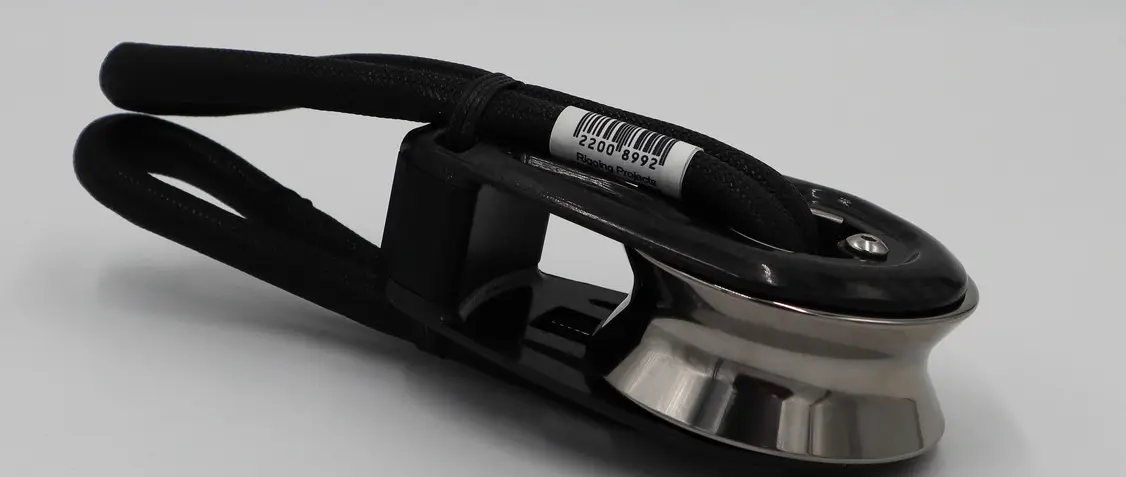
The lead picture is the original X Glide product visual submitted by Rigging Projects Ltd to its official METSTRADE listing. It is attributed to the manufacturer and depicts the specialist sheave discussed, not a photograph of a random rigging component or an identifiable yacht installation. The source specifically describes ceramic rolling elements, double angular-contact bearings and a sealing arrangement, and identifies the earlier 2022 release date. The article's discussion of selection, loading and maintenance is independent engineering analysis. No unverified speed gain, load rating or DAME award is assigned to X Glide.
X Glide remains relevant because large sailing-yacht engineering depends on the cumulative performance of many small components. A well-selected sheave can contribute to a lower-resistance and more predictable control system, but only when the rope, load path, bearings and supporting structure are properly matched. Its appearance in the 2026 supplier catalogue offers builders and riggers a reason to revisit those interfaces. The next step is a technical comparison using manufacturer's ratings, installation drawings and realistic operational trials. Owners should view the product as a specific engineering option rather than a magic solution for all sail-handling challenges.
Primary source: Rigging Projects original X Glide sheave product specification, maintained in 2026 METSTRADE catalogue.
© Rigging Projects Ltd. Original supplier photograph of the X Glide bearing and sheave product. Official source.
© Rigging Projects Ltd. Original supplier photograph of the X Glide bearing and sheave product.
Explore
Go deeper into the yachts, companies, events and destinations directly connected to this article.
Continue reading
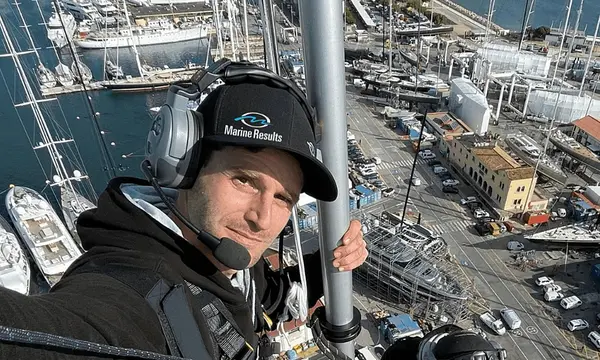
Rigging Projects and Marine Results have created a Palma de Mallorca service arrangement supplying yacht rigging components, winter refit support and supervised maintenance.

Williams Grand Prix Technologies has disclosed that the first customer for its ES10M marine battery system is an 80-metre-plus yacht targeting triple the installed …

A November 2026 official America's Cup technical report explains how sensors monitor speed, ride height, structural strain and control inputs aboard the foiling AC75.

Beneteau chief Bruno Thivoyon says electric propulsion technology could eventually add only 1–3% to boat prices as the group works with Fountaine Pajot on …
Superyacht Guide
Continue into the wider Superyacht Guide.
Business opportunities · Superyacht Guide
Companies serving the superyacht market can discuss clearly identified advertising, sponsorship and business-profile opportunities. Commercial activity remains separate from independent editorial coverage.
