Multiplex multistan Carbon Railings Revisit Fast-Access Deck Safety on Superyachts
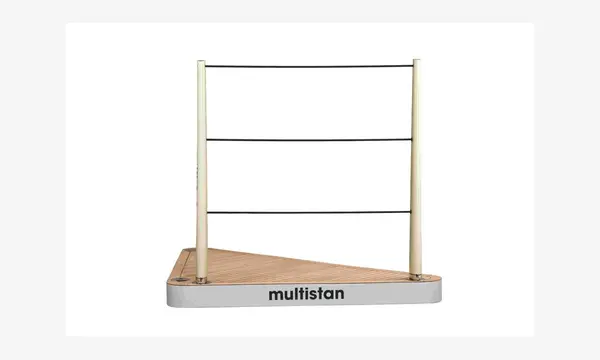
Multiplex describes its multistan removable carbon-fibre railings with a 180-degree locking mechanism and folding option for frequently accessed yacht deck areas.
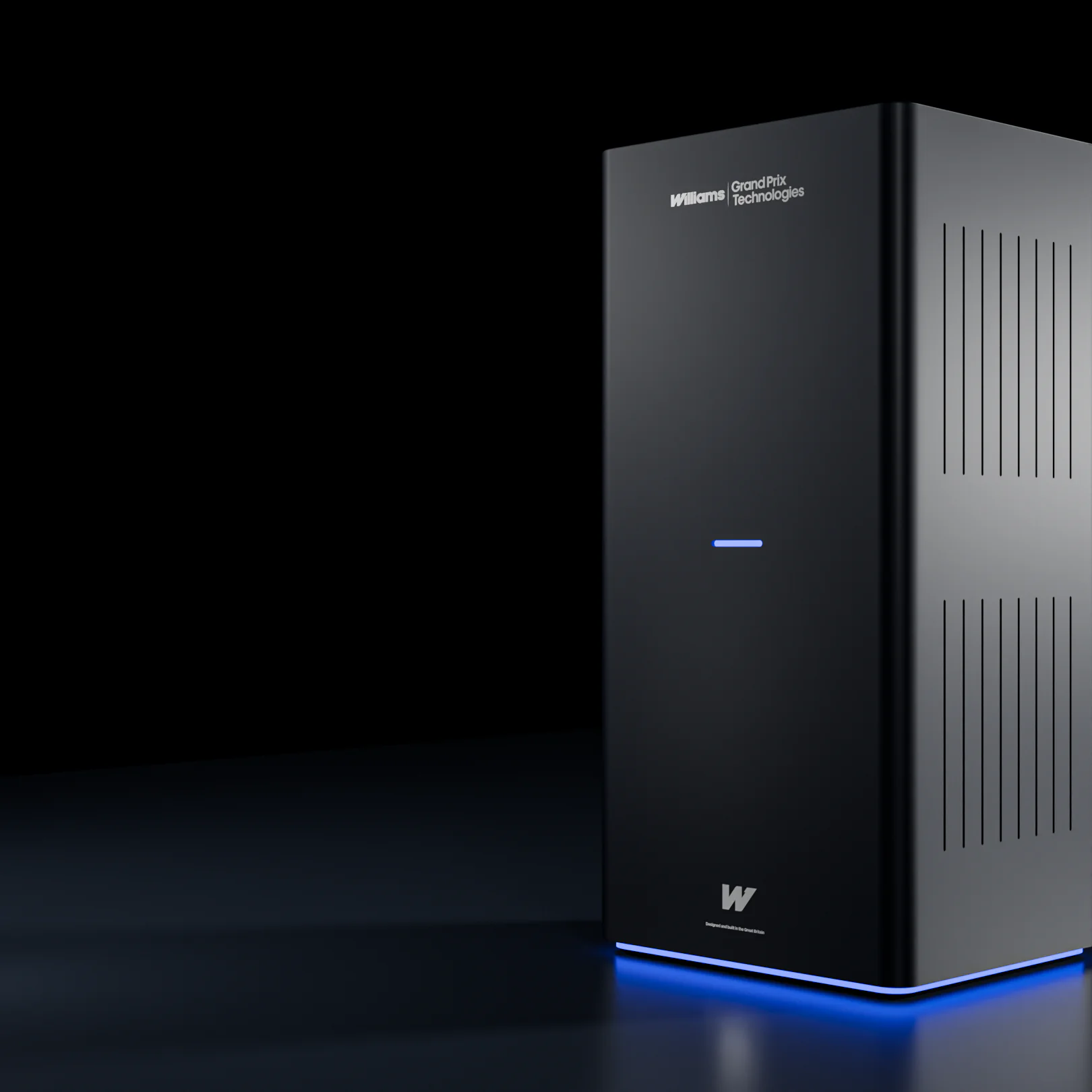
© Williams Grand Prix Technologies. Original manufacturer-issued ES10M battery photograph.
Williams Grand Prix Technologies has disclosed that the first customer for its ES10M marine battery system is an 80-metre-plus yacht targeting triple the installed energy capacity in comparable space.
Williams Grand Prix Technologies has disclosed that the first customer for its ES10M marine battery system is a yacht longer than 80 metres, with the installation designed to provide about three times the energy capacity in the same available space. The revelation emerged from a direct commercial interview published on 27 November 2026, moving the story beyond the earlier launch of the ES10M at METSTRADE. The customer vessel has not been publicly named in the material examined for this report, and the figures are statements about the planned integration rather than independently documented sea-trial performance. For the large-yacht sector, however, the project provides a concrete example of why compact high-energy storage is attracting attention: machine-room volume is scarce, and reducing generator running hours may improve the experience at anchor as well as the flexibility of the wider power system.
Earlier coverage of Williams Grand Prix Technologies concentrated on its decision to enter the marine battery market and on the ES10M platform's intended performance. The latest information is different because it identifies a first client category and an application target: an 80-metre-plus superyacht seeking a threefold increase in stored energy without enlarging the installation footprint. Alexander Trup, senior commercial manager, provided the details in the 27 November interview. Neither the shipyard nor the owner was named, and there is no reason to infer their identity. The milestone remains commercially relevant even without such disclosure, because it ties technical marketing to a live integration brief. It does not, by itself, confirm that the installation has been completed or accepted for unrestricted service.
An 80-metre yacht may appear spacious from outside, yet machinery rooms contain competing demands for access, ventilation, noise control, firefighting equipment and specialist plant. Every additional battery module requires not only its own physical space but also connections, monitoring, protection and maintainable clearances. More storage capacity within a given volume can therefore influence decisions elsewhere in the design, including how accommodation and technical routes are balanced. A gain in energy density is most useful when the complete installed system can be integrated without degrading service access or thermal safety. The headline threefold improvement should be read as the company's description of this particular customer's comparison, not as a universal ratio that every existing yacht will achieve.
Williams' official product documentation describes the ES10M as a modular marine energy-storage system suitable for new builds and retrofits, with published scalability from tens of kilowatt-hours to installations exceeding four megawatt-hours. The company emphasises predictive control, thermal separation and system fault tolerance. Those design features describe intended engineering capabilities, but they are not substitutes for verifying the exact configuration ordered, the relevant classification requirements or the tests carried out on an individual vessel. The platform's name and its Formula 1 engineering heritage may attract initial attention; a yacht builder still needs complete documentation covering operating limits, integration interfaces, emergency response and long-term servicing. A manufacturer's website is a useful primary technical source, while certification status requires separate confirmation.
One reason for installing substantial energy storage is the possibility of supplying hotel loads while generators remain stopped for longer periods. A yacht at anchor still uses electricity for essential systems such as ventilation, refrigeration, communications, lighting, pumps and monitoring, as well as for guest services. Battery energy can meet part of that demand without immediately starting a combustion generator, potentially reducing perceived noise and vibration during the night. The actual duration depends on usable storage, the power profile, temperature management and the vessel's operating reserves. It would be misleading to promise a fixed number of silent hours from a marketing headline. The value of the new first-customer disclosure is that it suggests a large yacht owner is seeking meaningful capacity within a constrained installation area.
A battery can support propulsion equipment, hotel services or both, but the duty cycle and technical requirements vary considerably. Propulsion power may be concentrated in relatively high-load periods, whereas hotel demand can continue for many hours across a changing pattern of use. The 27 November interview describes potential benefits for yachts travelling between anchorages without engaging engines, but this should be read as a capability the company is targeting rather than a report that the unnamed first customer has demonstrated it. Battery system design must be coordinated with generators, shore power, switchboards and the vessel's energy-management logic. A superyacht should never be characterised as fully electric merely because it has a large battery bank or a hybrid operating mode.
The company says new construction is currently a stronger area of interest than retrofit work because a designer can incorporate energy storage efficiently from the beginning. On an existing yacht, the geometry of machinery spaces, cable routes and heavy-lift access may restrict installation opportunities regardless of the theoretical density of a battery module. In new construction, the team can reserve suitable structure, ventilation, isolation, access and electrical distribution before the surrounding compartments are finished. This is not an argument against retrofits; the ES10M is expressly designed for more than one installation pattern. It is a reminder that the most beneficial technologies are often those considered before the general arrangement is fixed, especially where many systems compete for the same technical volume.
Lithium-based marine energy systems require consideration of thermal events, fault propagation, electrical isolation, ventilation, firefighting strategy and crew procedures. Williams lists cell-to-cell thermal isolation and battery-management fault tolerance among its product characteristics, including a stated ability to maintain operation under some partial-system conditions. The exact limits of these capabilities need to be assessed through engineering documentation and witnessed tests, not inferred from slogans. The battery management system is only one component of a vessel-wide safety strategy, which also includes detection, containment, protective switching, emergency isolation and practical accessibility. Nobody should interpret the product's motorsport pedigree as an exemption from marine classification rules. Independent approval remains vital when a high-capacity system forms part of a vessel's core electrical architecture.
In the latest interview, Alexander Trup described the company as roughly two-thirds through a Lloyd's certification process and said he expected the relevant approval by May or June 2027 at the latest. That is a target communicated by the company, not an announcement that approval has already been granted. Class and statutory requirements vary with flag, yacht type, system architecture and intended modes of operation, so owners should obtain the exact certification scope for the proposed installation. The distinction between testing in progress and a final certificate is especially important in high-energy equipment. A yard may be interested in a technology before all approval steps have been completed, but implementation schedules and final acceptance must reflect the actual documents and tests required by the vessel's surveyors.
Williams says it intends to focus initially on a small number of premium customers rather than rapid mass-market distribution. The interview describes single-digit customer targets over roughly the next three to five years and an emphasis on retaining direct engineering involvement with installations. That approach might give early projects closer contact with the development team, although it also makes delivery schedules, spares support and continuity of specialist expertise particularly important subjects for a contract. The company presents controlled growth as part of its quality strategy; readers should not mistake a small planned customer base for published evidence of a shortage of demand or limited production capacity. Both positive and negative interpretations would go beyond the information supplied. What is clear is that Williams is prioritising highly engineered, bespoke applications.
Published energy density figures typically describe a particular cell, module or packaged subsystem, and the basis of comparison matters. A yacht owner needs to know the usable capacity after operational limits, as well as the space occupied by protection equipment, cables, cooling apparatus and service clearances. The claimed threefold increase for the first customer is therefore best understood as an installation-level target communicated by the supplier, rather than a comparison between two unidentified battery cells. If future case-study data are released, the most useful measures would include actual available kilowatt-hours, equipment mass, installation footprint and monitored load cycles. Until that happens, precise performance claims should remain attributed to Williams rather than being treated as a verified industry benchmark.
Installing an energy-storage system is not a simple matter of connecting modules to an existing switchboard. Electrical architecture, charging controls, generator interfaces, thermal management, alarm hierarchy and vessel monitoring must be coordinated before a useful operating mode is possible. The team also has to establish safe procedures for leaving the yacht unattended, taking shore power, performing maintenance and responding to abnormal conditions. Owners should ask for a clear demarcation of responsibility between the battery supplier, system integrator, shipyard, class surveyor and yacht manager. Williams' statement that its engineers aim to remain closely involved in early customer work may be attractive, but actual obligations should be recorded in contract documents. The unnamed first installation remains a developing project, not a fully published template for other vessels.
Williams Grand Prix Technologies is known for engineering experience linked to demanding performance environments, and it is understandable that the brand's history opens conversations in the yacht sector. Racing applications emphasise disciplined control, fast data analysis and performance within stringent mass and packaging constraints. Marine systems, however, operate under a different set of demands, including salt exposure, years of maintenance, variable crew familiarity and the consequences of equipment failure far from technical assistance. The company's transfer of know-how is interesting because the disciplines can overlap, not because a Formula 1 association automatically proves fitness for an ocean-going superyacht. A prudent owner will compare independent test records and lifecycle support commitments before making decisions about a mission-critical electrical system.
The available information does not identify the yacht, its builder, its exact length, battery module count or commercial terms with sufficient independent confirmation for this article to publish such details as fact. The interview states that the vessel exceeds 80 metres and that the project is designed around significantly greater energy storage in comparable space. It does not disclose an independently audited energy-use profile or completed operational data from voyages. The absence of this information should not be treated as evidence of secrecy beyond ordinary commercial confidentiality. What matters for verification is keeping the boundary clear: there is a supplier-confirmed first application, a stated capacity objective and a future approval target. Additional specifics belong in subsequent articles if they are documented by the owner, builder or official survey records.
An owner evaluating the ES10M should request the design-basis document for the entire installed energy system, not only an attractive capacity figure. The most useful dossier would show the battery's usable energy window, maximum charge and discharge limits, redundancy arrangements, documented thermal safety measures, degradation expectations, warranty structure and practical maintenance intervals. It should also clarify expected generator-running reductions under realistic hotel loads and whether the proposed operating mode fits the owner's typical routes. The supplier, class society and shipyard should agree how software updates and fault investigations are managed during the vessel's lifetime. These are normal procurement questions rather than suggestions that Williams has failed to address them. The current announcement simply does not publish enough detail to answer them for a particular yacht.
Williams' first named customer category turns a marine battery proposition into a more tangible superyacht project. The reported threefold same-space energy target illustrates why owners may value compact systems, while the emphasis on direct engineering support shows how the supplier wants its early installations to be handled. Certification remains in progress according to the 27 November interview, and the lack of an identified vessel means that the installation should be described accurately without speculation. The meaningful next milestones are formal approval of the applicable configuration, commissioning results and verifiable service performance. Until then, the ES10M is an ambitious marine technology programme with a first large-yacht customer, not a universally proven recipe for tripling onboard power capacity.
Williams Grand Prix Technologies' official ES10M technology record supplies the manufacturer's product architecture and safety descriptions. The new first-customer and commercial-strategy statements come from the 27 November 2026 direct interview with Alexander Trup, which is credited here as a separate firsthand journalistic source. A prototype photograph on the manufacturer website illustrates the ES10M hardware rather than the unnamed customer yacht. The article does not claim a granted Lloyd's certification, a completed energy retrofit or any figure for operational emissions that has not been independently measured.
Original primary record: Marine Industry News direct 27 November 2026 interview with Williams Grand Prix Technologies senior commercial manager Alexander Trup. © Williams Grand Prix Technologies. Original manufacturer-issued ES10M battery photograph. Original first-party media: source photograph or official illustration. Copyright and image source are credited; first-party availability does not imply unrestricted reproduction permission.
© Williams Grand Prix Technologies. Original manufacturer-issued ES10M battery photograph.
Continue reading
Multiplex describes its multistan removable carbon-fibre railings with a 180-degree locking mechanism and folding option for frequently accessed yacht deck areas.
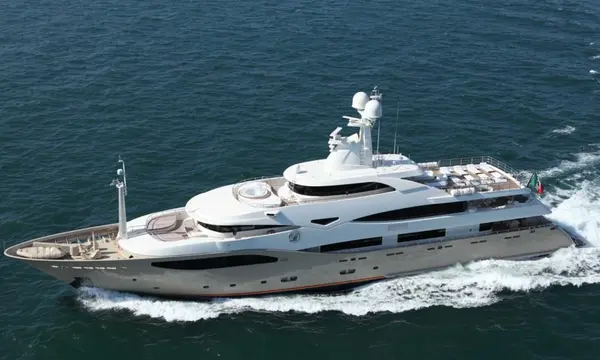
Videoworks has issued technical details of its completed digital refit aboard the 60m CRN charter yacht ELENI, covering multi-zone audio, a 115-inch upper-deck screen …
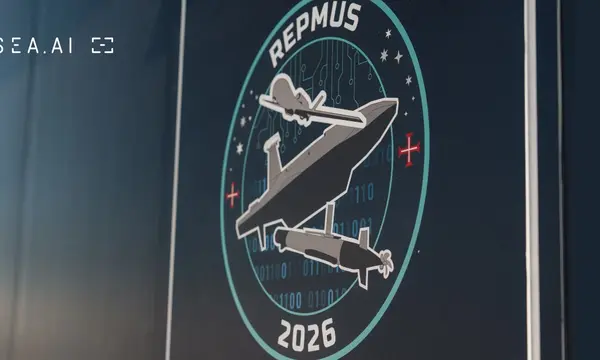
SEA.AI has tested its machine-vision technology across multiple crewed and uncrewed vessel platforms during the REPMUS 2026 exercise in Portugal.

Floatist has launched a managed website product for charter fleet operators that displays live availability, equipment details and booking payments.
Superyacht Guide
Continue into the wider Superyacht Guide.
Business opportunities · Superyacht Guide
Companies serving the superyacht market can discuss clearly identified advertising, sponsorship and business-profile opportunities. Commercial activity remains separate from independent editorial coverage.