SeaDrive Debuts 150kW 800V Electric Pod with Compact Footprint at METSTRADE
By Superyacht Guide Newsroom · Edited by Superyacht Guide Newsroom
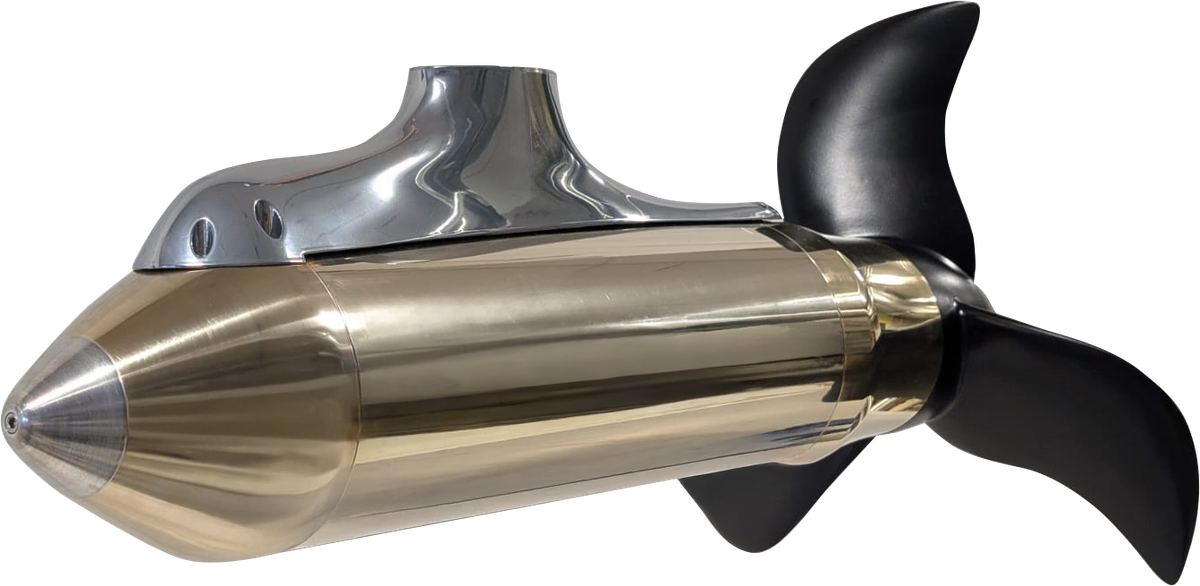
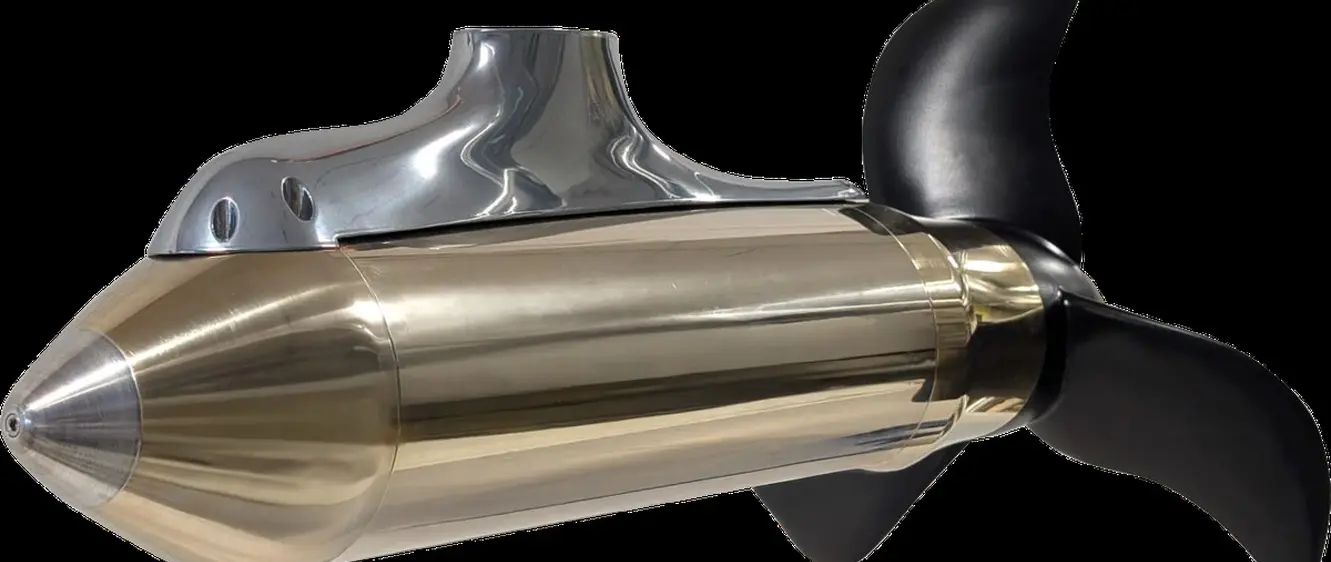
SeaDrive 150 kW 800V steerable electric pod original 2026 official manufacturer press photograph
SeaDrive premieres a compact 150 kW, 800 V electric pod at METSTRADE 2026, claiming 1,750 kg-force bollard pull and a wide steering angle for support craft.
Norwegian marine propulsion developer SeaDrive has announced a 150-kilowatt electric pod propulsion unit for METSTRADE 2026, describing a higher-power package that fits within the footprint of its existing 60-kilowatt model. Its official 13 November product statement identifies an 800-volt electrical architecture, a stated bollard-pull figure of 1,750 kilogram-force, a motor efficiency claim of 97 percent and a steering range of 90 degrees to either side. The announcement calls the product a world premiere. Those are specific, manufacturer-supplied characteristics, not proof of suitability for every hull or certification that an installed vessel will achieve the same efficiencies. For superyacht owners, the development is most immediately relevant to powered tenders, auxiliary craft and specialised support vessels that may benefit from a compact electric propulsion arrangement. It also offers a useful illustration of how packaging, manoeuvrability and high-voltage safety have become closely linked in marine engineering.
SeaDrive's central claim is that its new 150-kilowatt pod occupies the same compact footprint as its 60-kilowatt predecessor. If confirmed for the complete installed arrangement, this could provide a designer with more propulsion power without requiring a larger mounting envelope for the pod itself. The distinction matters in a fast or heavily equipped tender where space inside the hull competes with battery storage, passenger accommodation and service access. However, the physical size of the pod is only one part of the installation. A higher-power motor may need different electrical cabling, protection, cooling, battery capacity and supporting structure. The manufacturer has not published all these details in its short trade-show release. A project team should assess the complete propulsion package rather than equate a common mounting footprint with an uncomplicated drop-in upgrade.
The announced output of 150 kilowatts is the nominal power of the propulsion unit as described by its maker. It is not a statement of the speed that a particular tender will achieve or the number of hours it can operate on one charge. Hull resistance, propeller selection, displacement and sea conditions determine how the installed system performs. A designer should also distinguish continuous ratings from any short-duration operating limit, if such a distinction is relevant to the selected unit. For a chase boat, acceleration and loaded performance may matter more than a single headline top-speed figure. The proper specification should begin with the required duty cycle and then test whether the power level is suitable. Electric machinery can deliver useful control characteristics, but it cannot circumvent the basic energy demands of moving a hull through water.
The company identifies an 800-volt supply for the pod. Higher system voltage can reduce current for a given electrical power level, potentially easing some cabling and conversion demands, but it also introduces substantial electrical safety requirements. A marine installation must incorporate appropriate isolation, protective devices, safe disconnect procedures and clear warning labels. The battery, inverter, charging arrangement and service tools must be specified for the actual voltage and fault conditions. A small tender crew should not be expected to troubleshoot a high-voltage system without specialist competence. Owners commissioning an electric support craft must ensure that the builder and maintenance provider understand the complete energy architecture. The propulsion unit alone is not an electrical system, and a show exhibit is not evidence that the required protections have been implemented on any particular boat.
SeaDrive cites a bollard pull of 1,750 kilogram-force. Bollard pull is a way of describing static thrust under defined test conditions, but it does not directly predict a vessel's cruising speed or efficiency at higher speeds. Results can be affected by the propeller, control settings and the method of measurement. The owner should request the manufacturer's test information and clarify whether the figure refers to a particular propeller combination and continuous operating condition. A high static-thrust figure may interest designers concerned with low-speed manoeuvring or pushing a support craft against current. It should not be compared directly with an engine's horsepower without accounting for the very different quantities being measured. Reliable project calculations require the actual thrust curve and hull-resistance data.
The manufacturer describes 97 percent motor efficiency, an encouraging figure in the context of electrically driven propulsion. Yet an electric motor's efficiency is not equivalent to the total efficiency of the vessel from the charging plug to useful movement through the water. Electrical conversion losses, batteries, cabling and the hydrodynamic efficiency of the propeller also affect the result. The relevant operating point matters, because equipment efficiency can vary with load and speed. Owners should avoid interpreting a single motor-efficiency number as a promise of a 97 percent efficient voyage or a direct comparison against diesel engine fuel consumption. A credible energy analysis should describe each stage of conversion and use realistic duty-cycle assumptions. That is essential if the investment case depends on range, charging time or reduced operating cost.
SeaDrive lists steering through 90 degrees in either direction. A steerable pod can provide directional thrust without the same dependence on a conventional rudder arrangement, potentially supporting close-quarters manoeuvring. The exact performance will depend on hull geometry, propeller operation and the unit's control limits. A wide steering angle should not be interpreted as proof that a boat can move sideways at any speed or maintain perfect control in strong winds. Designers need to establish how the steering system responds, how it is monitored and what happens if an actuator or sensor fails. Operators should be trained in the handling characteristics of the finished vessel, especially during changes of thrust direction. The value of the control range will ultimately be judged through safely conducted trials.
Large superyachts depend on a wide collection of smaller boats, from guest tenders and beach-landing craft to workboats used for divers, provisions or shore support. Some of these may have suitable duty cycles for electric propulsion, particularly where they return regularly to the mother yacht or a marina with charging infrastructure. Others operate over long distances or need high reserve capacity and may be less suitable. The announced 150-kilowatt pod should be viewed as a potential component for the former type of project, subject to compatibility. It would be inaccurate to claim that a single 150-kilowatt installation is an adequate main propulsion solution for a large displacement superyacht. The manufacturer has not made such a universal assertion. The appropriate market is defined by hull design and operating duty rather than by the prestige of the owner.
The official announcement supplies motor and thrust characteristics but not a battery capacity or a representative range for an installed boat. That omission is technically important. Two vessels with the same propulsion unit could have very different endurance because their energy storage, hull efficiency and operating speeds differ. A tender operator may spend much of the day at low power, punctuated by short periods of higher output. A rescue or offshore support craft may need a more demanding reserve. The naval architect should model the anticipated daily energy demand and decide how charging will fit into operations. A contract must identify what endurance is guaranteed, under which load and environmental assumptions, rather than extrapolating it from the pod's nameplate power.
An electric tender supported by a superyacht creates a link between two electrical systems. Charging may occur alongside, in a garage or from a shore installation, depending on vessel design and safety requirements. The required power, cable handling and charging controls can influence both the tender's battery selection and the mother yacht's operational planning. The captain should know whether the yacht can support charging while anchored without compromising reserve power or other loads. Fire protection, ventilation, emergency isolation and the safe management of high-voltage equipment must be assessed by the relevant designers. The pod itself does not resolve those questions. A well-designed tender is only practical when the charging and storage arrangements can support its actual use throughout a cruising season.
A steerable pod transfers thrust and other loads into the hull through its mounting arrangement. For a newbuild, naval architects can account for those forces in the structure from the start. A refit may be more difficult, particularly if the original vessel uses a shaft, sterndrive or waterjet with different foundations and internal space demands. The designer must evaluate weight, vertical positioning, access, watertightness and the effect on resistance. The propeller also needs sufficient clearance and protection appropriate to the craft's intended use. Any structural changes may require approval from the relevant authority or classification body. The manufacturer's description of compact packaging is promising, but the engineering and installation drawings must demonstrate what can be achieved on the actual hull.
Electric propulsion does not eliminate maintenance; it changes its nature. Mechanical seals, propellers, steering components, electrical connections and cooling arrangements can still require inspection and periodic replacement. High-voltage equipment also needs qualified technicians and safe isolation procedures. The owner should ask SeaDrive for service intervals, spare parts, troubleshooting guidance and the locations of authorised service partners. A superyacht may cruise internationally, so rapid support in the home market is less useful if the tender becomes inoperable thousands of miles away. Any promise of low maintenance should be supported by documentation for the precise model. A well-designed installation will provide access to critical components and preserve service records for future crew.
A world-premiere announcement is an important commercial milestone, but the buyer still needs evidence of product maturity and any applicable approvals. Engineering due diligence should address sustained operation, cooling, vibration, steering endurance and fault handling. Sea trials need to be conducted with the finished hull at representative displacement and loading, not only with the unit on a demonstration stand. The integration contractor should record software and hardware versions and establish a clear process for updates. Where several pods are installed, control and failure behaviour may differ from a single-unit installation and must be assessed independently. A manufacturer can supply an impressive technical concept, but the completed vessel must demonstrate that it behaves predictably and safely in the conditions the owner expects.
An electric pod may cost more or less than alternative propulsion approaches depending on its installation requirements, energy storage and service arrangements. The owner should consider the total system cost, including batteries, chargers, supporting structure, integration and eventual replacement parts. Fuel or energy cost savings cannot be calculated from the motor-efficiency figure alone. Nor should lower local exhaust emissions be confused with a proven full-life-cycle environmental benefit without considering the source of electricity and manufacture of batteries. A properly designed comparison could consider actual kilometres or nautical miles travelled each season, maintenance needs and the value of quieter operations. The assumptions should remain visible so they can be checked as operating data becomes available.
SeaDrive's 13 November 2026 announcement is specific: a 150-kilowatt, 800-volt pod in the stated footprint of its 60-kilowatt model, with manufacturer figures for static thrust, motor efficiency and steering angle. That is enough to justify reporting a genuine product premiere. It is not enough to promise a range, certification status or handling performance on an unbuilt yacht. The superyacht industry's immediate opportunity is in the tender and support craft sector, where packaging and electric control may provide advantages if the duty cycle suits the technology. Owners and shipyards should use the announcement to open a technical conversation about hull integration, high-voltage safety and dependable service, keeping the equipment's published facts separate from performance claims that still require vessel-specific testing.
**Primary source:** SeaDrive AS, official METSTRADE exhibitor announcement dated 13 November 2026, "POD150kW 800V". All power, thrust, efficiency and steering figures are manufacturer-supplied product claims.
Primary source: SeaDrive AS — official 13 November 2026 METSTRADE announcement for the 150kW 800V pod.
Official SeaDrive AS 150 kW 800 V pod press photograph, distributed via METSTRADE 2026 exhibitor announcement. Official source.
Explore
Go deeper into the yachts, companies, events and destinations directly connected to this article.
Continue reading
Fendequip showcases UK-made maxiStow inflatable superyacht fenders at METSTRADE 2026, focusing on hull protection, stowage and crew deployment.
Technical Marine Supplies introduces SERTEC CMCE Micro at METSTRADE 2026, a passive capacitive device marketed for marine static-charge management.
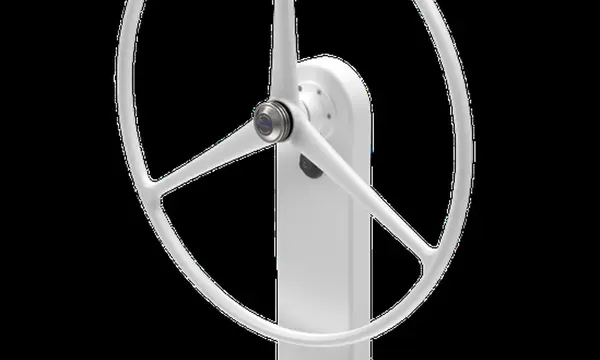
Jefa launches its WP950 bulkhead-mounted multihull steering pedestal with movable helm positions and support for mechanical or wire steering arrangements.
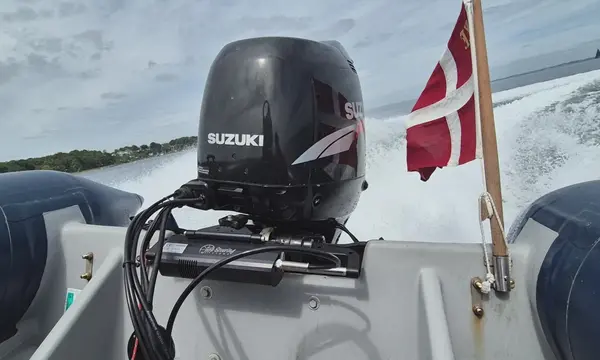
Jefa adds five-position wheel angle adjustment to its ES150 electric steering system, with new-build and retrofit options for superyacht tender helms.
Superyacht Guide
Continue into the wider Superyacht Guide.
Business opportunities · Superyacht Guide
Companies serving the superyacht market can discuss clearly identified advertising, sponsorship and business-profile opportunities. Commercial activity remains separate from independent editorial coverage.