SLAM Introduces SS27 Professional Superyacht Crew Apparel at METSTRADE
By Superyacht Guide Newsroom · Edited by Superyacht Guide Newsroom
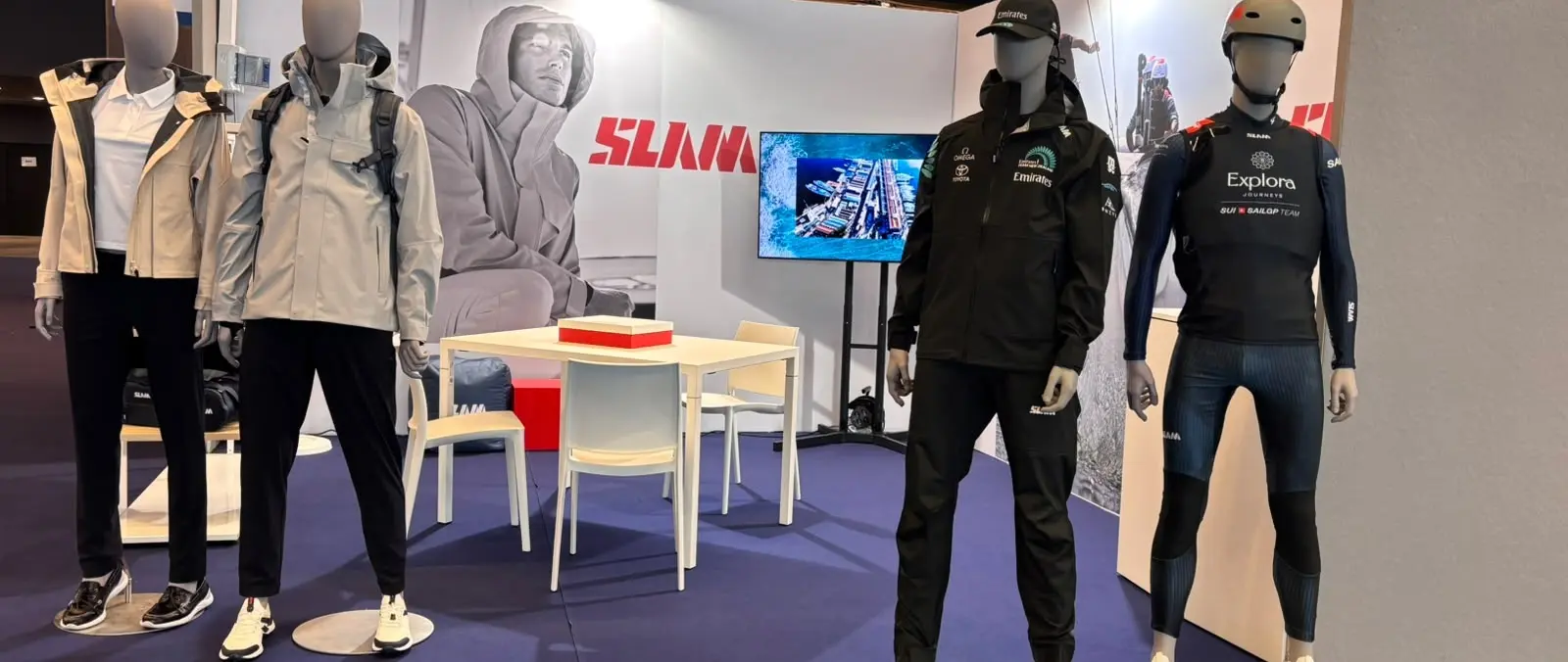
SLAM official BEST and METSTRADE 2026 company media image
SLAM debuts its SS27 professional superyacht and sailing capsule collections alongside technical offshore apparel and wind-tunnel-tested foiling garments.
Italian technical clothing company SLAM is presenting its spring and summer 2027 superyacht and sailing capsule collections at METSTRADE Amsterdam, taking place from 17 to 19 November 2026. The company's announcement of 17 November identifies Hall 8, stand 08.683, as its location within the Superyacht Pavilion. The launch follows its simultaneous participation in the BEST Blue Economy Summit and Trade Show in Genoa. Now part of the MSC Group, the company is placing greater emphasis on the requirements of professional yachting while continuing its development of equipment for competitive sailors. Its superyacht collection includes clothing intended for personnel living and working aboard large yachts, including coordinated uniform and customisation services. Alongside this offering, SLAM is presenting its Ocean Set for offshore sailing and Foil Aero Set developed for high-speed applications. The collections should be understood as separate responses to different operating requirements rather than a single garment specification intended for every member of a superyacht crew.
The appearance of a yacht's crew is a readily visible element of its operation, but the activities undertaken by personnel have a significant bearing on the selection of suitable clothing. An interior crew member regularly moving between guest accommodation and service areas faces different working conditions from a deck crew member carrying out cleaning, tender operations or maintenance. Engineering personnel may require clothing and protective equipment appropriate to machinery spaces, where environmental and safety considerations are not the same as those of guest-facing service. Coordinating an overall visual identity must therefore be distinguished from supplying identical garments for every duty. SLAM describes its professional collection as combining functionality, comfort and attention to materials and design. It also offers customised and coordinated garments. The selection of particular protective equipment remains part of the vessel's occupational safety arrangements and should be based on the actual work involved. The company's collection announcement does not establish that all items have been certified for specialist hazardous duties.
A superyacht may move between climates during a single period of operation. Clothing supplied for a Mediterranean summer may subsequently be used during an Atlantic crossing or a winter programme in a more humid environment. This creates a practical need to consider the range of garments supplied to each crew member and the ease with which they can be replaced or supplemented between seasons. A uniform system made up of different compatible layers may offer more flexibility than one that depends on a particular garment being suitable in every circumstance. There are also differences in the requirements of employees who work predominantly indoors and those who spend extended periods exposed to wind, water or intense sunlight. The new capsule collections provide an opportunity for yacht managers to review these distinctions before placing orders for the following season. Actual fabrics, available sizes, colours and replenishment terms should be confirmed with the supplier. The announcement does not provide complete specifications for individual garments in the professional collection.
SLAM's technical range includes an Ocean Jacket and Ocean Bib developed with the involvement of offshore racing sailors. The company identifies a four-layer Toray fabric incorporating mechanical stretch, with a stated waterproof rating of 30,000 millimetres and moisture vapour transmission figure of 10,000 grams per square metre over 24 hours. These figures relate to the manufacturer's description of the fabric and should not be interpreted as a guarantee of an identical experience for every wearer in every maritime environment. The test procedure, configuration of the completed garment and operating circumstances matter when comparing such performance measurements. Seams, closures, the fit of a hood and the interaction with other clothing can all influence the way a garment functions in use. The offshore set also incorporates a substantial protective collar, adjustable double cuffs, reinforcement at wear points and a high-visibility hood. These design features reflect the different challenges encountered during prolonged exposure at sea.
The company's November announcement places particular emphasis on the contribution of professional sailing teams to its development programme. SLAM reports supporting seven skippers across four classes in the 2026 Route du Rhum, which began in Saint-Malo on 1 November. It also identifies experience associated with the Vendée Globe and Jules Verne Trophy among the influences on its offshore apparel. Such environments provide opportunities to observe issues affecting sailors during sustained exposure to demanding conditions, including mobility, the accumulation of moisture and the practicality of operating equipment while wearing several layers. The lessons may be relevant to crews aboard large sailing yachts whose work also involves time outside in variable conditions. They cannot automatically be transferred to every role on a motor yacht. A garment designed for offshore racing may prioritise factors that are not central to a particular guest-service or maintenance uniform. Yacht managers should examine the requirements of the duty before deciding which technical features warrant inclusion in their standard clothing inventory.
The Foil Aero Set takes a different approach, concentrating on the aerodynamic characteristics of clothing worn during high-speed foiling. SLAM says the system was originally developed with Olympic Nacra 17 sailors Ruggero Tita and Caterina Banti. Its micro-grooved surface has undergone wind-tunnel testing, while the close-fitting construction is intended to limit movement of the fabric even in wet conditions. The company identifies its use by the Explora Journeys Swiss SailGP Team and refers to its collaboration with Emirates Team New Zealand for the next America's Cup. The technical concept should be distinguished from conventional weather protection clothing. Aerodynamic performance may become especially relevant when athletes operate at considerable apparent wind speeds, where loose material can interact with the surrounding airflow. The release does not provide numerical drag reductions applicable to the garments across all conditions. For the wider yacht sector, the development is principally an example of how specific operating requirements can influence garment construction rather than proof that the same clothing will improve the performance of every vessel.
A yacht clothing procurement programme should take account of the way garments work with other items of equipment. A sleeve or collar can influence access to a lifejacket's controls or the comfort with which a harness is worn. Footwear, gloves and protective equipment must be considered in relation to the task and the applicable safety procedures. A clothing layer may fit differently when worn over insulation or under other protective items than when tried on independently. Crew members also have different body shapes, making a representative fitting process valuable before large orders are placed. These considerations are particularly relevant when personnel are expected to work for extended periods in the clothing. A garment that restricts movement or creates avoidable discomfort may be less suitable despite the appeal of its appearance. SLAM's announcement identifies comfort and functional design as priorities but does not establish the suitability of particular garments for specific safety-critical tasks. Those decisions remain the responsibility of the vessel's management.
The company offers customisation as part of its professional superyacht clothing proposition. For a yacht management company overseeing multiple vessels, the relevant considerations include continuity of available designs, arrangements for supplying new crew members, lead times for branded garments and consistency between replacement orders. A new collection may be attractive when initially introduced, but a uniform specification is most useful when it remains practicable to replenish individual items. Shipyards preparing a yacht for delivery also need to coordinate selection and distribution with other preparations for the arrival of its operating team. Laundry procedures and storage arrangements may affect the durability and condition of garments over time. The official release has not disclosed current wholesale prices, minimum order quantities or the precise conditions attached to its customisation service. These elements should be examined by purchasing teams as part of their evaluation. For crew managers, the benefit of a coordinated supplier relationship will depend on the actual support available once the clothing has entered routine operation.
The simultaneous appearance at BEST and METSTRADE reflects SLAM's emphasis on developing business relationships in the professional marine sector. Its official statement brings together the new superyacht collection and the research undertaken with athletes, while its associated exhibitor announcement describes the company's collaboration with Palumbo Upfit. The news is the presentation of the SS27 range, supported by the wider technical development programme; it does not establish a specific new uniform contract with an individual yacht. Those responsible for purchasing crew clothing can use the exhibition to examine the garments and discuss the practical details of the professional service. A successful selection should balance the visual identity intended by the owner with the actual duties, working environment and equipment requirements of the crew. For an industry in which substantial attention is devoted to the design of guest accommodation and technical systems, the professional clothing programme merits a similarly considered approach. The company's new collections offer a concrete opportunity to undertake that review ahead of the 2027 season.
Primary source: SLAM official company announcement, 17 November 2026.
Further official information: SLAM's exhibitor release distributed via PressMare.
Image: SLAM, supplied with its official November 2026 news announcement covering BEST and METSTRADE. Official source.
Image: SLAM, supplied with its official November 2026 news announcement covering BEST and METSTRADE.
Explore
Go deeper into the yachts, companies, events and destinations directly connected to this article.
Continue reading

Muir introduces Volume II of its anchoring guide at METSTRADE, addressing equipment handover, commissioning, safe operation and maintenance for large yacht crews.
A new Northrop & Johnson crew advisory questions whether rotational employment suits every position, highlighting differences between senior and junior crew and between yacht …

An IYC and SuperYacht Times panel at Monaco Yacht Show 2026 examined how crew rest, staffing, mental wellbeing and working culture affect the guest …

Captain-developed software from Helmwise turns crew notes and handover material into structured records, addressing the loss of operational knowledge when superyacht personnel rotate.
Superyacht Guide
Continue into the wider Superyacht Guide.
Business opportunities · Superyacht Guide
Companies serving the superyacht market can discuss clearly identified advertising, sponsorship and business-profile opportunities. Commercial activity remains separate from independent editorial coverage.
