

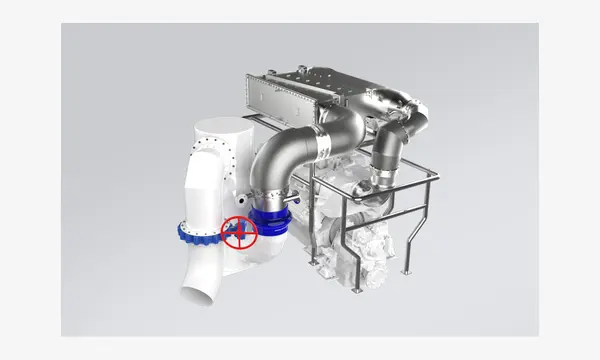
Hug Engineering Compact SCR Puts IMO Tier III Emissions Controls Under the Superyacht Spotlight
Hug Engineering presents a compact selective catalytic reduction arrangement intended to reduce nitrogen-oxide emissions from larger yacht engines.
Solent University Plans New Maritime Autonomy Training Facility — licensed SYG News 26Nov batch07
Southampton Solent University plans an uncrewed surface vessel training facility for students in marine engineering, robotics and computing disciplines.
Southampton Solent University is preparing a dedicated Uncrewed Surface Vessel (USV) learning facility following a successful bid for capital funding from the Office for Students. The university's 24 November announcement places autonomous vessels, sonar, robotics and high-performance computing at the centre of a new multidisciplinary teaching programme. The planned facility will allow students to design, programme, operate and maintain uncrewed systems, including exercises involving interactions among multiple vessels. Although developed for education and research rather than yacht sales, the investment is relevant to an industry increasingly interested in intelligent navigation, environmental monitoring, harbour services and advanced technical skills.
Solent describes the investment as a new facility supported by capital funding awarded through the Office for Students. The announcement states the university will launch a project to establish the learning environment in Southampton. It does not provide a final commissioning date, a completed facility inspection or a full published equipment inventory. Those distinctions are important: winning capital funding is a significant step toward development, but it does not prove that every planned training system is already installed and available. The announcement should be read as a concrete education project entering its next stage, with practical outcomes to be judged when the facility begins serving students.
An uncrewed surface vessel can carry sensors, navigation equipment and computing systems while operating with varying levels of remote control or autonomous capability. It does not mean that every such craft operates without supervision or that an operator can dispense with existing safety responsibilities. Students learning to work with USVs need both hands-on engineering knowledge and an understanding of mission planning, operating limits and human oversight. Solent says its facility will connect design, programming, operation and maintenance. This combined emphasis is valuable because an impressive trial demonstration may be of limited use without staff able to diagnose faults, maintain equipment and document safe procedures.
The university specifically identifies advanced sonar systems, robotics and high-performance computing alongside autonomous vessels. Each serves a different purpose. Sonar can support underwater surveying and situational understanding; robotics can govern actuation and sensing; computing capacity can process data and execute demanding algorithms. Integrating them into a reliable system is not simply a matter of purchasing components. Communications, timing, sensor calibration, energy management and software validation all influence how well a vessel performs. For professional marine users, the competence to understand the entire chain can be more important than familiarity with a particular manufacturer's screen or control panel.
Solent says the facility will be integrated across existing courses in maritime subjects, engineering and computing. That breadth is one of the stronger features of the announcement. Autonomous maritime systems require different specialists to work together: navigators understand the operating environment, engineers understand hardware and failure modes, while software experts translate information into control decisions. A shared educational environment creates opportunities to expose students to the assumptions and limitations of other professions. The most effective graduates may be those who can communicate across these boundaries rather than treating navigation, data processing and marine maintenance as completely separate activities.
The university highlights hydrographic surveying as one of the sectors in which USVs are being used. Survey work can involve collecting information about water depth, seabed features and other conditions relevant to navigation or marine planning. An unmanned platform can offer useful flexibility, but the resulting data still require quality control and appropriate interpretation. For marinas, shipyards and yacht operators, accurate local hydrographic information can influence planning and risk management. A new training facility does not itself supply official charts or guarantee survey accuracy; it can, however, help train the people who design and operate survey technology in accordance with professional standards.
Solent also identifies environmental monitoring among the growing applications for USVs. These missions may involve measuring water conditions, collecting observations or supporting research in places where a small instrumented craft offers operational advantages. The precise value depends on sensor quality, calibration, data coverage and how results are processed. For superyacht destinations, credible environmental information can inform conservation efforts and local infrastructure planning, but a recreational fleet should avoid overstating what one autonomous measurement proves. Education that combines engineering and scientific practice can help reduce the gap between collecting an attractive graph and producing data that specialists can actually trust.
Port security is another use listed in the university announcement. Its inclusion should not be taken to imply that autonomous vessels can independently decide how to respond to suspicious activity or that private operators acquire policing powers. Surveillance, safety and security operations require lawful authority, defined responsibilities and robust procedures. In an educational setting, students can explore how sensors, communications and vessel behaviour interact with those obligations. For commercial marinas, understanding the technology is useful even if actual security policy remains with port authorities and professional providers. Technical capability and permission to deploy a system are separate matters, and neither should be assumed from a laboratory demonstration.
A distinctive element of Solent's plan is experience with the safe and effective interaction of multiple autonomous vessels. Coordinated operations bring additional problems compared with controlling a single small craft. Each vehicle may have different sensor limitations, manoeuvring response and communications quality, while operators need a clear understanding of priorities when planned routes conflict. In a teaching environment, students can learn why a fleet cannot simply be treated as several independent single-vessel missions. Testing methods should examine degraded communications, unexpected obstacles, recovery procedures and the ability of supervisors to understand what each vessel is doing at a given moment.
The project will be developed alongside facilities Solent already operates, including a 60-metre towing tank, Maritime Simulation Centre, specialist laboratories and a Ship Handling Centre at Timsbury Lake. These are distinct facilities with different training and research uses. A towing tank supports physical-model investigation, while simulation allows scenarios to be tested under controlled conditions. Combining new autonomous equipment with established resources may give students exposure to both traditional seamanship and emerging digital operations. The announcement also identifies the Solent Maritime Autonomy, Research and Training Centre as part of the university's broader investment in maritime innovation.
Employers seeking USV specialists need more than people who have watched autonomous craft operate. They need technicians and officers comfortable with mission planning, sensor interpretation, system integration, troubleshooting and safe working practices. Solent describes industry demand for these skills as growing, particularly in the region. The facility aims to prepare students across disciplines for relevant career paths. It is too early to measure graduate numbers or employment outcomes specifically attributable to the new project. What is confirmed is a clear educational response to the skills required by sectors adopting autonomous systems, with practical teaching planned rather than a purely theoretical course announcement.
Superyachts are not automatically expected to become uncrewed simply because autonomous technology is advancing. Owners and captains remain responsible for safe operation under the relevant legal and professional framework. More realistic near-term connections include auxiliary survey craft, environmental monitoring, maintenance inspections, remotely operated support tasks and improved onboard decision-support systems. Technical crews may increasingly need familiarity with software-controlled equipment and sensor data. The business opportunity is not a justification to remove qualified crew prematurely. It is an incentive to train people who can work with new tools while maintaining a clear chain of command and established maritime safety practices.
Harbours present difficult operating conditions: traffic moves unpredictably, shore structures create reflections and signal interruptions, and small craft manoeuvre near people and moorings. Even when algorithms perform well in a controlled trial, they must be evaluated for situations that were not part of that trial. An autonomous system can fail in subtle ways if sensor inputs are misleading or assumptions about other vessels prove wrong. A well-designed learning programme can teach students to recognise those limits and to plan conservative operating procedures. Such knowledge is valuable to the wider yacht industry, where guests, crew and harbour neighbours expect safety to take priority over technological novelty.
Jonathan Ridley, identified as Associate Pro Vice-Chancellor at Southampton Solent University, linked the investment to the rapid development of USV technology and a regional need for people with relevant skills. His message emphasises graduates applying specialist expertise in maritime autonomy. These are the university's stated educational objectives; they should not be confused with a public guarantee that a particular system has passed full operational certification. The next milestones to monitor include the detailed equipment plan, how teaching is integrated with courses, and evidence of practical access once the new facility opens. The source announcement provides the rationale but not every implementation detail.
The planned Southampton facility adds to a broader trend in which software, sensors and engineering interact more closely with traditional marine operations. For superyacht builders, technical managers and marina operators, the immediate relevance is the workforce and knowledge base that may support future projects rather than a new product ready to buy. The strongest prospect is an educational environment in which students must work with real hardware and real operational constraints. Whether autonomous technology becomes routine in a particular yacht programme will depend on safety, regulation, reliability and commercial need. Solent's new facility is a step toward developing the people capable of assessing those questions responsibly.
Primary source: Southampton Solent University, official news release, 24 November 2026.
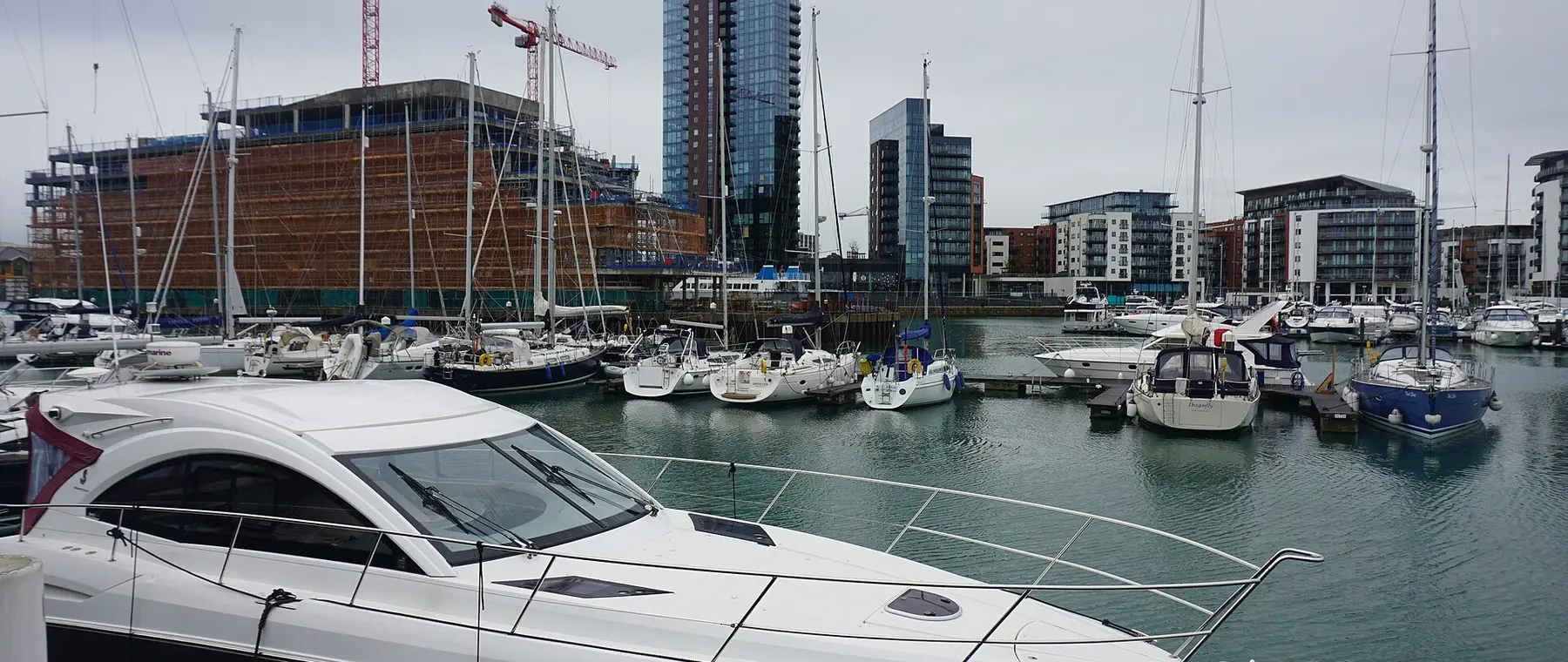
Archival Southampton waterfront photograph; not the university's planned autonomy facility. Photo: Bill Boaden; CC BY-SA 2.0 via Wikimedia Commons. Licensed photograph.
Continue reading
Hug Engineering presents a compact selective catalytic reduction arrangement intended to reduce nitrogen-oxide emissions from larger yacht engines.
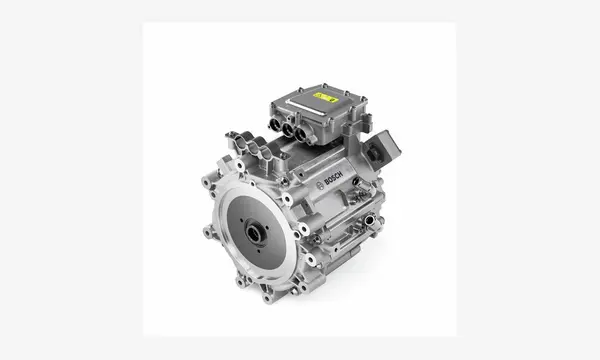
Bosch Engineering's 800V SMG230 electric motor brings a stated 200kW capability to marine power design, with installation and high-voltage safety under review.
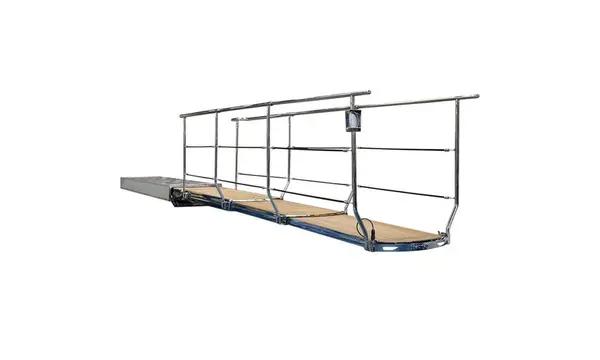
Opacmare details VIPER 1181 stainless-steel telescopic gangways with hydraulic actuation, multiple sections and a 150kg boarding limit at METSTRADE for crews.
MarQuip marks 25 years of specialist exhaust engineering, tracing its development from wet-exhaust technology to compact emissions systems for superyachts.
Superyacht Guide
Continue into the wider Superyacht Guide.
Business opportunities · Superyacht Guide
Companies serving the superyacht market can discuss clearly identified advertising, sponsorship and business-profile opportunities. Commercial activity remains separate from independent editorial coverage.