
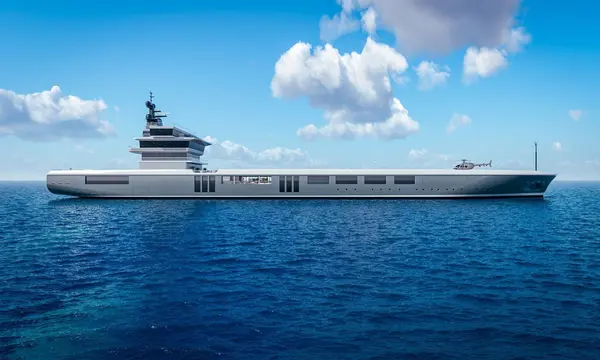
Oceanco and Mario Biferali Outline 150m Anthos Conversion Concept
Oceanco, Mario Biferali Yacht Design and Lateral outline Anthos, a 150m container-ship conversion concept with a 10,630GT proposed layout.
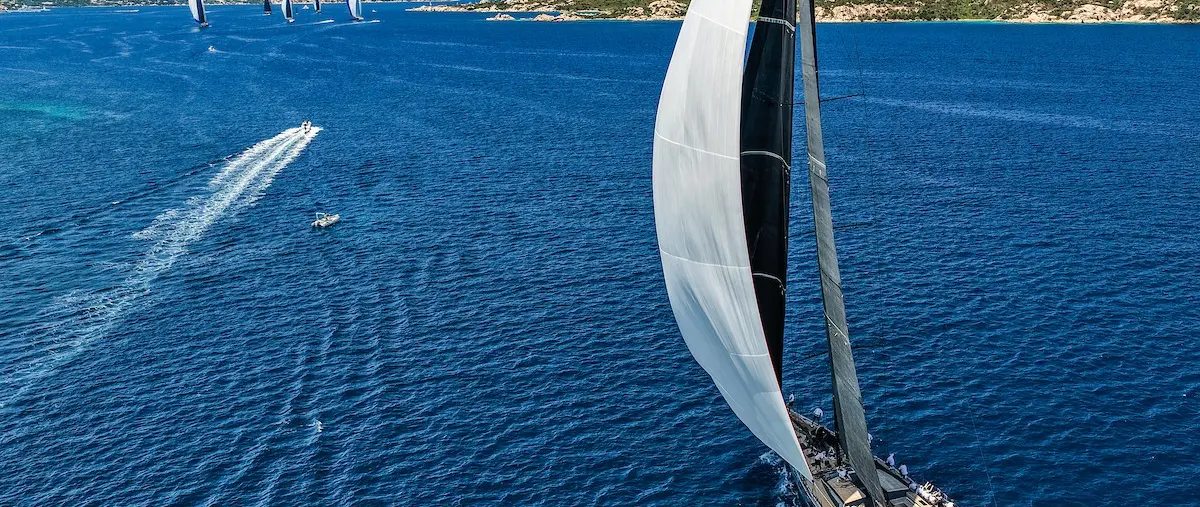
Southern Wind Rendezvous 2026 racing fleet aerial photograph - official shipyard Sailing Energy archive
Southern Wind details its Perfect Balance approach to the SW106 GTO, linking performance under sail, cruising comfort and feedback from existing owners.
Southern Wind has used a new account of its 2026 rendezvous programme to explain how it wants performance, long-range comfort and owner support to fit together under the expression Perfect Balance. The 21 November feature, published through Seahorse Magazine on Pressmare, goes beyond the results of the Porto Cervo regatta. It brings the technical approach of the new SW106 GTO into the same discussion as the shipyard's wider design culture and the experience of existing sailing-yacht owners. At the heart of the engineering presentation is a familiar challenge: creating a yacht that is responsive in light air, secure in stronger conditions and comfortable for extended cruising. The story is not the launch of a new vessel or a claim that every Southern Wind yacht has identical performance. It is a useful account of how the yard and its designers are describing their current priorities.
The Southern Wind Rendezvous and Trophy in Porto Cervo reached its twentieth edition in 2026. The event brought owners and crews together on the water around the Maddalena Archipelago, with technical presentations and opportunities to discuss design and ownership ashore. Race results provide a visible test of yacht handling and sail performance, but they are only one part of an owner's relationship with a builder. A vessel might spend a handful of days racing and much longer crossing oceans or cruising with family. A yard that uses an owners' gathering to exchange practical experience may obtain information that does not emerge from standard commissioning trials. The latest feature presents the meeting as a place where naval architects, sailors and owners consider how design choices work in service. That is a strategic claim about engagement; the article does not independently measure levels of customer satisfaction.
The phrase Perfect Balance refers to an ambition that has long shaped performance cruising yachts. Speed, interior volume, structural weight, stability, seakeeping and ease of handling cannot all be maximised independently. A fuller hull can provide desirable accommodation while increasing wetted area; a more powerful sail plan can improve performance while demanding greater control and stronger structures. A cruising yacht must also carry water, fuel, tenders, provisions and equipment that affect trim and mass distribution. The practical work of design is to set priorities, model their consequences and make deliberate trade-offs. Southern Wind's feature describes that process as central to its brand identity. Owners should not understand the claim as proof that one design has achieved an objectively perfect point for everyone. Different buyers have different cruising plans and expectations, and the appropriate balance will change with the intended use of the yacht.
The published discussion points to the custom SW106 GTO as a case study in simultaneous design optimisation. Naval architect Matteo Polli's presentation examined performance in a range of conditions rather than the pursuit of maximum speed in isolation. The new yacht is reported as being under construction, with Nauta Design involved in exterior and interior design and Gurit supporting structural engineering. These are named elements of the project team, not proof of a completed sea-trial result. The design problem includes hull shape, wetted surface, form stability, appendages, sail power and the weight of the yacht's equipment and accommodation. A modification intended to improve one aspect can change another. The design process therefore requires successive analyses and decisions. For a prospective owner, the most useful question is how the chosen configuration reflects realistic cruising and racing conditions, not whether an attractive headline performance number can be produced.
A sailing yacht that performs well in modest wind may need different qualities once conditions strengthen. Reduced wetted surface can improve light-air efficiency, while appropriate stability and appendage behaviour are vital for handling increased loads and maintaining directional control. The SW106 GTO discussion described the balancing of these competing factors. Engineers can use computational fluid dynamics, hydrodynamic modelling and structural calculations to explore possible forms, but a model must be built around assumptions about sail configuration, loading and conditions. The reported design process should not be confused with measured performance under sail. Ultimately, real-world validation depends on construction quality, tuning, sea trials and owner use. A yacht that is quick in one regime may not have the same advantage in another. Captains and owners need to understand the intended envelope of the design rather than treating the expression high-performance as an absolute promise.
Lightweight construction is attractive in performance sailing because excessive mass can affect acceleration and response. Yet weight reduction must be assessed alongside strength, fatigue, serviceability and the demands of offshore use. The feature's reference to Gurit and specialised analysis underlines the importance of structure in a design programme of this kind. A yacht's hull, deck, mast support and appendage attachments experience significant forces, some of which vary rapidly with wind and sea state. The load cases used in design need to correspond to credible operations. The yard must also consider how components can be inspected and repaired far from its home base. An owner intending global cruising may place particular weight on redundancy and access to service support. There is no inherent contradiction between carefully engineered lightweight solutions and reliable operation, but the justification should be found in the actual calculations, material specification and validation work.
The phrase cruising comfort is often reduced to cabin dimensions and finishes. On a sailing yacht, comfort also depends on the way the hull moves, the angle of heel, the sound and vibration generated by systems and the ability to circulate safely on deck. Interior design therefore needs to be considered alongside naval architecture from an early stage. Storage and tank location affect weight distribution; large openings and furniture arrangements interact with structural requirements; service access can determine whether crew can resolve a fault without disturbing guests. The SW106 GTO's combination of performance-focused architecture and interior design provides a useful illustration of these interfaces. No public description of the design philosophy can establish how a particular owner will experience the completed yacht. That can be judged only once the vessel is delivered and operated under real conditions.
The feature also points to the SW108 Kalantis, which made a racing appearance at the Southern Wind Rendezvous after its passage from Cape Town. This is an example of a yacht moving from the shipyard and delivery stage into the owner's sailing programme. Its presence at the event offers a useful connection between construction and operation, although a single regatta cannot establish lifetime reliability or the suitability of every design choice. The yacht's participation illustrates the breadth of what large sailing yachts are expected to do: undertake long-distance passages, operate in varied conditions and then perform on a racecourse with other vessels. Those roles place different demands on sailors, equipment and maintenance. When a builder describes performance and cruising as complementary, the strongest evidence comes from repeated service experience across a fleet, including lessons from incidents and modifications, rather than a single successful event.
A builder's relationship with an owner continues after delivery through technical support, modifications and, sometimes, further commissions. A rendezvous provides a structured opportunity to hear what owners and captains have discovered in practice. Feedback might concern sail handling, machinery access, communications, interior durability or the suitability of systems for long-range cruising. For the next construction project, such information is valuable only if the yard turns it into documented changes and evaluates whether the results improve the yacht. The Southern Wind feature presents this continuing relationship as part of its wider proposition. It would be premature to claim that a specific new component was adopted because of a particular discussion at Porto Cervo unless the company confirms it. Still, the broader design principle is sound: service experience should feed back into engineering, rather than leaving the design office isolated from the operational fleet.
The feature quotes Southern Wind executives describing a preference for being technologically advanced without pursuing every experimental idea. This is especially relevant to owners whose yachts undertake ocean passages. A novel component might offer a performance gain but introduce unfamiliar fault modes, specialist maintenance or uncertainty about spare parts. A more established solution may provide better long-term value despite being less spectacular at a boat show. The correct decision depends on the importance of the function and the risks involved. Mission-critical steering, rig controls, power and navigation demand a different level of evidence from optional guest amenities. The company's stated preference for mature innovation is a philosophy; prospective buyers should still ask for test results, certifications, maintenance records and clear technical support commitments. The goal is not to avoid progress, but to understand what can be trusted in the intended service environment.
The Southern Wind account connects its owners' programme with sailing education, including the Southern Wind Sailing Academy. Training can be particularly valuable on large sailing yachts because crew responsibilities span traditional seamanship, sophisticated electronics, high-load equipment and guest service. A system may become easier to handle with practice, but training does not remove the need for sound design and safeguards. Owners planning to participate in racing or longer passages should consider whether their crews have access to suitable preparation and whether relief staff understand the vessel's equipment. The academy's inclusion in the overall programme illustrates the yard's view that ownership experience extends beyond the yacht itself. It does not demonstrate the outcome of any particular course or the number of crew trained. Those details would require separate evidence.
An owner evaluating a large performance cruiser should request more than a brochure rating. Predictions of speed or efficiency should be accompanied by the assumed displacement, sail plan, sea conditions and wind range. Even comparative race results can be affected by handicap rules, crew skill, weather and the configuration chosen for that day. The SW106 GTO's design emphasis on optimising several parameters together is a reminder that yacht performance is multidimensional. A vessel may be intended to sail comfortably with fewer crew, maintain consistent average passage speed or compete seriously in selected events. Those are different objectives. Transparent technical documentation makes it easier for buyers to assess whether the proposed compromises suit their intended use. It also helps the captain plan equipment, staffing and seasonal maintenance around the yacht's actual characteristics.
Southern Wind has been the subject of previous reports on yacht deliveries, awards and rendezvous results. The 21 November feature is a different kind of development: an explanation of the engineering and ownership philosophy associated with the SW106 GTO and the yard's wider fleet. It should not be represented as a newly completed yacht or the first announcement of the rendezvous. The genuinely fresh material is the detailed discussion of simultaneous design optimisation, the relationship between the yard and owners, and the preference for technologies with practical maturity. By separating that account from earlier vessel news, readers can judge it on its own terms. The next substantial evidence will come from delivery and sailing results, continuing owner feedback and the way the design choices perform beyond a conference presentation.
The broader lesson from Southern Wind's latest presentation is that performance, reliability and comfort are engineering and operational questions before they become marketing claims. Hull efficiency, stability, weight distribution, equipment integration and crew training all influence what owners experience at sea. The SW106 GTO provides a contemporary design example, while the rendezvous and Kalantis illustrate how a builder tries to connect that work to an active fleet. No single design solution is best for all owners. A successful performance cruiser must reflect the voyages, racing ambitions and people it is intended to serve. For the superyacht industry, the story is useful because it makes those trade-offs explicit, inviting discussion of actual design choices rather than treating speed and luxury as simple opposites.
Primary source: Seahorse Magazine via Pressmare — Southern Wind Perfect Balance feature, 21 November 2026.
Further information: Southern Wind — first-party 2026 Rendezvous and Trophy race report.
Photo: Sailing Energy / Southern Wind, official Southern Wind Rendezvous 2026 aerial archive image, illustrating the active fleet rather than the unlaunched SW106 GTO. Official source.
Continue reading
Oceanco, Mario Biferali Yacht Design and Lateral outline Anthos, a 150m container-ship conversion concept with a 10,630GT proposed layout.
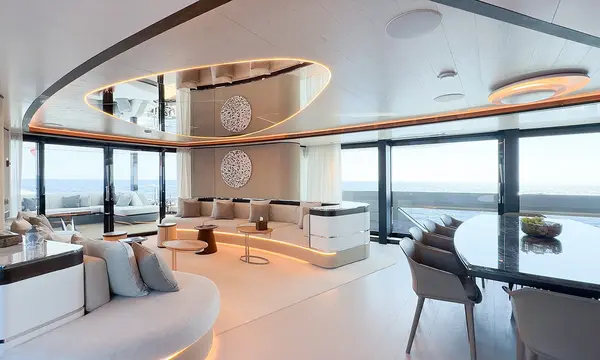
New photographs show the contemporary saloon, dining area and owner suite of the 41.45m Amer explorer EVEN FURTHER, delivered in July 2026.
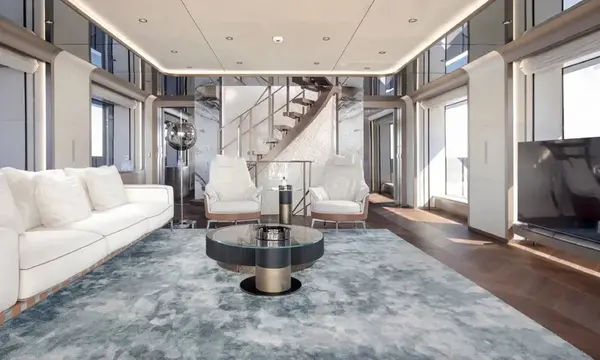
VYD Studio releases interior images of Mengi Yay’s 52.6m GRAY WOLF explorer, showing its guest spaces, main saloon and contemporary material scheme.
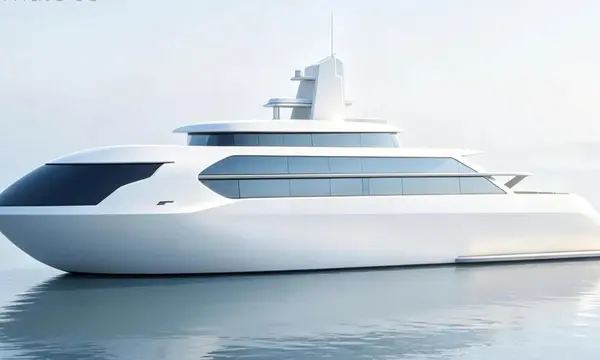
Charlie Chen Yacht Design presents the 65m Beluga Whale proposal with five decks, 980 GT and an unusual foredeck-to-interior space concept.
Superyacht Guide
Continue into the wider Superyacht Guide.
Business opportunities · Superyacht Guide
Companies serving the superyacht market can discuss clearly identified advertising, sponsorship and business-profile opportunities. Commercial activity remains separate from independent editorial coverage.