
Aon Highlights Insurance and Climate Risks for Fine Art Aboard Superyachts
Aon specialists have highlighted insurance limits, humidity, vibration, transit and shipyard risks owners should consider when carrying fine art aboard yachts.
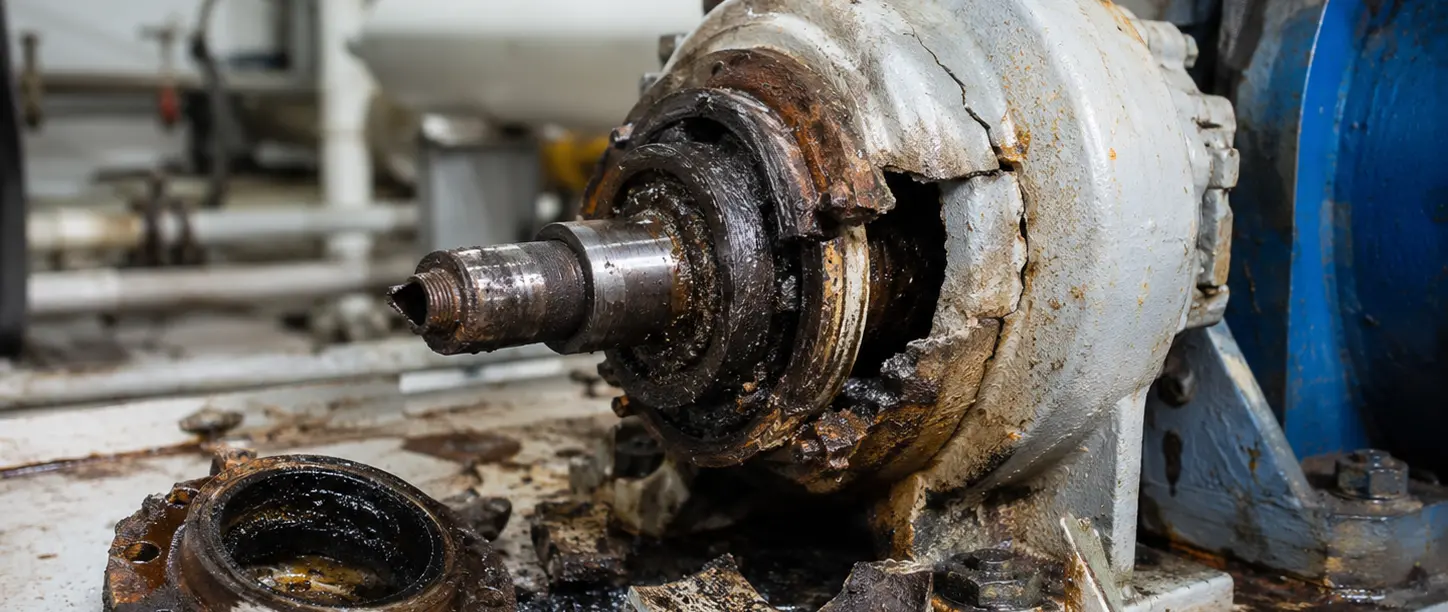
After a new superyacht is delivered, the warranty period begins. But when defects emerge, responsibility can involve shipyards, suppliers, subcontractors, owners and a much larger bill than the failed part itself.
There is a moment in every new-build superyacht project when years of drawings, meetings, payments, construction photographs, technical decisions and sea trials finally become ownership. Documents are signed, the yacht is formally delivered, the owner steps aboard and the shipyard hands over what may be one of the most complex privately owned machines ever built.
It feels like the end of the project.
In many ways, it is only the beginning.
A newly delivered superyacht may contain thousands of individual components supplied by hundreds of manufacturers, integrated into electrical, hydraulic, mechanical, navigation, entertainment, hotel and safety systems that have never before operated together for months at a time in real cruising conditions. Doors that worked perfectly during trials begin being opened hundreds of times. Air-conditioning is tested in Mediterranean heat. Stabiliser systems encounter different sea states. Tenders are launched repeatedly. Generators accumulate hours. Guests fill every cabin. Kitchens operate at full capacity and showers, pools, lifts, passerelles, balconies, televisions, blinds, pumps and control systems are suddenly used as the owner intended rather than as a shipyard test programme anticipated.
Small problems are almost inevitable. Occasionally, larger ones emerge.
That is when the superyacht warranty economy begins.
The apparently simple question — who pays? — can become surprisingly complicated. A failed pump might clearly be defective, but was the pump itself faulty, was it installed incorrectly, or was another system causing it to operate outside its intended parameters? If a marble floor has to be removed to reach it, who pays for the marble? If the yacht must divert 600 miles to an approved shipyard, who pays for the fuel? If a technician has to fly from Germany to the Caribbean, is the flight covered? If the yacht loses three weeks of an owner’s summer programme while repairs take place, does anyone compensate the owner for the lost use?
The answer is rarely found in the price of the broken component. It is found in the building contract, the warranty wording, the technical evidence and, increasingly, in how well the yacht’s post-delivery team manages the problem from the moment it first appears.
The idea that a new yacht should emerge from the shipyard absolutely perfect is understandable. After all, an owner may have spent €50 million, €100 million or considerably more on the project. Yet a custom superyacht is not a mass-produced object assembled thousands of times on an identical production line. It is closer to a one-off hotel, power station, communications centre and ship combined into a single moving structure, much of it designed and engineered specifically for one owner.
Sea trials can test an enormous amount, but they cannot reproduce an entire year of real ownership. A yacht may pass speed, manoeuvring, noise, vibration and machinery tests while still having minor items requiring completion or adjustment. Delivery can therefore take place with an agreed list of outstanding minor non-conformities or pending items that the builder remains responsible for completing.
Then the warranty period begins.
The exact terms vary from contract to contract, but post-delivery builder warranties commonly operate for a defined period rather than indefinitely. Publicly available shipbuilding contracts show how different arrangements can work: some provide a 12-month guarantee period, while other yacht-building contracts have contained 24-month warranty provisions covering specified defects in design, materials or workmanship. The crucial point for an owner is that there is no universal superyacht warranty that automatically covers everything for a standard length of time.
The contract controls the relationship.
That distinction becomes important very quickly. Owners sometimes assume that because a yacht is “under warranty”, every malfunction during that period is automatically the shipyard’s financial responsibility. A builder may see things very differently. Warranty clauses usually define what constitutes a covered defect, how and when it must be reported, who has the right to inspect it, where repairs may take place and what categories of cost are excluded.
A defective weld caused by poor workmanship may be straightforward. A pump damaged because a filter was not maintained may not be. A navigation display that fails internally may be an equipment manufacturer’s warranty matter. Damage caused when that display is removed incorrectly by a third-party technician introduces another party. A piece of equipment supplied directly by the owner rather than through the builder may sit outside the builder’s warranty altogether.
One failure can therefore create several possible answers to the question of responsibility.
The first year after delivery is often when these boundaries are discovered in practice. The captain, chief engineer and owner’s representative begin building defect lists, gathering photographs and fault histories, communicating with the yard and separating genuine warranty claims from ordinary maintenance and operating issues. On a large yacht, this can become a substantial administrative exercise in its own right.
A well-managed yacht does not wait until the end of the warranty period to produce a chaotic spreadsheet containing hundreds of poorly documented complaints. Defects are identified, recorded and notified as they arise, with enough evidence for the builder and suppliers to understand the problem and respond.
That distinction between a complaint and a properly documented warranty claim can be worth a great deal of money.
Consider something apparently simple: a newly installed pump fails six months after delivery.
The pump costs €15,000.
At first glance, the warranty exposure appears to be €15,000.
But the pump is located behind finished joinery in a technical space. Removing it requires dismantling cabinetry. The yacht is cruising in the Caribbean, while the manufacturer and the shipyard are in Europe. A replacement has to be shipped urgently by air. Two specialist technicians need flights, hotels and local transport. The yacht must spend two days alongside rather than at anchor. Crew spend hours preparing access and later reinstating the surrounding area. During removal, another component is discovered to have been damaged by the original failure.
The €15,000 pump has now generated a much larger economic event.
This is where warranty language becomes critical. A builder may accept responsibility for supplying and fitting the replacement component while disputing responsibility for travel, freight, hotel costs, access work or damage that it argues is indirect rather than an immediate consequence of the defect. The owner may reasonably argue that none of those costs would have existed had the original component not failed.
Both sides can believe they are being reasonable.
The same problem becomes more complicated when the failed equipment came from a specialist supplier. Modern superyachts depend on an enormous subcontracting ecosystem. Main engines, generators, stabilisers, propulsion systems, navigation electronics, audiovisual equipment, lifts, HVAC plants, watermakers, sewage treatment systems, paint systems, glazing, galley equipment and countless other products may carry their own manufacturer warranties.
The owner bought a yacht from the shipyard, but the shipyard bought much of what went into it from somebody else.
When something fails, the contractual chain matters.
In some cases the builder handles the claim directly and recovers the cost from its supplier. In others, supplier warranties may eventually be assigned to the owner. The supplier may send its own technician and insist on diagnosing the equipment before accepting responsibility. One company may provide the hardware while another designed the installation and a third commissioned it.
Responsibility can quickly become a technical detective story.
Imagine an air-conditioning compressor fails. The manufacturer may argue that the compressor was perfectly sound but operated outside specification because the cooling-water flow was inadequate. The installer may say the pipework matched the approved design. The designer may point to a later modification. The shipyard may argue that filters were not cleaned correctly after delivery. The crew may have maintenance records showing that they were.
The component is broken.
Determining who pays for it may require establishing why.
That makes evidence enormously important. Alarm histories, service records, oil samples, photographs, operating hours, commissioning data and written communications can all become relevant. Replacing a failed component immediately and throwing the old one away may solve the operational problem while destroying some of the evidence needed to establish the warranty claim.
The same applies to unauthorised repair work. Many warranty arrangements give the builder the opportunity, and sometimes the contractual right, to inspect and rectify a covered defect itself. An owner who immediately instructs an unrelated shipyard to carry out expensive repairs without notifying the original builder may later discover that reimbursement is disputed.
Of course, yachts operate around the world and emergencies do not wait for contractual administration. A failed seawater pipe in the middle of a cruising season may require immediate action. Nobody sensible expects a captain to allow damage to worsen while waiting days for permission to protect the yacht. But emergency mitigation and a planned third-party warranty repair are not necessarily the same thing.
The safest approach is usually to preserve evidence, notify promptly and create a clear written record of why any immediate work was necessary.
Some of the most difficult warranty disputes are not about whether something has failed. They are about whether the failure is really a defect.
Yachts begin ageing from the moment they are launched. Machinery accumulates hours, filters become dirty, seals wear, painted surfaces are exposed to ultraviolet light and salt, moving components require adjustment and crew begin maintaining equipment according to manufacturer schedules. Warranty and maintenance therefore overlap almost immediately.
A generator that develops a manufacturing fault after 300 hours may be a warranty issue. A generator damaged because an oil change was missed may be an owner issue. Between those extremes lies a large grey area where failure can have several contributing causes.
Cosmetic standards create another challenge because luxury yachts are judged by expectations far beyond those applied to most commercial vessels. A microscopic crack in a decorative finish may have no effect whatsoever on the safe operation of the yacht but be completely unacceptable on a new vessel costing €100 million. Paint disputes can become particularly difficult because defects may involve preparation, application conditions, fairing, coating products, environmental exposure or maintenance after delivery.
Interiors create similar questions. Natural materials move. Timber reacts to humidity. Stone can crack. Leather changes with use. Bespoke furniture settles after months at sea. Some changes are normal characteristics of materials; others reveal poor manufacture or installation.
Who decides which is which?
The contract, specification, agreed quality standards and expert evidence become increasingly important when the answer is disputed.
There is also the difference between repairing the defect and paying for everything around the defect. This is one of the most important concepts for owners to understand before delivery. A warranty may provide a right to repair or replacement without automatically compensating the owner for every financial consequence associated with the failure.
Loss of use is a good example. Suppose a serious warranty defect prevents a yacht from cruising for six weeks in July and August. The repair itself may clearly be the builder’s responsibility. But what is the value of the owner’s lost summer? If the yacht would otherwise have been chartered, what about lost charter income? What about additional berth fees, crew costs or an aircraft chartered to reach an alternative holiday destination?
Many construction contracts contain exclusions or limitations intended to prevent the builder’s liability from expanding indefinitely into consequential financial losses. The precise rights depend heavily on the contract wording, governing law and circumstances.
For an owner, this means the phrase “covered by warranty” can be dangerously imprecise.
Covered for what?
The replacement part? Labour? Removal and reinstatement? Freight? Travel? Dry-docking? Paint repairs? Damage caused by the original failure? Loss of use?
The answer can be different for each.
This is why sophisticated owners negotiate the warranty regime before signing the build contract, not after the first serious defect appears.
The geography of warranty work matters too. A yacht built in northern Europe may be in the South Pacific when something fails. Another delivered in Italy may immediately begin a Caribbean season. Returning to the builder could cost a fortune in fuel and time, yet the contract may give the yard important rights concerning where and how warranty repairs take place.
Sometimes the commercial solution is obvious: send technicians to the yacht or authorise an approved local yard. Other times the scale of the work makes returning to the builder sensible. Arguments begin when the technically cheapest solution for the yard is operationally expensive for the owner.
A €50,000 repair can become a €300,000 problem if the yacht has to travel thousands of miles to have it completed.
That does not automatically mean the builder must pay the €300,000.
It means the contract should ideally have anticipated the question.
As the warranty period approaches its end, the owner’s team faces an important deadline. Problems that have been tolerated, monitored or temporarily repaired cannot simply remain informal knowledge aboard the yacht. Anything potentially covered needs to be identified and notified according to the contractual requirements before relevant time limits expire.
This is why many well-managed new yachts undergo a concentrated end-of-warranty review.
The process may involve the captain, engineers, management company, owner’s representative, specialist surveyors and sometimes legal advisers. Machinery records are reviewed, recurring alarms examined, unfinished items checked and areas that are normally inaccessible may receive closer inspection. The objective is not to invent claims simply because the warranty is ending. It is to make sure legitimate defects do not become the owner’s financial responsibility merely because nobody documented them properly in time.
A useful owner-side warranty discipline typically asks:
Once again, the checklist is less important than the discipline behind it. The most expensive warranty problems are often not dramatic failures but unresolved small issues that repeatedly return, passing from one technician to another until the warranty period has expired and nobody accepts responsibility.
Eventually, however, the formal builder warranty does end.
That does not mean every possible legal right automatically disappears. Questions involving latent defects, negligence, design responsibility, supplier guarantees and applicable national law can extend beyond the simple contractual warranty period, but the position depends heavily on the contract, governing law and circumstances. An owner should never assume that a serious defect discovered later is either automatically covered or automatically excluded without specialist advice.
Operationally, though, the economic transition is clear.
The yacht moves from being a new-build project supported by a warranty regime into being a fully mature asset whose maintenance increasingly belongs to the owner.
That transition is why post-delivery support has become such an important part of the modern superyacht business. Major shipyards increasingly maintain dedicated after-sales departments, mobile technical teams, refit divisions and long-term fleet-support relationships. The motivation is partly commercial. A satisfied owner may return for another yacht, recommend the yard to others or bring the vessel back for refit work years later.
A badly handled warranty claim can damage that relationship remarkably quickly.
For the owner, the difference between a good and bad warranty experience is often not whether defects occur. On something as complex as a custom superyacht, problems will occur. The real test is how they are handled: whether responsibility is identified quickly, whether communication remains constructive, whether repairs are properly engineered and whether the yacht’s programme is disrupted as little as possible.
For the shipyard, warranty should not simply be viewed as the irritating final cost of a yacht already sold. It is the first real test of the promises made during the sales and construction process. The owner no longer sees presentation drawings and sample boards. They see whether the yacht works.
And for the owner, delivery should never be mistaken for the moment when scrutiny can stop. The first year or two of a new yacht’s life may be among the most important periods of technical observation the vessel will ever have. Systems are bedding in, equipment is being used properly for the first time and defects that were invisible during construction may finally reveal themselves.
The warranty economy exists because somebody eventually has to pay when they do.
Sometimes it is clearly the shipyard. Sometimes it is the equipment manufacturer. Sometimes it is a subcontractor, an insurer or the owner. Frequently, several parties become involved before the answer is established.
The smartest owners therefore ask a different question long before delivery.
Not simply, “Does the yacht have a warranty?”
But: when something goes wrong in another country, in the middle of the season, who is responsible for fixing it, who controls the repair — and exactly which bills will they pay?
That question may not be as exciting as choosing the yacht’s exterior lines, marble or tenders.
After delivery, it can become considerably more valuable.
Continue reading
Aon specialists have highlighted insurance limits, humidity, vibration, transit and shipyard risks owners should consider when carrying fine art aboard yachts.
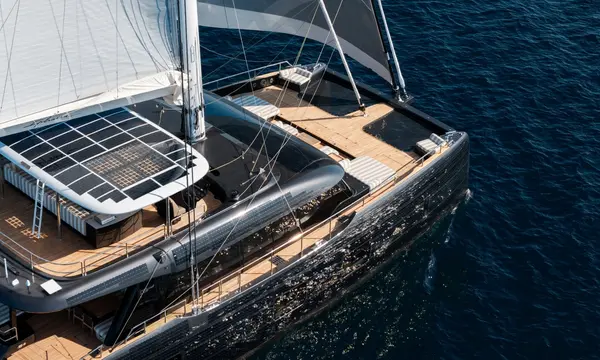
The first Sunreef 100 Eco, Ipharra, will combine private family cruising with student educational voyages focused on the sea and environment.
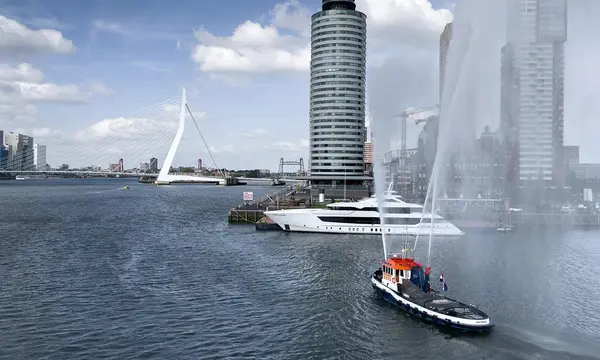
Heesen has formally christened 55-metre Pa’lante, formerly Project Frida, after successful North Sea trials.
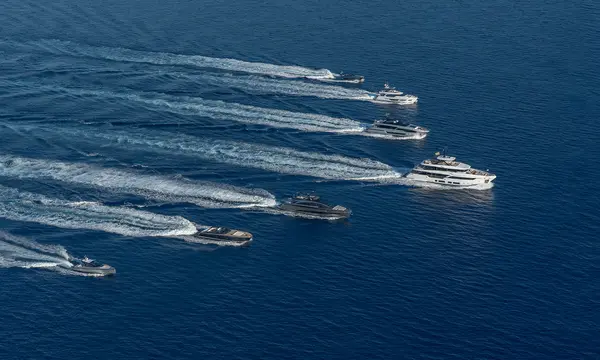
Ferretti Group has introduced its Quality Promise programme, adding one year of limited coverage beyond the standard warranty for eligible yachts up to 45m.
Superyacht Guide
Continue into the wider Superyacht Guide.
Business opportunities · Superyacht Guide
Companies serving the superyacht market can discuss clearly identified advertising, sponsorship and business-profile opportunities. Commercial activity remains separate from independent editorial coverage.