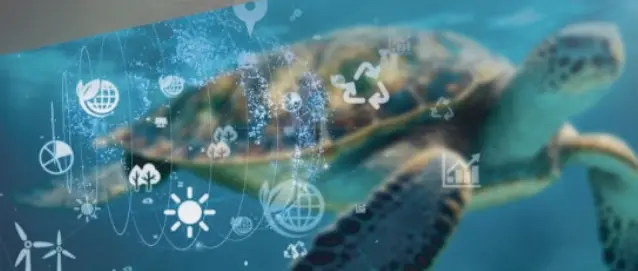
Termodinamica Makes Case for DX HVAC Architecture on Superyachts
By Stephen Yardley · Edited by Stephen Yardley
Image: Termodinamica
Termodinamica argues that direct-expansion cooling with decentralised air treatment can reduce yacht HVAC energy demand, weight and generator strain.
Termodinamica has published a detailed engineering argument for changing the way superyacht HVAC systems are specified. The company separates two design choices that are often discussed as one problem: whether cooling is generated through direct expansion or a chilled-water loop, and whether conditioned air is distributed centrally or through more decentralised local units.
Its preferred architecture combines direct-expansion cooling with local cabin units and dedicated air-handling equipment where required. Termodinamica says this can reduce electrical demand, pipework, pump loads, system weight and airflow while giving individual cabins faster temperature and humidity response.
In a conventional chilled-water yacht system, central chillers cool water that is then pumped around the vessel to fan coils and air handlers. Direct expansion instead sends refrigerant to the point where cooling is required, removing the secondary water loop and the pumps needed to circulate it throughout multiple decks.
Termodinamica argues that the extra conversion and pumping stages in chilled-water systems create avoidable energy losses. The company also points to the physical consequences of those loops, including pipe runs, insulation, pump equipment and machinery-space requirements that become significant on a yacht where every cubic metre and kilogram has competing uses.
The second part of the company's argument concerns air distribution rather than refrigeration technology. A total-air approach depends on moving large volumes of centrally conditioned air through ducting, while decentralised systems can handle much of the sensible cooling locally and use air-handling units mainly for ventilation and humidity control.
Termodinamica says lower airflow can reduce duct size and fan power while improving acoustic performance. Local control can also respond more quickly when individual cabins experience different solar loads, occupancy or guest preferences, rather than forcing a central system to balance several spaces with conflicting cooling requirements.
HVAC is one of the largest continuous hotel loads on many superyachts, particularly in hot climates. Reducing that baseline demand can allow generators to operate closer to efficient load points, reduce the number of sets running simultaneously and extend the periods in which a battery-supported yacht can remain quiet at anchor.
Those benefits depend on the complete vessel design rather than one component. Refrigerant selection, redundancy, maintenance access, heat rejection, ventilation standards and the owner's expectations for tropical performance all have to be considered before deciding whether a decentralised DX architecture is appropriate.
Termodinamica says its approach has been assessed through a Water Revolution Foundation life-cycle process and presents the result as evidence of lower environmental impact than conventional alternatives. That is useful supporting information, but owners and naval architects still need project-specific load calculations rather than assuming one architecture automatically produces the same saving on every yacht.
The wider significance is that HVAC is increasingly being treated as part of the yacht's energy strategy rather than a fixed hotel-service package. As builders add larger batteries and pursue longer generator-off operation, the efficiency, weight and control behaviour of the air-conditioning system can materially affect how the entire electrical plant is sized and operated.
Explore
Go deeper into the yachts, companies, events and destinations directly connected to this article.
Continue reading
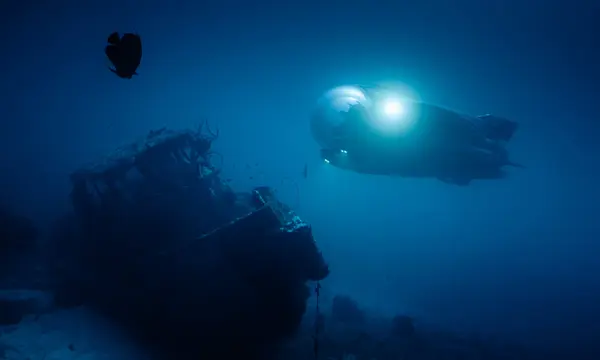
U-Boat Worx has completed Curaçao sea trials of its Super Sub and confirmed first-client delivery, with a 300m operating depth and nine-knot top speed.
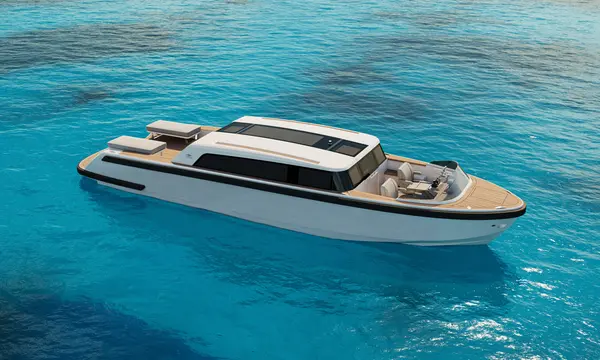
Castoldi’s new 10.5m JT34 Limo combines twin waterjet propulsion, an enclosed air-conditioned cabin and seating for 12 guests plus two crew.
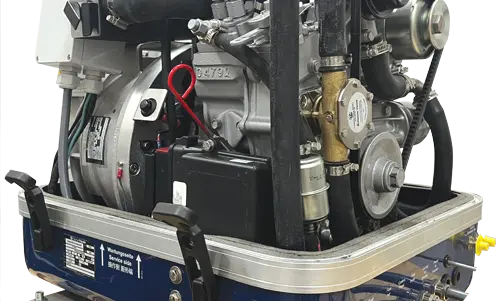
Fischer Panda has introduced the compact 5.5e inverter generator, rated at 5.5kW and designed for quiet variable-load marine electrical supply.
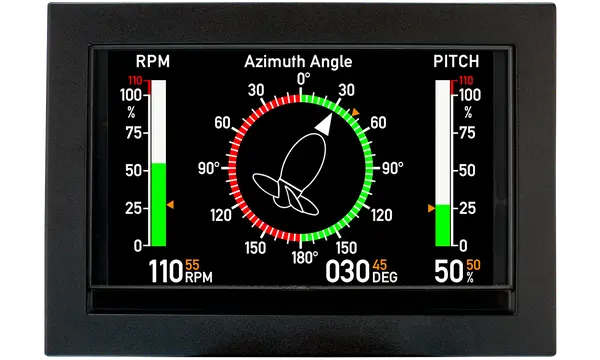
DEIF has previewed its next-generation XDi II digital bridge instrumentation alongside new wind and rudder-sensing hardware at SMM 2026.
Superyacht Guide
Continue into the wider Superyacht Guide.