

KONGSBERG Adds Aegir17 and Aegir57N to Subsea Sonar Family
KONGSBERG announced on 3 November 2026 that two new models, Aegir17 and Aegir57N, have joined its Aegir Subsea Situational Awareness sonar family. Together with …
At METSTRADE and The Superyacht Forum in Amsterdam, Water Revolution Foundation will focus on practical material information, life-cycle assessment and the adoption of common environmental methods across superyacht construction.
Water Revolution Foundation has published a programme spanning 16–20 November 2026 at METSTRADE and The Superyacht Forum in Amsterdam. Its emphasis is less on broad environmental promises than on the information, common methods and verified products that might improve decisions in real yacht projects. The programme includes a session on the Smart Interior Horizons material library and another on making environmental-performance measurement routine across the industry. These are planned discussions, not announcements that a fully adopted universal system is already in place. The distinction is important for owners, designers, shipyards and suppliers who must make procurement decisions today.
The foundation's own programme explains that METSTRADE has a particular significance to the organisation: it was founded there in 2018. In 2026 it returns with what it describes as a focus on tools, improved data and more credible environmental solutions. For Superyacht Guide readers, the immediate question is what evidence can move from a trade-show presentation into a specification, tender or maintenance plan. A supplier's sustainability language is not independently useful until the customer can understand its boundary, verification, relevance to the finished yacht and any trade-offs in durability or service life.
Superyacht interior specifications combine woods, fabrics, metals, stone, adhesives, coatings, insulation and many bespoke manufactured components. One supplier may report the ingredients of a product, another may publish a company-wide target, and a third may offer a product-level life-cycle assessment. Those documents are not automatically equivalent. Designers trying to compare options can struggle with different units, geographic assumptions, missing transport data and inconsistent estimates of expected lifespan. Water Revolution's Smart Interior Horizons initiative addresses the information chain that links client expectations with the decisions made by designers, interior contractors and suppliers.
The foundation's Amsterdam description says an updated SIH Material Library will be introduced as a common starting point for the supply chain, alongside its work on material environmental performance and life-cycle assessment. A library can improve the quality of a first conversation if it makes comparable information easier to find. It should not be mistaken for a guarantee that every listed material meets all standards or performs identically once installed. Superyacht interiors face demanding fire, humidity, vibration, maintenance and weight requirements; those constraints are essential parts of responsible material selection, not obstacles to be ignored for a lower headline impact figure.
The scheduled Smart Interior Horizons session is designed to involve representatives of owners, shipyards, yacht designers, interior contractors and material suppliers. The organisers explicitly identify gaps between the information one stakeholder can provide and what another needs to decide. That is an unusually useful framing. An owner might seek better traceability; a designer needs performance and appearance information; an installer needs reliable specifications; and a supplier needs to know which claims will actually influence a purchasing decision. Without shared definitions, each party can work hard on environmental reporting without producing data the next party can use.
Practical alignment would mean identifying relevant materials early, asking questions consistently and recording how decisions are justified. It would also mean acknowledging uncertainty rather than reducing every choice to a single score. For instance, a replaceable panel with a slightly greater manufacturing impact might prove preferable over a long service period to a fragile alternative that needs frequent replacement. The opposite may be true in another application. A material library can organise evidence, but project teams must still evaluate embodied impacts, maintenance, repair options and the real operational context of the finished interior.
Life-cycle assessment, commonly shortened to LCA, considers environmental impacts across defined stages of a product or activity. In yacht construction the analysis may concern raw-material production, manufacture, transport, installation, use, maintenance and end-of-life treatment. Results are meaningful only when the assessed stages, assumptions and functional unit are clear. A comparison of one square metre of finish is not necessarily a comparison of one decade of usable service, and a yacht-wide assessment does not automatically establish the performance of an individual supplier's item. Water Revolution is emphasising the need to make such methods usable across the professional supply chain.
A responsible builder would want to know whether an assessment uses measured supplier information or generic databases, which emissions categories are counted and how replacement cycles are handled. Designers also need to distinguish a product's environmental declaration from a claim that it is suitable for marine use. None of these questions is solved by a single certification logo. The aim of better information should be more defensible trade-offs and fewer unsupported assertions. For owners commissioning major refits, those principles may be as relevant to replacement materials as to a wholly new yacht.
Another Superyacht Forum session in the foundation's programme is titled Making Environmental Performance Standard Practice and is scheduled for Tuesday 17 November. It follows work associated with the Yacht Environmental Transparency Index, or YETI, and the contribution of industry research to ISO standardisation. The foundation says participants will examine inconsistent measurement, reporting practices, information governance and commercially sensitive data. These are substantive problems. Shipyards compete, equipment manufacturers protect processes and owners do not necessarily want every vessel characteristic disclosed. A workable framework must permit credible measurement without assuming unlimited public access to proprietary details.
The existence of emerging standards should not be presented as proof that all yacht manufacturers use a common calculation today. Standardisation is a process of aligning definitions, methods and evidence, and its real-world benefits depend on adoption and independent scrutiny. A yard could publish one figure while excluding upstream impacts, while another provides a much broader result; the two cannot be compared fairly without understanding their scope. The Amsterdam discussion is therefore relevant to buyers who want stronger environmental reporting in contracts. They should ask which methodology is being used, which decisions the reported numbers can support and who has checked the underlying data.
Water Revolution's broader METSTRADE agenda includes attention to verified products and practical exchanges between industry participants. Verification can help distinguish a claim backed by evidence from a general marketing statement, but the word verified is not a substitute for examining what was tested. The basis may relate to a product property, an environmental calculation or a defined performance threshold. It does not automatically establish compatibility with every yacht system or the requirements of a particular flag or class society. The useful question for a procurement manager is which exact claim has been demonstrated and what documentation is available for review.
A project team considering a supposedly lower-impact interior material might still require trials for wear, staining, fire performance and cleaning chemicals. A novel product can also affect installation methods and eventual repair logistics. Such tests are not evidence that sustainability ambitions have failed; they are necessary if materials are to remain in service rather than be discarded. Verified information is most valuable when it allows purchasers to compare genuine alternatives within a clearly stated technical brief. The foundation's programme provides a forum to discuss those conditions with both data specialists and the companies responsible for delivering yacht projects.
Owners and their representatives can influence environmental performance through decisions about vessel use, system selection, refit intervals and interior preferences. They can also improve project reporting by specifying what information the yard should provide before a contract is signed. If the owner asks only for an unexplained sustainability score, the project has little incentive to expose important assumptions. If the owner requests material provenance, realistic repair options and comparable calculations for major choices, the design team has clearer questions to put to suppliers. This is a management issue as much as a technical one.
Environmental decisions also intersect with budget and schedule. A material with a long lead time may disrupt a build sequence, while a difficult-to-maintain finish could generate more disruption during service. Transparent life-cycle thinking does not mean ignoring cost, guest experience or aesthetics. It means documenting those trade-offs before a fashionable product is specified. The Amsterdam sessions are an opportunity for the industry to refine how that information moves through a complicated chain of consultants and contractors. Their success should ultimately be judged by actual project practices and results, not the number of presentations delivered.
The first-party schedule confirms Water Revolution Foundation's planned participation and substantive themes between 16 and 20 November 2026. It is therefore appropriate to report the intentions, speakers' subjects and tools due to be discussed. It is not appropriate, before the event, to claim that participants have agreed a new standard or that material suppliers have already adopted a revised industry-wide reporting system. Some sessions are organised within The Superyacht Forum rather than across the public trade-show floor, so professional attendees should use the published schedule to identify the correct location and registration conditions.
For the superyacht sector, the most consequential outcome would be a clearer pathway from broad environmental commitments to information a designer can use and a purchaser can verify. Better material data could support more consistent specifications, while common assessment methods could expose both improvements and unresolved impacts. None of that should diminish the importance of vessel safety, serviceability or honest accounting boundaries. Superyacht Guide will treat subsequent announcements as separate developments requiring documentary evidence. For now, the verified news is that the foundation has made supply-chain information and measurable performance prominent subjects of its November Amsterdam programme.
Primary documentation: Water Revolution Foundation; additional first-party details: official programme or catalogue. Report dated 7 November 2026. Future event schedules, sale catalogues, berthing availability and advertised conditions may change. No future event outcome or auction sale result has been assumed.
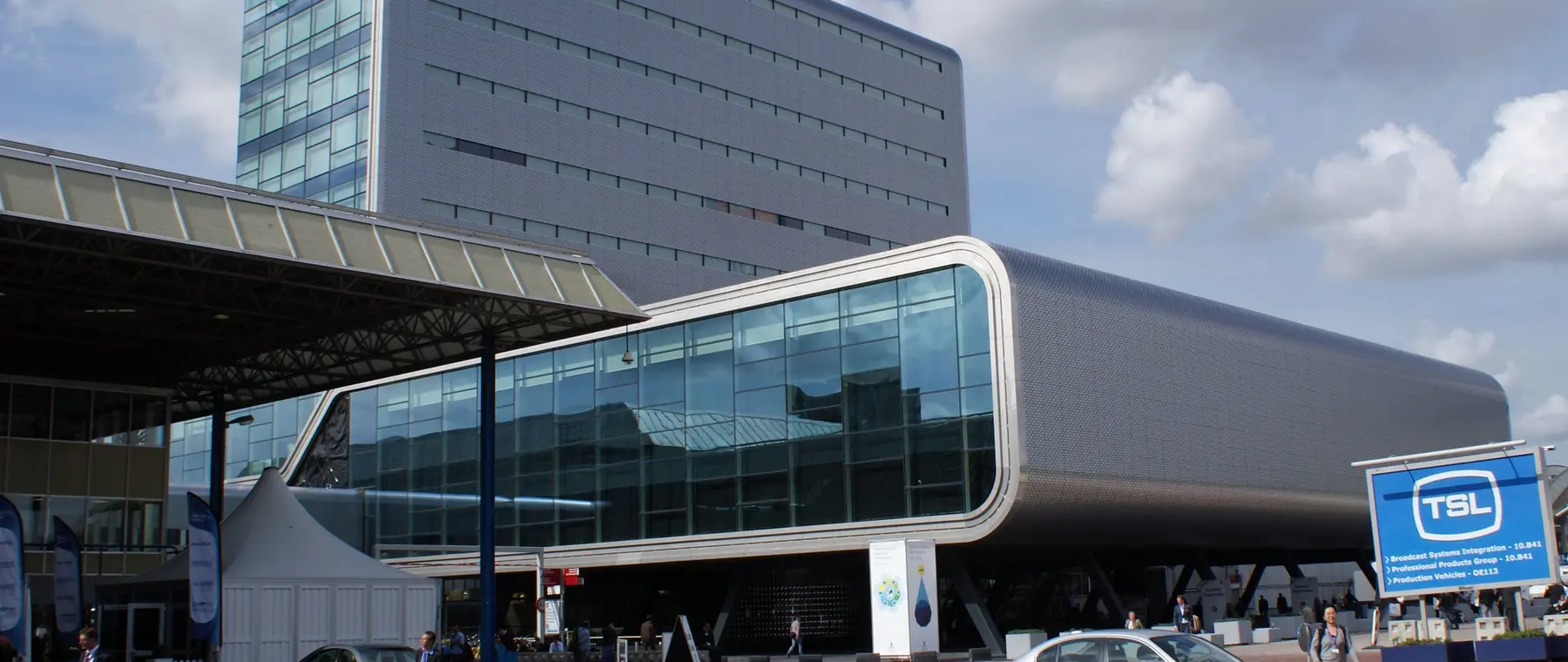
Editorial illustration: File:Amsterdam RAI EC.jpg — RAI Amsterdam exhibition centre, 2010 — Adam Kliczek (CLI) / Wikimedia Commons, CC BY-SA 4.0, resized; archival venue image, not METSTRADE 2026. Original author and source credited under Creative Commons licence; cropped/resized for this article. This is a historical or locality photograph, not a depiction of the forthcoming event, current sales lots or event attendees. For share-alike images the adapted image remains under the original compatible CC BY-SA licence.
Continue reading
KONGSBERG announced on 3 November 2026 that two new models, Aegir17 and Aegir57N, have joined its Aegir Subsea Situational Awareness sonar family. Together with …
BLICKFANG Vienna is taking place at the MAK Museum of Applied Arts from 6 to 8 November 2026, bringing independent furniture, fashion and jewellery …

With the 16 November Marine Impact Lab approaching, organisers have detailed two practical workshops and eight topic tables covering materials, propulsion, finance and the …
One Ocean Foundation has appointed economist Ralph Chami to its international Scientific Committee. His work on blue natural capital and marine ecosystem finance follows …
Superyacht Guide
Continue into the wider Superyacht Guide.
Business opportunities · Superyacht Guide
Companies serving the superyacht market can discuss clearly identified advertising, sponsorship and business-profile opportunities. Commercial activity remains separate from independent editorial coverage.