

Company
Water Revolution Foundation
Explore the company profile and related Superyacht Guide coverage.
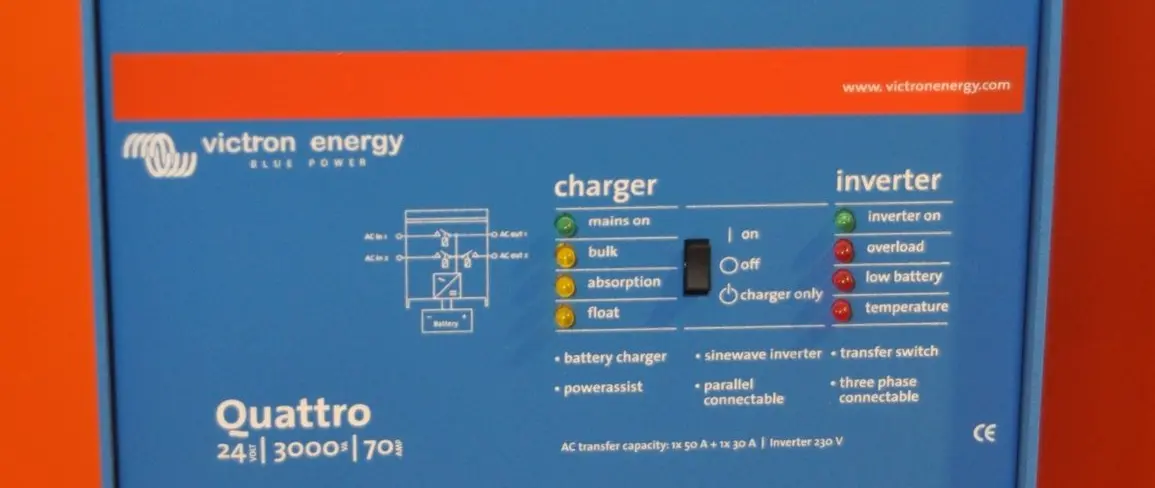
Water Revolution Releases Life Cycle Assessment Guide for Marine Suppliers — licensed SYG News 26Nov batch05
Water Revolution Foundation’s new guide explains Life Cycle Assessment principles and data needs for marine suppliers, helping improve environmental reporting.
Water Revolution Foundation has published new guidance intended to help marine equipment manufacturers understand and undertake Life Cycle Assessment, or LCA, as environmental information becomes more important in superyacht construction and procurement. In an official post dated 23 November, the foundation says the resource addresses what an assessment involves, the information a supplier needs and how the results can support product development and environmental reporting. The publication is relevant to a sector whose supply chain spans composite materials, metals, electronics, interior fittings, mechanical systems and the specialist services required to integrate them into a finished yacht.
The foundation's 23 November statement introduces a practical guide rather than announcing a regulatory requirement that every supplier must satisfy. Its stated aim is to make LCA principles and methodology more accessible to companies facing demand for product-level environmental data. It also encourages suppliers to understand where to begin and how to communicate results responsibly.
Those distinctions matter. A guide can assist a manufacturer without guaranteeing the quality of its future assessments. The actual work of measuring impacts requires appropriate data, clearly defined assumptions and expertise suited to the product. Buyers should ask what has been studied and how, rather than assume that a business's association with a sustainability initiative is itself a verified environmental result.
A large custom yacht involves materials and components sourced from many specialist companies. Hull and superstructure construction can require steel, aluminium or composites, while the yacht's systems include engines, pumps, lighting, climate control, electronics and hotel equipment. Interior spaces may combine stone, leather, timber, adhesives and textile products from several countries.
This diversity makes environmental measurement difficult. A yard might know what materials it purchased but lack reliable information about how some components were produced. A supplier may likewise understand its factory operations without having complete data about raw-material extraction or transport. Product-level assessments can help close those gaps, provided companies agree transparent boundaries and methods.
An LCA is a structured method for examining environmental impacts over the stages of a product's life. Depending on the study and its defined scope, those stages might include material extraction, manufacturing, transport, use, repair and end-of-life treatment. Greenhouse gas emissions are often a central concern, but impact categories can also extend to resource use and other environmental pressures.
A study focused only on carbon may be useful, yet it should not be presented as a complete assessment of every possible environmental issue. The relevant indicators depend on the method used and the questions being asked. A responsible supplier should state which impact categories are included so shipyards can understand the meaning and limits of the findings.
Before collecting data, a manufacturer needs to identify what is being compared. A pump, for example, can be assessed as one unit leaving the factory, or according to the useful work it performs over a defined period. Those choices can produce very different comparisons. A high-efficiency product might have more material in its construction yet consume less energy over its working life.
The functional unit is therefore a critical part of the study. It should reflect the service delivered rather than merely the weight or purchase price of the product. For a piece of yacht equipment, factors such as duty cycle, maintenance, replacement and expected service life can be material. Without a consistent functional unit, apparently precise numbers may be misleading.
Some LCAs measure impacts from raw material extraction through manufacturing, sometimes called cradle-to-gate. Others attempt to cover installation, use and end-of-life stages. Neither should be presented as automatically interchangeable. A cradle-to-gate result may be appropriate for certain supplier comparisons but cannot by itself describe the total impact of years of equipment operation aboard a yacht.
A shipyard needs to know exactly where an assessment stops. If a supplier excludes transport or electricity consumed during use, that omission may be justified by the study design, but it must be disclosed. A clear scope helps technical teams combine different information without accidentally omitting major stages or counting some impacts twice.
The foundation's release points to the need for information as a central issue. A supplier might collect details about material quantities, energy consumption, waste, packaging, transport routes and subcontracted processes. Where direct measurements are unavailable, estimates or secondary datasets may be used, but their quality and relevance should be explained.
Data collection is often more demanding than preparing a final chart. It can reveal gaps in purchasing records or inconsistencies between products that share the same model name. Companies may benefit from improving internal recordkeeping even before completing a full LCA. These operational improvements should be considered potential outcomes of the process, not results claimed for every supplier that reads the guide.
The materials and processes chosen during design can influence the embodied impact of yacht equipment. Decisions about thickness, finishing, machining, assembly and repairability may affect the quantity of raw materials and energy required. An LCA can help identify areas worth investigating, but conclusions need to be checked for unintended consequences.
Reducing material weight is not always environmentally beneficial if the product becomes less durable or needs replacement more often. Similarly, a manufacturing change that lowers factory energy consumption might increase transport requirements. Comparing complete relevant life stages helps decision-makers avoid optimising one number at the expense of the overall result.
Equipment that operates frequently aboard a yacht may have a substantial use-phase energy requirement. Pumps, ventilation systems and electronic devices all consume power, although their actual contribution depends on duty cycle and the source of electricity. A design that uses energy more efficiently might create savings during operation, but those benefits require credible performance data.
A laboratory rating is not a complete operating history. A pump might run intermittently, or a yacht might be laid up for several months each year. Manufacturers should be cautious about applying one generic assumption to very different vessels. Owners and managers can assist by keeping reliable operating records when confidentiality and access arrangements permit.
Many superyacht owners expect systems to remain serviceable for extended periods. The ability to replace a worn component, obtain spare parts and update software may prevent premature replacement of expensive equipment. These factors can influence environmental performance, especially when manufacturing a new system requires substantial materials and energy.
A life cycle model should use defensible assumptions about maintenance intervals and replacement. Suppliers who claim that a product will last a certain number of years should explain the conditions underlying that expectation. An unusually optimistic service-life assumption can make a study appear favourable even if the real product is difficult to maintain.
Equipment may contain combinations of metals, plastics, electronics and other materials. Recycling potential differs among them, and the presence of a recyclable component does not guarantee that appropriate facilities will be available at the end of a yacht's working life. An LCA can model end-of-life scenarios, but these should be identified as scenarios rather than known future events.
Design for disassembly and clear material identification may help future repair or recovery. A supplier considering these possibilities can also reduce practical maintenance difficulties. The challenge is to balance ease of disassembly with safety and durability requirements. Changes should be validated technically, not treated solely as environmental improvements.
A yard may receive environmental claims from several competing suppliers, each using a different study boundary or data source. Comparing those figures directly can create a false ranking. A smaller numerical carbon figure might reflect a narrower scope rather than a genuinely lower impact. Procurement teams should ask for the method, functional unit, data vintage and relevant uncertainties.
The foundation's guide is aimed at helping companies understand these requirements. Its publication does not establish one universal comparison for every marine product. For meaningful purchasing decisions, the comparison must be based on equivalent services and sufficiently consistent assumptions.
Independent verification may be appropriate when environmental results are used for important procurement or public communications. A reviewer can examine whether the methodology follows an identified standard and whether conclusions are supported by the data. The foundation's introductory article does not certify individual products, so readers should avoid treating the guide itself as a verification mark.
Suppliers need to distinguish between having carried out an internal calculation, publishing an independently reviewed study and obtaining a recognised product declaration where applicable. Each represents a different level of assurance. The distinction is important for yacht owners seeking environmental information that can withstand scrutiny.
Yacht builders are increasingly asked about emissions associated with purchased goods and services. These indirect impacts can be difficult to estimate because they occur outside the builder's own facilities. Supplier information may improve the accuracy of that accounting, provided the studies are appropriately scoped and data can be incorporated without double counting.
The term Scope 3 does not mean that every vendor must publicly disclose proprietary manufacturing details. Data-sharing agreements and aggregation may help balance commercial confidentiality with environmental assessment. A good process defines what the shipyard genuinely needs and avoids requesting information that serves no clear analytical purpose.
A supplier may be tempted to use the word sustainable as a broad marketing label. An LCA is more useful when the result is specific: a stated impact for a defined product, under identified conditions. If a reduction has been measured against a previous design, both products and the comparison basis should be described.
The industry has good reasons to avoid unsupported claims. Owners and builders may rely on technical documentation when making expensive decisions, and inaccurate environmental statements can undermine trust. An LCA can provide evidence, but it does not automatically make a product impact-free or environmentally preferable in every category.
Not every specialist marine supplier has a dedicated environmental team. The guide's practical orientation is relevant because many firms produce niche equipment with limited staff. A manageable first step might involve defining a product family, improving material records and seeking professional help with an appropriate methodology.
The scope should match resources and decision needs. A modest but transparent study may be more useful than an elaborate presentation built on weak estimates. Companies should avoid implying that reading the guide is equivalent to conducting an assessment. The actual analytical work still needs to be performed.
Water Revolution Foundation's confirmed development is the publication of a practical marine-supplier LCA guide on 23 November 2026. It addresses methodology, data requirements, procurement and reporting. The article does not announce mandatory certification, quantify the environmental performance of a new yacht or identify a manufacturer as having met a newly adopted standard.
For the superyacht industry, the significance lies in improving the quality of information passed along the supply chain. Better product data can help designers and yards compare options more responsibly, and owners can ask clearer questions about a yacht's materials and systems. Real progress will depend on suppliers gathering defensible evidence and using it carefully.
Primary source: Water Revolution Foundation official Practical Guide for Marine Suppliers announcement 23 November 2026.
Licensed archival marine industry exhibition photograph, not an LCA audit Photo: S.J. de Waard; CC BY-SA 3.0 via Wikimedia Commons. Official source.
Explore
Go deeper into the yachts, companies, events and destinations directly connected to this article.
Company
Explore the company profile and related Superyacht Guide coverage.
Continue reading

As the 2026 Forum opens, its earlier panel review highlights fuel compatibility, lifecycle emissions, sourcing and cost considerations for existing yachts.

Over 40 yacht-industry specialists met in Nice to test a shared Smart Materials Library and address evidence, maintenance and environmental decisions in superyacht interiors.

Water Revolution Foundation has introduced a four-tier verification framework for its Hub of Verified Solutions, giving yacht suppliers a staged route toward full LCA.
Water Revolution Foundation urges yacht operators to incorporate whale-safe navigation and ecological information into northwestern Mediterranean passage plans.
Superyacht Guide
Continue into the wider Superyacht Guide.
Business opportunities · Superyacht Guide
Companies serving the superyacht market can discuss clearly identified advertising, sponsorship and business-profile opportunities. Commercial activity remains separate from independent editorial coverage.