HP Watermakers Presents Integrated Yacht Water Package at METSTRADE 2026
HP Watermakers outlines an integrated freshwater system at METSTRADE 2026, combining water production, purification and distribution for large yachts.
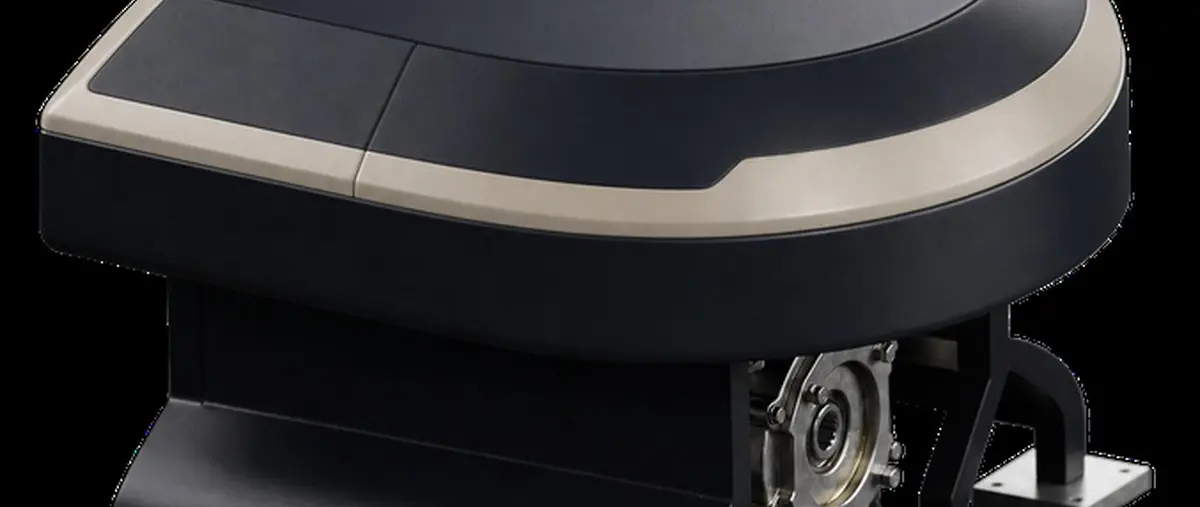
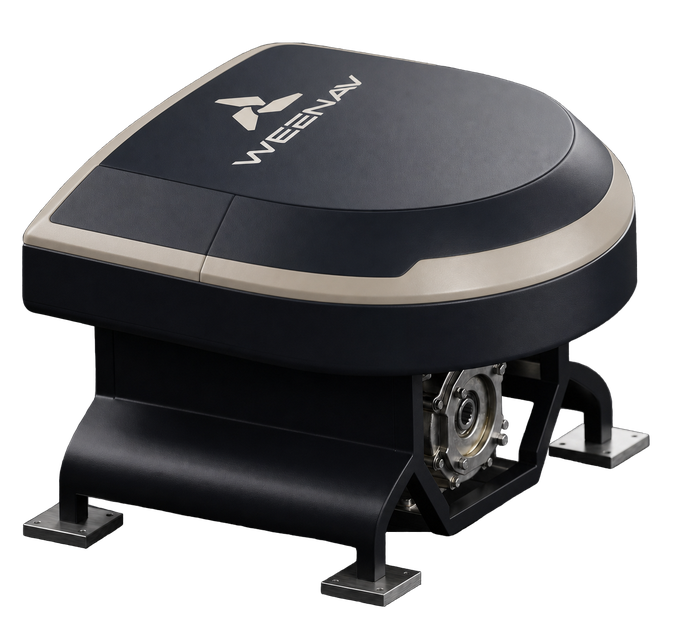
Weenav KRONOS Light KRONOS ARION electric marine propulsion official METSTRADE 2026 product image
Weenav presents KRONOS Light electric outboards and ARION inboard motors at METSTRADE 2026, with first KRONOS Light deliveries forecast for May 2027.
French electric-marine propulsion developer Weenav has presented its KRONOS Light outboard programme at METSTRADE 2026, alongside its higher-powered KRONOS units and the ARION inboard range. In its 12 November announcement the manufacturer describes KRONOS Light as a forthcoming outboard family offering continuous ratings of 110, 150 and 200 horsepower, with initial deliveries expected from May 2027. The existing KRONOS range covers 250 and 300 continuous horsepower, while ARION inboards are offered across six continuous ratings between 50 and 400 horsepower. The company says it is seeking shipyards, installers and dealers capable of supporting its systems. For the superyacht industry this is not a claim that these motors can directly propel a large displacement vessel. It is a story about the increasingly varied propulsion options for chase boats, utility craft and guest tenders that form an essential part of many larger yachts' operations.
Weenav identifies KRONOS Light as its new 2026 exhibition introduction, designed for customers who want the architecture of the existing KRONOS in a lighter package. The maker names 110-, 150- and 200-horsepower continuous options, with the most powerful variant said to reach 250 horsepower for short peak demand. It quotes a maximum weight of 239 kilograms, though this should be verified for the exact configuration. Those figures indicate the scale of the intended equipment but do not establish a particular tender's speed, acceleration or range. A superyacht fleet manager should compare them with the current engine loads and operating requirements of the craft under review. The important distinction is between a power rating at the motor and the performance delivered by the complete boat, including propeller and energy storage.
The official announcement says KRONOS Light was open for reservation during METSTRADE, with first deliveries expected from May 2027. That is a planned schedule, not evidence of units already delivered in November 2026. A yard refitting a tender for the next Mediterranean season would need a confirmed build, commissioning and service timetable before adopting the product in a critical programme. The supplier also identifies five proposed finishes—blue, black, red, olive green and white—which may help tailor the external appearance of a guest tender. Colour is commercially interesting on a yacht where the tender is often styled to match the mothership, but it does not affect the basic engineering checks. Compatibility, delivery dates and aftersales support should remain decisive elements of the purchase.
Weenav also presented the KRONOS 250 and KRONOS 300 outboards, with continuous ratings of 250 and 300 horsepower and stated peak values of 347 and 420 horsepower respectively. Those numbers are manufacturer-supplied and depend on the defined operating conditions. It would be misleading to assume that the peak level can be maintained indefinitely or that the rating translates directly into the speed of a particular hull. Battery output, thermal limits, drive geometry and propeller design all matter. The supplier says its lower unit was engineered for the torque characteristics of the electric drive. A buyer should request the operating curves and review how sustained loaded operation affects output. The right comparison with a combustion-engine tender must be based on representative duty cycles rather than advertising headline power alone.
For craft where an outboard is not appropriate, the company offers ARION inboard motors at continuous ratings of 50, 100, 150, 200, 300 and 400 horsepower. The published weight range is approximately 140 to 340 kilograms, and the maker describes a liquid-cooled arrangement that can be integrated with different transmissions. Those claims make the product relevant to certain custom tenders or auxiliary boats where a designer wishes to retain an inboard layout. It is not sufficient to state that the motor can fit any boat without assessing the shaft line, reduction ratio, loading, hull structure and available cooling. A successful project will involve the naval architect, equipment supplier and installation contractor early. Existing equipment may require modification even if the selected motor itself fits inside the original space.
Weenav describes a common onboard environment supported by its DORIS control, which can be specified in single or dual arrangements. The controls are intended to support starting, trim and safety behaviour at idle. The company also refers to Garmin display integration between nine and 16 inches, with a tailored interface for mapping and motor data. That could provide a familiar operator environment across a tender fleet, but the actual functions must be verified for each motor and installed boat. A control that appears similar on two craft may operate different machinery under different limits. Crew should receive vessel-specific training and understand the meaning of alarms, remaining battery energy and any automatic power reduction. Standardising the interface is useful only if it also reduces the risk of operating mistakes.
The supplier states that the common energy package is based on modules containing 5.43 kilowatt-hours of stored energy, each weighing 49.5 kilograms and occupying about 35 litres. These are tangible figures for early design studies, but they do not establish a suitable pack size for a particular tender. Designers must account for the usable fraction of the stored energy, peak electrical loads, battery-management restrictions and the expected reserve at the end of a mission. The physical packaging also requires space for structural support, wiring, ventilation or thermal management, protective equipment and service access. Several modules add substantial weight, which can change trim and performance. A higher motor rating may be attractive, but a successful vessel also needs an appropriately designed energy system capable of supporting the required duty cycle safely.
A yacht's tender may spend time idling beside a platform, making short trips to shore or carrying guests at higher speeds. Those operations can produce very different energy consumption even with the same motor. An advertised horsepower value cannot tell the captain how many return journeys are available before charging. The project team should record representative routes, passenger loads, speeds and operating conditions to build an energy budget. That budget should include reserves for weather delays and any necessary safety systems. The manufacturer can then propose a suitable battery configuration, subject to verification. A tender that performs comfortably on a short demonstration run may still be poorly suited to a demanding charter schedule if its battery and charging arrangements were selected without reference to the real programme.
A large yacht carrying electric tenders must integrate charging, stowage and maintenance with the mother vessel's engineering arrangements. Battery-powered craft may introduce different fire and electrical hazards from a conventional fuel-powered tender, even though they avoid certain local exhaust emissions. Designers need suitable isolation and protection for the charging circuit, appropriate storage conditions and an operating plan for damaged batteries or other faults. The tender garage's structural and ventilation arrangements may need specialist assessment. A battery module's physical size alone does not define safe storage conditions. The owner should involve the yacht builder, class and flag advisers where applicable, and the tender manufacturer before approving a new configuration. The aim is to enjoy cleaner and quieter tender operation without compromising the safety of the larger yacht.
Weenav says its equipment can support both new construction and repowering of existing boats. A retrofit may preserve a hull that already meets the owner's requirements, but significant technical changes may be needed. The original engine's weight distribution, propeller arrangement, cooling services and fuel system will differ from those of a battery-electric package. Electrical distribution and high-voltage safety may require a new design, particularly at the upper end of the motor range. The contractor should inspect the existing hull and prepare a complete conversion plan. It is not enough to compare the dimensions of a petrol outboard with the body of an electric motor. Battery placement, structural reinforcement, controls and charging interfaces all contribute to the completed weight and cost.
The official announcement states a first service recommendation of 5,000 hours for KRONOS and 10,000 hours for ARION. These are manufacturer claims about the propulsion equipment and should not be read as permission to operate an entire tender without inspection until the stated hour count. Propellers, battery systems, steering, cables and hull fittings may have separate requirements. A yacht fleet manager should request the full maintenance schedule, including routine checks and conditions that could shorten an interval. It is also important to understand whether the quoted numbers apply to the exact model and operating profile purchased. A maintenance claim can be useful for cost modelling, but long-term reliability remains dependent on inspection, clean installation and competent repair support.
Weenav is recruiting authorised dealers and installers and says it provides onsite training, engineering documentation, support for first installations and a warranty process. This is relevant to international yachts because a novel propulsion system becomes difficult to manage if only one technician in one location understands it. Owners should establish where approved service partners are located and how replacement parts can reach the vessel during a season. They should also understand whether software updates require specialist tools and who holds the necessary configuration records. The supplier's planned network may become an advantage, but a prospective buyer should confirm actual coverage for the intended cruising regions rather than assume that an exhibitor's global ambitions are already a fully operational service infrastructure.
The decision between KRONOS Light, the larger KRONOS units and an ARION inboard should begin with the boat's mission. An outboard can provide a compact, serviceable arrangement for some hulls, while an inboard may offer different weight distribution and external styling possibilities. Propulsion geometry also affects shallow-water use, beach approaches and the ability to protect the propeller from damage. A superyacht may prefer a particular solution for a guest-transfer tender and another for a utility craft. Designers should compare manoeuvring, maintainability and the implications for seating or cargo space. The manufacturer's range offers several configurations, but not every one is relevant to every tender. The proper outcome is a coordinated vessel design rather than selecting whichever engine has the most impressive peak figure.
The 12 November press release establishes a concrete commercial development: the KRONOS Light range was presented for reservation, with intended first deliveries in 2027, while the existing higher-power outboards and ARION inboards formed part of Weenav's broader offering. Its technical details provide a starting point for tender builders and yacht management teams. They do not prove the performance or regulatory acceptance of any future installation. Superyacht owners can use the announcement to review their auxiliary fleet's energy needs, charging infrastructure and servicing arrangements. Electric propulsion may be an attractive option in carefully defined roles, but dependable operations require the battery, hull and crew procedures to be engineered as one system.
**Primary source:** Weenav SAS, official METSTRADE exhibitor announcement of 12 November 2026, describing KRONOS Light, KRONOS and ARION power ranges, battery modules, controls and intended delivery timing. The discussed use is superyacht tenders and support craft, not primary propulsion for large yachts.
Primary source: Weenav SAS — official 12 November 2026 KRONOS Light, KRONOS and ARION METSTRADE presentation.
Official Weenav SAS product photograph illustrating its KRONOS and ARION electric propulsion range, METSTRADE November 2026. Official source.
Continue reading
HP Watermakers outlines an integrated freshwater system at METSTRADE 2026, combining water production, purification and distribution for large yachts.
The history and engineering of the 28.27m first hybrid-electric Swan 88 DreamCatcher, with its distinct Nautor hull identity and official 2024 source.
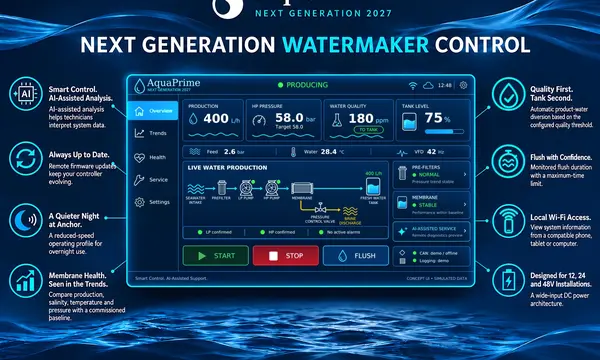
AquaPrime will preview its new watermaker control platform at METSTRADE, with touchscreen monitoring and diagnostic features under development for yacht crews.
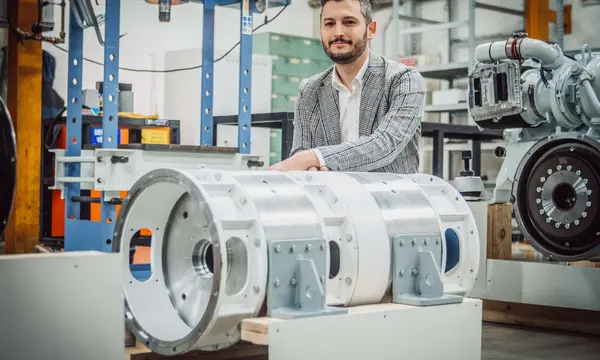
Vulkan Italia will present its 200kW H1000 parallel-hybrid module for marine diesel engines rated 500–1,500kW during METSTRADE's Next Gen showcase.
Superyacht Guide
Continue into the wider Superyacht Guide.
Business opportunities · Superyacht Guide
Companies serving the superyacht market can discuss clearly identified advertising, sponsorship and business-profile opportunities. Commercial activity remains separate from independent editorial coverage.