
Malta Revises Assistant Engineer Rules for Commercial Yachts Under 500 GT
Malta has introduced a risk-based Assistant Engineer manning framework for qualifying Short Range and Extended Short Range commercial yachts below 500 GT.
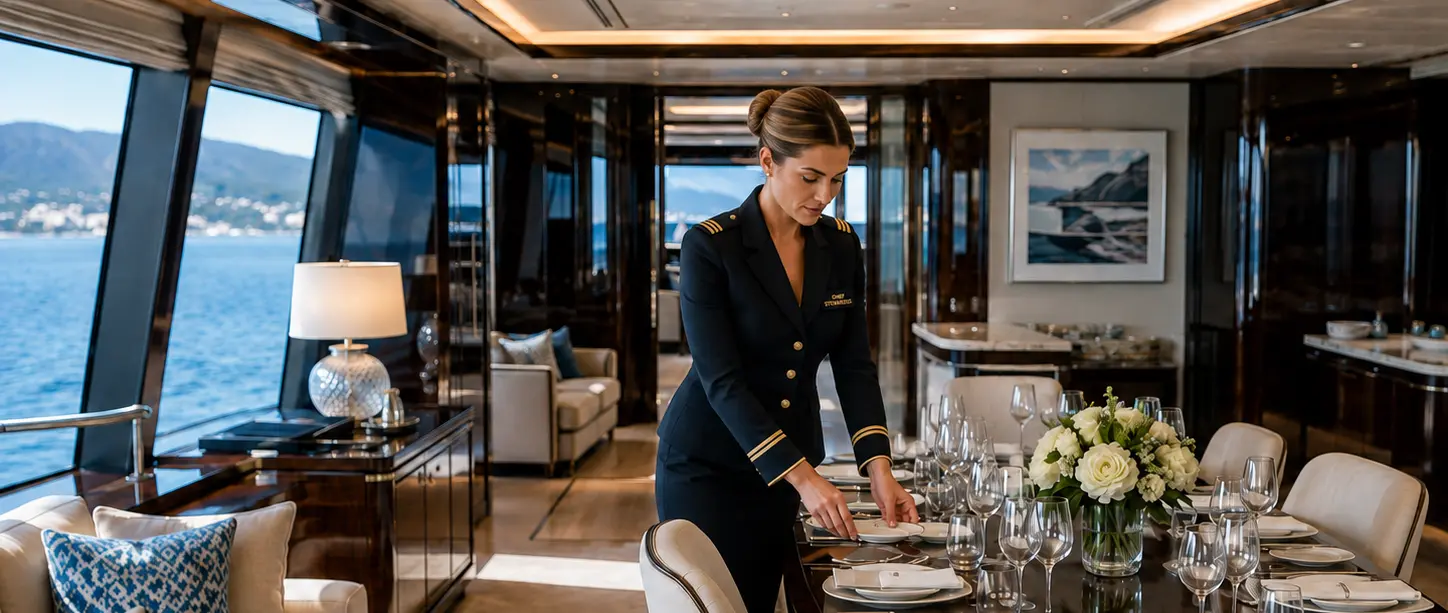
The chief stewardess is often the person who turns an owner’s preferences into the daily rhythm of the yacht. The role demands far more than polished service: it requires leadership, judgement, planning, discretion, training and the ability to keep the interior department effective under pressure.
A great chief stewardess is easy to underestimate because the best work is designed to remain largely invisible. Guests see a calm welcome, a perfectly prepared cabin, a table set at the right moment and a service team that appears to understand what is needed before anyone asks. They do not usually see the planning, allocation, checking, training and problem-solving that made the experience possible.
The role sits at the centre of the yacht’s hospitality operation, but it is not simply a senior service position. On many yachts, the chief stewardess manages the interior team, oversees housekeeping and laundry, plans service, controls inventories, supports provisioning, coordinates guest preferences and works closely with the captain, chef, purser, deck department and shore-based management. The exact responsibilities vary with yacht size, manning and operating pattern, but the underlying challenge remains the same: the chief stewardess must make a complex department feel effortless.
That standard cannot be achieved through personality alone. Warmth and confidence help, but a successful chief stewardess also needs structure, consistency and the judgement to know when to intervene, when to delegate and when to leave guests alone. The strongest professionals are not merely excellent at service; they create an interior department that can continue performing well when the yacht is busy, plans change and the pressure rises.
The most important difference between an experienced stewardess and a strong chief stewardess is leadership. A junior crew member may be judged mainly on the quality of their own work, while the chief stewardess is responsible for the performance, conduct and development of the entire interior team.
That responsibility begins with clear expectations. Cabin standards, laundry handling, table service, uniform, guest privacy, radio communication, shift handovers and stock control should not depend upon individual interpretation. A department that relies on everybody just knowing what to do will usually become inconsistent as soon as the workload increases or new crew join.
A great chief stewardess creates systems without making the department feel bureaucratic. Checklists, service notes, cabin assignments, inventories and daily briefings are practical tools, but they should support judgement rather than replace it. The objective is to give the team enough structure that they can work confidently and adapt intelligently.
Training is part of the daily role. Junior stewardesses may arrive with formal courses but limited experience of a particular yacht, owner or service style. The chief stewardess must teach not only how a task is completed, but why it matters and how it connects with the wider guest experience.
This can include showing a new crew member how to enter a cabin discreetly, how to record preferences, how to handle valuables, how to communicate a delay and how to recover from a service mistake without creating further disruption. The internationally recognised IAMI GUEST framework reflects the breadth of modern yacht-interior competence, with training and assessment covering interior duties, leadership and chief-stewardess responsibilities rather than treating the role as simple domestic service.
Leadership also requires honest feedback. Correcting an error early and privately is usually kinder than allowing poor practice to become established. The chief stewardess should be able to explain what went wrong, demonstrate the correct standard and determine whether the problem arose from inexperience, unclear instruction, fatigue or attitude.
The strongest leaders do not create a department that functions only when they are personally present. They develop senior stewardesses who can run a service, organise a shift and make sound decisions. A chief stewardess who refuses to delegate may appear indispensable, but the department becomes fragile because every question and approval returns to one person.
Luxury service is often described in terms of polish, but observation is more important than performance. Guests should not have to repeat the same requests, explain their routines each day or constantly summon the crew to obtain basic preferences.
The chief stewardess builds an understanding of how guests actually use the yacht. Preference sheets provide a starting point, but real behaviour is more informative. One guest may prefer coffee before conversation, another may want complete privacy after lunch and another may expect the interior team to help plan every part of the day.
These differences are rarely announced formally. They are discovered through timing, body language, repeated choices and quiet communication between departments. A guest who consistently moves away from an exposed seating area may value privacy or shade. Someone who leaves dinner early may prefer a shorter service, while a family using the same saloon every evening may need that space reset before they return.
The chief stewardess converts those observations into an organised service plan. Relevant information is shared with the crew who need it, while personal or sensitive details remain protected. The aim is not to create an intrusive record of the guests, but to prevent them from repeatedly managing the service themselves.
Knowing when to disappear is as important as knowing when to approach. A good stewardess understands when to enter a saloon and when to wait, and that judgement is particularly important for the chief stewardess, who sets the department’s culture and determines whether attentive service feels reassuring or oppressive.
The yacht is a private living space, not a restaurant where guests expect staff to remain permanently visible. Crew may need to anticipate drinks, clear tables and prepare the next area while allowing owners and guests to feel alone. A great chief stewardess trains the team to remain aware without hovering.
Discretion extends beyond physical presence. Guest conversations, personal habits, visitors, itineraries and family dynamics should not become crew entertainment. The chief stewardess often has access to sensitive information and private spaces, making confidentiality a professional duty rather than a matter of personal style.
Interior service cannot function independently of the rest of the yacht. Meals depend upon the chef, guest movements depend upon the deck team, arrival times depend upon the bridge and cabin comfort may depend upon engineering systems. A chief stewardess who manages only the interior will struggle because the guest experience is created across departments.
Communication with the captain is particularly important. The captain may know that weather requires an earlier departure, while the chief stewardess knows that guests are preparing for a dinner ashore. The technical and hospitality information must be considered together before the change is presented.
The chief stewardess can explain how a navigational or weather decision will affect meals, clothing, children, sleep and shore arrangements, allowing the yacht to offer a workable alternative rather than merely announce a cancellation. This role is one of the most valuable links between the owner’s experience and the vessel’s operational reality.
The chef relationship is equally important. Meal times, guest numbers, dietary information, late arrivals and changes between formal and casual service need to be communicated accurately. Poor coordination can leave the galley preparing food for a schedule that no longer exists, while guests wait for a service that the interior team assumed had changed.
The deck team needs timely information about tender movements, luggage, beach setups, water activities and guests returning from shore. Interior crew should not promise immediate departures or equipment without confirming that the operation can be carried out safely and that the necessary crew are available.
Engineering communication may be less visible but remains essential. Air conditioning, lighting, water, laundry equipment, refrigeration and entertainment systems directly affect the interior department. A strong chief stewardess reports defects clearly, understands the operational constraints and avoids placing engineers in impossible situations by presenting every guest preference as an emergency.
The role therefore requires translation. The chief stewardess interprets guest expectations for the operational departments and explains operational reality to the service team. When this is done well, the yacht moves as one organisation rather than a collection of departments protecting their own priorities.
Almost any team can perform well when the yacht is quiet, the guests follow the plan and the crew are rested. The quality of the chief stewardess becomes clearer when the charter starts late, luggage arrives unexpectedly, dinner moves forward, a cabin has a technical problem and several guests want different things at once.
Pressure exposes weak systems. Without clear responsibilities, the same task may be completed twice while another is missed entirely. Without proper handovers, the evening team may not know what happened during the day. Without leadership, junior crew may become anxious, defensive or reluctant to report mistakes.
A great chief stewardess creates calm by deciding what matters first. Guest safety, allergies, privacy and critical service needs take priority over minor presentation details. Some tasks can be delayed, simplified or reassigned without lowering the real standard of the yacht.
This does not mean accepting carelessness. It means recognising that perfection is achieved through prioritisation, not through treating every crease, flower and glass as equally urgent during a peak workload.
The chief stewardess must also protect the team from unnecessary chaos. Last-minute requests are part of yachting, but avoidable internal disorganisation should not be accepted as normal. If schedules change, the department needs an updated plan. If the crew are working split shifts, each person should know when they are expected to rest and when they will return.
International maritime labour rules require minimum rest of ten hours in any 24-hour period and 77 hours in any seven-day period. Safe-manning guidance also requires owners and operators to consider peak workload when deciding whether a vessel is adequately crewed. Those standards matter to the chief stewardess because the interior department cannot maintain safe, high-quality service indefinitely through exhaustion.
A weak leader may hide chronic understaffing by asking the team to work longer and smile harder. A strong chief stewardess records hours honestly, plans rotations, raises concerns with the captain and distinguishes between a temporary operational peak and an unsustainable way of running the yacht.
This can require courage. Owners and guests may see only the result they want, while the chief stewardess sees the accumulated hours behind it. Protecting rest is not a refusal to provide service; it is part of preserving safety, judgement and professional standards.
The chief stewardess is often required to manage people with very different backgrounds, experience levels and expectations. The interior team may live and work together for months, with limited personal space and little separation between professional and private life.
Technical competence alone is not enough in that environment. The chief stewardess needs to recognise tension before it affects service, address grievances fairly and prevent personal conflicts from becoming departmental divisions.
This does not require constant friendliness or an avoidance of difficult conversations. Emotional intelligence means understanding how to communicate effectively with different people while maintaining clear standards. One crew member may respond well to direct instruction, while another may need a fuller explanation before they can improve.
Fairness is essential. Favouritism, inconsistent discipline and unpredictable moods damage trust quickly. Crew should know that the same standards apply regardless of friendship, seniority or nationality.
A good chief stewardess also understands the limits of the role. Serious employment, welfare, harassment or medical concerns should not be treated merely as personality problems to be solved within the department. The captain, management company or appropriate shore-based support may need to become involved.
Confidence should come from competence rather than performance. The loudest person in the crew mess is not necessarily the strongest leader, and the most formal service style does not automatically create the best guest experience. The chief stewardess should be able to remain calm, admit uncertainty, ask for assistance and correct a decision when better information becomes available.
The same emotional control is important with guests. A complaint may be delivered unfairly or at the worst possible moment, but the response must remain professional. The chief stewardess should listen, establish the real problem and decide whether the solution is immediate, operational or something that should be discussed with the captain.
The visual side of the role receives the most attention, but a large part of chief-stewardess work is administrative. Inventories, purchasing, crew schedules, uniform records, guest preferences, laundry systems, cabin assignments, maintenance reporting and budget tracking all support the service operation.
Stock control is particularly important because yachts often operate far from familiar suppliers. Linen, toiletries, cleaning products, beverages, tableware and guest consumables must be maintained without creating unnecessary waste or filling limited storage with poorly chosen items.
Purchasing requires judgement. The cheapest product may not meet the yacht’s standards, but the most expensive option is not automatically appropriate. The chief stewardess should understand quality, durability, storage, delivery times and the owner’s expectations before approving expenditure.
Maintenance records also matter. Damaged furniture, fabrics, tableware and interior equipment should be documented and addressed before small problems become costly ones. During refits and yard periods, the chief stewardess may contribute detailed knowledge of how spaces are used and where the design creates recurring operational problems.
Good administration protects continuity. When a chief stewardess takes leave or eventually leaves the yacht, the department should not lose its inventories, supplier contacts, service standards and owner preferences. An organised handover is evidence that the department was professionally managed rather than held together through personal memory.
A great chief stewardess does more than produce beautiful tables and immaculate cabins. The role strengthens the entire yacht by creating a stable interior team, improving communication between departments and giving the captain reliable information about how guests are experiencing the programme.
Owners benefit because their preferences are remembered and delivered consistently. Guests benefit because service feels natural rather than repetitive. Junior crew benefit because they receive training, structure and fair leadership. Other department heads benefit because requests are communicated clearly and changes are shared before they become emergencies.
The strongest chief stewardesses also understand that standards must suit the yacht. A formal charter yacht, a private family yacht and an expedition vessel may require very different interior cultures. Copying the procedures of a previous yacht without understanding the current owner and operation can create unnecessary rigidity.
Adaptability should not be confused with having no standard. The chief stewardess establishes a professional foundation and then adjusts the style of service around the people aboard. The method remains disciplined even when the visible result feels relaxed.
Ultimately, the quality of a chief stewardess is measured by what continues around them. The guests feel comfortable, the interior team knows what it is doing, the captain receives accurate information and the service remains composed when plans change. The role may be associated with presentation, but its real value lies in leadership and control.
A great chief stewardess does not merely make the yacht look ready. They make the yacht’s hospitality operation dependable.
Continue reading
Malta has introduced a risk-based Assistant Engineer manning framework for qualifying Short Range and Extended Short Range commercial yachts below 500 GT.

Gard’s 2026 Crew Claims Report draws on about 3,000 P&I crew claims and finds elevated injury risk early in a crew member’s time on …
Junior Yacht Stewardess Salary 2026: Entry-Level Pay and Leave Junior yacht stewardess and steward pay in 2026 is currently benchmarked at about €3,000–€3,500 per …
Yacht Spa Manager Salary 2026: Pay, Rotation and Duties Spa managers with yachting experience on 80m+ yachts are currently benchmarked from about €4,500+ per …
Superyacht Guide
Continue into the wider Superyacht Guide.