40m Superyacht Running Costs: Crew, Fuel, Berthing and Refit
Running a 40m superyacht requires a substantial annual budget for crew, maintenance, fuel, berthing and other operating costs. Superyacht Guide's 2026 model of 322 …
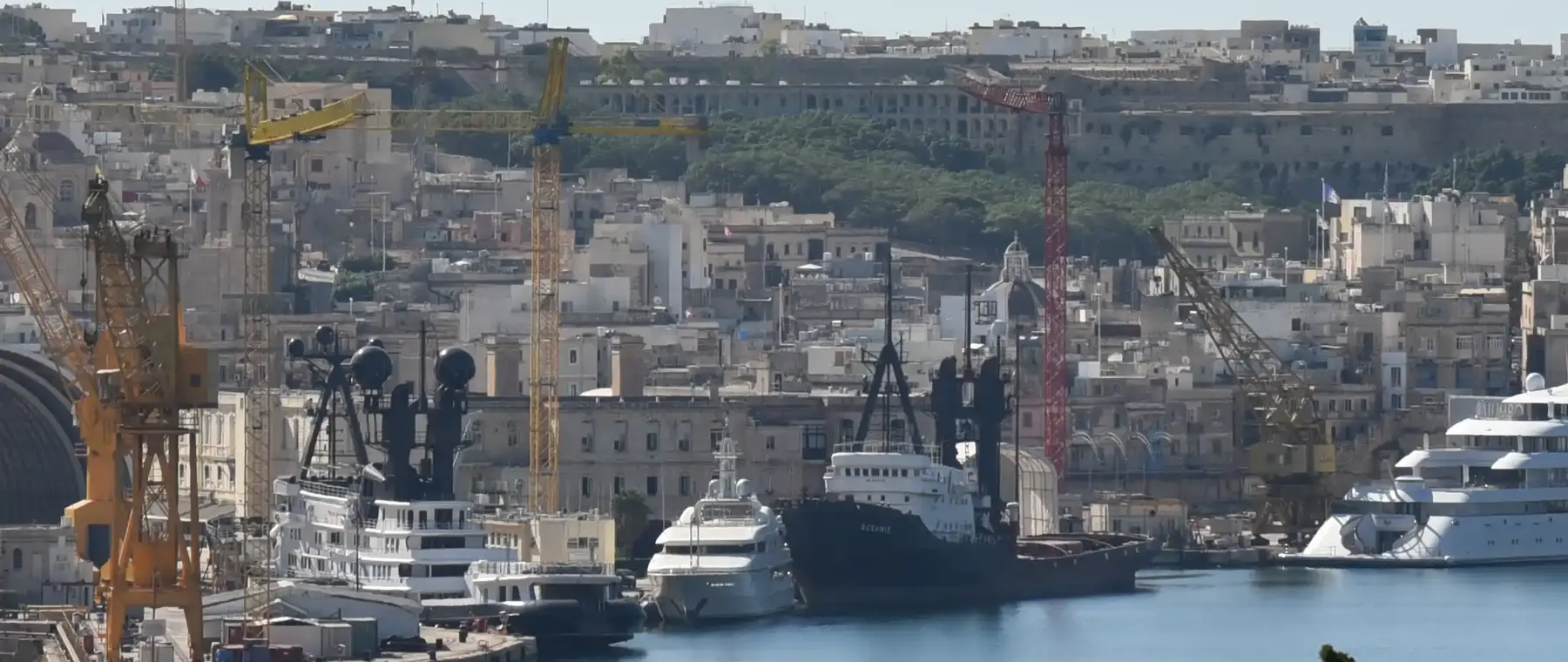
Why do some extraordinary superyachts spend weeks sitting quietly in marinas? The answer lies in owner availability, crew, maintenance, cost, geography and the hidden complexity of keeping a yacht ready.
Walk through almost any major superyacht marina in the Mediterranean and sooner or later the same question comes to mind. Why are so many of these extraordinary yachts sitting quietly at their berths? Some have cost tens or even hundreds of millions of euros to build, employ full-time professional crews, and consume millions more every year simply to remain ready for use. Yet from the quayside they can appear almost motionless for days or weeks at a time. To an outsider, it can look like extraordinary waste. In reality, the apparent inactivity of a superyacht often says very little about how the yacht is being operated, how often its owner uses it, or how much work is taking place behind the scenes.
The idea that a yacht is either being “used” or “unused” is itself misleading. A large yacht is not like a sports car sitting under a cover in a garage, waiting for its owner to turn the key. It is a permanently functioning marine operation. Even when the owner is nowhere near it, generators may be running, air-conditioning and water systems are operating, engineers are servicing machinery, deck crew are maintaining exterior finishes, the interior team is preparing cabins and stores, and the bridge department may be planning future movements, permits and berthing arrangements. The yacht may look idle from shore while operating as a busy workplace every day.
The more interesting question is not why some superyachts remain at the dock, but why actual owner use can be surprisingly limited despite the enormous resources invested in making the yacht available. The answer lies in a combination of time, geography, crew, maintenance, cost and complexity. For the owner to step aboard and enjoy the yacht exactly as intended, all of those elements have to align at once.
Perhaps the greatest constraint is also the simplest: owning a yacht does not create more time. The people able to purchase and operate large yachts often have demanding business interests, international investments, multiple homes and complicated family schedules. The same activities that created the wealth required to own a superyacht may also make disappearing aboard one for several months almost impossible. A yacht can be available for the entire year while the owner may have only a handful of suitable windows in which family, business and personal commitments allow everyone to gather in the same place.
This becomes more complicated because the yacht itself may not be where the owner suddenly wants to be. A private aircraft can cross Europe in a few hours; a yacht cannot. If the owner unexpectedly finds a free week and decides that Ibiza sounds appealing, the yacht may be in Greece, Montenegro or undergoing work in Italy. Repositioning it takes time, fuel, planning and crew resources, and may conflict with weather, maintenance or an already established cruising programme. The alternative is for the owner to travel to the yacht, but this can defeat the purpose if the desired holiday was built around a particular destination, event or group of guests. The yacht is mobile, but its mobility is measured in days rather than hours, and that difference can have a surprisingly large effect on spontaneous use.
Timing becomes even more important once maintenance is considered. Every superyacht has a continuous programme of servicing, inspections, repairs and surveys. Engines and generators have service intervals; stabilisers, air-conditioning systems, watermakers, tenders, cranes, passerelles and navigation equipment all require attention. Paintwork and teak need constant maintenance, safety systems must remain compliant, and classification and regulatory obligations cannot simply be postponed indefinitely because the owner wants another week in Sardinia. Some of this work can be carried out while the yacht remains operational, but larger refits, repainting, engineering projects and scheduled dockings may remove the yacht from use for weeks or months.
The difficulty is that owners naturally want the yacht available during exactly the periods when the Mediterranean is most attractive, while shipyards, contractors and equipment suppliers face their greatest pressure immediately before those seasons. Good yacht management therefore becomes an exercise in protecting the owner’s cruising calendar. The best-run yachts plan maintenance around likely periods of use so effectively that the owner barely notices how much work has taken place. Poorly managed yachts can produce the opposite experience, where technical problems begin to intrude repeatedly on holidays and eventually affect how often the yacht is used.
Reliability has a powerful psychological effect on ownership. A single mechanical failure may be accepted as part of running a complex vessel, but repeated problems change the relationship between owner and yacht. A failed air-conditioning system, unavailable stabilisers, an engine fault that delays departure or a tender that cannot be launched can quickly turn an anticipated holiday into a source of frustration. If an owner begins to associate the yacht with disrupted plans, technical discussions and constant decisions, another villa, hotel or private island can start to look considerably easier. In that sense, one of the most important responsibilities of yacht management is not simply to repair machinery but to make the entire complexity of the vessel disappear from the owner’s experience.
Crew play an equally important role. A yacht with a stable, experienced crew becomes easier to use because the operation gradually adapts around the owner. The captain understands preferred cruising areas and how much advance notice is realistic. The chef knows the family’s preferences. The interior team understands routines, guest expectations and cabin arrangements. Engineers know the machinery intimately and can often anticipate faults before they interfere with a trip. Over time, the yacht begins to feel effortless because the people running it know exactly how the owner wants it to work.
Constant crew turnover can have the opposite effect. New crew have to learn the vessel, new department heads have to establish working relationships, and the owner may repeatedly find themselves explaining preferences that were once understood instinctively. Recruitment itself takes time, particularly for senior positions, while certification, training, visas, rotation and legal rest requirements all have to be managed. A large yacht cannot simply demand unlimited working hours from a small crew because the owner suddenly changes the programme. Safe manning, fatigue management and crew welfare all place practical limits on how spontaneously a complex yacht can operate.
None of these complications disappear when the owner is absent, and neither do most of the costs. This is one of the most unusual economic features of yacht ownership. Crew salaries continue whether the owner is aboard or not. Insurance, berthing, management, certification and routine maintenance continue. Machinery still needs servicing, systems still operate, and the yacht still has to be kept secure, compliant and ready. Industry estimates vary widely according to yacht size, age and operating profile, but a broad planning assumption of around 10 to 15 per cent of a yacht’s value per year is often used when discussing annual running expenditure.
That creates an interesting cost-per-use paradox. A yacht costing €3 million a year to operate does not become dramatically cheaper because the owner only spends 20 days aboard rather than 90. Many of the largest expenses are fixed or only partly related to actual owner use. Financially, this may not matter to someone wealthy enough to own the yacht in the first place, but psychologically it can still influence how ownership is perceived. A yacht that delivers three unforgettable holidays a year may be considered entirely worthwhile. Another that repeatedly sits in the wrong place, requires constant technical attention and becomes difficult to organise may begin to feel disproportionately burdensome regardless of whether the owner can easily afford it.
Increasing yacht size can also introduce a strange contradiction. The larger and more capable the yacht becomes, the more freedom it appears to offer, yet the operation required to provide that freedom becomes increasingly complicated. A smaller yacht might allow an owner to call the captain on Thursday and arrive on Friday for a weekend aboard. On a very large yacht, a seemingly simple decision can involve guest travel, aviation arrangements, berth availability, customs and immigration procedures, provisioning, security, crew rotation, tenders, helicopters, weather forecasts and local agents. None of these issues should reach the owner if the yacht is managed well, but they still have to be solved.
Berthing creates another layer of complication, especially during peak Mediterranean summer periods. A yacht may theoretically be capable of cruising almost anywhere, but large berths in the most fashionable destinations are finite. The problem becomes more difficult as yacht length and beam increase. Monaco, Saint-Tropez, Capri, Ibiza and other high-demand locations cannot simply create unlimited berthing space, particularly for yachts above 60 or 80 metres. Anchoring offers alternatives, but weather, local regulations, tender distances and owner preference can make it less attractive. An owner may possess one of the most mobile private assets in the world and still discover that the desired berth in the desired harbour is unavailable.
Weather can unravel even the best-planned itinerary. A villa remains where it is when the mistral arrives; a yacht may have to move. Strong winds can make a favourite anchorage uncomfortable, swell can restrict tender operations, and poor conditions can prevent watersports or helicopter movements. The captain will usually have alternatives, but those alternatives may not match the holiday the owner imagined. For someone with only seven days available, losing several of them to uncomfortable conditions can be significant. Over time, some owners simply become more selective about when they use the yacht, which can further reduce annual utilisation.
Family life also changes more quickly than yachts do. A vessel commissioned when children are young may be delivered into a completely different family dynamic several years later. Children leave for university, establish careers and relationships, and begin organising their own lives. Grandchildren arrive. Business commitments evolve. Health changes. A yacht designed around long family summers together may eventually serve a family that struggles to find a single week when everyone is free. The yacht itself can remain immaculate while the lifestyle around which it was conceived gradually disappears.
This partly explains why apparently excellent yachts sometimes come onto the brokerage market after relatively little visible use. The assumption is often that something must be wrong with the yacht, but sometimes nothing is wrong at all. The owner’s circumstances have simply changed. A vessel can remain technically outstanding while no longer fitting the life of the person who commissioned or purchased it.
Charter can increase utilisation, but it changes the nature of ownership. Allowing paying guests to use the yacht when the owner is absent can offset a portion of annual operating expenditure and ensure that the vessel spends more time cruising rather than sitting in port. Yet charter introduces its own regulatory, tax, maintenance and operational demands. The owner also sacrifices some flexibility because popular weeks may already be committed to charter clients months in advance. Wear increases, crew workloads change and the yacht becomes partly a commercial hospitality operation rather than a purely private retreat. Some owners are comfortable with that model; others would rather accept long periods of apparent inactivity in exchange for knowing the yacht is exclusively theirs.
That raises perhaps the most overlooked point of all. Some owners simply do not care whether outsiders believe their yacht is underused. For them, the value lies as much in availability as utilisation. A person may own several homes around the world without expecting to occupy each one continuously, and a yacht can function in much the same way. It is there when wanted, maintained to the owner’s standards, crewed by people they trust and configured exactly to their preferences. Whether it is used for 20 days or 100 may be less important than knowing that those days can happen privately, aboard their own yacht, without having to compromise on accommodation, service or surroundings.
Seen this way, the apparent paradox of the unused superyacht begins to make more sense. The yacht may have extraordinary range, multiple tenders, advanced communications, a helipad, a spa, a cinema and the ability to cross oceans, but every additional capability introduces another system, another maintenance requirement and often another layer of crew and logistical support. The yacht becomes more capable while the organisation behind it becomes more complex.
The best yacht programmes recognise that the true job is not simply to operate a vessel but to protect the owner’s access to it. Maintenance is scheduled around likely periods of use. The yacht is moved before the owner needs it rather than after. Crew rotation is planned so the strongest team is available during important trips. Berths and anchorages are anticipated. Provisioning preferences are already known. Alternative itineraries are prepared before weather forces a change. Technical problems are dealt with before the owner knows they existed.
When this is done well, the yacht feels effortless. The owner arrives, the yacht is in the right place, the crew are ready and the holiday begins. What looks like spontaneity may in fact be the product of weeks of preparation.
A yacht sitting quietly in a marina therefore tells us very little. It may be waiting for an owner arriving tomorrow, recovering from an eight-week cruise, preparing for an Atlantic crossing, undergoing maintenance, or simply remaining available because that is exactly what its owner wants. The real measure of whether a yacht is being successfully used is not how often it leaves the dock, but whether it delivers the experience its owner expected when they bought it.
For one owner that may mean four months a year exploring the world. For another it may mean three perfectly organised family holidays. For someone else, the value may simply lie in knowing that a private floating home is ready somewhere in the Mediterranean whenever life finally creates the time to step aboard.
Superyachts are often described as ultimate symbols of freedom. In practice, they reveal something more complicated: freedom on this scale requires an extraordinary amount of organisation. The greatest luxury may not be the yacht itself, but the ability to make all that complexity invisible.
Continue reading
Running a 40m superyacht requires a substantial annual budget for crew, maintenance, fuel, berthing and other operating costs. Superyacht Guide's 2026 model of 322 …
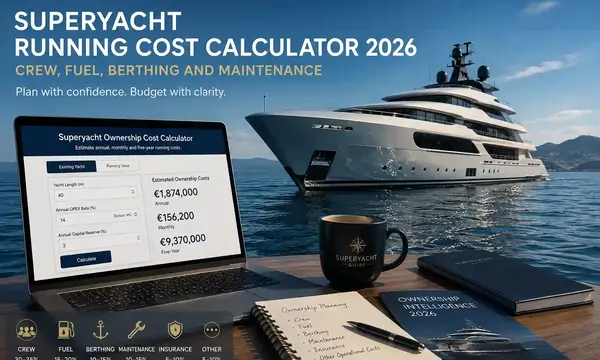
Superyacht Guide's 2026 running cost calculator provides annual, monthly and five-year ownership estimates using either an existing yacht or a planning value. It gives …

A superyacht can function as a full-time home, but continuous living changes crew, maintenance, berthing and operating requirements. We examine the practical and financial …
A 50m superyacht can require several million euros a year to keep professionally crewed, maintained, insured, berthed and ready to cruise. Superyacht Guide examines …
Superyacht Guide
Continue into the wider Superyacht Guide.
Business opportunities · Superyacht Guide
Companies serving the superyacht market can discuss clearly identified advertising, sponsorship and business-profile opportunities. Commercial activity remains separate from independent editorial coverage.