
Malta Revises Assistant Engineer Rules for Commercial Yachts Under 500 GT
Malta has introduced a risk-based Assistant Engineer manning framework for qualifying Short Range and Extended Short Range commercial yachts below 500 GT.
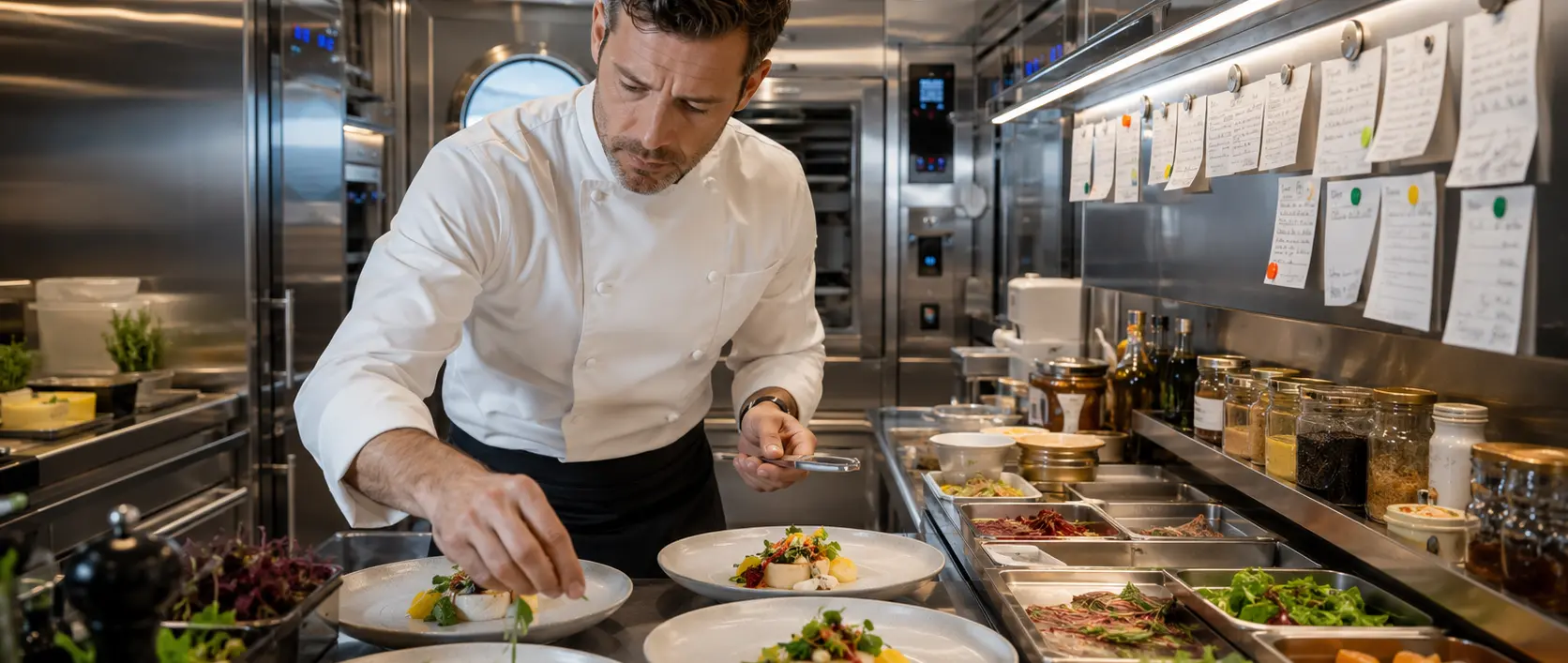
Yacht chefs balance severe allergies, personal diets and last-minute guest demands while working within the hard limits of galley space, provisioning and food safety.
A superyacht chef can spend days planning a guest menu, source specialist ingredients across several countries, organise limited refrigeration down to the last shelf and still discover at six o’clock in the evening that dinner has changed completely. A guest who had requested light Mediterranean food now wants Japanese. Two children have decided they will only eat something that was never mentioned on the preference sheet. Another guest announces an allergy that the yacht had not previously been told about, while somebody else wants a tasting menu served in an hour because the evening plans have moved forward.
From the dining table, none of this may appear particularly complicated. A superyacht is associated with abundance, and guests quite reasonably expect an exceptional level of choice. Behind the galley door, however, the chef is working inside a small floating supply chain with finite refrigeration, finite ingredients, finite preparation time and, on many yachts, no second chef standing beside them. Unlike a restaurant ashore, there is no walk-in storeroom two floors below, no purchasing department capable of sourcing something within twenty minutes and no guarantee that the yacht will remain close enough to a major port to restock tomorrow.
This makes yacht cooking a peculiar combination of fine dining, logistics, risk management and psychology. The chef is expected to remember what people love, avoid what they dislike, understand what they medically cannot eat, adapt to cultural and religious requirements, feed the crew properly and somehow make every change appear effortless. A successful meal is measured not simply by whether the food is good, but by whether it feels as though it was always intended to be served that way.
That illusion of ease is one of the hardest things a yacht chef has to produce.
The preference sheet is one of the most useful documents received before an owner trip or charter. It may identify favourite cuisines, disliked ingredients, breakfast habits, wines, children’s food, dietary regimes, allergies, intolerances, religious requirements and the kind of dining experience the guests expect. Superyacht Guide has previously examined how these sheets support both charter preparation and provisioning, but the difficulty begins when the written preferences are treated as a complete specification rather than the first stage of a conversation.
People do not always describe the way they eat accurately. Someone may write that they are vegetarian but eat fish. Another may describe themselves as gluten-free while still eating foods containing gluten when they feel like it. A guest may request low-carbohydrate meals and then want pasta after a long afternoon swimming. Children can reject foods they normally eat at home, and adults can become more adventurous or more particular once they are on holiday. Even a precise preference sheet cannot predict appetite, mood, weather, activity or the simple human tendency to change one’s mind.
The experienced chef therefore reads between the lines. Rather than creating a rigid seven-day menu and assuming it will survive contact with the guests, the chef builds flexibility into the provisioning plan. Ingredients are selected because they can move in several directions: a piece of excellent fish might become sashimi, a grilled main course or part of a light lunch; vegetables can support different cuisines; sauces and garnishes can change the character of a dish without requiring an entirely separate supply chain.
The chef also has to understand the difference between preference and necessity. A guest who dislikes coriander presents a service challenge. A guest with a serious food allergy presents a safety issue. Those two pieces of information cannot be managed with the same degree of flexibility, and one of the most important responsibilities in the galley is making sure they are never treated as though they can.
Food allergies introduce a level of responsibility that goes far beyond personal taste. The precise legal requirements that apply to a yacht will depend on flag, location, operation and other circumstances, but established food-safety guidance demonstrates the principles involved. The UK Food Standards Agency, for example, identifies 14 allergens that require declaration within the food businesses it regulates and stresses the importance of knowing ingredients, keeping allergen information current and preventing cross-contamination during preparation. It also makes the wider point that people can react to foods outside those 14 categories.
For a yacht chef, cross-contamination is where an apparently simple request can become difficult very quickly. A galley may be immaculate but compact. The same preparation surfaces, utensils, ovens, fryers and refrigeration spaces are used repeatedly throughout the day. Ingredients for guest and crew meals may be handled only metres apart. When a severe allergy is involved, the chef has to consider not just whether the allergen appears deliberately in a dish, but whether it may have entered through equipment, cooking oil, storage containers, sauces, garnishes or substituted ingredients.
Official food-safety guidance illustrates the discipline required: utensils should be cleaned between relevant preparations, ingredients kept appropriately segregated and labelled, hands washed between tasks, and shared cooking media considered as possible routes of contamination. Where a kitchen genuinely cannot prevent cross-contamination, the safe response is not to promise something that cannot be guaranteed.
That last point is particularly important in luxury service because the instinct aboard a yacht is usually to say yes. Crew are trained to find solutions. If a guest asks for something difficult, the normal response is to work out how it can be achieved rather than explain why it cannot. Allergy management is one of the areas where that culture has to stop at a professional boundary. A chef should never allow the expectation of limitless service to turn an uncertain food-safety situation into false confidence.
The challenge becomes greater when an allergy is disclosed late. If the information arrives before provisioning, ingredients and preparation procedures can be designed around it. If it is revealed once the yacht is underway, the chef may have to audit existing stores, examine ingredient labels, rethink prepared foods and establish what can be produced safely with the equipment and ingredients already aboard. A request that sounds like “just leave the nuts out” may in reality require a complete re-evaluation of how part of the galley is being used.
Allergies are only one layer of the modern yacht chef’s workload. A single guest party can combine vegan, vegetarian, pescatarian, gluten-free, dairy-free, low-sodium, high-protein and religious dietary requirements with children who want familiar food and adults expecting sophisticated restaurant-level dining. None of those requests is inherently unreasonable. The pressure comes from having to deliver them simultaneously from one galley without making the dinner feel fragmented.
A hotel can solve this with scale. Several restaurants, specialist stations, pastry chefs, sous-chefs, separate storage areas and large supplier networks allow different dietary requirements to be absorbed into the operation. A yacht chef may have one galley, one or two ovens, limited refrigeration and responsibility for every meal produced that day. Superyacht Guide’s comparison between yacht service and five-star hotels highlights precisely this difference: yacht chefs are often expected to handle multiple cuisines, dietary regimes and last-minute changes with far fewer people and far less physical infrastructure.
The most effective chefs avoid creating six unrelated dinners wherever possible. Instead, they construct a menu with a common foundation and controlled variations. A vegetable preparation may work across several plates. A sauce containing dairy can be separated from the underlying dish. Proteins can be cooked individually while sharing accompaniments. Dessert may be conceived from the beginning so that an alternative version does not look like an apology placed beside the main dish.
This matters psychologically as much as operationally. Guests with dietary restrictions do not necessarily want their food to look like the compromise meal. The best service makes the adapted plate feel equally deliberate. If seven guests receive a carefully composed dessert and the eighth receives a bowl of fruit because they cannot eat dairy or gluten, the dietary requirement may have technically been satisfied but the hospitality has failed.
The same applies to crew food. The chef is not only feeding the people paying for the yacht experience. On commercial vessels to which the Maritime Labour Convention applies, food and catering standards are part of the regulated living conditions of seafarers. MLC Regulation 3.2 requires appropriate quality, nutritional value, quantity and variety, with differing cultural and religious backgrounds taken into account, and requires properly trained catering staff.
Crew food is therefore not the expendable part of the galley budget or the meal prepared once guest service is finished. On a busy yacht, crew may be working long days in heat, machinery spaces, tenders and guest areas. Poor crew catering can become a morale and performance problem very quickly, placing still more responsibility on a chef who may already be producing breakfast, lunch, snacks, canapés and dinner for guests.
Some requests become memorable because they are extravagant, but the hardest requests are often difficult for less glamorous reasons. The ingredient exists, but it is not aboard. It is available ashore, but the yacht is anchored two hours from a suitable supplier. A particular product can be flown in, but customs or transport timing makes that impossible before dinner. Fresh seafood may be locally available, but not in the exact species or quality requested. A guest may ask for a speciality item that the chef could easily provide in Monaco or Palma but not in a remote island anchorage.
This is why provisioning remains inseparable from cooking. A yacht chef does not merely decide what to prepare; the chef has to understand where the yacht will be, what can be stored, how quickly ingredients deteriorate, when the next reliable supply point will be reached and what contingency stock is worth carrying. Superyacht Guide’s existing provisioning guide describes specialist sourcing and remote-location logistics as core parts of yacht supply, because the galley cannot function independently of geography.
Storage introduces another constraint. Luxury guests may expect unlimited choice, but every additional choice occupies physical space. Extra dairy alternatives, gluten-free products, speciality drinks, children’s snacks, fresh produce, multiple proteins and backup ingredients all compete for refrigerators, freezers and dry stores. Overstocking can create waste and make inventory harder to control; understocking leaves the chef exposed when the programme changes.
The chef is therefore constantly buying optionality. Extra ingredients are carried not because the planned menu requires them, but because the chef knows the plan may not survive. This is one of the hidden costs of yacht hospitality: the vessel must be prepared for decisions that have not yet been made. A guest who changes dinner from Italian to Asian has not simply changed a recipe. They may have changed which ingredients, condiments, garnishes and preparation methods the galley needs within the next two hours.
Sometimes the request genuinely cannot be achieved exactly as asked. The professional skill then shifts from cooking to substitution. Rather than saying that an ingredient is unavailable, the chef offers something that fulfils the intention behind the request: another exceptional local fish, a different cut, an alternative preparation or a dish that captures the flavour the guest wanted without pretending the original ingredient somehow exists aboard.
Done well, this can improve the experience. The guest feels looked after rather than refused, while the chef remains within what can safely and realistically be delivered.
A change to dinner rarely affects only the chef. Service timing affects the interior team. A beach lunch involves deck crew and tenders. Moving dinner forward can collide with crew rest, guest transfers or other preparations. A request to serve at anchor instead of ashore may alter the entire evening rhythm of the yacht.
The chef therefore works inside a larger operational system. The chief stewardess or interior manager needs to know when courses will be ready, how the table should be set and whether the menu requires special service. The captain may need to understand whether a change affects departure time or anchoring plans. The purser may be arranging suppliers, customs and payments. Deck crew may be collecting provisions from shore.
Poor communication turns a difficult request into a crisis. Good communication turns it into another adjustment that the guests never notice.
This is also where pressure can become self-defeating. If every request is accepted instantly without considering preparation time, supply or safety, the yacht may promise more than the galley can deliver. The result can be late food, stressed crew and disappointed guests—the exact opposite of the service culture the yacht was trying to protect.
The strongest chefs tend to be adaptable without becoming chaotic. They understand what can be changed quickly and what requires time. They maintain enough preparation ahead of service to absorb surprises without plating food hours before it is needed. They communicate early when a major request will affect timing, but they do so through the interior team rather than transferring galley pressure directly to the guest.
The aim is not to stop guests changing their minds. Flexibility is part of what they are paying for. The aim is to build an operation capable of absorbing those changes without compromising safety, quality or the crew behind them.
On a private yacht, the relationship can become even more personalised. Over time, the chef may know exactly how an owner likes eggs cooked, which olive oil they prefer, how spicy a particular dish should be, what they eat after exercise and which foods they avoid before a long passage. This accumulated knowledge is part of the extraordinary personal service that separates a yacht from a restaurant or hotel.
It also increases expectations. Once the yacht has learned a preference, repeating the question can feel like a failure of service. Preference records therefore become part of the yacht’s institutional memory. Professionally managed yachts may maintain detailed owner and guest profiles covering food sensitivities, favourite dishes, drinks and routines so guests do not have to explain the same requirements repeatedly.
The chef still has to distinguish between useful memory and dangerous assumption. A favourite dish may remain a favourite for years; an allergy or medical diet may change. Ingredient formulations can change as well. Food-safety guidance emphasises keeping ingredient information and recipes current precisely because substitutions and product changes can alter the allergen profile of something that appears familiar.
That principle translates well to yacht operations. “We served this last year” is not adequate confirmation when safety is involved. Labels need to be checked, suppliers questioned where necessary and guest information updated rather than simply inherited.
The chef’s memory is therefore valuable, but the professional system around it matters more.
The image of the brilliant yacht chef is often built around limitless adaptability: someone who can produce sushi at lunch, French fine dining at dinner, fresh pastries the following morning and a child’s favourite pasta at midnight without appearing tired. That versatility is real, but the most professional chefs are not simply those who say yes most often. They are the ones who know how to say yes safely, how to offer an alternative when the exact request cannot be achieved and when a food-safety requirement is more important than the performance of effortless luxury.
Formal maritime standards reinforce the importance of competence in the galley. The Maritime Labour Convention requires trained and qualified ship’s cooks in the circumstances to which its provisions apply, while current UK Maritime and Coastguard Agency guidance links ship’s cook certification to recognised food-safety and hygiene qualifications.
Those rules concern professional competence rather than the extravagant expectations of an owner or charter guest, but the connection is important. A yacht galley is not merely a luxury kitchen. It is a regulated food-preparation environment operating aboard a vessel, often far from immediate medical, logistical or supplier support.
The chef who protects that standard while still making dinner feel spontaneous is doing something considerably harder than restaurant cooking.
Guests may never see the lists, labelled containers, temperature checks, provisioning calls, rewritten menus, substitutions, separate preparation areas or discussions taking place behind the galley door. They simply sit down and receive food that appears precisely suited to them.
That is the success condition aboard a superyacht. The allergy has been taken seriously without making the allergic guest feel difficult. The vegan dish looks intentional rather than secondary. The child receives something familiar without forcing the adults’ menu to become ordinary. The last-minute request is absorbed when it genuinely can be, and intelligently redirected when it cannot.
The greatest yacht chefs are therefore not only creative cooks. They are planners, buyers, food-safety professionals, logisticians, diplomats and exceptionally good interpreters of human behaviour. Their work becomes hardest precisely when the guest experience looks easiest.
And when the dining table feels effortless, it usually means the galley has been anything but.
International Labour Organization — Maritime Labour Convention, Regulation 3.2: Food and Catering
UK Food Standards Agency — Allergen Guidance for Food Businesses
UK Food Standards Agency — Allergen Information and Best Practice
UK Maritime and Coastguard Agency — MLC Food and Catering, Ships’ Cooks and Catering Staff
UK Maritime and Coastguard Agency — Ship’s Cook Certificate of Competency
Continue reading
Malta has introduced a risk-based Assistant Engineer manning framework for qualifying Short Range and Extended Short Range commercial yachts below 500 GT.

Gard’s 2026 Crew Claims Report draws on about 3,000 P&I crew claims and finds elevated injury risk early in a crew member’s time on …
Junior Yacht Stewardess Salary 2026: Entry-Level Pay and Leave Junior yacht stewardess and steward pay in 2026 is currently benchmarked at about €3,000–€3,500 per …
Yacht Spa Manager Salary 2026: Pay, Rotation and Duties Spa managers with yachting experience on 80m+ yachts are currently benchmarked from about €4,500+ per …
Superyacht Guide
Continue into the wider Superyacht Guide.