Company
Quantum Marine Stabilizers
Explore the company profile and related Superyacht Guide coverage.
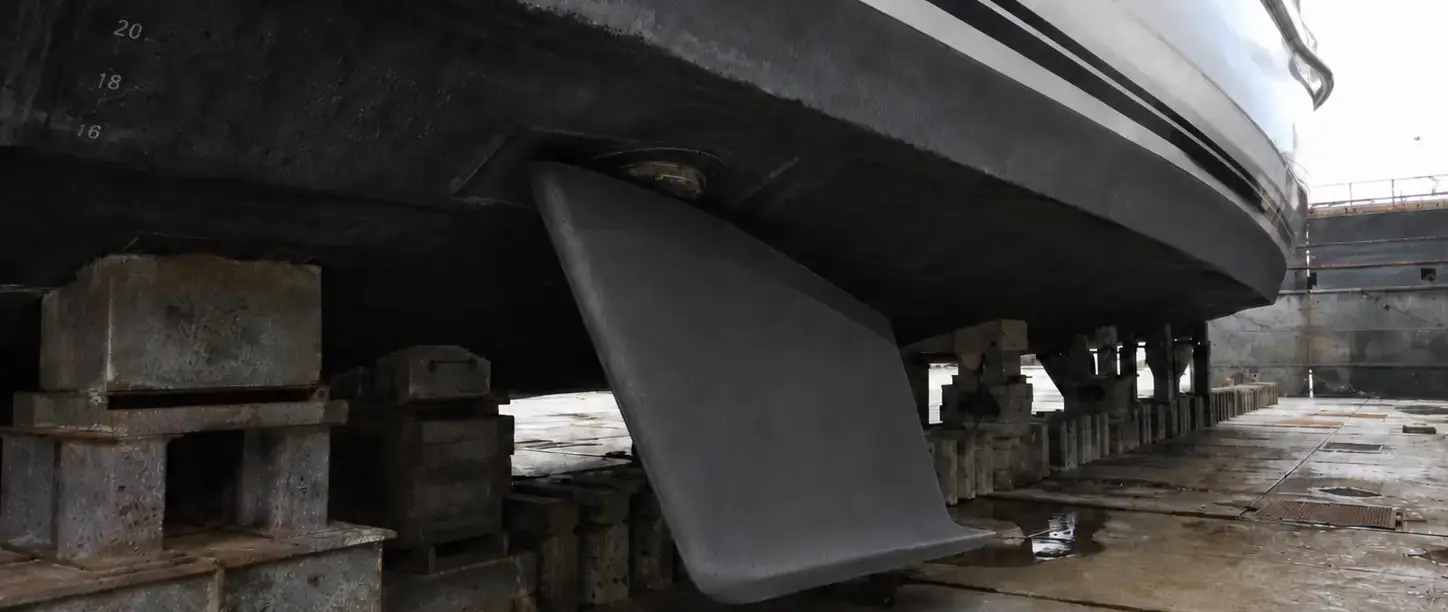
Stabilizers can transform comfort aboard a superyacht underway and at anchor, but their value depends on correct sizing, installation and maintenance. We examine how fin systems work, what they cost and what happens when they fail.
A calm anchorage can become uncomfortable remarkably quickly when a swell arrives on the beam. Glasses begin to move, doors shift in their frames, guests struggle to sleep and crew members adapt every routine to the yacht's movement. Underway, persistent rolling can turn what should be an enjoyable passage into several hours of discomfort, even when the yacht itself is operating entirely safely.
Modern stabilizers are designed principally to reduce that roll. The distinction matters because a stabilizer cannot make a yacht immune to the sea: pitch, heave, sway and yaw still exist, and sufficiently large waves will continue to move the vessel. Sleipner describes roll as generally the most uncomfortable component of vessel motion and notes that stabilizers primarily attack this movement rather than eliminating every other dynamic force acting on the hull.
On a large motor yacht, the improvement can nevertheless be dramatic. Stabilization has moved from being a desirable comfort option towards being an expected part of the specification on many modern yachts, particularly where owners intend to spend long periods at anchor. Lloyd's Register underlined the operational importance of the technology in 2025 when it introduced a dedicated fin-stabilizer class notation covering the strength, machinery and control aspects of these systems and their integration into the hull.
The familiar superyacht stabilizer is an underwater fin mounted through the hull, normally as a pair positioned on opposite sides of the vessel. Sensors and control systems measure the yacht's motion, while hydraulic or electric actuators continually change the angle of the fins. As water passes over them, the fins generate lift in a direction calculated to oppose the yacht's roll.
At cruising speed the principle is relatively intuitive. Forward movement creates water flow across the fin, and changing its angle changes the hydrodynamic force it produces. Modern systems perform these adjustments continuously, responding far faster than a person could manually compensate for each movement of the yacht.
Fin shape, surface area, actuator speed and control software all influence the result. Sleipner's Vector Fin system, for example, uses a curved fin profile intended to create greater stabilizing force with less drag than conventional flat fins, while Humphree offers electrically actuated fins capable of 360-degree rotation and combines them with interceptor systems where control of roll, pitch and other vessel behaviour is required. Quantum takes several different approaches on larger yachts, including conventional and extendable fins, retractable Dyna-Foil units and MAGLift rotors based on the Magnus effect.
The latter use rotating cylinders rather than conventional foil-shaped fins to generate a force perpendicular to the surrounding water flow. These variations demonstrate that stabilizers are not one uniform product but a family of systems designed around different yacht sizes, operating profiles and engineering constraints.
Traditional fin stabilization was most effective when the yacht was moving because forward speed provided the water flow needed to generate lift. That limitation mattered less when stabilizers were regarded primarily as passage-comfort equipment, but it became much more significant as owners increasingly expected to spend entire days and nights at anchor.
Modern zero-speed systems actively move or rotate their fins while the yacht is stationary. Instead of relying on forward motion, the fin itself moves through the water to create the opposing force. Humphree describes its zero-speed system as operating while the vessel is stationary, while Sleipner's published performance data shows substantial reductions in roll during at-anchor testing.
The practical effect can be more valuable to an owner than underway stabilization. A yacht may cruise for only a few hours before spending several days anchored in a bay, and an uncomfortable beam swell can otherwise make exterior dining, swimming, tender operations and sleeping unpleasant. Stabilization effectively expands the range of conditions in which the yacht remains enjoyable, although it should never be confused with creating an absolutely motionless platform.
Zero-speed operation also increases duty cycles. Fins that may once have been active principally during passages can now work throughout an afternoon and continue through the night. That places greater emphasis on energy consumption, actuator reliability, hydraulic or electrical system capacity, machinery noise and planned servicing.
Large-yacht stabilizers have traditionally relied heavily on hydraulics because very substantial forces must be transmitted rapidly through the fin shaft. A hydraulic installation generally includes pumps, reservoirs, valves, manifolds, hoses, actuators, cooling arrangements and the control electronics required to coordinate the system.
Quantum notes that superyacht and megayacht stabilization can require considerable power and offers dedicated hydraulic power units as well as hybrid arrangements. Its current F45 hybrid power system is designed to reduce power consumption, heat generation and airborne and structure-borne noise compared with traditional hydraulic arrangements.
Fully electric systems have also become increasingly important, particularly where builders want to reduce the amount of central hydraulic equipment aboard. Humphree's current fin range includes fully electric actuation, while Sleipner produces both hydraulic systems and electrically driven stabilizer actuators in appropriate yacht-size ranges.
There is no universal answer that makes one technology superior for every yacht. A new-build project can integrate power supply, hull structure, machinery-space allocation and controls around the stabilizer from the beginning, whereas a retrofit has to work within the yacht that already exists. The best system is therefore the one correctly engineered for the vessel's displacement, hull form, speed range, electrical or hydraulic architecture and actual operating programme.
Owners sometimes ask for the price of a pair of fins as though that figure represents the stabilizer budget. On a superyacht, it rarely does. The equipment itself is only one part of a project that can involve naval-architect calculations, structural engineering, class approval, hull penetrations, foundations, power generation or hydraulic capacity, control-system integration, cabling, cooling, pipework, dry-docking, removal and reinstatement of interiors and extensive commissioning.
Public pricing for superyacht-scale stabilization packages is uncommon because installations are heavily vessel-specific. Sleipner gives a useful smaller-yacht benchmark, estimating complete stabilizer installation at roughly two to four per cent of vessel cost in typical installations and quoting approximately £70,000 for a complete system on a new 70-foot motor yacht. That figure should not simply be multiplied upwards to predict a 50-, 70- or 100-metre yacht budget, but it illustrates how rapidly the installed project cost becomes more significant than the price of the visible fins themselves.
Real refit projects show why. Pendennis installed Quantum zero-speed stabilizers during the refit of the 46.5-metre Feadship Audacia, while the 62.2-metre Feadship Virginian received new Naiad zero-speed stabilizers during a refit that also included paint, engineering and survey works. Stabilizer upgrades are frequently coordinated with an existing docking period because the shipyard already has access to the underwater hull and can integrate structural and engineering work into a wider programme.
Lifecycle cost matters just as much as installation. Bearings, seals, hydraulic oil, hoses, pumps, valves, actuators, electronics and control equipment must remain serviceable years after delivery, while specialist technicians may need to travel to wherever the yacht happens to be operating. Quantum's service division lists fins, rotors, hull units, hydraulic, electric and hybrid power units, control units, hoses, shafts, valves, manifolds and pumps among the components it maintains, illustrating how much machinery exists behind what guests see simply as the stabilizers.
A stabilizer is unusual because it combines powerful machinery inside the yacht with a moving structure passing through the hull and operating continuously in seawater. That creates several different categories of failure rather than one simple component that either works or does not.
Hydraulic systems can suffer problems involving pumps, hoses, valves, contamination or loss of pressure. Mechanical components include shafts, bearings, seals, actuators and the hull unit itself, while electronic failures can involve motion sensors, position feedback, control units, communication networks or power supplies. Quantum specifically includes oil-contamination control, hull-unit greasing and system-pressure procedures in its stabilizer maintenance training, demonstrating that apparently minor maintenance issues can have a direct influence on system reliability.
The underwater components introduce further risk. Fins can encounter floating objects or the seabed, while marine growth can affect underwater machinery and the areas around stabilizer penetrations. Sleipner incorporates a defined shaft shear point intended to limit damage if a fin strikes an object, while Quantum hull units include emergency centering cylinders capable of locking a fin in its centre position if the main cylinders, hydraulic power or control system fail.
Seals and bearings deserve particular attention because they sit at the boundary between machinery space and seawater. Quantum states that the lower seals and bearings in its hull units are designed for replacement during scheduled docking, with other internal servicing possible while the vessel remains afloat. The important lesson is broader than one manufacturer's maintenance schedule: stabilizers should be included deliberately in docking and survey planning rather than serviced only after performance begins to deteriorate.
A yacht does not normally lose basic seaworthiness merely because stabilization becomes unavailable. Lloyd's Register notes that stabilizers have traditionally not been treated as essential safety equipment apart from their attachment to the hull, but it also warns that a sudden stabilizer loss can create immediate passenger-safety concerns and potentially result in unscheduled dry-docking and operational disruption.
The operational consequences depend heavily on circumstances. A failure at anchor in modest weather may simply mean uncomfortable guests and a decision to move to a more sheltered bay. A failure during a rough beam sea may force the captain to change speed or heading, delay the passage or choose a different route because the yacht's motion without stabilization is no longer acceptable for guests and crew.
A structural or sealing failure is much more serious than a software alarm. Fin shafts pass through the hull, so leakage, impact damage or a compromised hull unit requires immediate engineering attention even if the yacht can otherwise continue operating. This is one reason emergency centering or locking arrangements and proper isolation procedures matter: a failed fin should ideally be placed into a predictable, secure condition rather than remain uncontrolled.
The commercial consequences can also be substantial on charter yachts. Guests paying high weekly rates are unlikely to consider severe rolling a minor technical inconvenience, while a stabilizer fault discovered shortly before a charter can force difficult decisions about repair, relocation or itinerary. Reliable stabilization is therefore part of the yacht's hospitality infrastructure even if it is hidden deep below the waterline.
Good stabilizer maintenance starts with trends rather than breakdowns. Engineers should know what normal hydraulic pressure, actuator behaviour, temperature, oil condition and response characteristics look like, because gradual changes can expose developing problems long before the system stops operating completely.
Scheduled docking provides the opportunity to inspect underwater fins, shafts, seals, bearings, coatings and hull areas that cannot be examined properly while the yacht is afloat. Marine growth deserves attention around the stabilizers because these complex underwater areas can become biofouling niches even when the exposed hull remains relatively clean.
Crew competence matters as well. Remote diagnostics can help manufacturers identify electronic or control problems from ashore, and Quantum now offers remote troubleshooting alongside worldwide field support, but somebody onboard still needs to understand the system well enough to recognise abnormal operation, isolate equipment safely and explain what has happened.
An older system should also be judged against what modern stabilization can provide. A yacht may have perfectly functional underway fins yet remain uncomfortable at anchor because its equipment predates effective zero-speed operation. Replacing or modernising such a system during a planned refit can therefore be an owner-experience upgrade rather than simply an engineering replacement, and manufacturers continue to market retrofit programmes specifically around improved zero-speed performance and reduced energy consumption.
The value of stabilization is easiest to understand when viewed in terms of how the yacht is actually used. A system that makes a marginal anchorage comfortable can preserve an afternoon with guests. A system that reduces rolling on passage can allow people to dine, sleep or work normally instead of enduring hours of motion sickness. On a charter yacht it can protect the guest experience, while on a private yacht it can determine whether an owner remains aboard or decides that conditions are too uncomfortable to continue.
That benefit has to be balanced against installation cost, machinery space, weight, energy consumption, drag, maintenance and eventual overhaul. Claims about percentage roll reduction are useful for comparing systems, but the real specification exercise should begin with the yacht's hull form, cruising speeds, anchor habits, expected sea states and owner's tolerance for motion rather than with a brochure percentage.
Modern stabilizers are extraordinarily capable, but they remain mechanical systems working continuously in one of the harshest environments aboard. Their greatest success is that guests rarely notice them at all. The moment they stop working, everyone usually does.
Explore
Go deeper into the yachts, companies, events and destinations directly connected to this article.
Company
Explore the company profile and related Superyacht Guide coverage.
Continue reading
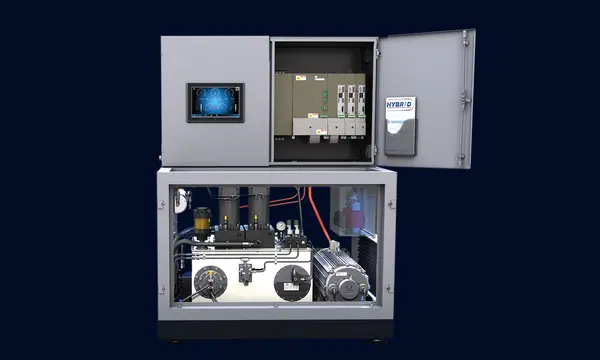
Quantum says its F45 hybrid stabiliser power system can reduce power use by up to 80% underway and 60% at zero speed while recovering …
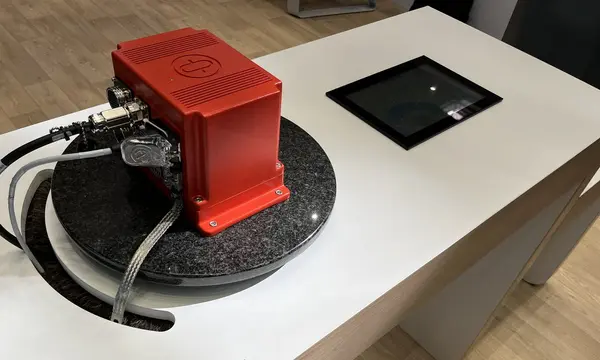
Anschütz has unveiled the Standard 100 MF, a maintenance-free gyrocompass designed for straightforward new-build and retrofit integration from 2027.
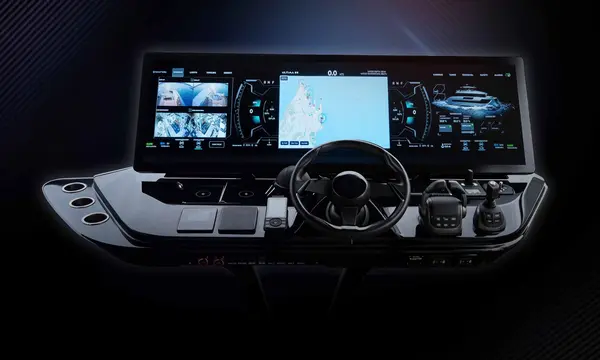
Sunreef Yachts has introduced WETRA, connecting navigation, energy, guest comfort and technical monitoring in an integrated yacht-management environment for owners and crews.
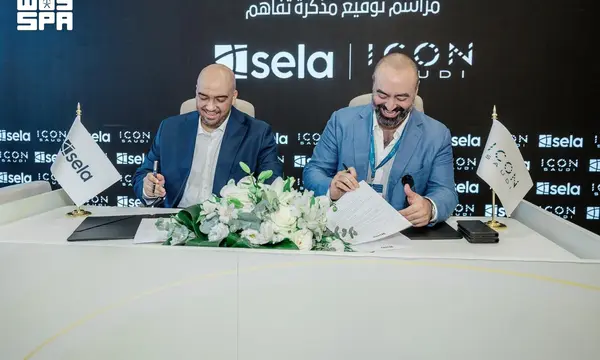
A Monaco Yacht Show agreement between Sela and ICON Saudi aims to develop specialist yacht maintenance services at Jeddah for the Red Sea fleet.
Superyacht Guide
Continue into the wider Superyacht Guide.
Business opportunities · Superyacht Guide
Companies serving the superyacht market can discuss clearly identified advertising, sponsorship and business-profile opportunities. Commercial activity remains separate from independent editorial coverage.