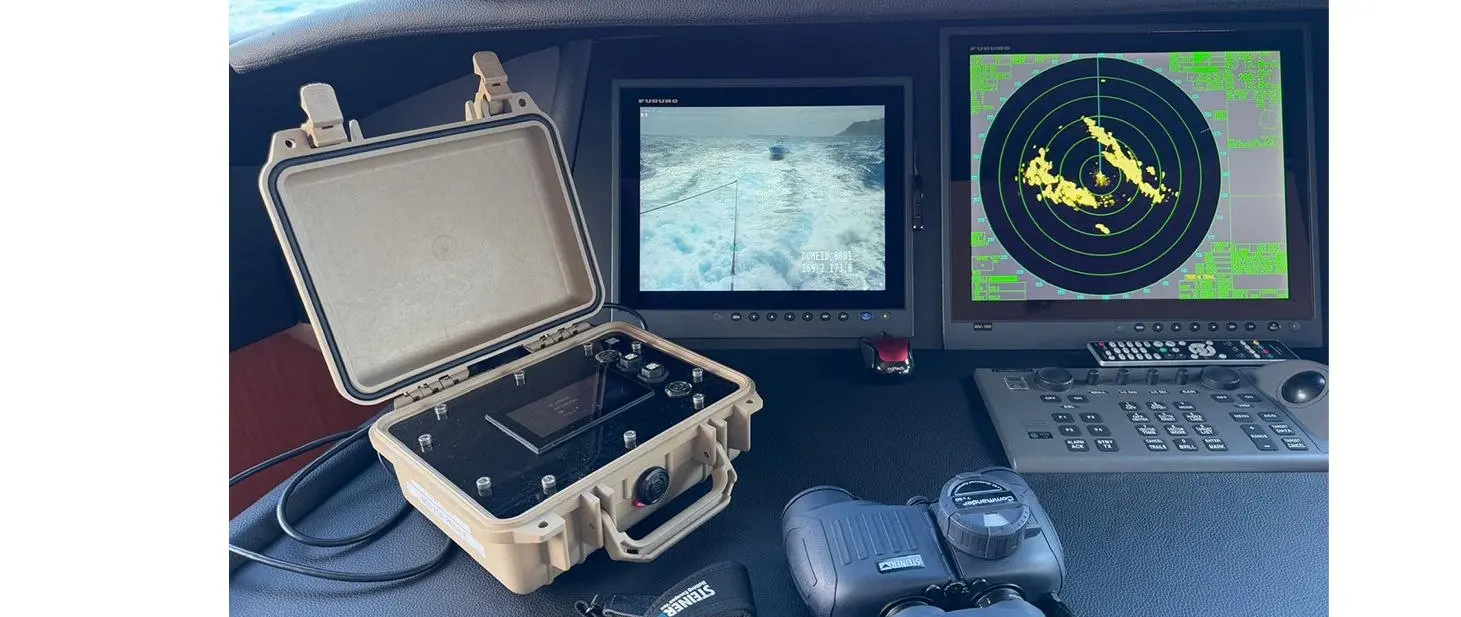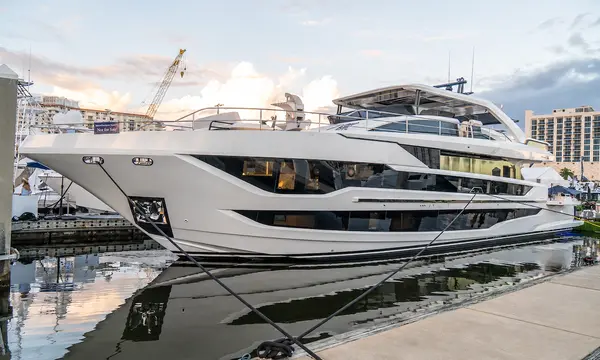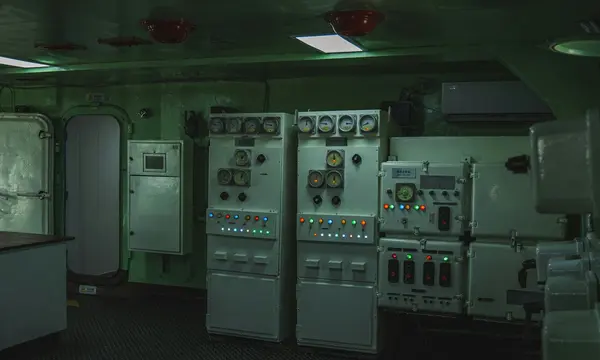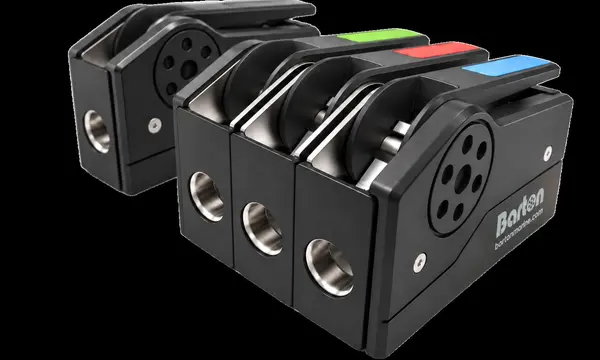
Yacht Trace official supplied news photograph for British Marine announcement

News

Yacht Trace Joins Superyacht UK as Tender Monitoring Draws Attention

Nov. 12, 2026 Technology

Yacht Trace official supplied news photograph for British Marine announcement

British Marine confirms Yacht Trace has joined British Marine and Superyacht UK, bringing tender, chase-boat and equipment-monitoring technology into a wider industry forum.

Marine technology news, 12 November 2026. British Marine announced the company's membership on 10 November; this report explains what the announcement establishes and what captains should independently test before selecting monitoring equipment.

A new industry membership for a specialist monitoring supplier British Marine announced on 10 November 2026 that Yacht Trace has joined both British Marine and Superyacht UK. The announcement concerns a supplier of monitoring and tracking systems for tenders, chase boats and personal watercraft associated with larger yachts. It is a development in industry participation rather than the launch of a newly invented tracking system. Yacht Trace's technology and past passages have been discussed before; the new item is its formal involvement with the two organisations. For a superyacht captain, the operational issue behind the announcement is familiar. A valuable boat can be out of sight, operating away from the mothership, under tow or left unattended in a marina. A crew needs to know where it is and whether anything requires attention, without assuming a position dot alone gives a complete picture of its condition. The membership offers a timely reason to review that distinction.

What the association says the equipment actually monitors The British Marine statement identifies bilge water level, battery health, pitch, roll, movement and separation distance among the variables monitored by Yacht Trace. These are different questions from a straightforward location request. A tender may remain close to a yacht while taking on water, for example, or it may retain a healthy battery while moving outside an agreed operating area. Combining measurements can help a crew decide whether a change warrants investigation. However, sensor availability and the exact meaning of an alarm will depend on a specific installation and configuration. The official announcement does not constitute an independent test report demonstrating a particular accuracy or response time in every condition. Captains should ask which sensors are fitted to each craft, what thresholds can be changed, whether historical data is preserved and how an alarm is presented to the watchkeeper during normal bridge activity.

Independent communication is the central technical distinction According to British Marine, Yacht Trace uses a dedicated two-way encrypted radio connection that operates independently of AIS, cellular networks and Wi-Fi. Iridium satellite capability is available for tracking over much greater distances, while TimeZero chartplotter integration lets personnel view positions on a familiar bridge display. This architecture addresses a genuine weakness of relying exclusively on consumer connectivity or on information intended primarily for navigation. A craft outside cellular coverage or without a conventional AIS installation may still need monitoring. Independence, however, does not mean immunity from failure. Antenna placement, power supply, range, interference, installation quality and satellite-service arrangements can all influence real-world performance. Owners should request the technical specifications for their intended routes and establish what happens if the principal connection is lost. An effective solution needs a defined degraded mode, not merely a reassuring statement that more than one communications path exists.

Tender towing creates a particular operational problem Large yachts may tow substantial tenders or use separate chase boats for passages. In either case, crew members must account for a craft that is not always directly visible from the bridge. Tow arrangements can change with sea state, visibility, manoeuvres and weather; a tracking system is only one component of safe planning. British Marine's announcement cites a 900-nautical-mile passage by the yacht ANDIAMO and a 4,000-nautical-mile Pacific tow involving a 48-foot Viking tender as examples associated with the supplier. These are presented by the organisation as real-world applications, but the announcement does not publish the full route data, failure history or an independent technical evaluation. We therefore treat them as reported deployments, not proof that an equivalent passage would be safe under different conditions. The captain remains responsible for approved towing arrangements, watch routines, weather assessment and the decision to alter or abandon a plan.

Monitoring unattended craft is a different use case A tender may be left in a marina or at anchor while crew members attend to other responsibilities aboard the mother yacht. At that point a system capable of sensing movement, bilge condition or battery state may provide useful information that ordinary navigation equipment does not. The way alerts reach personnel becomes especially important if the yacht is alongside, the bridge is not continuously manned or the assigned crew member is ashore. The operator needs a clearly written plan for who receives notifications, who acknowledges them and what action follows. An alarm that is repeatedly ignored or routed to an unavailable device offers little practical protection. It is also worth documenting whether the system distinguishes a legitimate movement from one that may be unexpected. The goal is to support human oversight, not create the impression that technology can substitute for physical checks, secure moorings and sensible access procedures.

Bridge integration should reduce, rather than increase, workload The announcement's reference to TimeZero integration is relevant because watchkeepers already manage several information sources at once. A monitoring product that displays a tender's position within an existing chartplotter can reduce the need to consult a separate screen for basic awareness. Yet usability depends on how positions, alarms and time stamps are presented. Crew members should determine whether data is current, how often it updates, and how a lost signal appears. A stale position that looks live may be more misleading than an explicit communications warning. Owners commissioning new systems should arrange demonstrations for the actual bridge team, including night-mode viewing, alarm acknowledgement and handover between watches. Crew training is part of the installed capability; a technically sound device can underperform if the watch routine does not incorporate it in a disciplined way.

Security questions deserve the same scrutiny as position accuracy British Marine describes the supplier's radio communications as encrypted. That is an important design characteristic but does not by itself answer every security question. Buyers should ask how devices are authenticated, how access permissions are granted to different crew members and what happens to old credentials when personnel change. They should also establish whether information is stored ashore, who can retrieve it and how long it is retained. These concerns are especially pertinent when the equipment is associated with high-value yachts whose routes or ownership arrangements may be sensitive. The public membership announcement does not provide a complete independent cybersecurity audit, so it would be inappropriate to claim one. A reasoned procurement review can require written explanations of updates, support arrangements and data handling without publishing private security configurations that could compromise the vessel.

Insurance recognition needs to be understood precisely The association says the company's systems are recognised by leading marine insurers. That is a vendor-related claim reported in an industry announcement; it does not establish universal approval, an automatic premium reduction or a policy requirement for any particular yacht. Underwriters differ in the equipment, operating procedures and risk information they ask owners to provide. A manager should check directly with the relevant broker or insurer whether a proposed installation affects coverage conditions or survey recommendations. It is also important to establish whether monitoring records can be exported in a useful form after an incident, while respecting appropriate confidentiality and evidential handling. The operational case for tender monitoring should stand on practical awareness and documented procedures, not on an assumed commercial saving that the source does not quantify.

Membership can strengthen conversations without certifying performance Joining British Marine and Superyacht UK may give Yacht Trace additional access to industry discussions, events and potential collaborators. For a specialist supplier, participation can expose engineering decisions to captains, yards, management companies and other users with practical experience. Yet an association membership must not be confused with formal product certification or a guarantee that a particular configuration is suitable for every voyage. Buyers should still request references relevant to their type of vessel, equipment details and evidence of maintenance support. They should distinguish between the company's promotional material, feedback from operators and independently verified results. If a tender requires integration with its existing electrical system, the installer should also address isolation, protection of the battery supply and the effect of maintenance work on the monitoring device.

The practical questions before committing a fleet to the system An owner with several tenders, a chase boat and personal watercraft may benefit from thinking about the fleet as a group rather than buying a tracker for one craft at a time. Each unit has a different range, electrical capacity and pattern of operation. Before installation, the captain can map the intended monitoring role of every device, identify who responds to its alerts and agree on a test procedure for loss of connection, a low battery or an unexpected change of position. The supplier should document equipment limitations and ongoing service costs, and the crew should review the arrangement after the first operational period. The British Marine announcement establishes Yacht Trace's membership and outlines its claimed technology and example use cases; it does not replace such a trial. The wider lesson is straightforward: awareness of a separated tender can be valuable, but safe superyacht operations depend on verified information, well-defined responsibilities and trained people.

Primary source: British Marine, 10 November 2026, Yacht Trace joins British Marine and Superyacht UK.

Photo licence and source

Yacht Trace / British Marine, official photograph supplied with 10 November 2026 association membership press announcement.

Continue reading

All news

Superyacht Guide

Explore the superyacht world

Continue into the wider Superyacht Guide.

Business opportunities · Superyacht Guide

Reach the superyacht industry audience

Companies serving the superyacht market can discuss clearly identified advertising, sponsorship and business-profile opportunities. Commercial activity remains separate from independent editorial coverage.