
BlueNav Smart Mooring Wins Cannes 2026 Navigation Award
BlueNav Smart Mooring has won the Cannes Innovation Route award for navigation equipment, using electric propulsion and precision positioning.
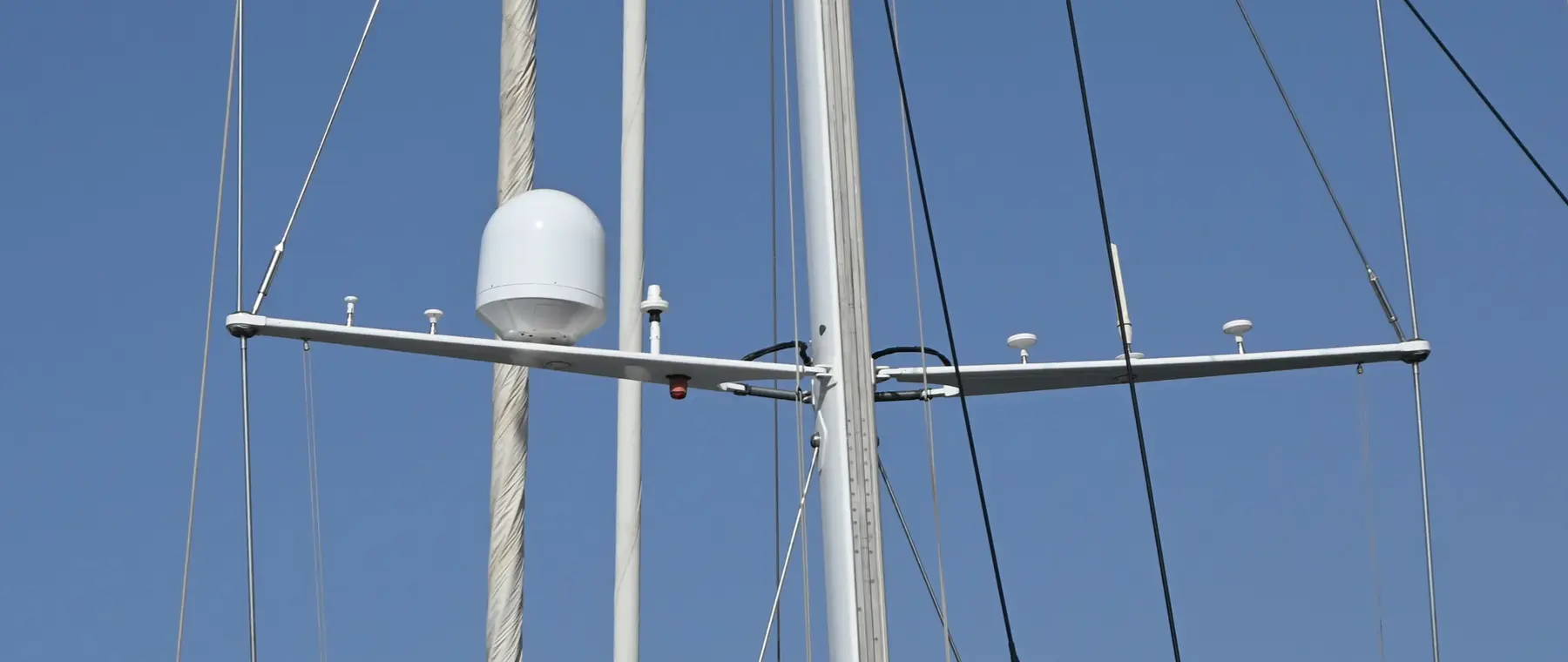
AIS was designed to help ships identify one another and reduce navigational risk, yet the same broadcasts can expose a superyacht’s movements to the public, commercial intelligence platforms, journalists and political investigators. Owners cannot treat the system as either a simple tracking service or a privacy switch.
A superyacht leaving Monaco, Palma or St Barths may appear on public vessel-tracking websites within minutes. Its name, position, course and speed can be followed from an office, airport lounge or mobile telephone by people with no connection to the yacht. An owner’s arrival, a family itinerary or a politically sensitive port call may become visible long before the yacht’s management team has issued any public statement.
That exposure begins with a system created for maritime safety rather than publicity. The Automatic Identification System allows equipped vessels and shore stations to exchange identifying and navigational information. It supports situational awareness, collision avoidance and vessel-traffic management, particularly where radar targets alone may not reveal a vessel’s name, type or intended movement.
The International Maritime Organization requires AIS on ships of 300 gross tonnage and above engaged on international voyages, cargo ships of 500 gross tonnage and above on non-international voyages, and passenger ships irrespective of size. Ships subject to the requirement are expected to keep AIS operating except where international rules or safety and security considerations justify otherwise.
For many larger commercial yachts, AIS is therefore not an optional convenience. It is part of the yacht’s navigational and regulatory equipment. The difficulty is that a broadcast intended for nearby ships and authorities can be collected by shore receivers and satellites, combined with other data and presented to a global audience.
AIS can show the identity, position, course and speed of transmitting vessels, together with selected static and voyage-related information. On the bridge, this can help the officer of the watch understand which ship is approaching, whether it is altering course and how it may be contacted by radio.
The system is particularly useful in congested waters, at night and in poor visibility, but it does not replace radar, visual lookout or professional navigation. UK Maritime and Coastguard Agency guidance warns that not every vessel carries AIS and that the information must supplement, rather than replace, the use of all available means to assess collision risk.
The limitations are important for owners who think of AIS primarily as a website showing a yacht’s location. The public display may be delayed, incomplete or derived from different combinations of terrestrial and satellite reception. A yacht can appear stationary after it has moved, disappear because reception has been lost or display incorrect information because data were entered wrongly.
The bridge team sees AIS as one source within a larger navigational picture. Commercial tracking companies may combine signals from ships, land stations and satellites to create a more continuous historical record, but even sophisticated services cannot transform every gap or anomaly into certainty.
This distinction matters when people interpret absence as concealment. A missing public track does not automatically mean that the transponder was deliberately switched off. Reception gaps, equipment faults, antenna problems, transmission congestion and failures in the commercial data chain can all affect what appears online.
At the same time, the system is sufficiently useful that a long unexplained outage may attract attention. Insurers, authorities, banks, sanctions-screening providers and journalists increasingly compare AIS histories with port calls, satellite imagery, ownership records and other evidence.
AIS was developed for ship-to-ship and ship-to-shore safety, not to allow millions of people to follow private travel. The growth of terrestrial receiver networks, satellite AIS and commercial websites changed the practical audience for each transmission.
A superyacht owner may regard the yacht as a private residence, yet the vessel’s movements can reveal patterns similar to those exposed by private-aircraft tracking. Repeated summer ports, winter bases, shipyard visits and crossings can be used to infer travel habits, family movements, ownership changes or periods when the yacht is unused.
The yacht’s position does not prove that the owner is aboard. It may be carrying charter guests, repositioning under crew, entering a refit or moving for operational reasons. Public discussion frequently ignores that distinction and treats the vessel’s movement as the owner’s personal movement.
That can create reputational and security problems. A port call may be linked to a political event, business negotiation or personal relationship without evidence that the owner was present or involved. A yacht operating legally in a sensitive region may nevertheless become part of a public narrative that is difficult to correct once widely repeated.
Crew privacy is affected as well. A vessel’s track can reveal when the crew are preparing for an owner trip, when they are crossing an ocean or when the yacht is likely to be lightly occupied in port. Social-media posts, photographs and publicly available schedules can then be combined with AIS data to build a more detailed picture of the operation.
The appropriate response is not to pretend that the yacht can disappear from the maritime system whenever privacy becomes inconvenient. It is to manage expectations, restrict unnecessary public disclosure and understand exactly which information the yacht is transmitting.
The IMO’s revised operational guidelines state that AIS should remain in operation when a ship is underway or at anchor. They allow the master to switch it off where continued operation could compromise the ship’s safety or security, or where a security incident is imminent. The reason should be recorded in the logbook, relevant authorities may need to be informed, and the system should be restarted when the danger has passed.
This is a narrow professional judgement, not a general right to avoid public attention. A request from an owner who does not want friends, journalists or social-media users to see the yacht is not automatically equivalent to a safety or security threat.
The captain remains responsible for the vessel’s compliance and safe navigation. On a yacht required to carry and operate AIS, the captain should not be placed under pressure to deactivate it merely because the itinerary is private or politically awkward.
There are circumstances in which broadcasting may create a genuine security concern. Piracy, armed robbery, a credible threat against the vessel or an imminent hostile incident may justify temporary deactivation under the applicable rules and the master’s professional judgement. The decision should be specific, documented and reviewed as conditions change.
Flag-state requirements, coastal-state rules, charter status and local reporting systems may add further obligations. A yacht should therefore have a clear procedure describing who can authorise deactivation, what legal advice is required, how the action is logged and when authorities must be notified.
The existence of a lawful exception does not mean that an AIS gap will be interpreted sympathetically by every outside observer. A legitimate security decision may still appear suspicious to a commercial screening platform unless the yacht can later explain and document what occurred.
AIS manipulation and unexplained transmission gaps have become associated with sanctions evasion, illicit cargo movements and deceptive shipping practices. The association arose mainly from commercial shipping, particularly tankers accused of concealing ports, ship-to-ship transfers or the origin of cargo.
US sanctions guidance identifies deliberate disabling or manipulation of vessel location and identification data as a warning sign requiring greater scrutiny. UK maritime sanctions guidance similarly describes spoofing as the transmission of false vessel identities, locations or voyage information.
This creates a problem for yachts because behaviour that once appeared merely private can now be interpreted through a political and compliance framework. A yacht with an unexplained AIS gap near a sanctioned jurisdiction, followed by a change of name, flag, ownership company or management, may attract greater attention than the same gap would have received a decade ago.
The yacht may have done nothing improper. Its equipment could have failed, the captain may have acted for a legitimate security reason or the public provider may simply have missed the transmissions. The political exposure arises because authorities and compliance teams examine patterns rather than accepting each event in isolation.
Banks, insurers, brokers, shipyards and marinas increasingly use vessel-screening systems when deciding whether to accept a client or transaction. Anomalies in AIS history can prompt questions about ownership, previous ports, counterparties and the purpose of the voyage.
This does not mean every gap is evidence of sanctions evasion. Responsible compliance requires context. Duration, location, vessel condition, reporting obligations, nearby reception coverage and subsequent activity all affect the interpretation.
For the owner, however, the operational lesson is clear. AIS history has become part of the yacht’s compliance record, not merely its navigational record.
A yacht can disappear from a public map for several reasons, but deliberate transmission of false information is a different and more serious issue. Spoofing may involve broadcasting an incorrect name, Maritime Mobile Service Identity, IMO number, position or voyage destination.
AIS data depend partly on information entered into the equipment and on positioning inputs supplied by connected systems. Incorrect manual entries can therefore create errors without deliberate deception. A destination left unchanged after departure or an inaccurate draught entry may reflect poor bridge procedure rather than an attempt to conceal the yacht.
False positional information or identity switching raises a different level of concern. Government sanctions guidance treats manipulation as a possible deceptive practice because it can make one vessel appear to be another or place a ship somewhere it was not.
Superyachts should control access to AIS configuration and ensure that static information matches the vessel’s official records. The correct Maritime Mobile Service Identity, IMO number where applicable, call sign and vessel name should be verified after equipment changes, flag transfers and ownership restructurings.
Bridge teams should also understand how errors propagate. Once incorrect information enters commercial databases, it may be copied by multiple platforms and remain visible after the equipment has been corrected. Early detection and proper documentary evidence can make later correction easier.
A yacht that changes name or flag should not assume every public database will update immediately. The IMO number, where assigned, provides continuity through name and flag changes and is therefore central to sanctions, ownership and casualty research.
Turning off a public-facing account or requesting removal from one website does not make a yacht invisible. AIS signals may be collected by numerous terrestrial receivers and satellites, while historical positions can be retained by commercial databases.
Some platforms offer privacy or masking arrangements for particular users, but those arrangements usually affect only the platform’s display. They do not prevent other receivers, authorities, nearby ships or competing data companies from receiving the original transmission.
The yacht may also be tracked through methods unrelated to AIS. Satellite imagery, marina photographs, port records, customs data, social media, webcam footage and eyewitness reports can establish its location. AIS is only the most convenient and structured source.
Owners should therefore be cautious about services promising complete disappearance from public tracking. A display can be hidden in one place while the underlying movement remains visible elsewhere.
The more realistic objective is controlled exposure. The yacht should transmit accurate information where legally and operationally required, while the owner’s team avoids adding unnecessary personal context through public itineraries, photographs and real-time social posts.
Crew should understand that a photograph can reveal far more when combined with tracking data. A timestamped image from a recognisable deck may confirm who is aboard, while an airport post can connect an individual to a yacht already visible in the same region.
AIS history is not only a privacy liability. It can provide evidence that the yacht was somewhere other than alleged, confirm its arrival at a yard or support the chronology of a casualty.
Insurers and investigators may use tracking data to reconstruct passages, speeds and port calls. Managers can monitor fleet movements and coordinate agents, while family offices can confirm that the yacht is following an approved operational programme.
During a search-and-rescue incident, transmitted identity and position can help authorities understand which vessel is involved and how it has been moving. Nearby ships can use AIS information to contact the yacht and coordinate assistance.
Tracking records can also protect against false claims about ownership use. A public allegation may say that an owner attended an event aboard the yacht when the vessel was demonstrably in another country. The track cannot prove who was aboard, but it can disprove an impossible location.
The value of the evidence depends on its integrity. Public screenshots should not be treated as conclusive where legal or financial consequences are significant. Original equipment records, voyage data, logbooks, port documents and authoritative provider data may be needed to establish a reliable chronology.
Owners should therefore regard AIS records as part of the yacht’s wider data governance. Relevant exports and incident records should be preserved where a dispute, casualty or investigation is foreseeable.
A yacht can become politically visible without entering sanctioned waters or switching off its transponder. Its presence near a government event, disputed territory or politically exposed individual may be enough to generate speculation.
The central difficulty is that AIS answers where the yacht appears to be, not why it is there or who is aboard. Public commentary often fills those gaps with inference.
A yacht may visit a country for fuel, maintenance, weather shelter, crew changes or delivery. It may remain offshore while the beneficial owner is on another continent. None of those facts is apparent from a simple tracking map.
Owners and managers should therefore prepare for foreseeable questions where an itinerary is politically sensitive. The yacht’s lawful purpose, charter status, guest arrangements and operational decisions should be documented internally, even when there is no intention to make them public.
This is particularly important where ownership is already under scrutiny. AIS history can be combined with guest patterns, payments, management instructions and aircraft movements to support arguments about who controls or benefits from the yacht.
Privacy law and confidentiality agreements may limit what can be disclosed publicly, but they do not eliminate the need for accurate private records. A yacht that cannot explain its own movements may allow outside interpretations to become the dominant account.
The bridge should not have to invent an AIS response when an owner suddenly requests privacy or when the yacht approaches a high-risk area. The vessel’s safety-management and security arrangements should set out the normal operating position and the exceptional process for any change.
The policy should identify the carriage requirements applying to the yacht, who may access configuration settings and how static and voyage information are checked. It should also establish the procedure for equipment failure, including repair reporting and any required notification to flag or coastal authorities.
Where the master considers deactivation necessary for safety or security, the policy should reflect the IMO guidance. The decision, reason, time, position and restart should be recorded, and mandatory reporting requirements should be followed unless doing so would create a further security risk.
The owner and family office should understand that the captain holds professional responsibility for this decision. Commercial, reputational or personal embarrassment should not be presented as a navigational emergency.
The policy should also address public tracking. Management should know which platforms display the yacht, which services retain historical data and who will respond if false information appears online.
This responsibility should not fall casually to a junior crew member. Corrections involving vessel identity, sanctions screening or ownership can have legal and commercial consequences and should be coordinated through the captain, manager and appropriate advisers.
A superyacht owner can reasonably expect discretion from the crew, broker, manager and service providers. That expectation cannot erase a statutory broadcast designed to protect navigation.
The practical privacy strategy begins elsewhere. Real-time guest movements should not be posted publicly, itinerary documents should be shared only with those who need them and owner photographs should be delayed until the yacht has left the location.
Agents, drivers, restaurants and event organisers should receive only the information required to perform their roles. Crew access to preference sheets, travel documents and security plans should follow defined responsibilities rather than curiosity or seniority.
Where there is a credible threat, professional security advisers can assess whether the risk justifies changes to communication, routing or AIS operation. The response should be based on evidence and the applicable maritime rules, not on a general desire to become untraceable.
The owner should also recognise that excessive secrecy can create its own reputational signal. Repeated unexplained gaps, inconsistent vessel identities and opaque operational arrangements may attract more scrutiny than an ordinary, accurate track.
A disciplined yacht can protect privacy without pretending that it is invisible. Accurate AIS operation, restrained public communication and strong internal recordkeeping provide a more defensible position than informal attempts to conceal movements.
AIS remains one of the most important aids to maritime situational awareness, but its modern significance extends far beyond the bridge. The same transmission can inform a nearby ship, populate a public website, trigger a sanctions alert and become evidence in an ownership investigation.
For captains, the system must be operated according to navigational need, legal requirements and professional judgement. For owners, it should be understood as part of the yacht’s public and political footprint.
The conflict between safety and privacy cannot be resolved by declaring one more important than the other. Safety requires accurate and available information, while responsible ownership requires awareness of how that information will be collected and interpreted.
The strongest approach is neither constant public disclosure nor casual deactivation. It is controlled compliance: accurate transmissions, documented exceptions, secure operational planning and realistic expectations about what can remain private.
A yacht may be a private asset, but once it enters navigable waters its movements form part of a shared maritime environment. AIS helps make that environment safer, while also ensuring that the yacht leaves a digital wake extending far beyond the horizon.
Continue reading
BlueNav Smart Mooring has won the Cannes Innovation Route award for navigation equipment, using electric propulsion and precision positioning.
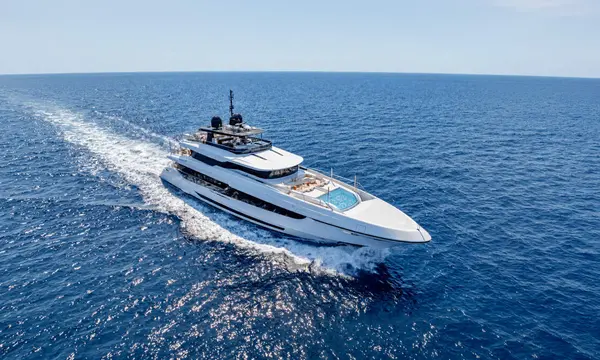
Fraser has added 43m Mangusta Oceano 43 TOY to its sales fleet, highlighting a 4,000nm range and five completed transatlantic crossings.

BWA Yachting has opened agencies in Panama City and Cartagena, extending its superyacht support network between the Caribbean, Latin America and the Pacific.
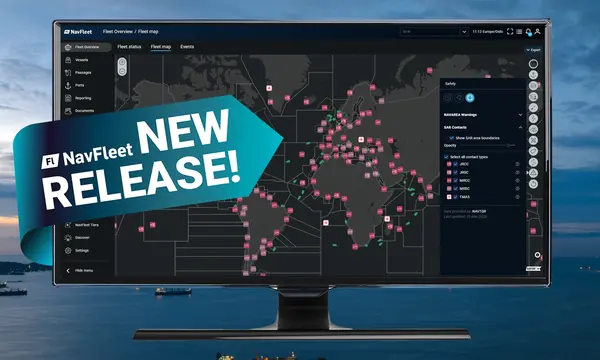
NAVTOR’s NavFleet 2.7 introduces centralised passage-plan settings that shore teams can configure and distribute to vessels across a managed fleet.
Superyacht Guide
Continue into the wider Superyacht Guide.