Company
Cayman Islands Shipping Registry
Explore the company profile and related Superyacht Guide coverage.
Cayman’s new Guidance Note 10/2026 tells owners, captains and managers to ensure bespoke stern names remain clearly readable before fabrication and installation.
Cayman Islands Shipping Registry has issued new guidance telling yacht owners, captains and managers to ensure bespoke yacht-name artwork remains clearly legible before expensive decals or nameboards are produced. Guidance Note 10/2026 warns that unusually styled lettering can create registration problems or enforcement issues even when a designer and surveyor believe the name is readable.
The notice addresses a practical problem familiar to the superyacht sector, where the vessel's name is often treated as a major design element on the stern. Cayman says aesthetic treatment cannot override the need for other vessels, coastguards, port authorities and members of the public to identify the yacht quickly and accurately.
Cayman lists legal compliance, emergency communications, collision avoidance, accident reporting and port or coastguard control among the reasons a yacht's name must be clearly discernible. The authority notes that other vessels may need to identify the yacht visually before making contact by VHF radio.
The guidance also points out that AIS does not solve every identification problem because it is not available to every interested party and is not required on all vessels. A readable physical name therefore remains an important layer of identification even on a highly connected yacht.
The registry says legibility is often subjective, particularly when the observer already knows the vessel's name. A Cayman Registry or classification surveyor may accept a design, yet authorities in another jurisdiction can still take a different view when the yacht enters their waters.
That creates a risk for owners who spend heavily on bespoke stainless-steel lettering, illuminated nameboards or custom typography only to discover later that the design is difficult to interpret. Refits can create the same problem when the name treatment changes without the registry being involved at the artwork stage.
The new guidance gives owners and graphic designers an unusually practical test: show the proposed artwork to several people who do not know the yacht's name and ask whether they can identify it unanimously. The point is to remove the bias created when someone already knows what the stylised lettering is supposed to say.
If the design fails that test, Cayman warns that the Carving and Marking note for a newly registering yacht or a yacht changing name may be rejected. It also says illegible marking may lead to enforcement action by the authority responsible for the waters where the yacht is operating.
Owners do not have to wait until expensive signage has been fabricated to find out whether a design is likely to create problems. Cayman says unusual typefaces or styling can be sent to the registry's technical team for review before ordering or installation.
For yacht projects, that makes nameboard approval something worth resolving during design coordination rather than at delivery. The guidance is a reminder that even highly aesthetic details on a superyacht can carry regulatory and operational consequences when they affect how the vessel is identified at sea.
Explore
Go deeper into the yachts, companies, events and destinations directly connected to this article.
Company
Explore the company profile and related Superyacht Guide coverage.
Continue reading
Cayman Registry’s voluntary yacht notations cover enhanced fire protection, survivability, seaworthiness and future weight-growth margin under the REG Yacht Code.
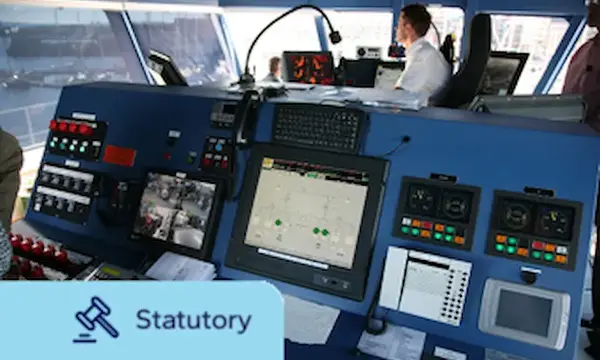
EU Regulation 2026/1434 updates Marine Equipment Directive testing and certification requirements for equipment including gyrocompasses, radios, EPIRBs and GMDSS systems.
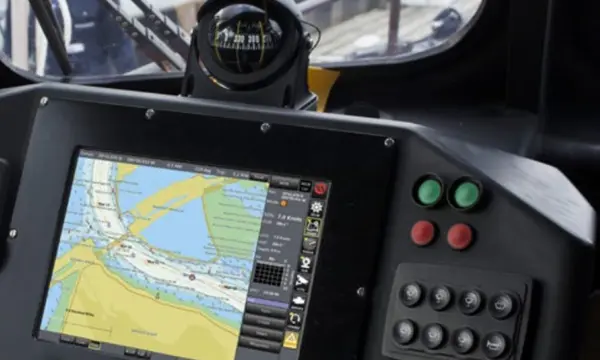
The MCA is consulting on replacement Safety of Navigation Regulations for 2027, updating the UK implementation of SOLAS Chapter V and its navigation requirements.

MCA MIN 738 confirms that existing UK Ship Register registrations granted through the former EU/EEA eligibility route remain valid and can continue to be …
Superyacht Guide
Continue into the wider Superyacht Guide.