

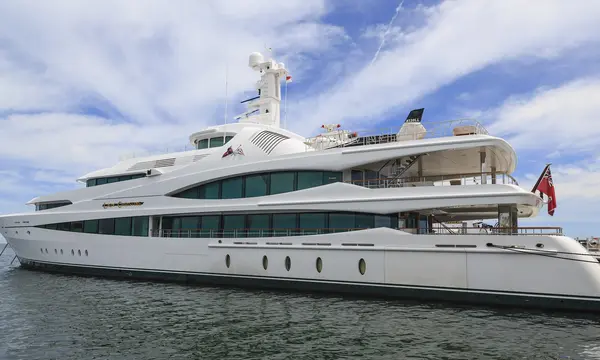
UK Updates Customs Declaration Guidance for Arriving Private Yachts
HM Revenue & Customs revised the goods declaration section of UK pleasure craft arrival guidance on 16 November, including overseas equipment purchases.

USS Blue Ridge engine-room maintenance — archival US Navy photo
The MCA opens consultation on maritime work equipment amendments covering conformity marking and digital inspection evidence, with responses due 15 December.
The Maritime and Coastguard Agency has opened a consultation on proposed amendments to the United Kingdom's Merchant Shipping and Fishing Vessels (Provision and Use of Work Equipment) Regulations 2006. Published on 17 November 2026, the consultation runs until 15 December. It concerns targeted adjustments to the legislation's product-conformity provisions following changes to the UK's product-safety framework after withdrawal from the European Union. The proposals also contemplate allowing appropriate digital evidence of the most recent inspection of work equipment. The MCA's stated ambition is for the amended regulations to enter into force in summer 2027, subject to the subsequent process. For superyacht managers and engineering departments, the significance is primarily in procurement, technical documentation and safety recordkeeping on vessels already within the legislation's scope, rather than a new blanket regime for all yachts.
The government's preferred approach is to amend the existing 2006 regulations rather than replace them in full. The consultation document describes changes to regulation 12 and the schedule identifying relevant product-safety instruments. Instead of retaining the specific existing terminology concerning CE marking, the draft would introduce a defined concept of conformity marking associated with the applicable essential requirements. A further change to regulation 8 would remove the reference to evidence being physical, allowing appropriate documentary evidence to be presented digitally. The MCA does not expect these targeted adjustments materially to change the substantive duties already applicable to those within the existing regulations. This distinction matters: a proposal for updated conformity terminology is not equivalent to a conclusion that existing equipment is automatically unsafe, nor is it a general waiver of continuing inspection requirements.
A superyacht is both a place of leisure and, where personnel work aboard, a complex working environment. The same vessel may contain engineering workshops, service areas, moving machinery, laundry equipment, hydraulic systems, lifting appliances and numerous other installations. When machinery is procured or replaced, the purchasing decision must take account of the specific legal framework that applies to the equipment and the conditions in which it will be used. Product documentation can assist competent persons in identifying the essential requirements against which a manufacturer has assessed equipment. But the suitability of an item for a particular onboard task remains a broader engineering and safety question. Even properly documented equipment can present hazards when installed in unsuitable conditions, used for purposes beyond its intended capability or inadequately maintained. Managers should keep conformity, installation and safe operation distinct within their technical records.
The consultation is framed around bringing existing wording into alignment with the current UK product-safety arrangements. Owners operating internationally may encounter equipment bearing different markings and manufactured for different regulatory markets. It would be incorrect to interpret the removal of a specific CE reference in the proposed maritime amendments as a universal prohibition on equipment carrying that mark. Nor can a purchaser assume that every alternative marking will be accepted for every purpose. The proposed definition connects the marking to relevant instruments and their applicable essential requirements, and the draft addresses alternative standards offering equivalent safety and suitability in use. The practical question for procurement is therefore which requirements apply to a particular item and how evidence of conformity is established. Buyers should seek precise supporting documentation rather than rely on a supplier's general assertion about market acceptance.
The proposed change to regulation 12 gives yacht purchasing teams a useful reason to examine how equipment is approved internally before orders are placed. Procurement often passes through multiple participants, especially during large refits. A shipyard may purchase an item, a subcontractor may install it and a yacht's engineer may become responsible for maintaining it. Unless responsibilities for obtaining technical documentation are allocated clearly, records may be incomplete when the vessel returns to service. A sound workflow would establish the equipment's intended purpose, request relevant conformity information and preserve the supporting material alongside the installation and commissioning documentation. The proposed amendments should be reviewed when they are finalised, but the underlying principle is already important. Technical purchasing decisions should remain traceable to competent assessments instead of simply recording the name of a supplier and the cost of an item.
The proposed change to regulation 8 is particularly relevant to yacht management teams that maintain electronic technical records. Removing the word referring to physical evidence would allow the evidence of the most recent inspection to be provided in an appropriate form, potentially including a digital record. The consultation makes clear that the remaining inspection requirements would not thereby disappear. A digital certificate is useful only if it corresponds to the correct item, records the inspection accurately and can be retrieved by the persons who need it. A well-structured maintenance system should therefore link inspection documents to identifiable equipment and retain the relevant dates, scope and results. It should also preserve access to essential information when a yacht changes its engineering personnel or management arrangements. Digital convenience cannot compensate for an inspection that has not actually been carried out.
Large refits are moments when inspection and conformity documentation can become fragmented. Numerous contractors may attend a vessel, individual systems can be removed or altered and equipment may be transferred temporarily to a workshop. The final commissioning and handover process should include reconciliation between the planned works and the items actually installed. Where new equipment has replaced an older unit, the vessel's own asset register ought to reflect the change. The management team should establish who is responsible for obtaining the relevant documents, who will review them and where the definitive record will be retained. This is especially important where work is completed in a different jurisdiction from the one under which the vessel will subsequently operate. The MCA proposal provides a timely prompt to examine these procedures, without assuming that a draft regulation already supersedes the rules that apply today.
Conformity documentation is one part of a wider system of workplace safety. Appropriate instruction, supervision, maintenance and inspection remain important, irrespective of whether supporting records are kept on paper or electronically. An item originally suitable for use may deteriorate, be modified or encounter conditions outside those anticipated by its manufacturer. A competent management team needs procedures for identifying such changes and assessing their consequences. It should also ensure that personnel know which activities require particular authorisation or expertise. The consultation document explains that the existing legislation addresses risks including contact with moving parts, inadequate maintenance and the failure of work equipment. The proposed technical revisions are intended to preserve the effectiveness of that safety framework. Their focus does not remove the importance of identifying actual hazards and responding to the conditions aboard the vessel.
The precise application of merchant-shipping legislation depends on the vessel, its registration, how it is operated and the scope of the relevant legal instrument. An international yacht manager should not infer that every yacht visiting British waters will acquire the same obligations in 2027. Equally, the description of a yacht as private should not be used as a substitute for establishing its regulatory responsibilities. Managers should identify the applicable framework with appropriate flag-state and technical advisers. Where the UK regulations are relevant, they should examine the final text and accompanying guidance when issued. Where another jurisdiction governs the operation, its requirements must be considered independently. This distinction is essential if multinational management companies are to avoid introducing a single procurement rule that inadvertently contradicts the requirements applicable to some of the vessels they operate.
The consultation is scheduled to close on 15 December 2026. The MCA intends to review responses during December and January, and aims to publish its assessment of the feedback within three months of closure. The proposed commencement period is summer 2027, not a confirmed effective date. Operators, suppliers, shipyards, technical managers and other interested participants can use the published consultation materials to consider whether the wording and associated guidance work in practice. Useful feedback might address the availability of manufacturer documentation, the interpretation of equivalent conformity evidence or the reliability of digital inspection records in maritime operations. Until amendments are formally made and commenced, the existing legal framework remains the appropriate point of reference. Superyacht Guide will distinguish any eventual adopted instrument from this November consultation and report material changes when the official text is available.
Primary source: MCA official consultation document, 17 November 2026.
U.S. Navy photo by Seaman Apprentice Zachary Del Rio, 13 January 2026; public domain, via Wikimedia Commons, resized. Illustrative shipboard maintenance photograph, not a superyacht or MCA inspection. Official source.
Continue reading
HM Revenue & Customs revised the goods declaration section of UK pleasure craft arrival guidance on 16 November, including overseas equipment purchases.

IMO has outlined its 30 November–3 December MEPC 85 agenda, including emissions, ballast water, marine pollution, efficiency and underwater noise discussions.

Lloyd's Register urges the yacht industry to evaluate potential carbon costs as the EU considers extending its emissions trading scheme to some smaller vessels.

The Beijing Convention on judicial sales of ships takes effect for the European Union on 15 December 2026, adding a treaty framework for cross-border …
Superyacht Guide
Continue into the wider Superyacht Guide.
Business opportunities · Superyacht Guide
Companies serving the superyacht market can discuss clearly identified advertising, sponsorship and business-profile opportunities. Commercial activity remains separate from independent editorial coverage.