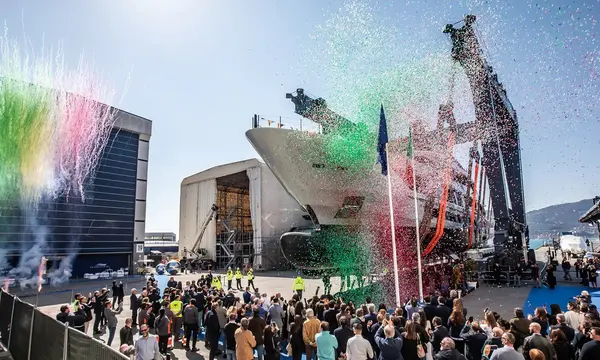
Baglietto Launches First 60m T60 as Largest Yacht in Its History
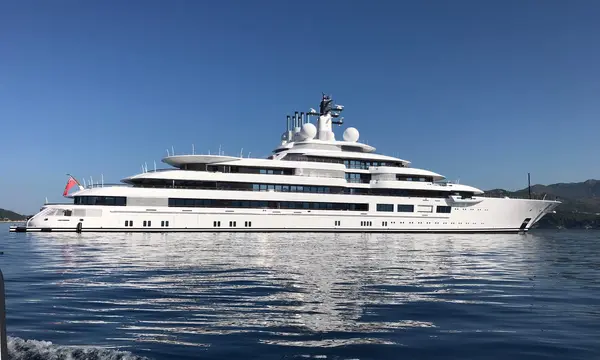
Baglietto has launched the first 60-metre T60, a roughly 1,100 GT flagship and the largest yacht completed by the shipyard in its history.
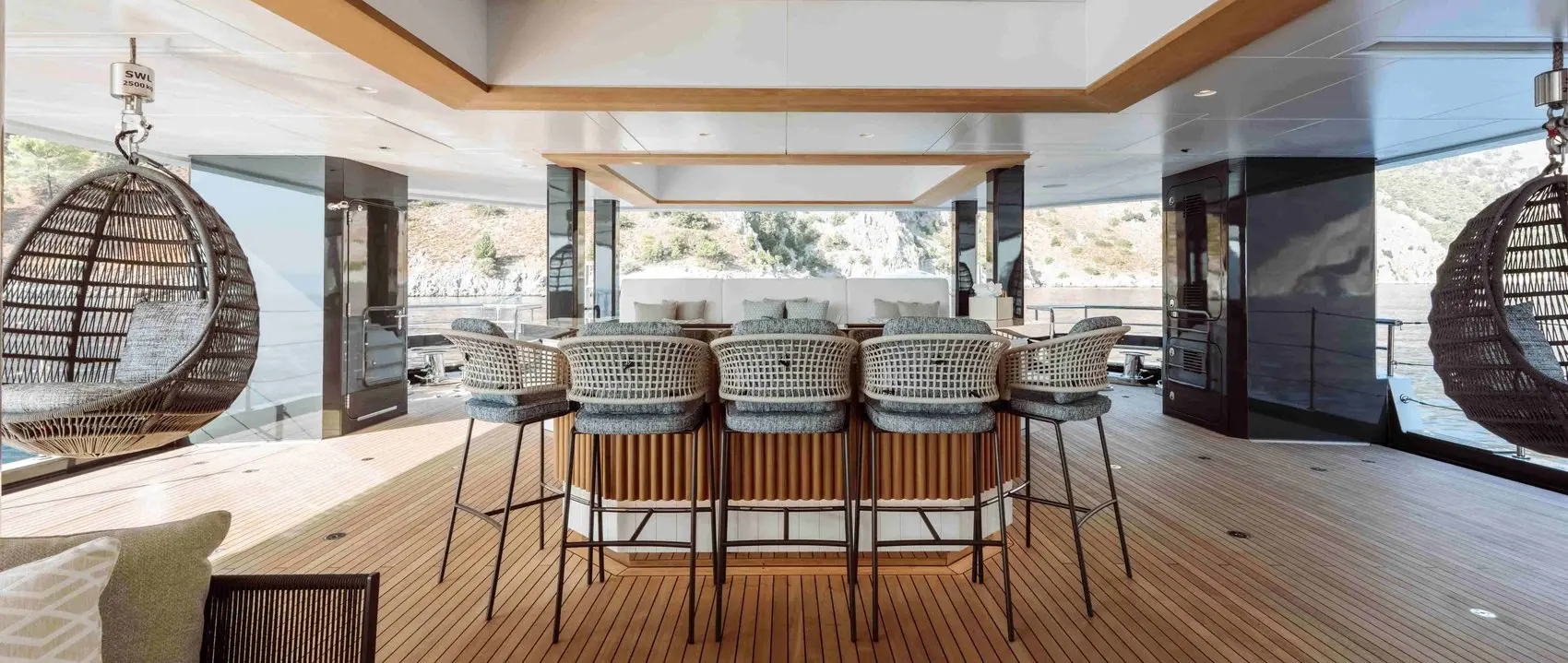
© Respective copyright holder / H2 Yacht Design; official source material, individual photographer not identified.
H2 Yacht Design's 17 November journal examines interior and exterior planning for extended exploration, drawing on its experience across several of the world's largest specialist yachts.
H2 Yacht Design's 17 November journal addresses a practical question for the explorer market: what changes when a large yacht is intended to spend considerable time away from the infrastructure of established cruising destinations? The studio examines that issue through its own portfolio, including AFTER YOU, SCOUT and the ambitious REV Ocean project. Its examples demonstrate why the interior needs to be conceived alongside the wider operational programme, rather than simply given a distinctive visual identity after technical decisions have been made.
The London and Nice design practice has been active since 1994. Its latest commentary draws attention to the overlap between hospitality design and extended navigation, a particularly relevant subject for owners considering a new superyacht. The journal discusses existing projects and design principles, rather than announcing a new construction order.
An explorer itinerary can change the significance of spaces that are normally treated as secondary. A galley that performs satisfactorily during a short Mediterranean cruise could face a different workload during an extended voyage with limited opportunities to replenish supplies. The same distinction applies to refrigeration, dry storage, laundry, waste handling and the provision of comfortable space during periods when exterior decks cannot be used.
In conventional resort-style cruising, shore restaurants and marina facilities can supplement onboard amenities. A more independent vessel needs to deliver a varied experience internally. The design issue is consequently not just the quantity of equipment carried, but whether the arrangement makes it practical for the crew to operate that equipment throughout the intended voyage.
H2 identifies the importance of professional kitchens and dedicated provision storage. That emphasis has consequences for the early design process, because storage volume and galley location affect neighbouring compartments and service routes. These decisions are harder to reverse once structural divisions and primary engineering installations have been settled.
For a new-build owner, the useful starting point is a voyage profile rather than a catalogue of finishes or appliances. The team can examine the likely duration between provisioning calls, the number of guests and crew aboard, and the space required for supplies. It can establish whether replenishment routes and preparation areas will work without unnecessarily interrupting principal guest spaces. The resulting brief should distinguish between everyday requirements and equipment intended for exceptional occasions.
The studio discusses the value of varied dining arrangements, a feature with a different purpose on a yacht undertaking sustained voyages than on one chiefly designed for entertaining in harbour. A large formal dining room may meet an occasional ceremonial requirement, while smaller informal options can make everyday life more flexible. That distinction becomes apparent when the same guests spend weeks aboard.
The challenge is to make those settings feel different without devoting unnecessary volume to rooms that duplicate each other's function. Daylight, outlook, proximity to the galley and the ability to rearrange furniture all contribute to that objective. A dining arrangement needs to be comfortable in a range of climates and at different points in the operating cycle.
H2 references AFTER YOU, the 60-metre Damen explorer delivered in 2025, as an example of a yacht conceived for adventurous cruising. The project contrasts with the assumption that an expedition-focused exterior requires an austere interior. The practice discusses features including a forward observation lounge, sauna and dining beneath a skylight.
A forward observation space illustrates how an interior contributes to the voyage itself. It allows the changing landscape to become part of the guest experience while providing protection from adverse conditions. The relationship between orientation, window geometry and access from adjacent guest areas matters at least as much as the decorative choices made within the space.
The 63.7-metre SCOUT, completed by Hakvoort in 2019, is another example in the studio's discussion. H2's involvement in both exterior and interior design makes it relevant to the relationship between the outward character of an explorer and activities accommodated inside it. Its programme includes a forward observation lounge and facilities supporting extended occupation of the vessel.
The journal refers to an LCD skylight aboard SCOUT. This is an intervention whose value extends beyond styling, because lighting and atmosphere influence the way a room feels throughout a voyage. Such a system nevertheless needs to be considered alongside ordinary lighting, maintenance access and continued use when specialist technical support is unavailable.
Outdoor space is central to the attraction of large yachts, but its usefulness depends on destination and season. An explorer heading into variable conditions may require a different balance of protected and open recreation areas from a vessel primarily intended for warm-water anchorages. An interior providing comfortable alternatives can extend the range of conditions under which guests enjoy being aboard.
This affects more than saloons. It can influence fitness facilities, changing areas, entertainment spaces and the connection between internal recreation and outdoor activities. Care is needed to distinguish facilities that will be used frequently from those that look appealing in a presentation but take substantial space for relatively little practical benefit. Owners should examine these choices in relation to the expected number and composition of guests.
The studio draws on its work for the earlier 107-metre Ulysses, now known as Andromeda, built by Kleven in 2016. Its discussion of light woods and natural fabrics shows how a substantial expedition platform can accommodate a deliberately comfortable visual environment. Extensive external facilities illustrate the other side of the equation: a large explorer has to reconcile hospitality with the practical support functions associated with its programme.
H2 also refers to its involvement in the later 116-metre Ulysses. The two vessels should not be confused because they shared a name at different points in their histories. When comparing projects, owners and their representatives need to identify the precise hull and design scope rather than rely on a familiar name as proof of specification.
The 194.9-metre REV Ocean project is cited in the journal as a large-scale example, with exterior design by Espen Øino and interiors by H2. Its research-oriented brief distinguishes it from a conventional privately operated leisure yacht. The proposed observation facilities and extensive internal programme illustrate why integration of purpose and accommodation is important on vessels of this scale.
It would be misleading to treat the project as a direct template for a smaller explorer. The significance lies in planning principles adaptable to other projects: the relationship between observation, circulation, technical functions and the experience of people spending significant time aboard. These principles need to be translated according to the actual capacity and operation of each yacht.
A detailed interior concept can have weaknesses if circulation required for cleaning, maintenance, provisioning and service is an afterthought. On a lengthy voyage the crew repeatedly uses those routes, and small inefficiencies accumulate. Early planning should include the people responsible for delivering the onboard experience, not just designers and owner representatives.
Materials and bespoke fittings deserve scrutiny. A finish that looks exceptional in a showroom may demand specialist restoration or cleaning products inconvenient to obtain during a remote itinerary. The goal is not to exclude refined materials, but to understand their implications before committing to extensive installations. It is also useful to examine whether replaceable components can be accessed without disturbing surrounding joinery or finishes.
The November journal gives prospective owners a framework for comparing explorer proposals beyond hull appearance and advertised cruising range. A useful comparison asks what assumptions underpin each proposal, how the guest experience changes in adverse weather, and how the vessel supports its crew and supplies. These questions can expose major differences between yachts that appear comparable in length and styling.
The central implication of H2's commentary is that independence should be reflected in the organisation of a yacht, not merely its equipment list. Observation, catering, storage, recreation and circulation need to support the same underlying brief. For new-build clients that makes early coordination of naval architecture, engineering and interior design especially valuable, while existing owners can use the same principles to assess where a proposed refit would deliver practical improvement. The objective is an interior whose quality remains apparent throughout the voyage rather than only during the initial viewing.
Original primary record: H2 Yacht Design. © Respective copyright holder / H2 Yacht Design; official source material, individual photographer not identified. Original first-party media: source photograph or official illustration. Copyright and image source are credited; first-party availability does not imply unrestricted reproduction permission.
Continue reading
Baglietto has launched the first 60-metre T60, a roughly 1,100 GT flagship and the largest yacht completed by the shipyard in its history.
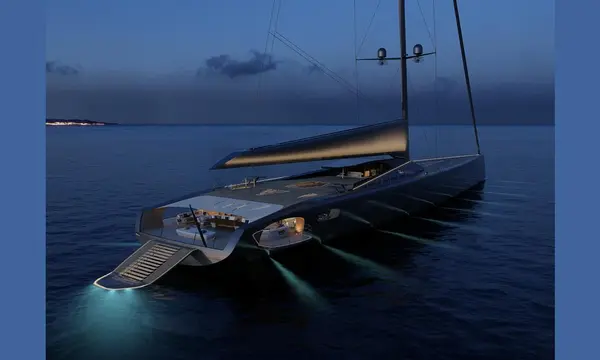
Royal Huisman has revealed 85m Project 410 at Monaco Yacht Show as the sailing yacht nears launch and prepares to become the world’s largest …
Europe’s largest superyacht marinas are ranked by verified maximum yacht length, with historical duplicate records removed and operator data checked.
Superyacht prices are often repeated without distinguishing build cost, asking price, sale price and later estimates. This 2026 ranking compares the highest supportable Superyacht …
Superyacht Guide
Continue into the wider Superyacht Guide.
Business opportunities · Superyacht Guide
Companies serving the superyacht market can discuss clearly identified advertising, sponsorship and business-profile opportunities. Commercial activity remains separate from independent editorial coverage.