
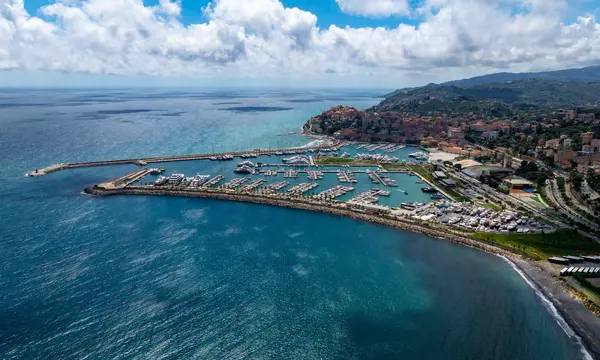
Imperia Court Upholds New 65-Year Marina Concession Framework
An Imperia court has reportedly upheld the independent status of a new 65-year marina concession, with a €159m redevelopment tender and potential appeals still …
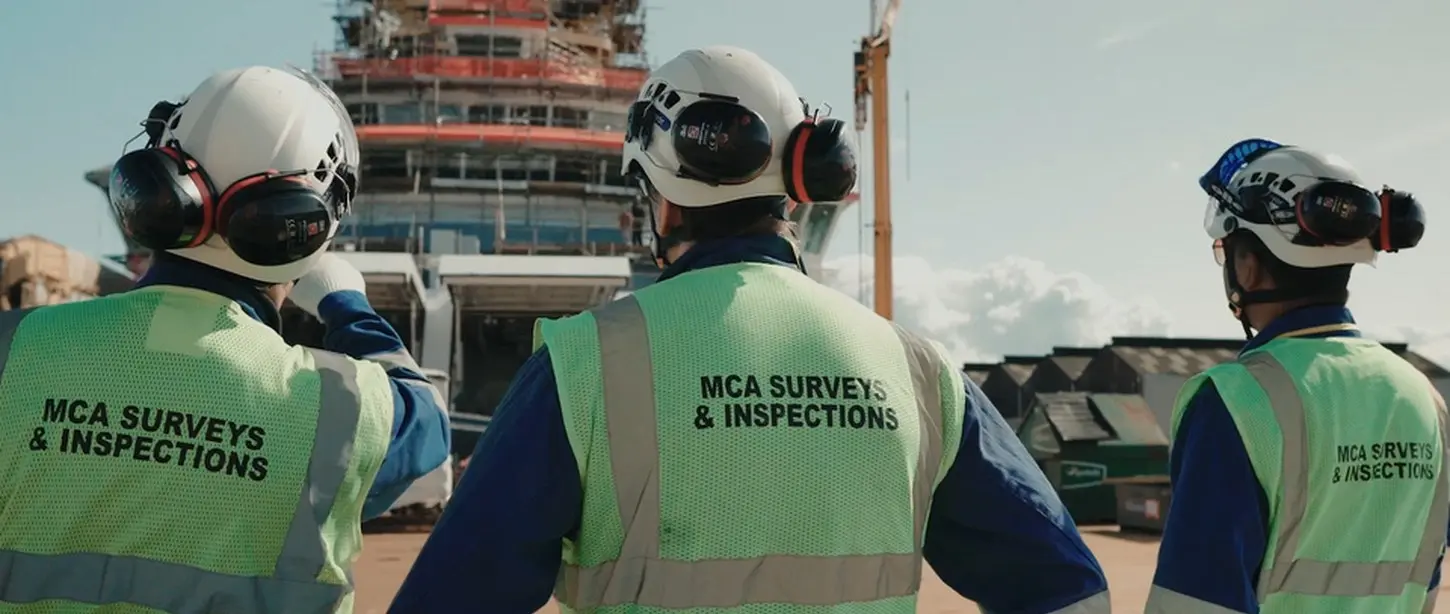
Official Maritime and Coastguard Agency surveyors at work - separate 2025 agency archival photo
The UK Maritime and Coastguard Agency seeks yacht-sector evidence on pleasure-vessel definitions before 1 February 2027, following a fatal Cowes incident.
The United Kingdom's Maritime and Coastguard Agency has opened a twelve-week call for evidence on how the country's definition of a pleasure vessel operates in practice. Announced on 10 November 2026, the exercise asks owners, mariners, operators and other stakeholders where the boundary between private pleasure use and commercial operation becomes unclear. The agency has set 1 February 2027 as the response deadline. For superyacht managers and owners, the subject is more consequential than it may initially sound: legal classification can influence safety equipment, certification, training and inspections. The MCA is deliberately not proposing new regulations through this invitation, however. Its stated objective is to understand present ambiguities following a Marine Accident Investigation Branch recommendation arising from a fatal incident off Cowes in October 2022.
The immediate development is an information-gathering process, not a change to existing yacht operating permissions. The MCA wants examples of how its current definitions are understood and applied, particularly where stakeholders find the divide between private pleasure use and commercial operation difficult to interpret. Those responses may inform future work, but the official announcement expressly says the exercise is not a consultation on regulatory amendments. That distinction matters for captains and compliance advisers: a request for evidence does not override the obligations that currently apply to any registered vessel. The responsible response is to continue operating under existing requirements while providing concrete, relevant feedback through the official channel.
The call for evidence was launched on Tuesday 10 November and is scheduled to close on 1 February 2027. These dates give the sector time to assemble examples from yacht operations rather than respond solely from a broad policy position. An owner or manager who believes a definition has created uncertainty should be able to identify the type of vessel involved, the circumstances of its use and the consequence of the uncertainty. The invitation is open to a range of stakeholders, which is important because owners, crew, insurers, surveyors, brokers and charter operators may encounter different practical questions. Submissions should follow the official government process and must not be mistaken for an application to obtain special permission for a particular voyage.
A superyacht may look substantially the same whether operated privately by its owner or made available for charter, yet those scenarios can engage different legal duties. The MCA highlights safety equipment, crew training, inspections and certification as areas affected by classification. Those are fundamental to vessel operation rather than administrative decorations on a registration document. A legal category can shape which standards are assessed and which evidence must be maintained before passengers board. The call for evidence should not be read as implying that every privately registered yacht is insufficiently regulated or that every charter is unsafe. Its purpose is to examine whether the rules are understood and applied consistently in circumstances that may not always fall neatly into familiar categories.
The agency says the exercise was prompted by an MAIB report following a fatal incident off Cowes on the Isle of Wight in October 2022. The independent accident-investigation branch recommended a review of the pleasure-vessel definition. That origin gives the exercise a direct safety context. It would be incorrect to claim that the MCA has already established specific wrongdoing by every type of yacht operator or to infer findings beyond the official announcement. The important verified fact is that an accident investigation identified a regulatory-definition issue worth reviewing. The public call is a mechanism for understanding how the category works in the real world before deciding whether further action is needed.
Yachts above twenty-four metres are often associated with complex arrangements involving private owners, dedicated management companies, professional crews and potentially several kinds of onboard activity. A yacht may have an owning company, a beneficial owner and appointed managers who perform distinct functions. Those arrangements can be lawful and routine, but they show why a simple description such as 'private yacht' may not answer every operational question by itself. The precise legal classification depends on the relevant legislation and the facts of use. This article is not offering a new legal test; the MCA is specifically inviting evidence on how the existing one is understood. Owners should obtain professional advice for their own circumstances rather than generalise from another yacht's registration.
Commercial yacht charter is an obvious point of comparison, but practical uncertainty can also be reported in situations where the owner, guests, crew and operators have different relationships. The MCA's invitation concerns the definition of pleasure vessels rather than one named charter contract type. An informative response might explain why a participant found a category difficult to apply and what safety consequence followed. It should avoid turning the process into an attempt to relabel an operation without evidence. The absence of a charter fee in a simple description is not sufficient to determine every legal question, just as a high vessel value does not make a yacht commercial. What matters is the legal framework and the actual operation.
Professional yacht managers may be able to describe recurring situations in which documentation, operational advice or inspection expectations differ. Captains may have firsthand examples of what questions arise during preparation for voyages, guest embarkation or interactions with authorities. Classification specialists and surveyors may identify inconsistencies in how requirements are explained or applied. Any submission should distinguish a general concern from a documented case. A narrative that states where a particular definition caused uncertainty is more useful than an unsupported assertion that the rules are always clear or always wrong. The agency has invited a broad conversation precisely because multiple professional viewpoints may help reveal where the line is difficult to interpret.
The MCA has explicitly linked the definition to differences in lifesaving equipment, training, inspections and certification. Those categories are familiar to superyacht safety professionals and can have substantial consequences when an operation's status changes. It is reasonable to ask whether a clear classification helps operators understand what competence and equipment are required. However, the exercise should not become a pretext to recommend reducing standards before evidence has been considered. In yacht operations, a well-managed safety culture depends on the actual risks onboard as well as the legal baseline. Owners can choose to exceed minimum requirements, while authorities determine which obligations apply. A review of definitions does not diminish the importance of practical risk assessment.
Clearer definitions can support compliant operators by making it easier to plan training, certification and contractual arrangements before a voyage. Ambiguity may create uncertainty not only for businesses but for private owners who want to ensure that their vessels meet the correct standards. If stakeholders can identify practical problems, the MCA may gain a better understanding of where guidance is sufficient and where other work might be considered. That possibility is an inference about the value of the call, not an announced proposal for reform. The agency has not committed to adopting a particular regulatory model. Its present task is to collect evidence and establish how the existing framework is experienced by those who use it.
There is a temptation to treat every government information-gathering exercise as an advance notice of stricter requirements. The wording of this announcement does not support that conclusion. The MCA's Esmé Flegg, identified as its Innovative Technologies Lead for Code Vessels, has said the agency is asking how the definition is applied and whether ambiguity affects operations. It is not inviting respondents to vote on a predetermined rule change. The clearest editorial approach is therefore to focus on the questions, the evidence required and the deadline. Speculating about future yacht charter taxes, crewing reductions or immediate certification amendments would go beyond what the source establishes and could mislead owners making expensive operational decisions.
The official GOV.UK announcement links to the evidence exercise entitled 'Use and perceptions of the definition of pleasure vessel' and also provides the MCA contact address codes@mcga.gov.uk. Interested parties should consult the full government instructions before sending information, particularly if they intend to describe a sensitive real-world case. A vessel operator may need to consider confidentiality, contractual obligations or the privacy of individuals mentioned in a submission. This article neither collects responses nor speaks for the agency. It identifies the live official process so that shipyards, owners' representatives and crew organisations can decide whether they have relevant experience to contribute before the February 2027 cutoff.
The agency has not announced an automatic change of rules on 2 February 2027. The deadline marks the end of the evidence-gathering period, after which the MCA will need to consider what it has received and determine whether any subsequent work is warranted. If future proposals emerge, their legal status and consultation arrangements will need to be evaluated separately. Superyacht businesses should monitor the official government channel rather than assume a secondary article will capture every later development. The industry has seen how quickly operational assumptions can become embedded in contracts and advice; checking the primary source is especially important when the questions concern mandatory safety standards.
This report is based on the MCA's 10 November 2026 GOV.UK press release, which identifies the call's purpose, origin, twelve-week duration and closing date. The accompanying photograph is an official UK government documentary image of the Maritime and Coastguard Agency headquarters in Southampton. It illustrates the responsible agency, not the October 2022 incident, and it is not presented as an image of a superyacht. The photograph's provenance is preserved with a link to its official source. Reporting on an investigation's recommendation should not invent new findings; accordingly the incident is mentioned only to the extent established by the MCA's own announcement.
For the large-yacht sector, the most important aspect of this announcement is the opportunity to explain what works and what is uncertain before a future policy direction is chosen. The pleasure-versus-commercial boundary affects real safety and certification decisions. Clear evidence from people who manage, inspect and operate yachts may help regulators understand that practical complexity. The agency is not announcing a new classification, nor is the review a reason to suspend compliance with present rules. With the submission period running until 1 February 2027, relevant industry participants have a defined opportunity to make their experience part of the record. That is the substantive news: a safety-related review grounded in real operating experience, rather than a regulation already decided.
Primary source: UK Maritime and Coastguard Agency — official GOV.UK press release, 10 November 2026.
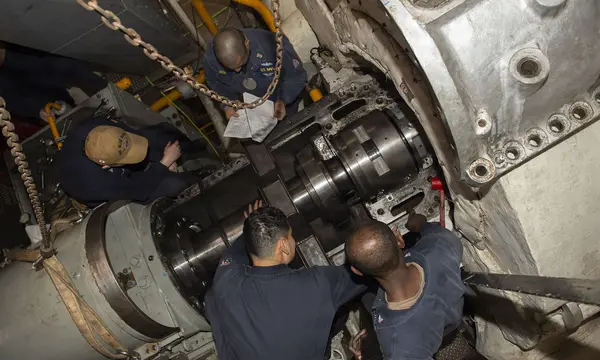
Photo: HM Coastguard / Maritime and Coastguard Agency. Actual MCA surveyors inspecting a ship at a dockyard in a 2025 official agency photograph; illustrative, not a photograph of the 2022 incident. Official source.
Continue reading
An Imperia court has reportedly upheld the independent status of a new 65-year marina concession, with a €159m redevelopment tender and potential appeals still …
Aon Italia's Paolo Mascino identifies crew liability and shipyard insurance as critical issues for superyacht owners, covering P&I and refit risk allocation.
HM Revenue & Customs revised the goods declaration section of UK pleasure craft arrival guidance on 16 November, including overseas equipment purchases.
The MCA opens consultation on maritime work equipment amendments covering conformity marking and digital inspection evidence, with responses due 15 December.
Superyacht Guide
Continue into the wider Superyacht Guide.
Business opportunities · Superyacht Guide
Companies serving the superyacht market can discuss clearly identified advertising, sponsorship and business-profile opportunities. Commercial activity remains separate from independent editorial coverage.