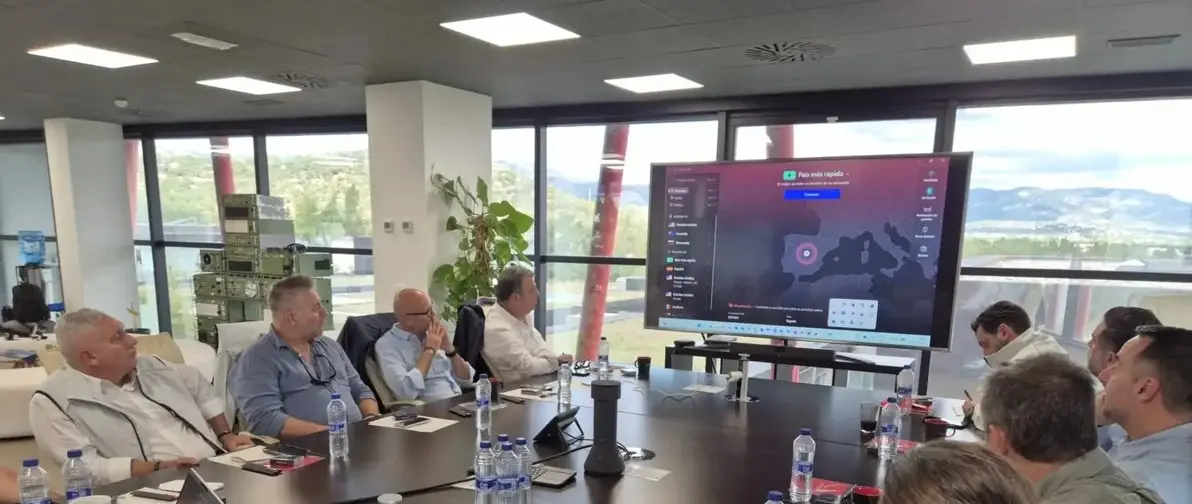
OmniAccess hosted superyacht captains at its Palma headquarters for two days of network demonstrations, cybersecurity workshops and discussions with technical specialists.
Maritime communications specialist OmniAccess has reported a two-day programme at its Palma headquarters bringing superyacht captains together with the technical teams that support their vessels. The company's announcement of 18 November 2026 describes demonstrations of its integrated digital services, discussions about operational resilience and interactive workshops dealing with cybersecurity.
The initiative reflects the importance of communication between the people responsible for operating a yacht and the shore-based specialists maintaining its digital infrastructure. As connectivity becomes more integral to everyday operations, an effective working relationship between these groups can be as important as the equipment installed aboard.
Inside the support operation
Participants visited the company's Technical Support Centre and Security Operations Centre. These facilities illustrate different aspects of the service relationship between a yacht and its external technology provider, from responding to connectivity issues to monitoring potential security incidents.
For a captain, the significance of such a visit is the opportunity to understand who handles an issue when it is escalated from the vessel. Knowing how an external service provider divides responsibilities, records incidents and communicates with the yacht can make it easier to establish appropriate onboard procedures before difficulties arise.
The captain's responsibility
Michael Deliezas, identified in the announcement as vice-president of the Hellenic Yacht Masters Club, highlighted the distinction between a captain's overall responsibility for a vessel and the specialist knowledge required to understand every individual system. This is an increasingly relevant distinction for yachts with sophisticated entertainment networks, satellite services, remote access arrangements and computer-based operational equipment.
A captain needs sufficient information to make decisions about the effect of a technology problem on the vessel. Detailed investigation, however, may require the assistance of an electro-technical officer, a shore-based network engineer or the manufacturer of a particular component.
Establishing who can authorise changes to important equipment is therefore an essential part of a support arrangement. The person answering a service ticket may possess the technical expertise to recommend a solution, while the captain or authorised officer remains responsible for deciding when changes can safely be undertaken.
Integrated connectivity through UNITY
The programme included demonstrations of OmniAccess's UNITY platform, which the company presents as a means of integrating its connectivity, network, cybersecurity and cloud-related services. Its approach includes access to multiple low-Earth-orbit satellite connectivity options.
For yachts travelling between different cruising regions, the attraction of an integrated service is the potential to manage changing communications requirements through a coordinated relationship. Individual services may have different geographical availability, subscription terms and technical limitations, so the existence of more than one connection should not be mistaken for a guarantee of uninterrupted worldwide coverage.
A management platform can help technical personnel understand how the network is performing. Its usefulness depends partly on the quality of information available and the ability of the crew to interpret it, particularly when an apparently straightforward connection problem originates in onboard equipment rather than the external service.
Separating guest experience from operational needs
Internet access is often most visible to guests when they are streaming entertainment, participating in video conferences or sharing photographs. The same vessel may also depend on digital communications for administration, weather information, maintenance coordination and contact with external contractors.
A carefully designed network distinguishes between these requirements instead of treating every connected device as equally trusted or important. Separating appropriate networks and managing permissions can reduce the consequences of an unexpected problem originating on a guest device.
The configuration must also take account of how the yacht operates when guests are not present. Crew members need reliable personal communications, and technical teams may require controlled access to equipment for maintenance without exposing unrelated onboard services.
Planning for changing connectivity conditions
Satellite coverage, local mobile services and marina connections can each contribute to a yacht's overall communications arrangements. Their availability and performance may vary according to location, equipment configuration and service terms.
A captain planning an extended itinerary should understand which services are expected to remain available in each cruising area. The relevant question is not simply the maximum advertised speed, but whether the yacht can maintain essential communications under the conditions it is likely to encounter.
Where more than one service is available, fallback arrangements should be tested as part of normal maintenance. An alternative connection that has never been checked may prove unsuitable when it is needed, particularly if equipment has been modified or subscriptions have changed.
Cybersecurity as an operational discipline
The Palma programme included workshops in which participants could discuss recognising, reporting and responding to cybersecurity concerns. These subjects matter because the earliest indication of a problem may come from a crew member observing unusual behaviour rather than from a specialist monitoring service.
Simple reporting procedures help ensure that suspicious events are brought to the attention of the appropriate person. Crew should know how to contact the technical team and what information can be shared without unnecessarily disclosing guest data or compromising the investigation.
The announcement does not suggest that the event involved an actual security breach aboard a participating vessel. It describes an educational and technical exchange intended to strengthen awareness and communication.
The value of clear service escalation
A technology failure can affect several suppliers at once. A problem involving a video conference might arise from a local wireless connection, a device configuration, a satellite terminal or a service outside the yacht altogether.
If the responsibility for each component is unclear, crew may spend valuable time passing an issue between organisations. A documented escalation route helps identify the provider responsible for coordinating the investigation and establishes when more specialised assistance is necessary.
Support arrangements should also recognise the importance of time zones and operating schedules. An issue that seems routine during office hours in Europe may arise while a yacht is preparing for an early departure in another part of the world.
Preparing for refit and equipment changes
A substantial refit can introduce new switches, access points, entertainment equipment, satellite antennas and control systems. Even a relatively modest replacement may alter how existing devices communicate or which remote service provider has access to a network.
The handover process should therefore include an updated record of installed equipment and relevant configuration information. A practical acceptance test can establish whether the principal services operate as intended before the yacht returns to its normal itinerary.
External providers and onboard technical personnel should also agree how future modifications will be documented. Maintaining an accurate record is particularly valuable when a vessel changes management, crew or service suppliers, as the incoming team needs to understand the actual installation rather than rely on assumptions.
Training for a mixed technical audience
Not every crew member needs the same depth of technology training. A deck or interior team member may benefit most from knowing how to report suspicious messages, handle guest connectivity requests and distinguish routine service faults from matters requiring immediate escalation.
The technical department requires a different level of understanding, including responsibility for equipment inventories, maintenance arrangements and authorised access. Captains and management representatives need information that allows them to evaluate operational consequences, service commitments and proposed expenditure.
A programme that brings these perspectives into contact can help identify misunderstandings before they become operational problems. It also gives a specialist provider an opportunity to learn how its services are experienced during the demanding schedules of an active yacht.
Evaluating a managed service relationship
The Palma visit was an initiative reported by OmniAccess itself, rather than an independent assessment of its services. The announcement does not publish comparative performance figures, a numerical attendance total or measured improvements in the participants' subsequent operations.
Its wider significance lies in the emphasis on informed cooperation between the captain and technical specialists. Owners and management companies evaluating communications contracts can apply the same principle by examining support responsibilities, service coverage, response arrangements and the procedures for investigating security concerns.
A connected superyacht needs equipment appropriate to its itinerary and operational profile, but it also needs people who understand how the installation is supported. Direct contact with the specialists responsible for that infrastructure can contribute to a better-informed approach to managing both everyday connectivity and unexpected difficulties.
Original source and photographic provenance
Original primary record: OmniAccess. © Respective copyright holder / OmniAccess; official source image, individual photographer not identified. Original first-party media: source photograph or official illustration. Copyright and image source are credited; first-party availability does not imply unrestricted reproduction permission.