
USVI Charter Yacht Show Adds Insurance and Regulatory Seminars for November 2026
IGY Marinas has outlined a Brown & Brown-backed seminar programme surrounding the 14–17 November 2026 USVI Charter Yacht Show at Yacht Haven Grande, St …
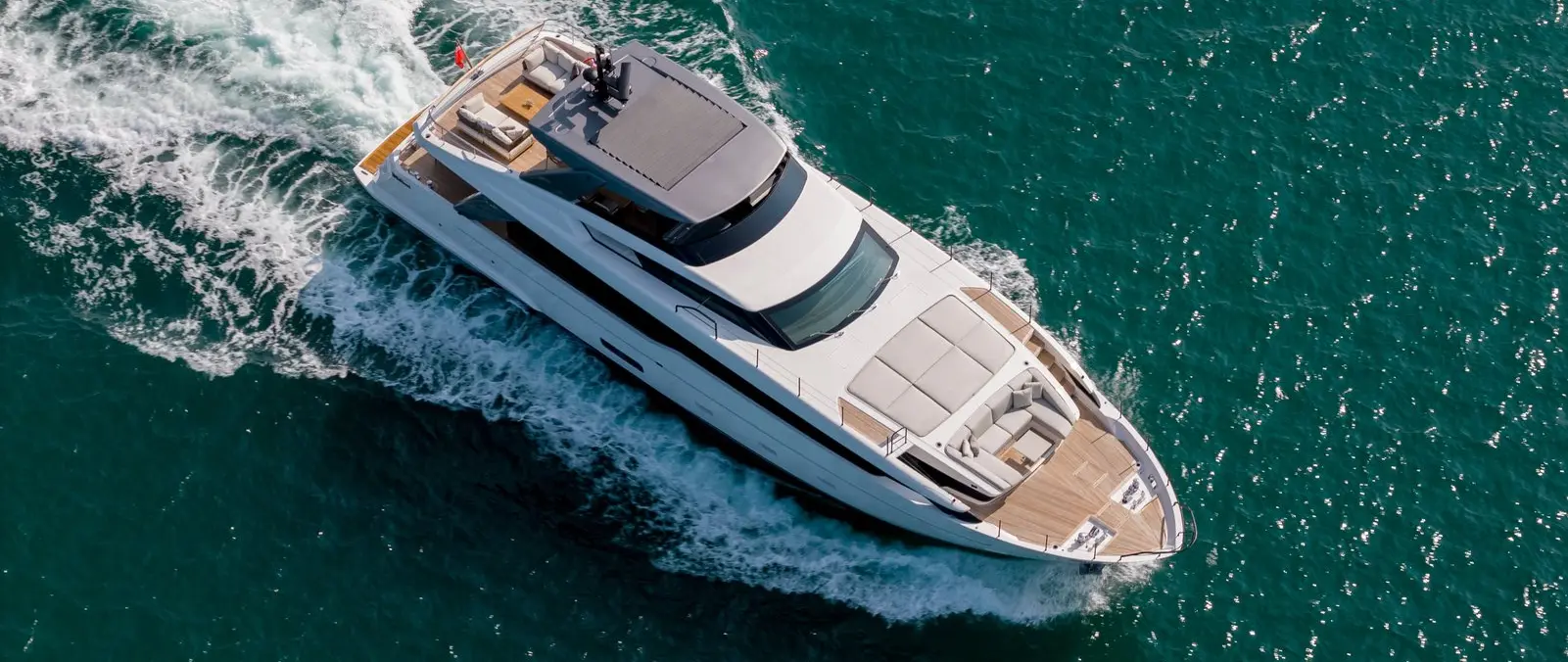
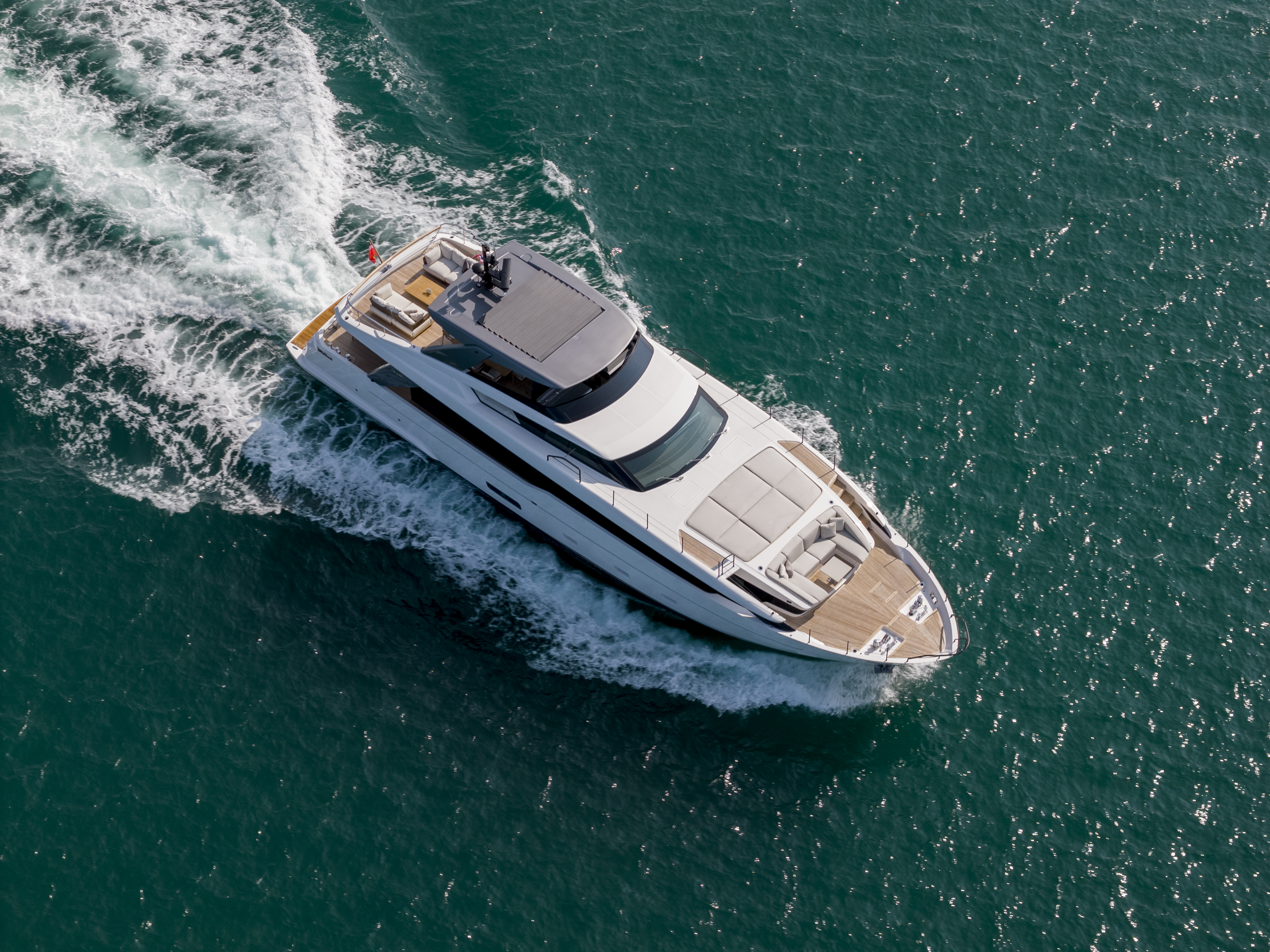
© Sanlorenzo Asia-Pacific / original Sanlorenzo SL86A official regional photography.
Sanlorenzo APAC has outlined the arrival of SL86A, SX88 and SX76 yachts into Asia-Pacific markets, highlighting the 26.6m SL86A asymmetric model and regional ownership infrastructure.
Sanlorenzo Asia-Pacific has reported a new group of yacht arrivals covering the SL86A, SX88 and SX76, an update that offers a practical view of how the Italian builder is supporting different cruising preferences across Asian markets. The most significant vessel for the 24-metre-plus superyacht audience is the 26.6-metre SL86A, the asymmetric flybridge yacht whose altered side-deck arrangement is intended to give more usable space to guests without simply extending the hull. The announcement is a regional fleet update, not a declaration that an entirely new yacht range has been launched. That distinction matters: the news concerns individual yachts reaching their operating region and the support network around them, rather than a previously unseen model making its world premiere.
The official announcement groups three established Sanlorenzo designs into one Asia-Pacific story, and the common thread is regional delivery and operation. Each yacht answers a different brief, from the familiar planing-yacht profile of the SL86A to the crossover approach represented by the SX range. Owners choosing a new yacht in Asia must consider more than the model brochure, because arrival, commissioning, crew arrangements, marina access and after-sales support all affect how the yacht is eventually used. Sanlorenzo's report does not disclose the names of owners, the values of transactions or a complete port-by-port delivery schedule. Those details should not be inferred from promotional photography. What can be established is the builder's presentation of these three arrivals as evidence of a broader regional presence.
At 26.6 metres, the SL86A is large enough to be treated as a superyacht under this publication's editorial definition, while remaining compact compared with the brand's steel-hulled custom vessels. This creates a very different operating proposition from a yacht whose sheer size requires extensive dedicated shore infrastructure. A yacht in this range may move between established marinas and sheltered cruising grounds more readily, but berth suitability, air draft, local regulations and the owner's intended itinerary still need to be checked individually. Length alone does not establish whether a particular berth or route is suitable. The significance of the latest regional arrival is therefore both practical and architectural: it brings a distinctive onboard layout into an Asian ownership context rather than establishing a new speed or range record.
Sanlorenzo says the SL86A changes the conventional port-side passage arrangement to unlock living space and improve the relationship between the interior and the water. On a yacht whose overall envelope cannot expand without consequences for mooring and handling, recovering interior width can be as valuable as adding length. Broad glazing and a differently arranged side deck give designers opportunities to reduce the sensation that social areas are divided from the sea by narrow exterior corridors. The trade-off is that crew movement, exterior access and operational safety must be incorporated into the concept from the beginning. The manufacturer's design description is evidence of intent, but prospective buyers should examine the actual circulation arrangements and their own cruising routines rather than treating any new layout as inherently superior.
Among the features the builder highlights is a concealed stern staircase, intended to remain visually unobtrusive until needed and then connect the cockpit with the water. Such an arrangement may improve the appearance of the transom when stowed, but it also needs to work reliably in the conditions in which owners actually board tenders, swim or transfer equipment. The important questions concern safe deployment, deck drainage, nonslip surfaces, lighting, the movement of guests with varying mobility and access for maintenance. Sanlorenzo's announcement establishes that the staircase is part of this design; it does not provide a new independent safety certification or measured ergonomic study. Owners should evaluate the feature within the complete aft-deck plan, including the position of any passerelle and tender-boarding points.
Sanlorenzo describes the SX88 as a key early model in its crossover family, introduced in 2017, with a design philosophy that brings explorer-style usability into a flybridge-yacht experience. That is quite distinct from the SL86A's treatment of conventional planing-yacht space. A crossover platform is often judged by the continuity of its external living zones, the relationship between sheltered areas and open deck space, and the ways guests can use the stern at anchor. These are useful concepts, but the word 'explorer' does not by itself certify blue-water endurance or unrestricted operation in every sea area. Actual autonomy depends on fuel, water, crew, loading, maintenance and navigation plans. The new Asian arrival makes the comparison between these two design approaches more relevant to regional buyers.
The SX76 is named in the same regional communication, although its size places it in a smaller market band than the main 24-metre-plus focus of this article. It is included here as context for Sanlorenzo's regional network rather than being incorrectly described as a qualifying superyacht. That distinction is valuable when manufacturers report several models together, because the sizes, crewing patterns and intended uses can differ considerably. A family weighing an SX76 against a larger SX88 may be making a choice about handling, ownership cost and time spent aboard, not merely interior styling. Sanlorenzo has not released a like-for-like ownership-cost comparison as part of this announcement. A serious evaluation would require individual equipment lists, service plans, power requirements and marina quotations.
An imported yacht reaching an Asia-Pacific market still has a series of practical transitions ahead. Local acceptance procedures, technical commissioning, crew familiarisation, onboard equipment checks and manufacturer support have to be managed in the vessel's intended operating environment. Climate and humidity can also shape maintenance needs, particularly in spaces where condensation control, ventilation and regular machinery checks matter. These are general considerations for yacht operators, not claims that any of the yachts in the announcement has encountered a problem. The point is that a regional arrival is the beginning of a new operating phase rather than merely the end of a sales process. Support capacity and clear responsibility between builder, representative and service provider remain central to the owner's experience.
The region cannot be reduced to a single boating market. Hong Kong, Singapore, Thailand, Japan, Taiwan and Australia present very different combinations of registration practices, weather patterns, cruising distances and marina environments. A boat primarily used for short family trips has different priorities from one planned for extended passages between jurisdictions. An owner may value an open beach-club arrangement, while another puts greater weight on enclosed air-conditioned living areas and low-maintenance exterior circulation. Sanlorenzo's three-model regional announcement demonstrates range breadth, but it does not justify assuming identical preferences across all those destinations. The right interpretation is that the builder is serving several use cases through a common regional presence, not that one configuration has displaced all the others.
Contemporary yacht marketing often relies on expressions such as spaciousness, connection with the sea and indoor-outdoor living. These descriptions can be useful starting points, but they should lead to specific questions at a viewing rather than replace them. Buyers should walk through the yacht as crew would during docking and as guests would when moving between dining, cabins and exterior decks. They should look at routes between the galley and service areas, sightlines, the placement of handholds and the practical storage allocated to deck equipment. The SL86A's asymmetric arrangement deserves particular attention because it reorganises space that many yacht owners are accustomed to finding in a traditional side deck. Practical circulation can be as important to satisfaction as the published floor plan.
For a builder selling yachts across multiple markets, local technical support is a significant element of the product itself. Boats remain working engineering systems after delivery, and reliability depends on disciplined maintenance and access to the right expertise. A clear process for ordering parts, documenting recurring issues and coordinating warranty investigations can reduce downtime. Owners should ask which services are performed by a regional representative and which require assistance from Italy or another specialist location. This article does not assume Sanlorenzo has promised a particular response time or all-hours support in every destination; none is supplied in the regional arrivals announcement. Rather, these are appropriate due-diligence questions when a vessel is placed far from its original construction yard.
Sanlorenzo has developed several yacht families and construction approaches to address different size ranges and ownership briefs. The SL86A's architectural optimisation and the SX family’s crossover philosophy show how product development can produce materially different experiences without every variation becoming a bespoke one-off build. Owners gain a choice of established platforms on which specification and personalisation can be considered. Shipyards, in turn, must preserve quality and technical consistency across regional networks. An arrival update therefore has meaning beyond the photographs: it indicates that multiple platform types are finding their way into the same broad region. It should not, however, be confused with evidence of undisclosed contracts or total regional market share.
Before a new yacht begins a cruising programme, managers should establish an accurate equipment register, understand scheduled servicing and record baseline conditions while the vessel is newly commissioned. The documentation should include machinery manuals, software versions where relevant, emergency procedures, safety equipment expiry dates and contact points for urgent technical assistance. Particular attention should be given to tender-boarding arrangements and any moving deck furniture or stair systems used regularly by guests. On the operational side, route planning must take account of draft, expected weather, crew competence and local port requirements. These recommendations are standard yachting practice and are not an allegation of shortcomings in the newly arrived Sanlorenzo yachts. Good handover discipline protects both owner experience and future resale records.
The official material is informative about the types of yachts arriving, but it does not establish named ownership, purchase consideration, contractual delivery dates or individual operating bases for every model. It also does not report independently tested speed, fuel economy or emissions figures for these particular yachts. These absences are important because publication of a manufacturer's fleet update can otherwise be mistaken for confirmation of facts that have not been disclosed. A reader researching a specific vessel should distinguish the design specification for a model from the equipment fitted to an individual hull. Optional machinery, tender arrangements and interior changes can influence both the yacht's technical capabilities and the way it should be managed.
Taken together, the SL86A, SX88 and SX76 arrivals suggest that Sanlorenzo's Asia-Pacific business is addressing a spectrum of owners rather than concentrating on a single yacht format. The most concrete news for the superyacht audience is the presence of the 26.6-metre asymmetric SL86A within that mix, while the crossover models provide context for the builder's wider offering. The value of the story lies in real regional deployment and in how the design differences translate into use, not in a speculative claim about record sales. Sanlorenzo's own account remains the primary record for the arrivals. The next meaningful evidence will be the yachts' operating experience, service support and any subsequent model-specific updates the builder elects to confirm.
The primary record is Sanlorenzo Asia-Pacific's official November 2026 statement covering the SL86A, SX88 and SX76. Model length and the SL86A design details are attributed to that company source, while the operational observations above are clearly editorial considerations rather than measured performance claims. This publication treats the 26.6-metre SL86A as the qualifying superyacht subject and mentions the smaller model only to make sense of the announcement's three-yacht regional context. No unnamed owner is identified and no sale price or confidential delivery detail is inferred. The accompanying original photograph is identified as the brand's SL86A image and credited to its source, without suggesting that an editorial credit transfers underlying copyright or licensing rights.
Original primary record: Sanlorenzo Asia-Pacific, official November 2026 regional arrivals announcement. © Sanlorenzo Asia-Pacific / original Sanlorenzo SL86A official regional photography. Original first-party media: source photograph or official illustration. Copyright and image source are credited; first-party availability does not imply unrestricted reproduction permission.
© Sanlorenzo Asia-Pacific / original Sanlorenzo SL86A official regional photography.
Continue reading
IGY Marinas has outlined a Brown & Brown-backed seminar programme surrounding the 14–17 November 2026 USVI Charter Yacht Show at Yacht Haven Grande, St …
Burgess promotes 43m Codecasa GIOIA for Caribbean and Bahamas winter charter, alongside a separate sale listing, in its 27 November 2026 charter-to-ownership selection.

ICOMIA confirms Pantaenius Yacht Insurance Agency as a new sustaining member, creating an industry forum link for yacht hull, liability, charter, crew and construction …
Damen Yachting has delivered the 60-metre Amels QU2 from Vlissingen, with Winch Design interiors and a Mediterranean charter programme ahead.
Superyacht Guide
Continue into the wider Superyacht Guide.
Business opportunities · Superyacht Guide
Companies serving the superyacht market can discuss clearly identified advertising, sponsorship and business-profile opportunities. Commercial activity remains separate from independent editorial coverage.