
MCA Consults on New Safety of Navigation Regulations for 2027
The MCA is consulting on replacement Safety of Navigation Regulations for 2027, updating the UK implementation of SOLAS Chapter V and its navigation requirements.
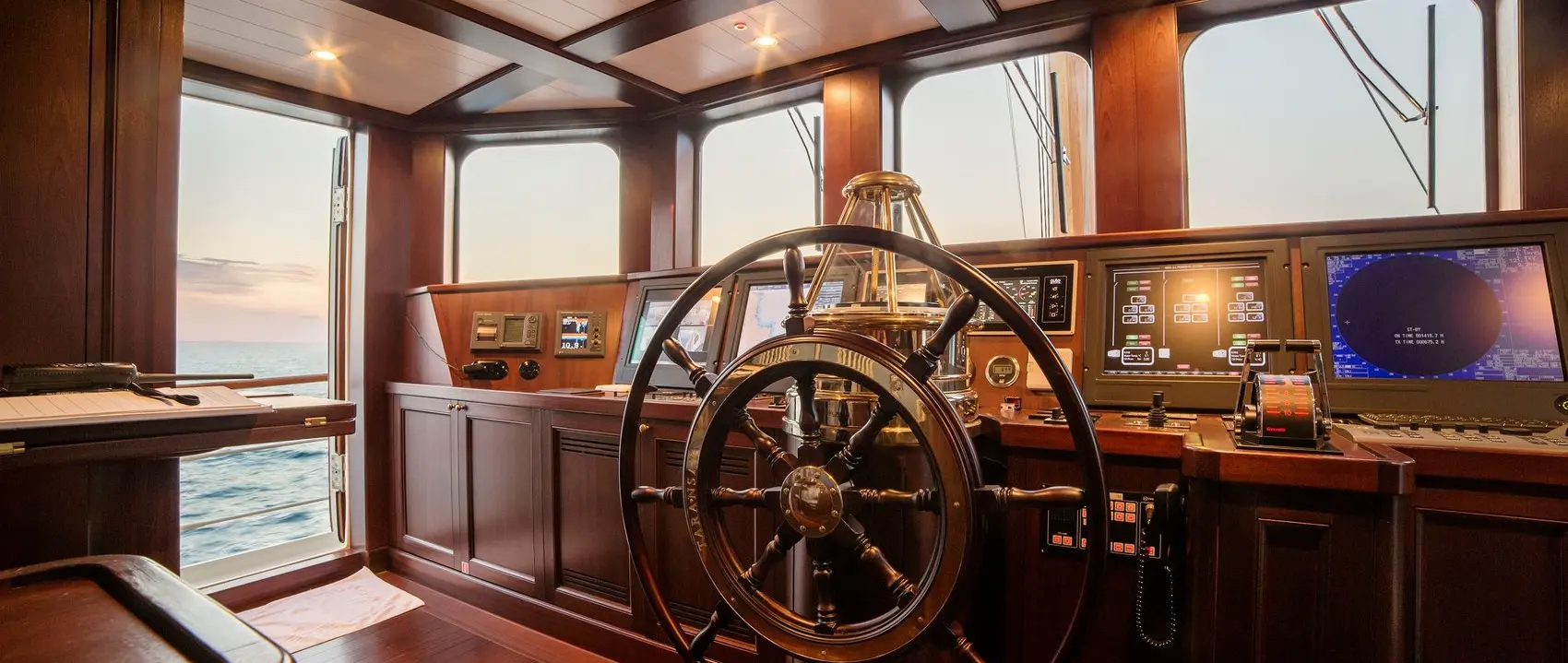
ClaR85 / Wikimedia Commons, CC BY-SA 4.0; resized. Licensed contextual photo of a yacht wheelhouse; no claim that the pictured yacht is affected by the proposal.
MCA consultation findings published 27 November 2026 outline how proposed navigation regulations would replace the 2020 UK rules and address pilot transfers, danger messages and bridge visibility.
The UK Maritime and Coastguard Agency published the outcome of its consultation on proposed Merchant Shipping (Safety of Navigation) Regulations 2027 on 27 November 2026. For owners and operators of large yachts with a UK regulatory connection, the important development is the publication of the government's response to comments, rather than the immediate commencement of a replacement set of rules. A consultation report explains the direction of policy; it is not itself a statutory instrument and should not be treated as one.
The proposal concerns the legal framework used to give effect to navigation provisions in Chapter V of the International Convention for the Safety of Life at Sea, commonly known as SOLAS. The MCA has proposed revoking and replacing the UK's 2020 navigation regulations, both to accommodate relevant international amendments and to address domestic legislative clarity. Yacht managers should therefore distinguish the report's confirmed existence from any future legal obligation that might arise only when final regulations take effect.
The timing gives the yachting sector a clearer opportunity to prepare while the legal process continues. The consultation itself had already placed an overhaul on the horizon; the outcome now identifies the administration's responses to questions raised during the exercise. An owner preparing a winter maintenance programme or a management company updating its compliance manual can start mapping possible effects, without suggesting that a new requirement has already entered force.
For a large yacht, even apparently narrow changes in navigation rules can intersect with the bridge procedures used across multiple jurisdictions. The practical concern is less the title of the regulation than whether a particular vessel, voyage or operating practice falls within its eventual application. Assessments should be made against the actual text of the final instrument and relevant guidance, not simply against headlines about the consultation.
SOLAS Chapter V deals with the safety of navigation and covers a broad range of navigational responsibilities. The underlying international framework is familiar to captains and surveyors, but its expression in national regulations can affect how operators demonstrate compliance. A replacement instrument may clarify definitions, duties, cross-references and implementation of amendments without changing every operational expectation on the bridge.
Superyachts do not all have identical regulatory profiles. Commercial and private use, vessel tonnage, flag, operational area and the wording of particular provisions can all matter, which makes a universal claim about every yacht inappropriate. Technical managers should start with the ship's actual certificates and flag-state requirements, then assess whether UK rules are applicable to its planned activity.
The published report sets out a review of submissions and the MCA's response. It records broad agreement or neutral positions across much of the feedback and explains the government's approach to the proposed replacement of the 2020 regulations. The report also acknowledges an editorial correction identified by a respondent, a reminder that consultation documents and associated guidance may evolve before the final rules are issued.
The response includes discussion of how the proposed instrument would bring together measures affecting navigation safety. That is an administrative and legislative exercise with operational consequences, not an announcement of a new type of yacht equipment or a change to a particular ship's certificate. Editorially, the distinction is essential: what the MCA proposes, what consultees said and what the law currently requires are three separate categories of information.
Bridge visibility is one of the safety subjects identified in the regulatory discussion. On a yacht, visibility is influenced by wheelhouse architecture, deck structures, glazing, lookout arrangements and the way the vessel is manoeuvred. An assessment can involve naval architects, captains, equipment suppliers and the flag administration, but the consultation outcome alone does not establish that a particular existing design must be altered.
Refit teams may nevertheless wish to retain drawings, visibility studies and the evidence supporting their present arrangements. This is useful documentation if a future survey or compliance review asks how the vessel's configuration meets applicable requirements. Any decision to make physical changes should follow a verified analysis of the relevant regulation and a project-specific engineering assessment.
The consultation material also addresses subjects connected with pilot transfers and the responsibilities associated with navigation arrangements. For large yachts that use pilots when entering commercial ports or negotiating restricted waters, safe preparation is already a core bridge-management task. Changes or clarifications in legislation can prompt operators to revisit how pilot boarding arrangements, instructions and supervision are documented.
A captain should not infer a new boarding specification from the publication date of a consultation outcome. The sound approach is to compare the final legal text and applicable equipment standards with existing operating procedures once the instrument is available. In the meantime, training records, maintenance checks and clear coordination between bridge and deck teams remain valuable independently of a legislative revision.
Navigation safety also depends on the timely communication of hazards and the disciplined handling of information received from other vessels and shore authorities. The MCA's discussion includes danger messages within the subjects relevant to the proposed regulatory framework. For a superyacht making an ocean passage, the operational challenge is to ensure that reliable warnings reach the bridge and are assessed alongside official maritime safety broadcasts and voyage-planning information.
Good practice separates the observation of a hazard from the legal rules governing how and to whom a report must be made. Those obligations may depend on the governing convention and applicable flag-state legislation. Management companies should avoid distributing an unverified interpretation as a mandatory new reporting rule, particularly while the proposed replacement instrument remains at the consultation-outcome stage.
Professional management organisations commonly maintain a vessel-specific library of rules, surveys, navigational risk assessments and operating procedures. The November publication is an opportunity to identify which documents cite the current UK regulations and create a controlled action item for later review. Such an item should name the responsible person, the official source and the trigger for updating the yacht's manuals.
This is not a substitute for legal advice, class guidance or flag-state instructions. It is a structured way to avoid both complacency and premature compliance claims. A manager who changes procedures solely on the strength of a policy summary may create confusion, while one who ignores the consultation entirely may leave insufficient time for a future transition.
Large yachts routinely use winter yard periods for bridge electronics upgrades, maintenance and survey preparation. Suppliers may be tempted to present any forthcoming regulation as a reason for immediate equipment replacement, but the published consultation outcome does not by itself justify that conclusion. Owners should request a traceable explanation linking any proposed expenditure to an actual requirement or a separately documented safety benefit.
Where a system upgrade is already planned, it is sensible to retain installation documentation, commissioning tests and the ability to demonstrate how alarms and navigation displays are managed. These records support consistent operation regardless of the precise legislative timetable. They also give managers a stronger starting point if subsequent official guidance identifies a technical obligation for the vessel's category.
Navigational compliance is as much about people and decision-making as about hardware. A change to legislation can affect bridge checklists, reporting procedures and training syllabuses even when no new device is installed. Captains should ensure that any eventual changes are communicated with version-controlled instructions, rather than as informal amendments circulating between crew members.
Teams can use the consultation outcome as a discussion prompt at a safety meeting. For example, they can review how the vessel receives official warnings, how its officers prepare for pilotage and how deficiencies are raised with management. Those exercises improve operational readiness without claiming that the MCA has imposed a new requirement before formal commencement.
A yacht built in one country, registered in another and chartered through several coastal states presents a complicated compliance picture. References to UK merchant-shipping rules do not mean that every yacht globally will be subject to the same domestic regulation. The vessel's flag administration and the geographical and operational reach of particular provisions must be examined first.
This is especially important when owner representatives compare guidance across fleets. A rule that applies to one commercial yacht may be inapplicable or differently implemented for a privately operated yacht of a similar length. Accurate reporting and sound management both start by preserving these differences rather than reducing the consultation to a blanket instruction for all superyachts.
The report describes the consultation outcome and the government's intentions; it is not a substitute for the final signed regulation, explanatory material and effective dates. The details of future obligations, transitional provisions or enforcement arrangements must be confirmed from official publications as they emerge. Where the current source does not establish a point, owners should avoid assuming either that a change is compulsory or that no change is coming.
The same caution applies to projected survey costs and retrofit work. An anticipated regulatory update can influence planning, but a financial forecast should be linked to documented technical scope and the vessel's own classification. Responsible editorial coverage therefore describes the current milestone precisely and identifies what readers still need to monitor.
For a UK-connected superyacht, an effective next step is to record the 27 November consultation report in the vessel's regulatory watchlist. The assigned manager can identify potentially affected manuals, note the survey and refit calendar, and request a flag or legal review once the final instrument is published. The bridge team can meanwhile continue following the rules currently in force.
The broader significance is that navigation safety regulation remains an active area of national implementation of international convention requirements. The MCA has advanced the discussion from proposal to published consultation response; the sector now has a more concrete basis for preparing, but not a licence to treat proposals as settled law. Clear source tracking, proportionate technical review and disciplined crew communication are the most useful responses at this stage.
Original primary record: Maritime and Coastguard Agency. ClaR85 / Wikimedia Commons, CC BY-SA 4.0; resized. Licensed contextual photo of a yacht wheelhouse; no claim that the pictured yacht is affected by the proposal. Original first-party media: source photograph or official illustration. Copyright and image source are credited; first-party availability does not imply unrestricted reproduction permission.
Continue reading
The MCA is consulting on replacement Safety of Navigation Regulations for 2027, updating the UK implementation of SOLAS Chapter V and its navigation requirements.
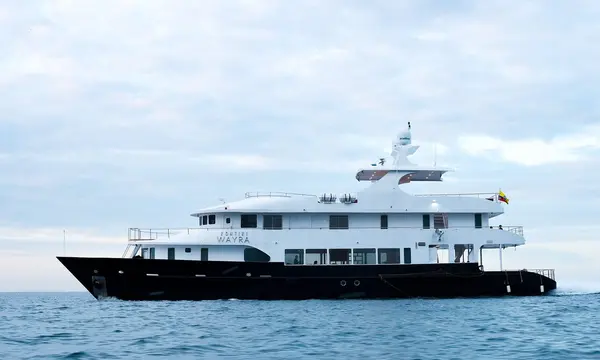
CharterWorld advertises a 20% Christmas-week reduction for the 40-metre KONTIKI WAYRA in Panama, with a booking-confirmation deadline of 4 December.

At Genoa's Sailing Super Yacht Forum, RINA representative Giorgio Gallo outlined a semi-autonomous navigation project and the unresolved question of who is responsible when …

The 55m Amels NOMAD is advertised for winter charter in Costa Rica, Panama, the Bahamas and Caribbean, featuring a 14.3m fishing chase boat and …
Superyacht Guide
Continue into the wider Superyacht Guide.
Business opportunities · Superyacht Guide
Companies serving the superyacht market can discuss clearly identified advertising, sponsorship and business-profile opportunities. Commercial activity remains separate from independent editorial coverage.