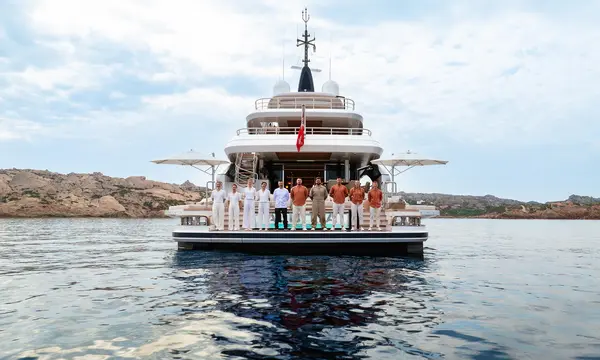
Current 2026 superyacht crew salary ranges for captains, officers, engineers, deck crew, interior teams and chefs, with yacht-size and rotation context.
Superyacht crew salaries in 2026 range from about €3,000 a month for many junior deck and interior positions to more than €20,000 for captains of the largest yachts. These are indicative monthly starting ranges in euros before tips, bonuses and personal tax, rather than guaranteed rates for every contract.
What superyacht crew earn in 2026
Published 2026 crew-market benchmarks compare current salary ranges across private and charter yachts. The figures show that yacht size matters, but qualifications, experience, vessel type, cruising programme, leave and the precise responsibility of the role can change the offer substantially.
The strongest pay growth is concentrated in positions carrying command, statutory or highly specialised responsibility. Larger yachts also tend to offer more structured leave, and equal rotation has become common for captains, senior officers, senior engineers and chefs on many yachts above 50 or 60 metres.
2026 monthly salary ranges by role
The table below compares indicative base salaries for representative roles and yacht sizes. A dash means the position is not normally separated as a standalone role at that size, while a plus sign means the upper end is open rather than capped.
| Role | 30–40m | 50–60m | 80–100m |
|---|
| Captain | €6,000–€9,000 | €10,000–€16,000 | €16,000–€23,000 |
| Chief officer / first mate | €3,500–€5,500 | €7,000–€8,000 | €8,000–€10,000 |
| Chief / sole engineer | €5,000–€7,000 | €8,000–€12,000 | €12,000–€15,000 |
| Bosun | €3,500–€4,500 | €4,000–€5,000 | €4,500–€5,500 |
| Junior deckhand | €3,000–€3,200 | €3,000–€3,200 | €2,800–€3,000 |
| Chief steward / stewardess | €4,000–€6,500 | €5,500–€7,500 | €7,500–€10,000 |
| Junior steward / stewardess | €3,000–€3,500 | €3,000–€3,500 | €3,000–€3,500 |
| Head / sole chef | €5,000–€7,500 | €6,500–€9,000 | €9,000+ |
The lower figure on a larger yacht does not always mean the package is worse. Junior roles on bigger vessels may carry narrower duties and longer rotations, while a smaller yacht can pay more for a combined deck, interior or galley position that demands broader responsibility.
How yacht size changes pay and rotation
Captain salaries provide the clearest size progression: approximately €5,000–€6,000 below 30m, €6,000–€9,000 at 30–40m, €8,500–€12,500 at 40–50m, €10,000–€16,000 at 50–60m, €14,000–€18,000 at 60–80m and €16,000–€23,000 at 80–100m. Above 100m, packages are generally negotiated individually and commonly include equal rotation.
Engineering pay also tracks the certificate and machinery responsibility required by the yacht. Published salary benchmarks place chief or sole engineers at roughly €5,000–€7,000 on 30–40m yachts, €8,000–€12,000 at 50–60m and €13,000–€15,000+ above 100m, with equal rotation prevalent in the larger size bands.
Interior and deck departments show a different pattern because larger yachts create more specialised hierarchies. A chief steward or stewardess can move from €4,000–€6,500 on a 30–40m yacht to €7,500–€10,000 at 80–100m, while bosun pay moves from €3,500–€4,500 to about €4,500–€5,500 across the same bands.
Why the total package matters
A monthly figure cannot be compared properly without the leave pattern. A permanent role with limited leave, a 3:1 arrangement and an equal 2:2 rotation create very different annual workloads, even when the monthly salary printed in the contract looks similar.
Charter tips and discretionary bonuses can add meaningful income, but neither should be treated as guaranteed salary. Accommodation and meals aboard, repatriation, travel, medical cover, training support and paid leave can also change the real value of a package.
Tax treatment is personal and jurisdiction-specific, so the common description of yacht earnings as automatically tax-free is unsafe. Crew should obtain advice based on residence, nationality, voyage pattern and employment structure, and should keep the records required by the relevant tax authority.
The Maritime Labour Convention requires seafarers to be paid regularly and in full in accordance with their employment agreements. The written agreement should therefore state the wage, currency, pay frequency, leave, notice terms and any conditions attached to tips, bonuses or deductions.
How crew and employers should use this guide
Candidates should compare the whole contract with roles requiring similar tickets, experience and responsibility, rather than focusing only on yacht length. Crew planning their next step can also read about the work of a superyacht engineer, the chief stewardess role and careers after yachting.
Owners, captains and managers should benchmark pay together with rotation, workload, itinerary and retention risk. A slightly stronger package can cost less than repeated recruitment, disrupted handovers and the operational knowledge lost when experienced crew leave.
Superyacht professionals looking for their next position can submit a crew CV to Superyacht Guide. Owners, captains and managers looking to recruit can instead submit a crew request with the role and yacht requirements.
Sources
The salary bands are cross-checked against published 2026 crew-market guidelines and are presented as indicative ranges rather than fixed rates. Employment-agreement and wage context is checked against the International Labour Organization’s Maritime Labour Convention, while tax is deliberately presented as jurisdiction-specific rather than assumed.