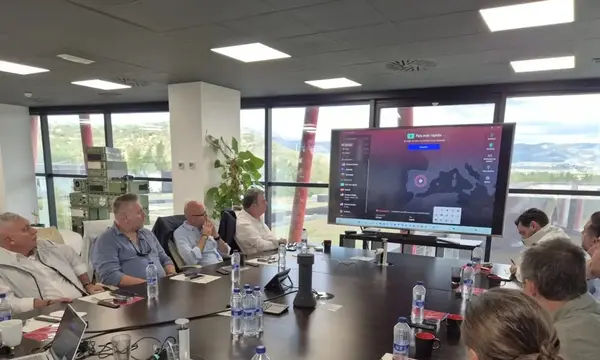
OmniAccess Brings Superyacht Captains Into Its Palma Technology Centre
OmniAccess hosted superyacht captains at its Palma headquarters for two days of network demonstrations, cybersecurity workshops and discussions with technical specialists.
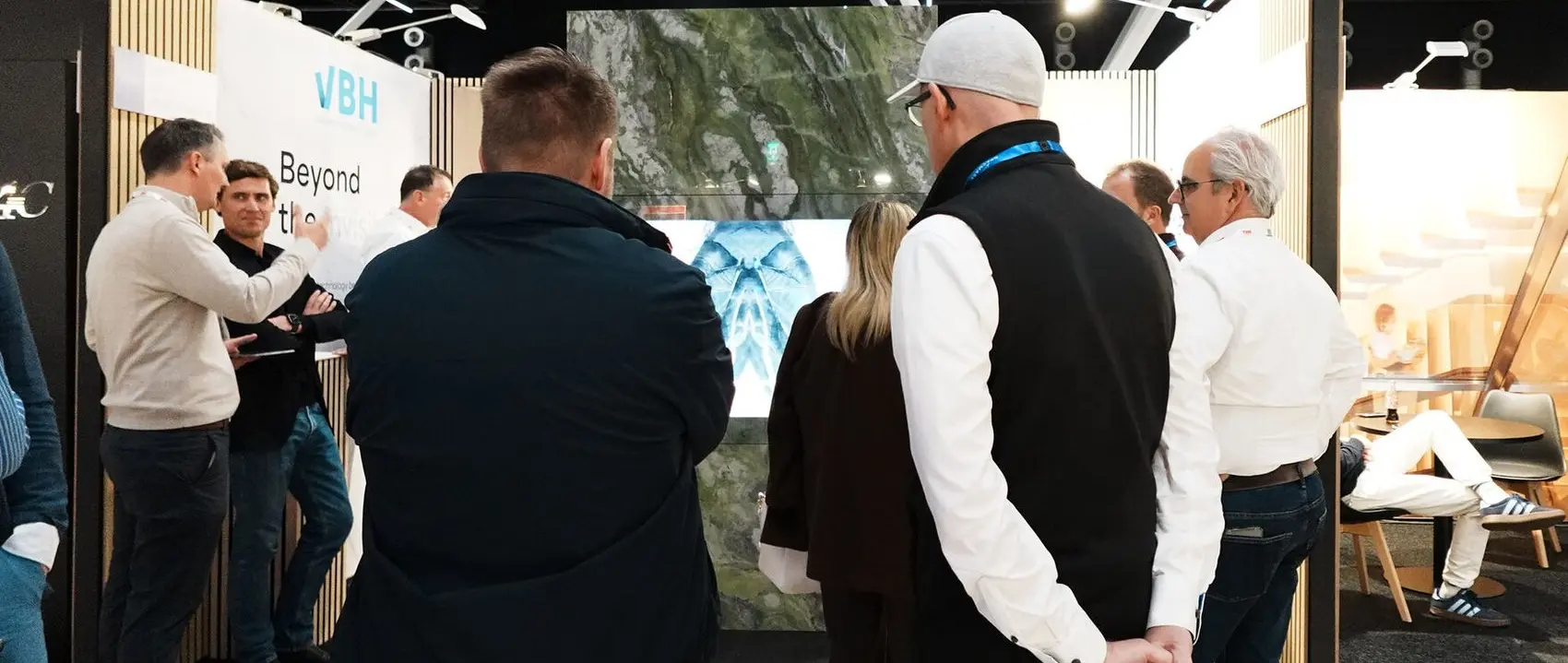
© Respective copyright holder / VBH; official source image, individual photographer not identified.
VBH introduced its Gijs conversational assistant at METSTRADE and demonstrated integrated entertainment, guest controls and technical monitoring for superyachts.
Dutch yacht technology specialist VBH introduced a conversational digital assistant named Gijs during METSTRADE 2026 at RAI Amsterdam. In its account of the exhibition, which took place from 17 to 19 November, the company also highlighted its demonstrations of onboard entertainment, user interfaces and integrated technical systems.
The presentation brought together two distinct aspects of the business: making information about its products easier to access, and integrating technology into the spaces used by guests and crew. For owners considering a new yacht or substantial refit, both are relevant to the process of choosing and evaluating technology.
Gijs is described by VBH as a digital assistant through which visitors can ask questions about the company and its solutions. The conversational format provides an alternative to navigating product pages individually when trying to understand which areas of the business may be relevant to a particular requirement.
The assistant should not be confused with an autonomous system responsible for operating a yacht. The exhibition announcement concerns an informational interface, not the delegation of navigation, machinery control or other safety-critical responsibilities to artificial intelligence.
That distinction is especially important when discussing AI in the maritime industry. A tool answering questions about available products serves a different purpose from equipment that executes commands aboard an operational vessel.
Owners' representatives and project teams often need to investigate many competing products before producing a detailed technical specification. Information can be spread across brochures, installation diagrams, project references and discussions with manufacturers.
A conversational assistant may help visitors establish the terminology needed to ask better questions or identify the department responsible for a particular subject. Its answers should still be checked against the latest technical documentation and written proposals, especially where compatibility, performance or contractual commitments are involved.
For a yacht project, the specification ultimately needs to establish precisely what is being supplied. It should identify the hardware, software, integration responsibilities, commissioning requirements and support arrangements rather than relying on a general description of the experience that a system is intended to provide.
VBH presented its exhibition under the theme Beyond the Invisible. The company used the stand to demonstrate how electronic systems can become part of an interior without necessarily dominating its appearance.
On a large yacht, this approach can be particularly relevant in private suites, main saloons and other spaces where the design team wishes to preserve a coherent architectural language. Screens, speakers and control interfaces need not be the most visually prominent features of a room, provided the resulting installation remains usable and serviceable.
The visual discretion of technology does not eliminate its physical requirements. Cooling, cabling, access, structural support and the characteristics of surrounding materials must all be considered before an apparently seamless installation can be approved.
Among the exhibits was the Alchimia Display Element, which VBH associates with the incorporation of display functions into natural surfaces. The company also presented its Sound Element and Control Element, illustrating related approaches to sound and user interaction.
These concepts address a recurring challenge in bespoke yacht interiors. A large conventional display can interrupt an architectural composition, and conspicuous technical hardware may be difficult to reconcile with custom joinery or a carefully developed materials palette.
The success of an integrated display depends on more than its appearance when switched off. A project team must assess readability under different lighting conditions, the interaction with surrounding finishes, the ease of using the system and the practicality of replacing components during the yacht's lifetime.
VBH also included GUIDA and MediaHub among the systems demonstrated at the exhibition. Its presentation placed these products within the wider context of an integrated onboard experience rather than treating every entertainment function as an isolated installation.
For guests, ease of operation matters as much as the number of available functions. A system may need to accommodate a first-time charter guest who wants to play music or watch a film without undertaking extensive training.
The needs of private owners may be different, especially if they have established preferences for particular content services or devices. A well-developed system should support those preferences while ensuring that the crew can assist other users and manage the installation appropriately.
An attractive control interface can simplify everyday interaction with a complex yacht, but the underlying permissions remain important. A guest-facing interface and a technical maintenance interface need not provide access to the same functions.
This is a particularly useful distinction when several systems share a common infrastructure. The appropriate degree of access depends on the function involved, the responsibilities of the person using it and the consequences of an incorrect command.
During specification, project teams should agree which controls are intended for guests, which are managed by crew and which require an authorised technical specialist. Documenting these boundaries helps prevent a convenient interface from unintentionally becoming a route to settings that should remain restricted.
The ETO Panel was another feature of VBH's exhibition presentation. Its inclusion illustrates the importance of giving onboard technical personnel appropriate tools to supervise and maintain the systems responsible for guest-facing services.
An electro-technical officer may be required to investigate issues affecting numerous cabins or shared equipment while the yacht continues its normal operations. Useful technical information should help distinguish a device failure from a wider service problem without requiring an unnecessary interruption to unrelated systems.
Owners and management companies should consider how the installation will be supported when the original commissioning specialists are no longer aboard. Access to current documentation, agreed service procedures and appropriately trained personnel can reduce dependence on undocumented knowledge held by individual contractors.
Technology integrated into bespoke furniture and architectural finishes benefits from early coordination between the design studio, shipyard and specialist installer. Decisions about display dimensions or acoustic treatment can affect joinery design, ventilation and the allocation of space behind finished surfaces.
During a refit, the challenge may be greater because the existing structure and interior constrain the available options. Reusing suitable components can be commercially sensible, but only after compatibility with the proposed equipment has been established.
The exhibition provided examples of the manufacturer's approach, not evidence that every product is suitable for every yacht. The final selection must reflect the vessel's actual construction, electrical and network architecture, operating pattern and the owner's priorities.
An acceptance programme for an integrated entertainment installation should reflect the way the yacht will be used. Checking an individual component in isolation may not reveal an issue that occurs when multiple cabins are occupied or when services switch between different connectivity arrangements.
Representative tests can establish whether controls respond as intended, whether the selected content is available and whether the crew has appropriate tools to support guests. They should also examine what happens when a non-essential service becomes unavailable.
Access to equipment for future maintenance deserves particular attention where hardware has been concealed within an interior. A successful installation balances its visual quality with the ability to inspect, repair and replace the components that provide its functionality.
The introduction of Gijs adds a new means of discovering information about VBH's capabilities. The announcement does not provide independent accuracy measurements or establish that the assistant can replace a technical consultation for a yacht-specific project.
Prospective clients can use an informational tool to refine their initial enquiries, but should seek confirmation of decisions that affect costs, system compatibility, privacy or delivery commitments. Confidential yacht drawings and operational information should only be shared through arrangements approved for that purpose.
The broader importance of VBH's METSTRADE presentation lies in the relationship between design, everyday usability and the technical infrastructure behind both. As superyacht technology becomes increasingly integrated, the ability to explain its functions clearly and support them throughout the vessel's life remains an essential part of delivering the intended experience.
Original primary record: VBH. © Respective copyright holder / VBH; official source image, individual photographer not identified. Original first-party media: source photograph or official illustration. Copyright and image source are credited; first-party availability does not imply unrestricted reproduction permission.
© Respective copyright holder / VBH; official source image, individual photographer not identified.
Continue reading
OmniAccess hosted superyacht captains at its Palma headquarters for two days of network demonstrations, cybersecurity workshops and discussions with technical specialists.
The International Yacht Brokers Association examines how AI could help brokers interpret changing client preferences while maintaining privacy and professional judgement.
Williams Grand Prix Technologies has disclosed that the first customer for its ES10M marine battery system is an 80-metre-plus yacht targeting triple the installed …
A November 2026 official America's Cup technical report explains how sensors monitor speed, ride height, structural strain and control inputs aboard the foiling AC75.
Superyacht Guide
Continue into the wider Superyacht Guide.
Business opportunities · Superyacht Guide
Companies serving the superyacht market can discuss clearly identified advertising, sponsorship and business-profile opportunities. Commercial activity remains separate from independent editorial coverage.